



 Goal 11. Sustainable Cities and Communities
11.4.2 Promote sustainable commuting

2024-2025
From Mobility Policy to Measurable Readiness: AASTMT’s Multi-Campus Commitment to Sustainable Commuting
AASTMT targets an integrated institutional approach that treats daily access to education as a matter of accessibility, affordability and environmental performance. Its Transport and Travel Planning Policy and Integrated Transport Plan emphasize shared transport, carpooling, pedestrian priority, more efficient vehicle access and awareness of the relationship between campus travel, traffic congestion and urban air quality. Alongside practical mobility services, the Academy promotes zero-emission vehicles, applied engineering and technical capacity-building to strengthen the transportation systems required by more inclusive and resilient cities. In Alexandria, the Abu Qir Main Campus and Miami connection are supported by a free shared shuttle service, campus transport planning and the 2024 carpooling campaign. In El Alamein, the 2024 introduction of bus routes strengthens connections with urban communities, including Alexandria and Cairo, while the June 2025 technical proposal advances planning for solar-linked EV-charging infrastructure. The Academy’s Cairo branches (including Smart Village and Heliopolis), Port Said and Aswan/South Valley form part of the wider multi-campus sustainability and transportation-policy framework.
Between 1 September 2024 and 30 August 2025, that policy framework translated into documented action across four verifiable milestones: an accessible shared-bus-route announcement, a campus-wide carpooling awareness event, an electric-mobility skills workshop, and a technically specified EV-charging proposal. Together, they demonstrate a pathway from reducing single-occupant travel and improving public transportation access to developing the knowledge and infrastructure needed for low-emission commuting.
1. Connecting Communities, Expanding Access: New Student Bus Routes for El Alamein
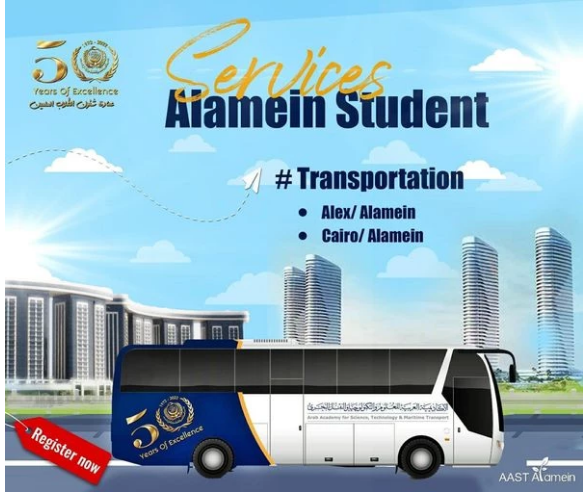
On 24 September 2024, AASTMT Student Affairs announced new bus routes serving its El Alamein branch, designed to improve the convenience, reliability and affordability of shared transport for students, staff and visitors. The official announcement describes multiple stops that widen access to the campus; its accompanying transportation poster identifies Alexandria–El Alamein and Cairo–El Alamein connections. By offering an organized alternative to separate private-car journeys, this public transport and commuting initiative supports more accessible transportation systems, better connectivity between urban communities, and the institutional objective of limiting traffic congestion and transport-related urban air pollution.
Link: https://aast.edu/en/news/news-details.php?event_type_id=1&language=1&news_id=486103208&unit_id=656
2. Electric Mobility Starts with Skills: The Erasmus+ SPEED Workshop
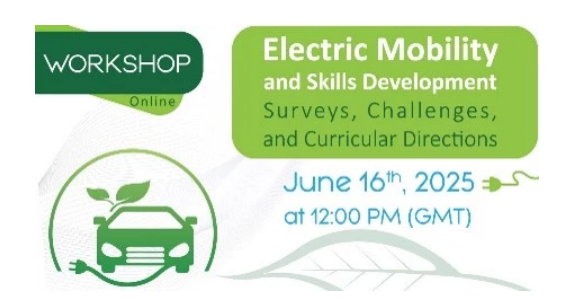
On 16 June 2025, the Erasmus+ SPEED initiative conducted the online workshop “Electric Vehicles Skill Development: Gaps and Challenges,” as documented on AASTMT’s official sustainability platform. The session presented survey findings on engineering and workforce skills gaps and invited discussion about future curricula and professional training in hybrid and electric vehicles. By connecting academia and industry around the electrification of the transport sector, the programme strengthens the knowledge base needed for intelligent transportation, low-emission vehicle deployment and more sustainable commuting.

Link: https://aast.edu/en/sdg/contenttemp.php?page_id=101190022
3. Preparing the Infrastructure for Cleaner Travel: El Alamein EV-Charging Proposal
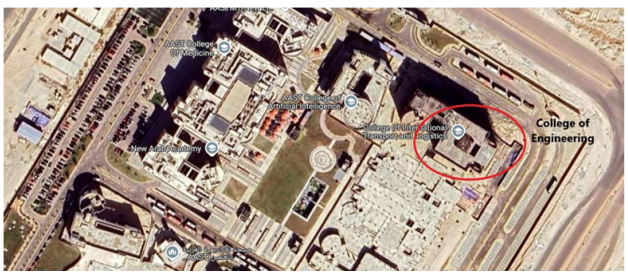
A formally dated AASTMT memorandum of 26 June 2025 submitted preliminary technical specifications for a proposed rooftop grid-connected photovoltaic system and two electric-vehicle charging points at the College of Engineering and Technology, El Alamein. The accompanying specifications call for two AC charging points rated at 22 kW each in the college building’s basement, with remote monitoring and control. The proposal represents a concrete planning step toward the charging infrastructure required for cleaner private and shared mobility, integrating energy and transportation systems within a smart-cities and sustainable urban-development agenda.
4. Carbon Accountability and Last-Mile Electric Mobility
AASTMT’s report published 30 April 2025 states that its institution-wide 2024 carbon footprint was 103,862,750 kg CO₂e, down 32.8% against the 2019 baseline, exceeding the Academy’s ≥30% campus-wide reduction target for 2025.

2023 - 2024
AASTMT contributes to sustainable urban mobility by implementing practical solutions that reduce traffic congestion, lower air pollution, and improve access to public spaces. Through initiatives that encourage public transportation, electric mobility, and smarter commuting strategies, the Academy fosters safer, greener, and more resilient urban environments while raising awareness among students and staff about sustainable travel practices.
Driving Towards a Sustainable Future: AASTMT's Charge for Clean Commuting
AASTMT works on integrating all the related initiatives of the 17 SDGs to ensure more clean, eco-friendly and sustainable commuting. AASTMT has taken early initiative in the field of Electric Vehicles (EV).


Seamless Journeys, Connected Minds: AASTMT's Cutting-Edge Transportation Solutions
The Transport Department of the Arab Academy offers a distinctive transportation service to transport our students and working on a fleet of bus with the latest technical means. All buses have free Wi-Fi service, and all vehicles have GPS devices that make the service safer to locate and move all vehicles to ensure the safety of passengers during daily trips. Transport service covers all regions.

Transportation - El Alamein Campus
Promoting Green Commuting and Urban Accessibility
1.Sustainable Student Bus Routes – AASTMT introduced new bus routes connecting the Al Alamein branch with key urban points, residential neighbourhoods, and public spaces. These routes encourage public transport use over private vehicles, supporting traffic reduction, air quality improvement, and safe urban mobility. The initiative enhances urban accessibility, fosters resilient transport systems, and provides a greener, smarter commuting solution for students.

Student Affairs-El Alamein | AASTMT
2.Electric Mobility & Green Transportation – AASTMT participated in the Egypt Electric Car Rally at New Alamein City, engaging 43 teams from 28 universities. The event promoted sustainable urban mobility, electric vehicles, low-emission transport, and green commuting, supporting urban accessibility, reduced traffic congestion, and improved air quality. This initiative raises awareness of climate-friendly transport solutions and encourages student engagement in smart and resilient urban mobility.

Arab Academy for Science, Technology and Maritime Transport- | AASTMT
3.Climate & Environmental Monitoring Training – Within a collaboration between AASTMT’s Faculty of Fisheries Technology and Aquaculture and the National Institute of Oceanography and Fisheries, a three-day training course was conducted at the Alexandria branch. The program combined theoretical and practical lectures on climate change, remote sensing, and marine resource management, followed by a field visit to the research vessel “Yarmouk”. This initiative enhances urban resilience, sustainable commuting, knowledge-based urban planning, and environmental monitoring, while fostering student engagement, local authority collaboration, and sustainable urban development.

College of Fisheries and Aquaculture Technology-Alexandria | AASTMT
4.Sustainable Practices & ESG Training – The College of Fisheries and Aquaculture Technology at AASTMT organized a training program under the National Initiative for Smart Green Projects, focusing on corporate sustainability and ESG reporting. Students engaged in practical sessions on sustainable practices, environmental management, responsible resource use, and corporate social responsibility. The initiative supports knowledge-building, climate-conscious community engagement, sustainable urban development, and capacity development for future urban leaders.

2022 - 2023
Driving Towards a Sustainable Future: AASTMT's Charge for Clean Commuting
AASTMT works on integrating all the related initiatives of the 17 SDGs to ensure more clean, eco-friendly and sustainable commuting. AASTMT has taken early initiative in the field of Electric Vehicles (EV).

https://www.instagram.com/aast_arab.academy/p/CAaKxrhBjBf/?img_index=3
Seamless Journeys, Connected Minds: AASTMT's Cutting-Edge Transportation Solutions
The Transport Department of the Arab Academy offers a distinctive transportation service to transport our students and working on a fleet of bus with the latest technical means. All buses have free Wi-Fi service, and all vehicles have GPS devices that make the service safer to locate and move all vehicles to ensure the safety of passengers during daily trips. Transport service covers all regions.

2021 - 2022
Arab Academy for Science, Technology, and Maritime Transport (AASTMT) takes commendable initiatives towards promoting sustainable commuting. Recognizing the environmental impact of transportation, AASTMT has implemented various measures to encourage its students, staff, and faculty members to adopt eco-friendly modes of transportation (illustrated in 11.4.1 and 11.4.6). The academy has developed a comprehensive network of bike lanes and pedestrian-friendly pathways, making it easier for individuals to commute via walking or cycling. Additionally, AASTMT has collaborated with local transportation authorities to introduce electric vehicle charging stations across its campuses, encouraging the use of electric cars. By prioritizing sustainable commuting options, AASTMT is not only reducing carbon emissions but also instilling a sense of environmental responsibility among its community members.
Also, AASTMT has made significant contributions towards achieving SDG6 - Clean Water and Sanitation. AASTMT recognizes the importance of access to clean water and sanitation facilities for sustainable development. Through various initiatives, AASTMT has actively worked towards improving water and sanitation conditions in its surrounding communities. AASTMT has implemented various projects aimed at ensuring access to clean water and sanitation facilities for all. Through activities and development, AASTMT has created innovative solutions to address water scarcity and improve water quality. Additionally, the academy has actively engaged in educational programs and awareness campaigns to promote sustainable water management practices and highlight the importance of sanitation in preventing waterborne diseases. AASTMT's commitment to SDG6 demonstrates its dedication to creating a sustainable future for communities and the environment.
Regarding SDG7 – Affordable and Green Energy, AASTMT has undertaken several commendable initiatives to ensure access to affordable, reliable, sustainable, and modern energy for all. AASTMT has actively engaged in promoting renewable energy sources by implementing solar power systems across its campuses, reducing its carbon footprint. Additionally, AASTMT has established research centers and laboratories dedicated to renewable energy research, fostering innovation and knowledge-sharing in this crucial field. By integrating sustainable energy practices into its operations and providing education and training on renewable energy technologies, AASTMT is playing a significant role in advancing SDG7 and contributing to a greener and more sustainable future.
