

 Goal 8. Decent Work and Economic Growth
8.2.6 Employment policy pay scale equity

2023-2024
The Employment Policy on Pay Scale Equity at the Arab Academy for Science, Technology, and Maritime Transport (AASTMT) reflects the institution’s unwavering commitment to fairness, transparency, and inclusivity in all employment practices. This policy guarantees that all employees—regardless of gender, nationality, background, or any personal characteristic—receive fair and equitable compensation for their work and contributions.
By embedding the principles of equal opportunity and non-discrimination into its pay structure, AASTMT ensures that compensation decisions are based solely on merit, qualifications, and performance. This approach directly supports Sustainable Development Goal 8 (SDG 8): Decent Work and Economic Growth, by promoting fair wages, ethical employment standards, and equitable access to professional advancement.
Through its Pay Scale Equity Policy, AASTMT reinforces a workplace culture built on trust, respect, and equality, affirming that decent work is a fundamental right and a cornerstone of sustainable development.
Please read AASTMT’s Pay Scale Equity Employment Policy at the following link:
https://aast.edu/en/sdg/goals.php?unit_item=1208&page_id=120800002 on AASTMT webpage
By adhering to a standardized and transparent pay scale free from discrimination and bias, the Arab Academy for Science, Technology, and Maritime Transport (AASTMT) ensures that compensation is determined solely by job role, qualifications, and performance. This approach fosters a harmonious and equitable work environment, where all employees are valued for their professional contributions.
AASTMT’s commitment reflects international standards of “equal pay for equal work”, reinforcing the institution’s dedication to gender pay equity and non-discrimination. These principles are not only central to the Academy’s mission of providing quality education and equal opportunity for all, but also form a core value of the Human Resources Department, which strives to ensure fairness, inclusivity, and transparency in all employment practices.
Through this policy, AASTMT actively supports Sustainable Development Goal 8 (SDG 8) by advancing decent work, equality, and sustainable economic growth across its campuses and community.
Arab Academy for Science, Technology and Maritime Transport (AASTMT) Advances Pay Equity and Decent Employment Practices in Support of SDG 8
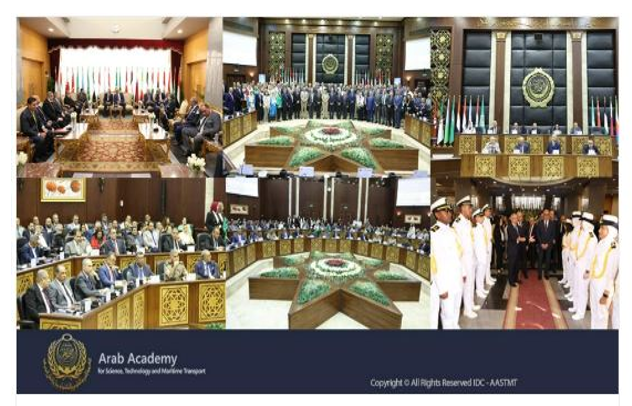
Alexandria, Egypt — May 21, 2024- The Arab Academy for Science, Technology and Maritime Transport (AASTMT) convened the 6th session of its Industrial Advisory Council under the title “Development and Excellence Journey: Building Capabilities and Enhancing Industry and Innovation through Training” on Monday, 20 May 2024 at its Abu Qir campus. This gathering brought together over 100 companies and 190 participants from diverse industrial sectors.
aast.edu
In line with Sustainable Development Goal 8 (Decent Work and Economic Growth), AASTMT underscored its commitment to fair pay, equal remuneration for equal work, and transparent employment policies as core institutional values. By actively involving industry partners in designing curriculum, training programs and job-placement opportunities, AASTMT ensures that graduates and employees are equipped with in-demand skills and are compensated fairly — thereby promoting full and productive employment and decent work for all.
AASTMT emphasises that pay equity is integral to its employment policy, ensuring that remuneration levels reflect capability, performance and contribution—regardless of gender, nationality or background. This approach helps close wage gaps, enhances workplace inclusion, and builds sustainable economic growth rooted in fairness and dignity.
“Our collaboration with industry enables us to align training with employer needs and ensures that our people receive not only opportunities for employment but wages that recognise their value,” stated Prof. Ismail Abdel Ghafar Ismail Farag, President of AASTMT.
Through sessions like this Industrial Advisory Council meeting, AASTMT solidifies its role as a leader in linking education, employment and fair labour practices—making a tangible contribution toward the achievement of SDG 8 by promoting inclusive economic growth, decent work and equitable pay.
Please visit the following link at our website for more information:
Arab Academy for Science, Technology and Maritime Transport- | AASTMT
AASTMT Strengthens Bilateral Collaboration with Ahfad University for Women, Reinforcing Inclusive Opportunity and Non-Discrimination
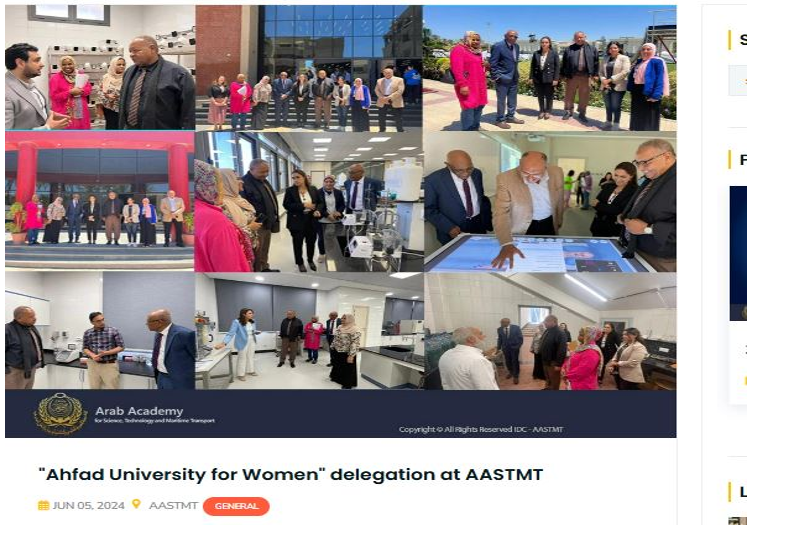
Cairo / Alexandria – June 5, 2024 — The Arab Academy for Science, Technology and Maritime Transport (AASTMT) hosted a delegation from the Ahfad University for Women (AUW) in Sudan as part of ongoing efforts to enhance inclusive academic cooperation, promote equitable educational opportunities, and reinforce institutional commitments to non-discrimination and decent work.
During the visit on 3 June 2024, AUW faculty and administrators met with AASTMT’s College of Pharmacy leadership and representatives from other academic units, exploring avenues to activate scientific collaboration, joint research, and capacity-building activities. The delegation also toured AASTMT’s Abu Kir campus to observe its advanced technological infrastructure and modern educational facilities.
Aligning with SDG 8: Inclusive, Decent Work and Equal Access
This partnership exemplifies AASTMT’s alignment with SDG 8 by promoting inclusive and equitable academic and professional opportunities across borders. The collaboration supports:
- Inclusive access to teaching, learning and research roles—ensuring women scholars from AUW engage equally in knowledge exchange and capacity building.
- Non-discriminatory institutional practices—both institutions underscore that gender, nationality or background must not hinder access to roles or professional development.
- Human capital development and decent employment pathways—by enhancing institutional linkages, AASTMT contributes to creating conditions for full and productive employment and professional mobility in line with SDG 8.
Institutional Commitment to Fairness & Non-Discrimination
AASTMT reaffirms that discrimination on grounds of gender, nationality, religion or any characteristic is inconsistent with its core values. By forging equal partnerships and enabling inclusive cooperation with AUW, the Academy emphasises its stance that decent work is available to all, free from bias or exclusion.
Looking Ahead
AASTMT and AUW will expand their collaboration through joint programmes, research grants, faculty exchanges, and workshops aimed at fostering inclusive academic environments and professional growth. These steps reflect AASTMT’s commitment to integrating equity, diversity and non-discrimination into its employment, academic and institutional frameworks.
Quote:
“Partnerships like this allow us to build bridges of opportunity that respect the dignity of every scholar and professional,” said Prof. Dr. Ismail Abdel Ghaffar Ismail Farag, President of AASTMT. “By collaborating with institutions such as AUW, we reaffirm our belief that access, fairness and inclusive professional growth are foundational to decent work and sustainable development.”
Please visit the following link at our website for more information:
AASTMT Strengthens Bilateral Collaboration with Ahfad University for Women, Reinforcing Inclusive Opportunity and Non-Discrimination
Values of the Human Resources Department at AASTMT:
The values upheld by the Human Resources Department at AASTMT, including equal opportunity, gender pay equity, fair recruitment, diversity and inclusion, merit-based promotions, professional development, conflict resolution, work-life balance, transparency, and continuous improvement, are closely related to Sustainable Development Goal 8 (SDG 8). These values align with SDG 8's objectives of promoting sustained, inclusive, and sustainable economic growth, full and productive employment, and decent work for all. They contribute to reducing inequalities, ensuring access to equal employment opportunities, eliminating gender-based pay disparities, fostering diverse and inclusive workplaces, and promoting fair and transparent HR practices—all of which are essential elements of achieving the principles outlined in SDG 8 and advancing toward a more equitable and prosperous society.
Here are the values of the Human Resources Department at the AASTMT:
Equal Opportunity: The HR department is committed to providing equal employment opportunities to all individuals regardless of their gender, race, nationality, religion, age, or any other characteristic. Discrimination in any form is strictly prohibited.
Gender Pay Equity: Ensuring that all employees, regardless of gender, receive equal pay for equal work is a fundamental value. AASTMT's HR department actively works to identify and address gender-based pay disparities.
Fair Recruitment: A commitment to fair and transparent recruitment processes, ensuring that hiring decisions are based solely on qualifications, skills, and experience, with no bias.
Diversity and Inclusion: AASTMT values diversity and actively promotes an inclusive workplace that celebrates different backgrounds, perspectives, and experiences.
Merit-Based Promotions: Promotions and career advancement opportunities are granted based on merit, performance, and qualifications, with no favoritism or bias.
Professional Development: Supporting the professional growth of employees through training, skill development, and educational opportunities is a core value.
Conflict Resolution: A commitment to resolving workplace conflicts and grievances promptly and fairly, fostering a harmonious work environment.
Work-Life Balance: Recognizing the importance of work-life balance and striving to provide flexible work arrangements when feasible.
Transparency: Maintaining transparency in HR policies and practices, ensuring that employees are aware of their rights, benefits, and the grievance process.
Continuous Improvement: A dedication to ongoing improvement in HR policies and practices to adapt to evolving needs, legislation, and best practices in the field of human resources.
For more information about our values, visit the AASTMT website through the following link:
Values of the Human Resources Department at AASTMT
AASTMT and United Nations High Commissioner for Refugees (UNHCR) Launch “Bridge of Hope” Initiative to Foster Inclusive Education and Employment Pathways
Alexandria, Egypt — On Monday, 10 June 2024, AASTMT welcomed a delegation from UNHCR at its Abu Qir campus to convene in a strategic meeting focusing on expanding educational and employment opportunities for refugees. During the visit, AASTMT President Ismail Abdel Ghafar Ismail Farag and Dr Hanan Hamdan, UNHCR’s Representative in Egypt, inaugurated the “Bridge of Hope” initiative. This collaborative programme will provide scholarship opportunities for refugees to attain bachelor’s degrees, thereby strengthening pathways into employment and contributing to labour market inclusion.
Linking to SDG 8: Employment Policy & Pay Equity
- Inclusive hiring and support: By partnering with UNHCR to offer scholarships to refugees, AASTMT embeds inclusive employment practice at the education-to-work transition stage. This supports SDG 8 target of “full and productive employment and decent work for all.”
- Equitable treatment and opportunity: The initiative ensures that a previously marginalised group—refugees—gain access to higher education and subsequent employment. This aligns with pay equity and non-discrimination in employment policy, as they enter the workforce on a more level footing with others.
- Building capacity for decent work: By equipping refugee students with university credentials, AASTMT helps to create a pipeline of skilled workers who are more likely to secure higher-quality jobs, supporting both decent work and sustainable economic growth.
- Institutional commitment to fair labour practices: The academy’s collaboration signals that employment policy extends beyond direct staff to the broader community — reinforcing that opportunity, fairness, and right to decent work apply to all, in line with SDG 8’s vision.
“Through ‘Bridge of Hope’, we reaffirm our conviction that education is the basis for decent employment and inclusive growth. We strive to open doors for all, including those displaced, so they may contribute meaningfully and gain just remuneration,” said Prof. Ismail Abdel Ghafar Ismail Farag.
With this initiative, AASTMT takes a prominent step in advancing SDG 8 by promoting equity in access to education and employment, thereby underpinning labour market fairness and pay equity across diverse segments of society.
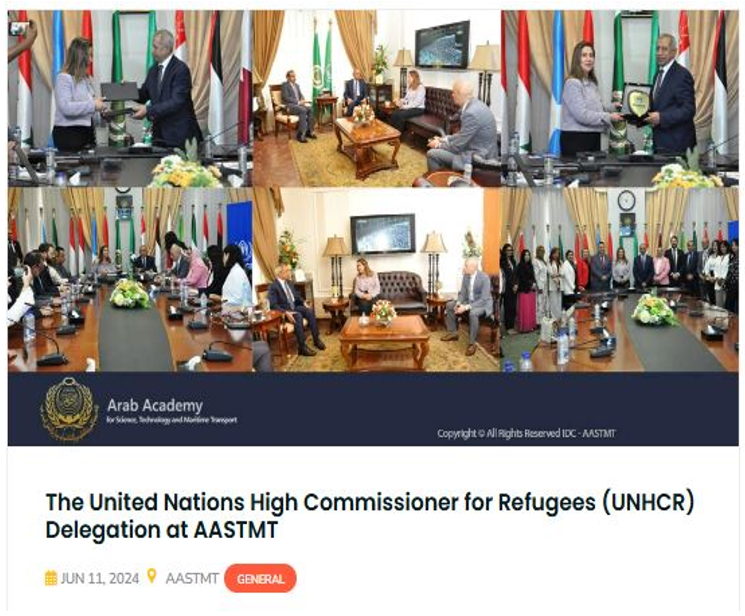
Read full news article: AASTMT and United Nations High Commissioner for Refugees (UNHCR) Launch “Bridge of Hope” Initiative to Foster Inclusive Education and Employment Pathways on AASTMT webpage
2022- 2023
The Employment Policy Pay Scale Equity at the Arab Academy for Science, Technology, and Maritime Transport (AASTMT) underscores the institution's unwavering commitment to fostering fairness and transparency in its employment practices. This policy ensures that all employees are compensated fairly and equitably, regardless of their gender, background, or any other characteristic.
Pay Scale Equity Employment Policy
Description
The Arab Academy for Science, Technology, and Maritime Transport supports the principle of equal employment opportunity, as defined in Egyptian Labor Law Article 35, and thinks that as part of that Law, all employees should receive equal compensation and treatment. The Arab Academy for Science, Technology, and Maritime Transport is committed to paying fair salaries and wages to its faculty, staff, and workers, that exceed the minimum wage rate that is determined by the government. The AASTMT is committed to paying fair salaries and wages to its faculty, staff, and workers that exceed the minimum wage rate that is determined by the government.
Scope
This policy applies to all academic and non-academic staff employed by the Arab Academy for Science, Technology, and Maritime Transport including all faculties, divisions, and departments.
Aim
This policy is intended to remove pay discrimination in practice, eliminate systematic bias and discrimination, and ensure that women are compensated equally with males for the work they accomplish.
Policy Statement
The Arab Academy for Science, Technology, and Maritime Transport pays all employees equally and is committed to developing pay scales that are equitable about each employee's qualifications. Individuals shall not be paid differently based on their race, color, religion, sex, national or ethnic origin, age, or status as an individual with a physical or mental disability unrelated to ability, military status, genetic information, marital status, parental status, ancestry, or source of income. This policy includes a commitment to fostering an equal and non-discriminatory work environment. Equal pay should be paid to all employees for work that is the same or roughly similar, for labor that is evaluated as equivalent, and for work of equal value. This policy applies to all kinds of compensation, including salaries, bonuses, social security, vacation and holiday pay, reimbursement for travel expenses, and benefits.
Procedures
To demonstrate our commitment to equal pay, we will:
*Conduct a gender pay review and implement the recommendations in a planned program.
*Disseminate the findings of the gender pay equity review.
* Monitor the impact of our procedures regularly by the University's Diversity and Inclusion policies.
*Educate staff members on how these practices function and how their compensation is determined (on request from a role holder and responding to grievances on equal pay).
*Provide training and direction to managers and supervisory employees involved in salary and benefit decisions.
The above activities are intended to avoid unjustified discrimination and to properly compensate all workers hired by the Arab Academy for Science, Technology, and Maritime Transport for the appropriate knowledge, skills, and competencies. This, in turn, is designed to improve efficiency and strengthen the University's reputation and image as an international institution.
Roles and Responsibilities
The University encourages open communication and will support anyone who raises honest concerns in good faith under this policy.
The Arab Academy for Science, Technology and Maritime Transport staff are responsible for:
• Helping to create a climate at work where communication channels are kept open so that pay concerns are discussed with Human Resources and resolved at an early stage.
• Notifying his/her line manager or Human Resources Director in case of suspicion of pay inequity.
Line Managers and supervisors are responsible for:
• Ensuring that such pay equity is one of the main business policies, respecting human rights with zero tolerance to inequality.
• Compliance with the aforementioned policy and ensuring that his/her team is well aware of it.
• Line managers must report all information concerning possible violations of this policy. The University cannot address violations and take appropriate corrective actions unless it is aware of such issues.
• Responding positively to complaints to avoid them escalating into grievances and taking the appropriate action towards any concern.
• Acting as role models and applying the pay equity policy with fairness and equality.
In the case of underperformers who have issues with their pay, line managers and supervisors have a responsibility to manage underperformance or concerns regarding a staff member’s conduct. During these discussions, managers/supervisors should give constructive feedback to help the staff member understand what he or she has done that needs improvement, address the reasons behind it, and how to improve in the future. This should be done in a constructive, encouraging style, following the University’s Performance Management Policy.
The role of the Human Resources Department is to:
• Ensure the fair implementation and application of this policy and procedure, starting from the hiring process, to applying pay raises and benefits.
• Take a proactive role in ensuring consistency of application across the university.
• Regularly reviewing workplace policies and procedures to ensure the non-existence of the aforementioned issues and the efficiency of workplace practices.
• Ensure that all university staff are adequately oriented or aware of this policy during the onboarding program.
• Provide advice or guidance to related parties through the arising issues or complaints regarding this policy.
Review program
Policy title | Pay scale equity Employment policy |
Date created | November 2020 |
Date reviewed | November 2023 |
Approving body | Human Resources Affairs Department |
Version | 2 |
Next review date | November 2025 |
Policy owner | Human Resources Affairs Department |
Lead contact | Head of Human Resources Affairs Department |
Approval Signature | Dr. Yasser Gaber Dean of Scientific Research and Innovation |
AASTMT’s Pay Scale Equity Employment Policy
By adhering to a standardized pay scale that is free from discrimination and bias, AASTMT guarantees that compensation is based on job roles, qualifications, and performance, thus promoting a harmonious work environment. This commitment aligns with international standards of equal pay for equal work and contributes to creating a workplace culture that reflects AASTMT's dedication to upholding principles of gender pay equity and non-discrimination in pursuit of its mission to provide quality education and opportunities to all. The gender pay equity is one of the core values of the Human Resources Department at the AASTMT.
AASTMT president meeting with champions with disabilities in AASTMT
On April 2, 2023, the President of the Arab Academy for Science, Technology, and Maritime Transport (AASTMT) held a meeting with champions with disabilities from the institution, underscoring AASTMT’s commitment to promoting inclusion and equity in employment practices. This meeting aligns with Sustainable Development Goal 8 (SDG 8), which aims to foster inclusive and sustainable economic growth, full employment, and decent work for all. By recognizing and supporting individuals with disabilities, AASTMT strengthens its commitment to equal opportunities and fair employment conditions for all members of its community, regardless of physical abilities. The event also served as an opportunity to emphasize the need for inclusive employment policies that ensure fair compensation and equitable career progression for people with disabilities.
A key focus of the meeting was on establishing pay scale equity within AASTMT, particularly the importance of measuring and addressing pay gaps that may exist, including those based on gender and disability status. AASTMT’s leadership reiterated their commitment to implementing a policy that guarantees equitable pay for all roles, ensuring that employees with disabilities receive compensation that reflects their skills and contributions on par with their colleagues. This commitment to transparency and accountability in pay structures supports the broader objectives of SDG 8 by promoting decent work and reducing inequalities in the workplace. Through this approach, AASTMT aims to create an employment environment where all individuals, including those with disabilities, are fairly compensated and valued, contributing to a more inclusive and just workforce.
Read more about this event on AAST website

Values of the Human Resources Department at AASTMT:
The values upheld by the Human Resources Department at AASTMT, including equal opportunity, gender pay equity, fair recruitment, diversity and inclusion, merit-based promotions, professional development, conflict resolution, work-life balance, transparency, and continuous improvement, are closely related to Sustainable Development Goal 8 (SDG 8). These values align with SDG 8's objectives of promoting sustained, inclusive, and sustainable economic growth, full and productive employment, and decent work for all. They contribute to reducing inequalities, ensuring access to equal employment opportunities, eliminating gender-based pay disparities, fostering diverse and inclusive workplaces, and promoting fair and transparent HR practices—all of which are essential elements of achieving the principles outlined in SDG 8 and advancing toward a more equitable and prosperous society.
Here are the values of the Human Resources Department at the AASTMT:
Equal Opportunity: The HR department is committed to providing equal employment opportunities to all individuals regardless of their gender, race, nationality, religion, age, or any other characteristic. Discrimination in any form is strictly prohibited.
Gender Pay Equity: Ensuring that all employees, regardless of gender, receive equal pay for equal work is a fundamental value. AASTMT's HR department actively works to identify and address gender-based pay disparities.
Fair Recruitment: A commitment to fair and transparent recruitment processes, ensuring that hiring decisions are based solely on qualifications, skills, and experience, with no bias.
Diversity and Inclusion: AASTMT values diversity and actively promotes an inclusive workplace that celebrates different backgrounds, perspectives, and experiences.
Merit-Based Promotions: Promotions and career advancement opportunities are granted based on merit, performance, and qualifications, with no favoritism or bias.
Professional Development: Supporting the professional growth of employees through training, skill development, and educational opportunities is a core value.
Conflict Resolution: A commitment to resolving workplace conflicts and grievances promptly and fairly, fostering a harmonious work environment.
Work-Life Balance: Recognizing the importance of work-life balance and striving to provide flexible work arrangements when feasible.
Transparency: Maintaining transparency in HR policies and practices, ensuring that employees are aware of their rights, benefits, and the grievance process.
Continuous Improvement: A dedication to ongoing improvement in HR policies and practices to adapt to evolving needs, legislation, and best practices in the field of human resources.

2021 -2022
The Employment Policy Pay Scale Equity at the Arab Academy for Science, Technology, and Maritime Transport (AASTMT) underscores the institution's unwavering commitment to fostering fairness and transparency in its employment practices. This policy ensures that all employees are compensated fairly and equitably, regardless of their gender, background, or any other characteristic. Please read AASTMT’s Pay Scale Equity Employment Policy
By adhering to a standardized pay scale that is free from discrimination and bias, AASTMT guarantees that compensation is based on job roles, qualifications, and performance, thus promoting a harmonious work environment. This commitment aligns with international standards of equal pay for equal work and contributes to creating a workplace culture that reflects AASTMT's dedication to upholding principles of gender pay equity and non-discrimination in pursuit of its mission to provide quality education and opportunities to all. The gender pay equity is one of the core values of the Human Resources Department at the AASTMT.
AASTMT promotes gender equality through its celebrations with the Women in Maritime day
AASTMT's celebrations of Women in Maritime Day contribute to the achievement of Sustainable Development Goal 8 (SDG 8). SDG 8 focuses on promoting sustained, inclusive, and sustainable economic growth, full and productive employment, and decent work for all. AASTMT's commitment to gender equality in the maritime sector aligns with SDG 8 by working to ensure that women have equal opportunities for meaningful and productive employment in the maritime industry. These celebrations play a crucial role in breaking down gender-based barriers in the workforce and contribute to creating a more inclusive and equitable work environment, thus supporting the broader objective of SDG 8.
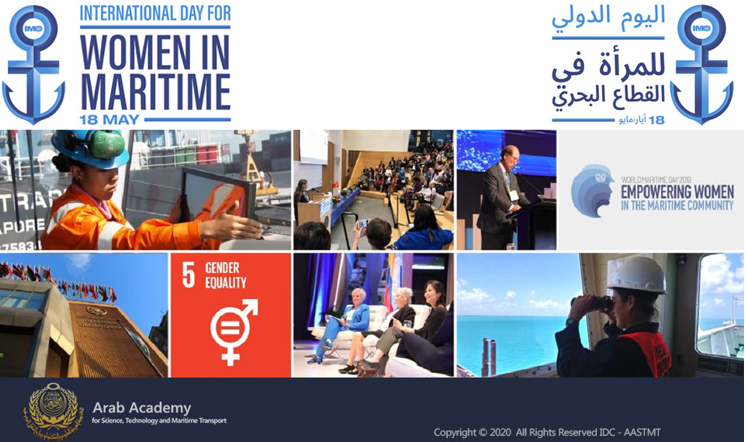
AASTMT celebration of International Day for Women in Maritime 2022 [2] on its news website
AASTMT’s units prepare some reports about the gender equality
AASTMT's units prepare reports on gender equality as a crucial step in fostering a more inclusive and equitable work environment. These reports serve as a means to assess and track the institution's progress in promoting gender equality and identifying areas where improvement is needed. By sharing these reports with the Human Resources (HR) department, AASTMT aims to initiate meaningful discussions and actions that can lead to positive changes in the workplace.
The preparation of gender equality reports is a proactive effort to address any disparities or challenges that may exist in terms of equal opportunities, treatment, and representation within the institution. AASTMT recognizes that promoting gender equality is not just a matter of social justice but also contributes significantly to achieving Sustainable Development Goal 8 (SDG 8), which focuses on promoting decent work and economic growth. Gender equality is a fundamental aspect of decent work, as it ensures that all employees, regardless of their gender, have equal access to opportunities, fair treatment, and a conducive work environment.
By discussing these reports with the HR department, AASTMT aims to take concrete steps towards improving workplace conditions, addressing any gender-based discrimination or biases, and promoting policies and practices that foster gender equality. This commitment not only aligns with SDG 8 but also demonstrates AASTMT's dedication to creating a workplace where all individuals are treated with dignity and respect, contributing to both social and economic development.
Explore a sample report Gender Equality Report at CMT
Values of the Human Resources Department at AASTMT:
The values upheld by the Human Resources Department at AASTMT, including equal opportunity, gender pay equity, fair recruitment, diversity and inclusion, merit-based promotions, professional development, conflict resolution, work-life balance, transparency, and continuous improvement, are closely related to Sustainable Development Goal 8 (SDG 8). These values align with SDG 8's objectives of promoting sustained, inclusive, and sustainable economic growth, full and productive employment, and decent work for all. They contribute to reducing inequalities, ensuring access to equal employment opportunities, eliminating gender-based pay disparities, fostering diverse and inclusive workplaces, and promoting fair and transparent HR practices—all of which are essential elements of achieving the principles outlined in SDG 8 and advancing toward a more equitable and prosperous society. Read more....