To combat high energy usage, AASTMT Energy Research Unit and Energy Management Committee put forward several strategies to reduce and rationalize electrical consumption in AASTMT campuses which primarily include upgrading and renovating existing buildings or establishing new buildings to follow higher energy-efficiency schemes and standards demonstrated in “AASTMT Approach in Establishing, Operating and Maintaining Buildings towards Achieving Sustainable Development Goals at All Academy Headquarters” with the link below.
AASTMT Buildings' Approach towards SDGs-pdf
AASTMT Buildings' Approach towards Achieving SDGs on AASTMT webpage
Each year, AASTMT Energy Research Unit and Energy Management Committee, updates its infrastructure renovation plan to regularly upgrade existing buildings in AASTMT different branches, to higher energy efficiency. This is done primarily to campuses that feature oldest infrastructure and highest energy wastes in order to reduce and rationalize their electrical consumption. Also, in case of new buildings, AASTMT consultancy office make sure that new establishments follow the high efficiency standards. By the end of the year, annual insights of energy consumption in each campus are compared to evaluate university progress towards higher energy efficiency and saving .
Related Annual Plans, Insights and Progress reports can be found in the links below.
AASTMT Annual Energy Plans on AASTMT webpage
AASTMT Annual Insights on AASTMT webpage
AASTMT Annual Energy Progress Reports on AASTMT webpage
AASTMT 2024/2025 Progress Towards Higher Energy Efficiency Buildings
AASTMT 2025 Plan Towards Green Sustainable Energy, included seven main pillars (Smart Monitoring, Energy Conservation and Efficiency, Renewable Energy Employment, Carbon Reduction, Innovative Programs and Lab Facilities, Research and Funded Projects and Agreements and Initiatives).
Within the two first pillars, AASTMT put vast efforts towards regular monitoring and analysis to energy consumption among its different campuses’ buildings to find locations of energy wastages and upgrading or renovating them. Thus, enhancing energy efficiency in already existing buildings in different branches, besides establishing new buildings as per high efficiency standards are AASTMT main goal. 2025 energy usage insights validate the effect of these measures in achieving considerable energy saving.
AASTMT 2024/2025 Plan towards Clean Sustainable Energy
AASTMT 2024/2025 Insights
AASTMT 2024/2025 Energy Progress Report
2024/2025 Renovations and Upgrading in AASTMT Alex. Branch
In each campus, data from local meters at each building is collected to analyze energy use of this building during different times and identify its subjection to energy wastage or energy inefficiencies. Buildings with highest wastage are to be selected for internal audits and measures are to be taken towards these buildings.
Since AASTMT Alexandria branch features multiple campuses, oldest infrastructure and largest number of staff and students, continuous renovations and upgrading procedures are conducted within its different campuses in 2025 as per the report shown in the following link.
2024/2025 AASTMT Renovation and Upgrading Report
This report is delivered by AASTMT Maintenance and Electrical Facilities Department stating all upgrading and renovations implemented in different campuses of AASTMT Alexandria branch in 2024/2025 along with photos of the implemented renovations and examples of energy saving in 2025 compared to 2024.
These renovations include,
First: Abu Qir Branch:
- Upgrading the lighting system at the entrance of the new gymnasium by installing 20 LED spotlights (5 W each).
- Upgrading all electrical outlets, data outlets, and lighting systems on the entire fourth floor of Iskan Hotel Building C.
- Upgrading all electrical outlets and accessories on the entire second floor of Iskan Hotel Building H.
- Replacing the lighting system in four classrooms on the fourth floor of the Architecture Engineering Building with LED lighting, installing 50 LED fixtures.
- Upgrading the lighting in all corridors of Engineering Buildings C and D using 100 LED fixtures.
- Upgrading the lighting in eight classrooms in the Marine Building D using 40 LED fixtures.
- Installing two current-correction panels for two UPS units in the Financial Affairs Building.
- Installing two control panels for the water pumps serving Iskan A and Iskan B.
- Upgrading the lighting in the third- and fourth-floor classrooms of Engineering College Building D using 100 LED fixtures.
- Upgrading the lighting in the third- and fourth-floor classrooms of Engineering College Building C using 100 LED fixtures.
- Completely upgrading the lighting system in the main restaurant of Iskan Hotel using 50 LED fixtures.
- Upgrading the lighting in four classrooms in the Preparatory Studies Building using 60 LED fixtures.
- Upgrading lighting, electrical outlets, and accessories on the 3rd and 4th floors of Iskan Hotel Building C.
- Upgrading the lighting, electrical outlets, and accessories on the first floor of Iskan Hotel Building D.
- Installing seven control panels for the seven irrigation system pump units.
- Installing one current-correction panel for the Civil Machinery Laboratory in Eng. College Building D.
- Installing one current-correction panel for the paper-cutting machine in the Printing Building.
- Upgrading the outdoor lighting of Smart Cafeteria using six 100 W LED façade floodlights.
- Upgrading the lighting in the ground-floor classroom of Eng. College Building G using 30 LED fixtures.
- Upgrading the lighting, electrical outlets, and accessories on the second and third floors of the Industrial Modernization Building.
- Upgrading the lighting, electrical outlets, and accessories in Classroom 02 of the Preparatory Studies Building.
- Installing one current-correction panel for a UPS unit on the ground floor of the Financial Affairs Building.
- Upgrading the outdoor lighting on the rooftops of the Engineering College buildings using six 200 W LED façade floodlights.
- Upgrading the outdoor lighting on the rooftop of the Campaign Building using six 200 W LED façade floodlights.
- Upgrading the electrical sub-distribution panels serving the Engineering Colleges, including 18 panels for power and lighting.
- Upgrading the electrical sub-distribution panels in Iskan Hotel Building D, including six power and lighting panels.
- Completely upgrading the power supply panel of the restaurant in Iskan Hotel Building D, including power and lighting circuits.
- Completely upgrading the power supply panels of the elevator system in the Marine Safety Building, including two power and lighting panels.
- Upgrading the electrical panel serving the hangar in the Technicians' Building, including power and lighting circuits.
- Upgrading the power supply panel of the Campaign Building, including power and lighting circuits.
- Upgrading all offices on the second floor of Engineering College Building A, including lighting, electrical outlets, and accessories.
- Upgrading four classrooms in the Faculty of Computing on the second, third, and fourth floors, including lighting, electrical outlets, and accessories.
- Upgrading the lighting throughout all corridors of Engineering College Building G using 300 LED fixtures.
- Upgrading the lighting in four classrooms in Engineering College Building G using 60 LED fixtures.
- Upgrading the lighting in six classrooms in the IMO Building using 80 LED fixtures.
- Installing two control panels for the irrigation pumps serving the sports field and the main restaurant, each rated at 3 HP.
- Upgrading the swimming pool lighting in the Marine Safety Building using four 200 W LED façade floodlights.
- Upgrading the second section of the low-voltage distribution panels at the main distribution station.
- Upgrading the room lighting systems in Iskan A and Iskan B using 180 LED fixtures.
- Upgrading the bathroom lighting in Iskan A and Iskan B using 60 LED spotlights.
- Installing one service distribution panel at the Engineering College sports field to provide electrical connections during events and celebrations.
- Upgrading two control panels associated with the water desalination plant at the main restaurant.
- Upgrading the fire alarm panel in the Admission and Registration Building.
- Installing an electrical current-correction panel for a UPS unit on the ground floor of the Financial Affairs Building.
- Installing an automatic alternating control panel for the water pumps in Engineering College Building G.
Second: El-Wabour El-Maya Branch:
- Upgrading the lighting throughout all ground-floor corridors using 50 LED fixtures.
- Installing one current-correction panel for the UPS unit in the studio.
- Upgrading the lighting throughout all ground-floor corridors using 50 LED fixtures.
- Installing one control panel for two water pumps, each rated at 3 HP.
- Upgrading the lighting in six classrooms using 50 lighting fixtures.
- Upgrading the lighting in the ground-floor corridors and eight classrooms using 50 LED spotlights (24 W each).
- Upgrading the lighting in the classrooms and corridors on the first and second floors using 30 LED spotlights (24 W each).
Third: Miami Branch:
- Upgrading the lighting on the ground floor of the Main Library and in the classrooms of Building A using 50 LED fixtures (40 W each).
- Upgrading the rooftop lighting of Buildings A and C using six 200 W LED façade floodlights.
- Upgrading six administrative offices on the ground floor of Building A, including lighting, electrical outlets, and accessories.
- Upgrading three classrooms on the third floor of the Administrative Building, including lighting, electrical outlets, and accessories.
- Upgrading the lighting in four classrooms in Building A using 40 LED fixtures.
- Upgrading the outdoor lighting of the Administrative Building and Building B using 40 LED spotlights (6 W each).
- Upgrading the landscape lighting system by installing 20 lighting poles/fixtures.
- Installing a service distribution panel at the International School sports field to provide electrical connections during events and celebrations.
- Upgrading the indoor lighting system of the new gymnasium.
- Installing a dedicated electrical supply panel for the new gymnasium.
Examples of Energy Efficient Appliances Usage in Alexandria - Abukir Campus in 2025 are below
- Using LED technology and lamps with light detection
- Use central are conditioning employing VRF and Variable Speed Drive VSD.
- Use Solar water heaters
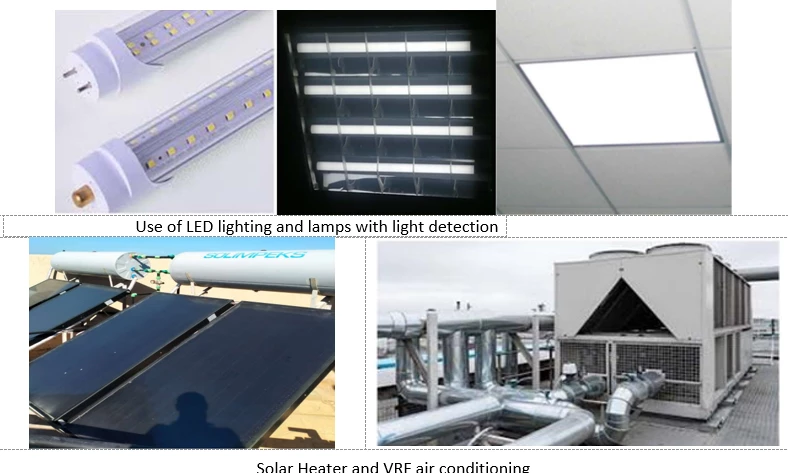
Figure 1: Example of Energy Efficient Appliances Usage in 2025 in AASTMT Abukir Campus
In summary, measures towards energy savings and efficiency can be summarized as:
- LED Lighting Technology: AASTMT has replaced conventional lighting with energy-efficient LED lamps. Approximately 97% of the lighting installations have been converted to LED technology, with the objective of achieving full conversion to LED lighting.
- Energy-Efficient Air-Conditioning Systems: AASTMT has introduced and upgraded air-conditioning systems to improve cooling efficiency and reduce electricity consumption. These measures include the use of Variable Refrigerant Flow (VRF) technology and Variable Speed Drives (VSDs), which allow equipment operation to be adjusted according to cooling demand.
- Upgrading Central Air-Conditioning Systems: Improvements to central air-conditioning infrastructure have included the adoption of more energy-efficient equipment and control strategies to reduce unnecessary operation and improve overall system performance.
- Energy Monitoring and Consumption Analysis: The Energy Management Team monitors electricity consumption across the different campuses to identify consumption patterns, assess energy-saving opportunities, and evaluate the effectiveness of implemented conservation measures.
- Continuous Energy Conservation Planning: AASTMT continues to assess existing electrical installations and appliances to identify opportunities for upgrading equipment, improving operational control, and reducing energy waste.
- Regular Instructions and Directions: These are addressed from AASTMT president to all AASTMT campuses towards energy saving and conservation as per the letter given below. Letter addressed to all AASTMT institutes from AASTMT president regarding energy saving
- Increasing awareness regarding energy rationalization and conservation plans: This addresses AAST staff, students, administrators and technicians via energy-related campaigns, initiatives and seminars as shown in the Events Section found in the following link: Energy-related Events
AASTMT 2024/2025 Energy Savings in Alex. branch
Thes renewal, upgrading, and control efforts in different campuses of AASTMT Alexandria branch have resulted in total electricity savings as shown in Table 1 and given by 2024/2025 AASTMT Renovation and Upgrading Report. This verifies the effectiveness of AASTMT plan and measures towards energy efficiency and saving in its entire Alexandria campuses in 2025.
Table 1. Examples of reduction in recorded energy consumption in Alexandria branch in 2025 vs. 2024
|
System
|
2024 Energy (kWh)
|
2025 Energy (kWh)
|
Change (kWh)
|
|
LED Lighting
|
124,816
|
150,640
(consumption increased as there were many replacements to conventional bulbs to LEDs to reach 97% LED lighting in 2025
|
+25,824
|
|
Irrigation
|
124,816
|
0
(Irrigation relied on solar irrigation unit implemented in 2024)
|
−124,816
|
|
Air-Conditioning Units
|
144,420
|
86,652
|
−57,768
|
|
Motors and Equipment
|
80,237
|
60,525
|
−19,712
|
For further validation to annual energy saving efforts in AASTMT-Alex. campuses, Figure 2 shows energy usage in Alex. Campuses from 2023 till 2025. It confirms energy saving across different Alexandria campuses in 2025 compared to 2024 and 2023. From 2024 to 2025, all AASTMT Alexandria campuses achieved a reduction in electrical energy consumption with overall reduction of 2.50%, reflecting AASTMT's continued commitment to energy conservation.
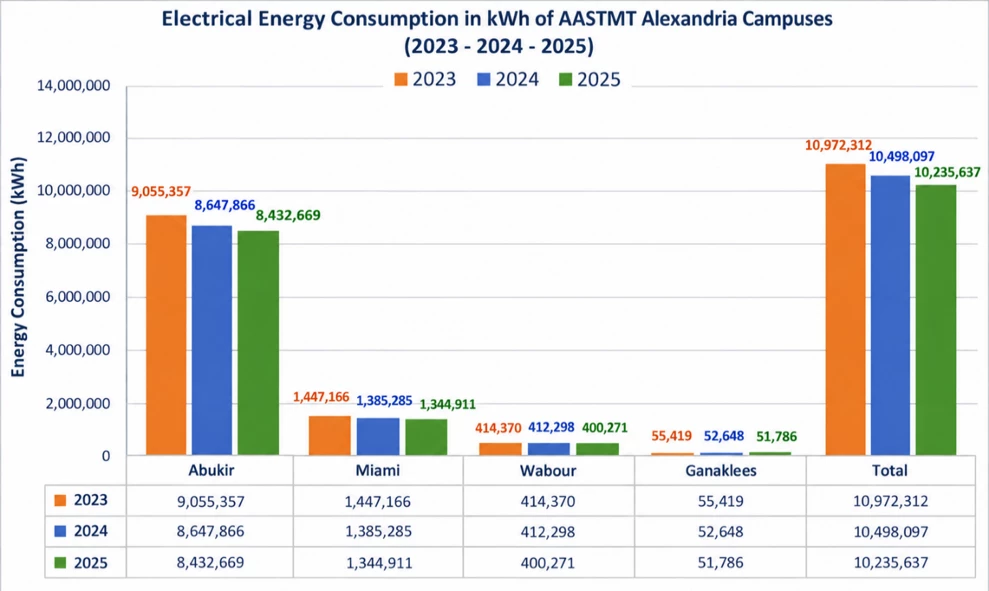
Figure 2. Electrical Energy consumption in each AASTMT Alexandria campus (2023-2025)
AASTMT 2023/2024 Progress Towards Higher Energy Efficiency Buildings
AASTMT 2024 Plan Towards Green Sustainable Energy, included three main aspects (Higher Energy Saving and Efficiency, More Renewable Energy Employment and Less Carbon Emissions). In the first aspect, AASTMT put vast efforts towards enhancing energy efficiency in already existing buildings in different branches, besides establishing new buildings as per high efficiency standards. 2024 energy usage insights validate the effect of these measures in achieving considerable energy saving.
AASTMT 2024 Plan towards Clean Sustainable Energy
AASTMT 2024 Energy and Carbon Insights
AASTMT 2023/2024 Energy Progress Report
2024 Renovations and Upgrading in AASTMT Alex. Branch
In each campus, data from local meters at each building is collected to analyze energy use of this building during different times and identify its subjection to energy wastage or energy inefficiencies. Buildings with highest wastage are to be selected for internal audits and measures are to be taken towards these buildings.
Since AASTMT Alexandria branch features multiple campuses, oldest infrastructure and largest number of staff and students, continuous renovations and upgrading procedures are conducted within its different campuses in 2024 as per the report shown in the following link.
2024 Buildings Upgrading and Energy Conservation Report in AASTMT Alex. Campuses
These renewal, upgrading, and control efforts in different campuses of AASTMT Alexandria branch have resulted in total electricity savings in 2024 of 474,289 kWh from 2023 as shown in Table 1 and given by 2024 Energy Conservation Report. This verifies the effectiveness of AASTMT plan and measures towards energy efficiency and saving in its entire Alexandria campuses in 2024.
2024 Buildings Upgrading and Energy Conservation Report in AASTMT Alex. Campuses
Table1: Electrical Energy Savings in 2024 in AASTMT Alexandria Campuses
|
Year
|
Lighting (LED) Savings
|
Irrigation Savings
|
Air Conditioning
Savings
|
Motors and Equipment Savings
|
Total Savings
|
|
2024
|
124,816 kWh
|
124,816 kWh
|
144,420 kWh
|
80,237 kWh
|
474,289 kWh
|
For further validation to annual energy saving efforts in AASTMT-Alex. campuses, Fig. 1 shows energy usage in Alex. Campuses from 2022 till 2024. It is clear that following the yearly renovation and modernization measures planned for different AASTMT Alexandria buildings, notable energy savings are achieved in 2023 by 2.5% from 2022 resulting in energy usage of 10,972,312 kWh and a further significant decrease in 2024 by 4.32% from 2023, achieving energy consumption of 10,498,097 kWh

Figure 1. Electrical Energy consumption in kWh of AASTMT Alexandria campus (2022-2024)