SDG4 report 2024-2025
AASTMT documented lifelong-learning provision across technical education, professional development, public scientific engagement and community outreach. The evidence shows contributions by academic colleges, the Regional Informatics Center, the Industry Service Complex, the Technical and Vocational Institute, the Productivity and Quality Institute and student organizations.
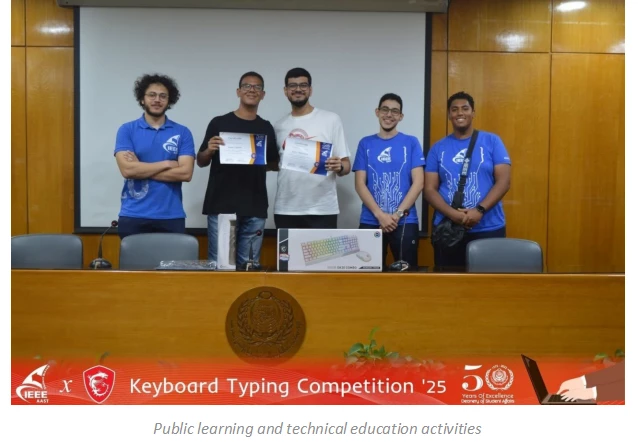
The Academy’s specialist institutes deliver programmed and ad-hoc learning in healthcare governance, quality management, technical skills, safety and digital transformation. The vocational-training dossier reports more than 100 activities across the wider institutional provision. Its institutional totals include historical cumulative reach and should not be interpreted as 2024–2025 attendance.
Partnerships with Caritas Egypt and other development organizations supported technical and vocational training for refugee and underserved communities. The public-resources evidence includes occupational safety training for 43 Sudanese participants, and a memorandum of understanding with Caritas Egypt to support refugee training.
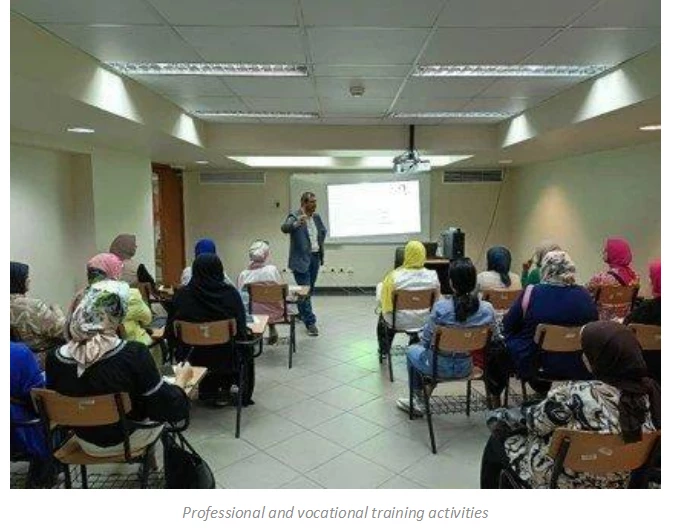
Documented examples include artificial intelligence, electronics, robotics, engineering and programming activities. The free AI workshop series was organized with Bibliotheca Alexandrina; the Electrical and Control Engineering Summer Camp included four practical workshops and participation certificates.
External learners can access selected libraries, laboratories and specialized equipment through organized activities and applicable access arrangements. AASTMT Libraries & Information Services Center reports 12 branches, more than 90,000 printed books, access to over 223,000 electronic journals and 150,000 e-books. External library visits require an official institutional or organizational request; access is not unrestricted.
The source dossier reports an open-access collection of 31,710 resources, an AAST E-Learning channel with 99 videos and more than 240,000 cumulative views, and a Robotak initiative with over 32,600 subscribers. These are cumulative platform measures, not annual unique learner counts. Subscribed databases remain subject to their own access conditions.
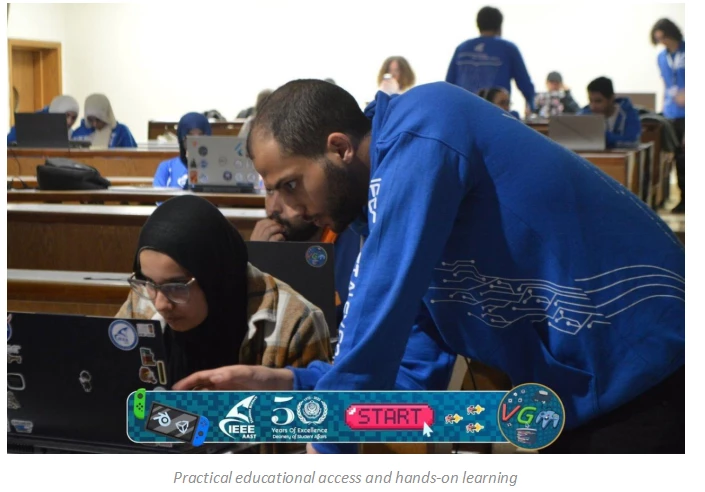
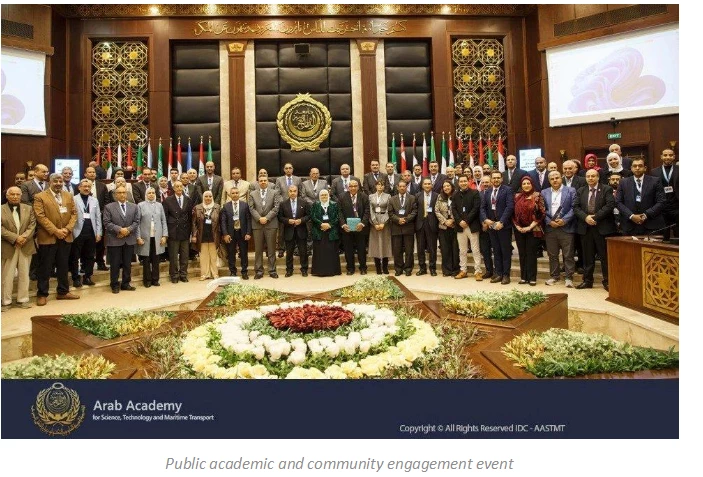
The 4.3.2 dossier groups 36 public-facing lifelong-learning entries across scientific conferences, public lectures, professional workshops and related educational activities. Examples include:
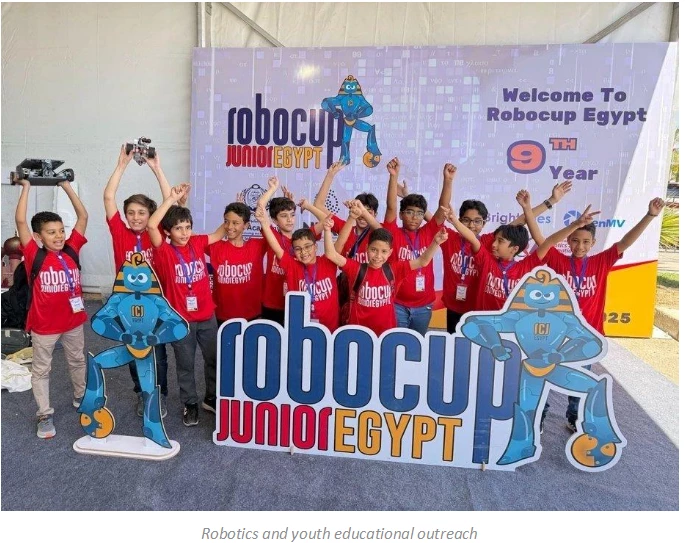
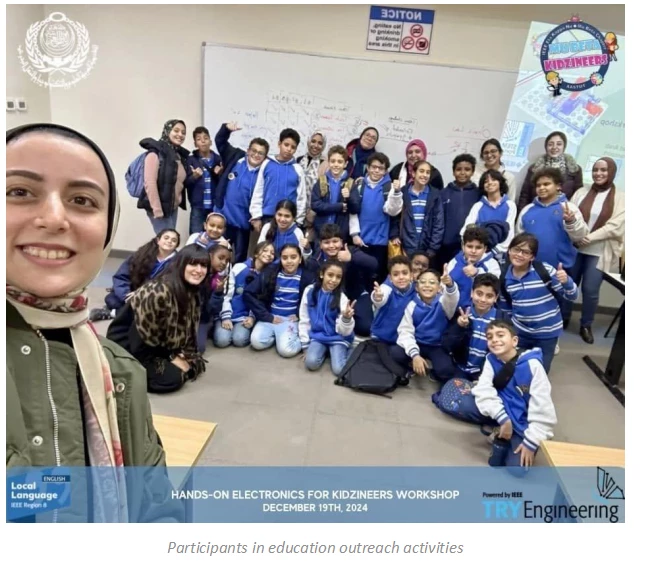
The 4.3.4 evidence dossier reports 93 education-outreach activity entries. Its Regional Informatics Center activities include RoboCup Egypt 2025 (April 16–19, 2025) and selection rounds for the International Olympiad in Informatics 2025 (January 24–25, 2025). The Kidzineers electronics workshop offered practical STEM learning for schoolchildren.
Outreach included school visits, competitions, external professional education, and training with community partners. The evidence reports approximately 85,000 Beaver Egypt participants and more than 8,000 participants across the ECPC competition cycle. These figures refer to separate programmes and are not added together here.
AASTMT worked with schools, professional organizations and civil-society partners. The scope of participation varies by activity; programmes for selected schools or beneficiary groups should be described as targeted outreach rather than universally open public access.
The evidence describes education for external learners and targeted beneficiaries, including schoolchildren, professionals, refugees and participants seeking digital and technical skills. Collaborations with Caritas Egypt, UNHCR, GIZ and other partners are reported in the public-resources and vocational-training materials.
AASTMT’s partnership with UNESCO’s Regional Office for Egypt and Sudan supports the Arab Women in Science (AWSci) platform. The platform offers peer mentorship and coaching, while its Community Knowledge Bank gives registered members access to scientific publications.
Priorities for the Next Reporting Cycle
|
Indicator |
2024–2025 Coverage |
|
Public resources |
Free certificate activities; access to learning facilities; open online resources |
|
Public events |
More than 35 grouped public-facing lifelong-learning entries |
|
Vocational training |
More than 100 activities reported across wider institutional provision |
|
Education outreach |
More than 90 reported activity entries, including recurring and one-off programmes |
During the 2023–2024 academic year, the Arab Academy for Science, Technology & Maritime Transport (AASTMT) solidified its position as a regional leader in inclusive education, lifelong learning, and community engagement. The Academy implemented a diverse array of public training programs, open-access scientific events, and school-centered outreach initiatives, all aimed at broadening participation and enhancing societal learning capacities.
AASTMT's lifelong learning offerings expanded considerably across professional, technical, and vocational areas. Various cohorts of Professional Diploma programs were launched in collaboration with national syndicates and industry partners, providing practical training in Quality Management, Healthcare Quality, Laboratory Accreditation, Food Safety, and Administrative and Supervisory Skills. These initiatives ensured accessible upskilling opportunities for working adults and early-career professionals (e.g., Professional Diploma in Quality Management, May 2024; waves of Healthcare Quality Management; Food Safety Diploma, August 2024). The Academy also broadened access to technical and vocational education through the Industry Service Complex, which offered hands-on courses in Refrigeration and Air Conditioning, Electrical Control, ISO 9001 Lead Auditing, First Aid, Firefighting, and HACCP food safety systems. The Port Training Institute, boasting over 40 years of experience and training more than 100,000 individuals, continued to enhance national and regional workforce preparedness.
AASTMT exhibited a firm commitment to socially responsive education through targeted programs for vulnerable groups. Initiatives included Occupational Safety and Health training for 43 Sudanese participants in collaboration with Caritas Egypt and GIZ, as well as a Memorandum of Understanding with Caritas to provide technical and vocational training for refugees. These efforts underscore the Academy’s belief in education as a vehicle for empowerment, resilience, and inclusion.
The Academy facilitated widespread public access to educational resources through free events, research spaces, and competitions. The Robotak Initiative offered youth aged 7 to 17 complimentary hands-on training in robotics and coding. AASTMT also welcomed numerous public conferences to its campuses, including the Young Researcher Conference, the International Day of Women and Girls in Science (in partnership with UNESCO), and open seminars focusing on AI, sustainability, and problem-solving. The Academy hosted large-scale national and international events that engaged both students and the public, such as the Egyptian Olympiad in Informatics, ICMISI 2024, and the World Junior Modern Pentathlon Championships.
Significant outreach initiatives were directed at schools and pre-university learners. These included STEM outreach sessions for high school students, sustainability awareness visits under the theme “Toward a Green and Sustainable Future,” and educational caravans promoting vocational pathways in technical schools. Competitive programming and computational thinking outreach achieved record participation levels, exemplified by the Beaver Challenge, which engaged 85,000 school-aged participants, and the Egyptian Collegiate Programming Contest, which involved 12,000 students from 123 universities and institutes.
AASTMT's programs further reinforced gender inclusion and equal opportunities through events such as the Women in Engineering (WIE) Forum in collaboration with RENEW MENA, along with workshops promoting women’s leadership and participation in STEM. Many open events were free, certificate-granting, and accessible without prerequisites, ensuring equitable opportunities for learners from all backgrounds.
Through its holistic approach—encompassing professional education, public access, youth engagement, and inclusive outreach—AASTMT made significant strides toward guaranteeing inclusive and equitable quality education and fostering lifelong learning opportunities for all.