2024–2025
The Arab Academy for Science, Technology and Maritime Transport (AASTMT) demonstrates its commitment to education for sustainable development through institutional strategies, structured learning opportunities, and practical educational initiatives addressing the United Nations Sustainable Development Goals (SDGs). During the 2024–2025 academic year, the Academy continued to support students’ understanding of sustainability through training frameworks, interdisciplinary research, specialized workshops, and educational activities addressing environmental, social, and economic challenges. These initiatives reflect AASTMT’s approach to promoting meaningful sustainability education by connecting academic knowledge with practical applications and encouraging students to develop the awareness, competencies, and critical understanding needed to contribute to sustainable development.
Training on Social Sustainability Aspects
AASTMT supports sustainability education through a structured framework for training on the social dimensions of sustainable development. According to the Academy's published framework, annual training on social sustainability is intended for students, faculty members, and professional staff. The framework addresses human rights, equality and inclusion, social justice, gender equity, disability rights, community resilience, peacebuilding, and responsible governance.
For students, learning opportunities are delivered through embedded academic modules, workshops, awareness campaigns, student-led initiatives, and international engagement activities. The framework estimates approximately 20–30 hours of annual social sustainability learning and engagement per student, based on programme schedules and course contact hours, with actual participation varying across colleges and extracurricular activities. These initiatives reflect AASTMT’s efforts to raise students’ awareness of the social dimensions of sustainable development and encourage their engagement with related issues
Training on Social Sustainability Aspects
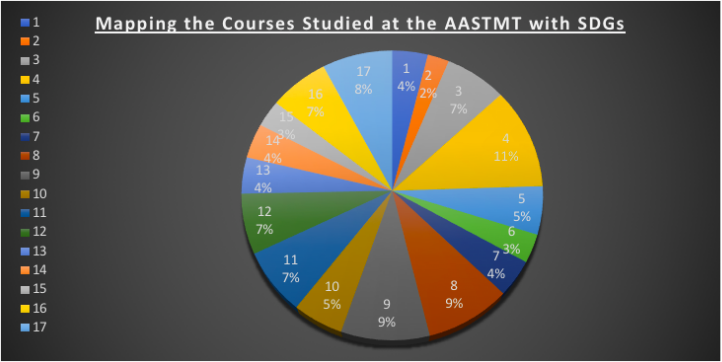
AASTMT demonstrates its commitment to integrating sustainable development into academic education through its institutional initiative, "Mapping AASTMT courses with the UN SDGs," launched in 2020. The initiative maps academic courses across programmes, disciplines, and campuses to the 17 United Nations Sustainable Development Goals. The published mapping provides an overview of SDG coverage within the curriculum and identifies individual courses associated with specific goals. This initiative provides evidence of AASTMT's institutional efforts to incorporate sustainability-related learning across different academic disciplines, extending beyond dedicated sustainability programmes.
Mapping AASTMT Courses with the UN SDGs
AASTMT Strategic Plan (2021–2026)
AASTMT’s Strategic Plan (2021–2026) establishes sustainable development as an integral part of the Academy’s institutional mission and long-term educational priorities. The plan emphasizes the role of high-quality education and training in preparing graduates to contribute to sustainable development. It also identifies education and learning as a central strategic priority, while recognizing the importance of economic, social, and human development across the Academy’s activities. This institutional direction provides a strategic foundation for promoting meaningful education that equips students with the knowledge, skills, and awareness required to understand and address sustainable development challenges.
AASTMT Strategic Plan (2021–2026)
Natural Gas and Petrochemicals Simulator System
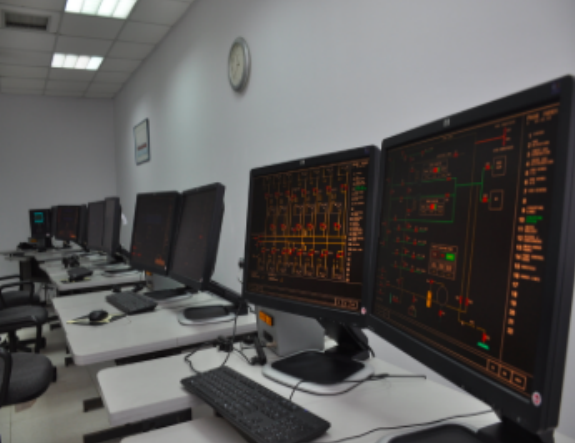
AASTMT supports practice-oriented technical education through its Natural Gas and Petrochemicals Simulator System. The facility provides students with opportunities to engage in realistic industrial simulations involving natural gas operations, liquid cargo handling, environmental protection, and operational risk management. Through interactive simulation terminals and practical exercises, students develop technical competencies and an understanding of the environmental and safety considerations associated with industrial operations. By linking technical training with responsible resource management, environmental protection, and safe industrial practices, the facility represents an applied learning environment that supports education relevant to sustainable development.
Natural Gas and Petrochemicals Simulator System
PQI and Wilkes University Organize First International Student Research Symposium on Sustainability and Innovation
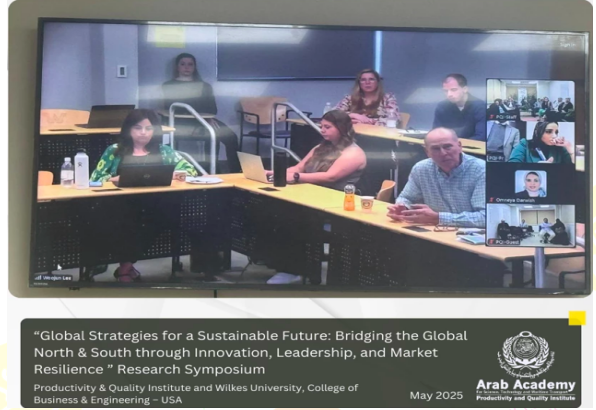
On 5 May 2025, AASTMT’s Productivity and Quality Institute (PQI), in collaboration with Wilkes University (USA), organized its first International Student Research Symposium under the theme “Global Strategies for a Sustainable Future: Bridging the Global North and South through Innovation, Leadership, and Market Resilience.” The symposium brought together students from both institutions in five joint interdisciplinary research groups to present projects addressing antimicrobial coatings, bio-based products, digital health, and foreign direct investment strategies. The event promoted international academic exchange and provided students with opportunities to develop research skills, critical thinking, and intercultural collaboration while examining environmental, technological, health, and economic challenges.
Student Seminar on Climate Change and Environmental Pollution - Technical & Vocational Institute, Port Said Branch
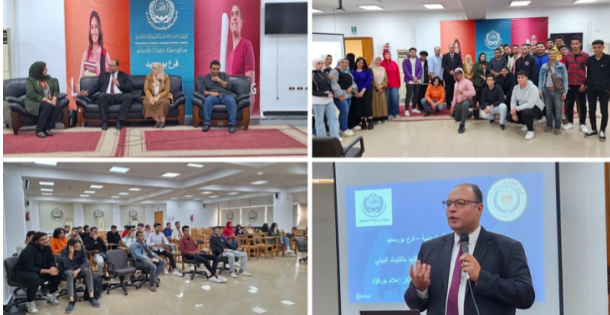
On 11 November 2024, AASTMT’s Technical and Vocational Institute – Port Said Branch organized a student seminar entitled “Methods of Addressing Climate Change and Its Relationship to Environmental Pollution,” delivered by Prof. Dr. Tamer Hassan Abu El-Dahab. The seminar was held as part of the Institute’s educational activities in connection with the COP29 Climate Summit. It aimed to raise students’ awareness of climate change, explain its relationship with environmental pollution, and introduce approaches to addressing these environmental challenges. The event also sought to strengthen students’ understanding of environmental responsibility and the importance of sustainable practices in responding to climate-related issues, supporting AASTMT’s commitment to education for sustainable development.
AASTMT Port Said Campus Hosts EU Workshop on Green Hydrogen Technologies
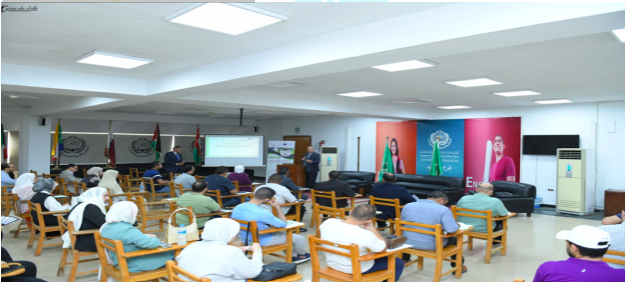
On 1 August 2025, AASTMT’s Port Said Campus hosted a workshop entitled “Advancing Green Hydrogen Technologies and Applications” as part of the Erasmus+ GREEN Project. The workshop focused on integrating green hydrogen technologies and sustainability into higher education, presenting findings from technical studies and surveys, and encouraging collaboration between academic institutions and industry partners. The discussions highlighted the role of renewable energy technologies in supporting the transition to cleaner energy systems and the importance of developing relevant knowledge and technical expertise through higher education. The initiative contributed to AASTMT’s efforts to promote sustainability-related education and strengthen academic engagement with emerging green technologies.
AASTMT Port Said Campus Hosts EU Workshop on Green Hydrogen Technologies
AASTMT Celebrates Arab Disaster Risk Reduction Day with Experts and Multisite Participation
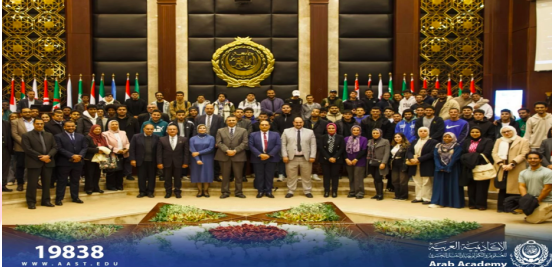
On 20 March 2025, AASTMT marked Arab Disaster Risk Reduction Day through an educational event held at its Abu Qir campus and broadcast across its other campuses and online. The programme brought together specialists in occupational medicine, epidemiology, environmental affairs, and professional training to discuss disaster risks affecting Arab societies and approaches to preparedness, prevention, and community resilience. The expert presentations addressed practical measures for reducing disaster-related risks and strengthening the capacity of communities to respond to emergencies. By making these discussions accessible across its campuses, AASTMT provided an opportunity for interdisciplinary learning on disaster risk reduction and sustainable development.
AASTMT Celebrates Arab Disaster Risk Reduction Day with Experts and Multisite Participation
AASTMT supports the integration of sustainable development into engineering education by linking ABET student learning outcomes with relevant United Nations Sustainable Development Goals (SDGs). This mapping highlights the relationship between engineering competencies, including design, ethical responsibility, communication, teamwork, and continuous learning, and broader environmental and social sustainability objectives. It provides a framework for demonstrating how sustainability-related considerations can be reflected in engineering learning outcomes and supports the Academy's commitment to incorporating sustainable development principles into academic education.
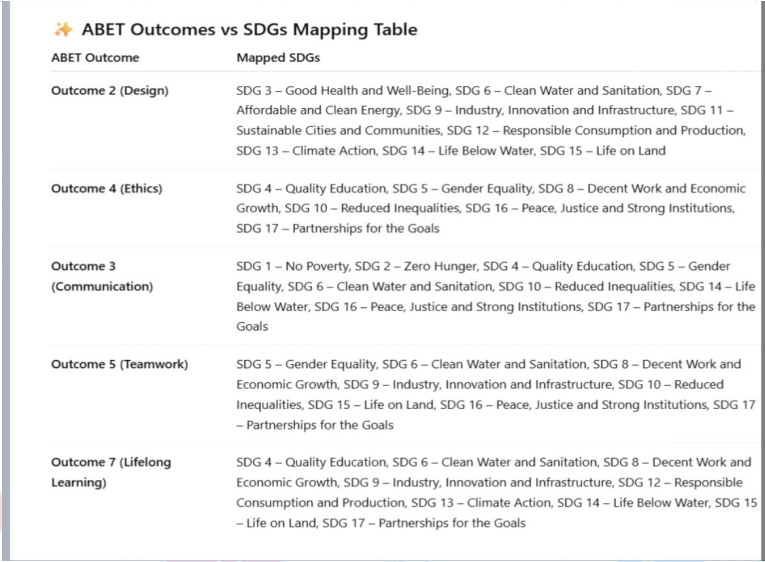

AASTMT maintains a clear and consistent dedication to integrating the Sustainable Development Goals (SDGs) into both academic study and student activities. SDG-oriented content is embedded within the curriculum across all colleges, and all undergraduate students are required to complete at least one course with explicit SDG learning outcomes as part of their graduation requirements — ensuring universal exposure regardless of major. By offering interdisciplinary courses, hands-on learning opportunities, and community-based initiatives, the university helps students understand the SDGs from multiple angles. This inclusive approach equips all learners with the competencies needed to tackle global sustainability challenges and encourages them to apply these concepts in practical settings. Ultimately, AASTMT aims to prepare graduates who are environmentally aware, socially responsible, and ready to contribute meaningfully to sustainable development.
AASTMT Actions Supporting SDG-Aligned Education
AASTMT reinforced its commitment to meaningful SDG-aligned education by advancing research projects that embed sustainability principles into the academic environment. Projects such as the INVOLVE Project, which integrates SDG frameworks within university systems, and the Uni-Green Climate Action Project, which empowers students to engage in climate-focused solutions, ensure that sustainability becomes an applied and relevant learning component for students across disciplines.
Natural Gas and Petrochemicals Simulator System – Applied Sustainable Training Facility
AASTMT’s Natural Gas and Petrochemicals Simulator System delivers advanced real-time training designed to strengthen students’ abilities in safe cargo handling, environmental protection, and responsible industrial operations. Through highly realistic simulations involving hazardous materials, emissions control, and chemical-risk management, trainees develop core sustainability-aligned competencies linked to SDGs such as Responsible Consumption and Production and Life Below Water. Embedding the simulator within academic programs ensures that students receive hands-on, meaningful education that directly reflects global sustainability priorities and real-world industrial contexts.

Natural Gas and Petrochemical Simulator
Integrated Simulators Complex (ISC) – Multidisciplinary Sustainable Training Platform
The Integrated Simulators Complex (ISC) at AASTMT provides an advanced, practice-driven training environment that unifies marine operations, environmental protection, crisis management, offshore safety, and state-of-the-art navigation technologies. Through full-mission ship-handling simulators, dynamic positioning systems, environmental laboratories, and oil-spill response units, students gain realistic, high-impact exposure to sustainability-related operational challenges. By integrating these simulation programs into academic and professional training pathways, AASTMT ensures that learners receive meaningful, relevant, and SDG-aligned education that builds practical, future-ready competencies across multiple disciplines.

AASTMT students took part in the Green Peace and Sustainable Resilience Forum organized by the Faculty of Economics and Political Science at Future University. The forum addressed key sustainability themes—including climate policy, green peace dynamics within international relations, the economic dimensions of environmental transitions, and public-policy approaches for managing climate challenges. Through this participation, students were exposed to interdisciplinary perspectives on global sustainability issues, supporting AASTMT’s efforts to strengthen SDG-focused learning and awareness within the student community.

Green Peace and Sustainable Resilience Forum
EGYPT RALLY 2023 Bootcamp – Entrepreneurship Training (July 2023)
AASTMT demonstrated its commitment to meaningful, SDG-oriented education by organizing the Egypt Rally 2023 Bootcamp, an open training event for students across different colleges. This program offered intensive sessions on business planning, legal foundations for startups, branding strategies, and innovation management. By enabling students to develop real startup concepts and apply entrepreneurial thinking, the bootcamp served as an optional educational pathway that supports SDG-related competencies—especially those linked to economic growth and innovation.

AASTMT-IMC Collaboration Meeting – Industrial Modernization Centre (May 2024)
Through a strategic meeting with the Industrial Modernization Centre (IMC) in May 2024, AASTMT reaffirmed its institutional commitment to sustainability-aligned education by integrating green technology, digital transformation, and sustainable production practices into student training and academic pathways. The discussion also emphasised the role of student and researcher projects in advancing competitiveness, productivity, and environmentally responsible industry practices. This initiative strengthens curriculum-integration and supports SDG-linked education, equipping students with practical competencies relevant to industry, innovation, and climate action.

ASTMT-IMC Collaboration Meeting
Egypt Entrepreneurship Rally 2023 – Finale Event (September 2023)
AASTMT demonstrated its commitment to providing meaningful, SDG-oriented education across the university by hosting the Egypt Entrepreneurship Rally 2023 Finale, an open innovation and entrepreneurship competition accessible to students from multiple disciplines. The event offered applied learning experiences through business-model development, mentorship from industry experts, and real-world problem-solving tasks that strengthened students’ entrepreneurial and analytical skills.

Egypt Entrepreneurship Rally 2023
Integrating Global Sustainability Goals into AASTMT’s Academic Framework
AASTMT systematically aligns its academic programs with the United Nations Sustainable Development Goals (SDGs) by mapping course learning outcomes to relevant sustainability themes across all colleges. This approach ensures that all students—across every discipline—are exposed to sustainability principles and develop the essential competencies needed to address global challenges. The curriculum is further enriched through elective courses such as Communication Skills, Innovation and Entrepreneurship, Global Business, and Ethics and Governance of AI, which foster ethical leadership, innovative thinking, and a strong understanding of global sustainability practices.
As a practical example of this institutional approach, the BSc in Energy & Petroleum Logistics Management integrates SDG-related content throughout its core modules, including sustainable energy practices, responsible resource management, and environmentally conscious supply chain strategies. This demonstrates how sustainability principles are embedded across multiple semesters, highlighting AASTMT’s commitment to delivering SDG-aligned education in both general and specialized programs.
AASTMT demonstrates a strong commitment to embedding the Sustainable Development Goals (SDGs) across its academic and extracurricular programs, ensuring their relevance and accessibility to all students. The university integrates SDG-focused education into its curriculum, making it applicable to diverse disciplines and mandatory for every student. This approach guarantees that all students, regardless of their field of study, are equipped with the knowledge and skills to address global challenges and contribute to sustainable development. Through a combination of interdisciplinary courses, experiential learning, and community engagement, AASTMT fosters a comprehensive understanding of the SDGs and empowers students to apply these principles in real-world contexts, cultivating socially responsible and environmentally conscious leaders.
Demonstrating Commitment to Sustainable Education through Innovative Research Projects at AASTMT
AASTMT’s commitment to integrating sustainability into education is exemplified by its innovative research initiatives, which tackle real-world challenges through advanced methodologies. As a leading institution in the Arab region, AASTMT plays a pivotal role in driving impactful research that addresses critical environmental, social, and economic issues while aligning with global and regional development agendas.
The “Innovative Photovoltaics Envelopes for Adaptive Energy and Comfort Management of Harsh Climate Areas in Upper Egypt” project exemplifies this commitment by addressing the urgent need for energy-efficient building solutions in challenging climates, contributing to the global vision of nearly zero-energy buildings. Similarly, the “Improved Recast of Climatic Changes and its Socioeconomic Implications Along the Northern Coastal Zone of Egypt” project demonstrates AASTMT’s leadership in leveraging cutting-edge technologies like satellite data and open-source modeling to map and mitigate the impacts of climate change in one of Egypt's most vital regions. These initiatives underscore AASTMT’s dedication to fostering sustainable development, advancing research excellence, and empowering communities to adapt to future challenges. By addressing both local and global sustainability priorities, AASTMT reaffirms its role as a cornerstone of innovation and education in the Arab region.
AASTMT Achieves ZEvA Accreditation in 2022: A Step Toward Sustainable Education
In 2022, AASTMT achieved ZEvA accreditation, a prestigious recognition of its commitment to academic excellence and alignment with global education standards. This accreditation reflects the academy’s dedication to integrating sustainability principles into its curriculum, fostering interdisciplinary learning that equips students to address complex global challenges.
The ZEvA process emphasized AASTMT’s efforts to embed social responsibility, critical thinking, and environmental awareness across its programs. By ensuring that sustainability concepts are integrated throughout its educational framework, AASTMT reinforces its role in preparing students to contribute effectively to sustainable development across industries and communities.

Reception of the Academy`s President to celebrate the college`s ZEvA accreditation
AI for Sustainability: Advancing Sustainability Education and Innovation for AASTMT's Commitment to the UN SDGs
Within the framework of the Arab Academy for Science, Technology, and Maritime Transport (AASTMT)'s continuous efforts to explore future prospects and its commitment to serving Arab countries in achieving their national goals as a specialized organization of the League of Arab States (LAS), AASTMT organized the fourth meeting of the Arab Artificial Intelligence Working Group from June 7 to 8, 2023, at its Alamein Campus. The event, attended by H.E. Prof. Dr. Ismail Abdel Ghafar Ismail Farag, AASTMT President, highlighted the role of artificial intelligence in addressing sustainability challenges across Arab nations. Moreover, by June 11, 2023, AASTMT students presented a graduation project focused on green hydrogen production through environmentally friendly methods, showcasing their dedication to integrating sustainable development concepts into their academic work. These efforts reflect AASTMT’s commitment to specific courses and projects that address sustainability and align with the UN Sustainable Development Goals (SDGs)

Mapping AASTMT courses with the United Nations Sustainable Development Goals (SDGs) is central to the academy’s strategy for aligning its curriculum with global sustainability objectives. This initiative ensures students across all disciplines are educated on sustainability principles, empowering them to address global challenges. AASTMT enhances its curriculum with electives such as Communication Skills, Innovation & Entrepreneurship, Global Business, and Ethics and Governance of AI. These courses focus on ethical leadership, innovative thinking, and global strategies, equipping students with diverse skills to tackle sustainability challenges.
Through this integration, AASTMT embeds SDG principles across its educational framework, preparing graduates to contribute meaningfully to sustainable development on a global scale.
Mapping AASTMT courses with the UN SDGs
In 2023, AASTMT actively participated in COP 28, reaffirming its dedication to global climate action and sustainability. This engagement provided a valuable platform to incorporate practical insights from international climate discussions into AASTMT’s academic and research initiatives. By integrating these insights into its educational framework, the institution ensures that sustainability education remains relevant and applicable to all students, regardless of their discipline. Through its involvement in COP 28, AASTMT exposed students and faculty to the latest developments in sustainable development and climate resilience, fostering a deeper understanding of global challenges. By bridging theoretical learning with tangible climate action, AASTMT cultivates an environment where students and faculty are empowered to explore innovative solutions to pressing environmental challenges, reinforcing its enduring dedication to fostering impactful and forward-thinking education.

TouMali Initiative on Sustainability in Maritime Transport
In 2022, AASTMT spearheaded the TouMali initiative, emphasizing the integration of sustainability principles into the maritime transport sector. By collaborating with local and international partners, the initiative facilitated in-depth discussions on embedding SDG-focused education into maritime logistics and transport programs. This effort highlighted AASTMT’s leadership in advancing sustainability through innovative approaches to education and its dedication to making sustainability concepts relevant and applicable across disciplines.
The initiative’s collaborative framework provided opportunities to connect academic knowledge with real-world sustainability challenges, particularly in maritime logistics. Through such efforts, AASTMT ensures that SDG principles are integrated across its curriculum, fostering a learning environment that equips all students, regardless of their specialization, with the skills and insights needed to tackle global environmental challenges. This initiative exemplifies AASTMT's unwavering commitment to meaningful education that prepares future professionals to contribute to sustainable development on both local and global scales.

In June 2023, AASTMT organized Environment Day, an event dedicated to raising awareness about environmental sustainability among both students and faculty. This initiative aimed to spark dialogue and inspire action on climate issues, focusing on fostering a deeper understanding of how individuals and institutions can contribute to environmental sustainability. Through workshops, discussions, and hands-on activities, Environment Day provided participants with practical tools and knowledge to address pressing environmental challenges. The event emphasized the importance of collective responsibility in tackling climate change, further embedding environmental consciousness into the university’s educational framework.
This initiative reflects AASTMT’s commitment to providing meaningful education that promotes sustainability awareness across the entire academic community. Depending on the scale of public participation, it may have extended its impact beyond campus, engaging the broader community in the fight for a more sustainable future.

Environmental Day
Education for SDGs commitment to meaningful education (2021-2022)
The Arab Academy for Science and Technology (AAST) is committed to fulfilling the requirements of Sustainable Development Goal (SDG) 17, specifically regarding education for SDGs and meaningful education. AAST integrates sustainable development principles into its curriculum, fosters innovation and critical thinking, and collaborates with stakeholders to enhance the quality and relevance of education. By doing so, AAST prepares students to become active contributors to sustainable development and equips them with the necessary knowledge and skills for addressing global challenges.
In pursuit of genuine commitment to the UN-SDGs, AASTMT has launched an initiative in 2020 that incorporates the 17 goals into all courses of all programs across all campuses. The outcome of mapping curricula to the 17 SDGs is a report that showcases the number of courses across all campuses that comply with each SDG.
Mapping AASTMT Courses with the UN SDGs on AASTMT webpage
At AASTMT Smart Village Campus Within the Arab Academy for Science, Technology and Maritime Transport (AASTMT) social responsibility, and as part of the National Sustainable Development Strategy "Egypt 2030", as well as AASTMT initiative to raise the environmental awareness at AASTMT Campuses under the umbrella of the Egyptian Ministry of Environment campaign to plastic use abatement, AASTMT held a workshop that entitled “Go Green” on Monday 10- 1- 2022, at AASTMT Smart Village Campus, under the patronage of H.E Prof. Dr. Ismail Abdel Ghafar Ismail Farag - AASTMT President, and with the participation of a group of AASTMT Officials, Academic Staff members and Students from different campuses.
https://aast.edu/en/news/news-details.php?language=1&view=1&unit_id=1&news_id=172931&event_type_id=1 Link on AASTMT Page
A symposium organized by the Department of Community Service and Environmental Affairs at the Institute of Productivity and Quality “Climate Change Mitigation and Adaptation” presented by Colonel Dr. Mohamed Abdel Hamid Al-Bassa - Head of the Weather Conditions Branch, Marine Survey Division - Egyptian Naval Forces - on Saturday, April 9, 2022, at nine-thirty in the evening, local time. Cairo via Zoom
Climate Change Mitigation and Adaptation on the AASTMT webpage
Prof. Dr. Ismail Abdel Ghafar Ismail Farag – President of the Arab Academy for Science, Technology and Maritime Transport (AASTMT) participated in the activities of the Fourth Edition of the Arab Week for Sustainable Development that was organized by the League of Arab States, the Ministry of Planning and Economic Development in Egypt, the United Nations, the European Union, and the World Bank, during the period from 13 - 15 February 2022, under the theme "Together for Sustainable Recovery", as to probe ways of alleviating repercussions and negative impacts of coronavirus to help achieve sustainable development goals in Arab countries.
The Fourth Edition of the Arab Week for Sustainable Development on the AASTMT news page