



 Goal 15. Life on Land
15.2.3 Maintain and extend current ecosystems' biodiversity
Download the full evidence (PDF)
2024-2025
AASTMT carries out ecosystem management and biodiversity conservation on its campuses, maintaining and extending campus habitat and vegetation. Its own planting nurseries propagate plants for the revegetation and plantation of campus green areas, new planting extends the vegetation cover of its campuses, and soil conservation relies on compost and vermicompost, while green areas are irrigated with groundwater and harvested rain instead of drinking water. The work below took place in the academic year 2024-2025.
AASTMT Biodiversity Action Plan and Campus Development Plan 2025-2030
The plan that puts AASTMT’s biodiversity commitments into practice: ten action areas, a biodiversity review for every qualifying project, a development plan for each campus site through 2030, and indicators reported every year.
https://aast.edu/en/sdg/goals.php?unit_item=1215&page_id=121500063
AASTMT Living Campuses: Biodiversity 2024-2025
A report on how AASTMT grows, protects and studies life on land across its campuses, from Abu Qir on the Mediterranean to the South Valley Campus in Aswan, in 2024-2025.
https://aast.edu/en/sdg/goals.php?unit_item=1215&page_id=121500066
Abu Qir Planting Nurseries and Campus Revegetation (12 May 2025, AASTMT Abu Qir Campus, Alexandria)
AASTMT runs its own planting nurseries at the Abu Qir campus, which propagate trees, shrubs and ground cover for the revegetation and plantation of the campus green areas, supporting vegetation recovery, and supply its ongoing plant expansion works. On 12 May 2025 the AASTMT President inspected the nurseries and the expansion works, met the nursery staff and reviewed the latest methods for plant maintenance and irrigation. Through the nurseries, AASTMT maintains and extends the habitat of its 213,646 m² Abu Qir campus, of which about 62,000 m² (29%) is planted vegetation. The nurseries have been inspected each May since 2023 as the green areas continue to expand.
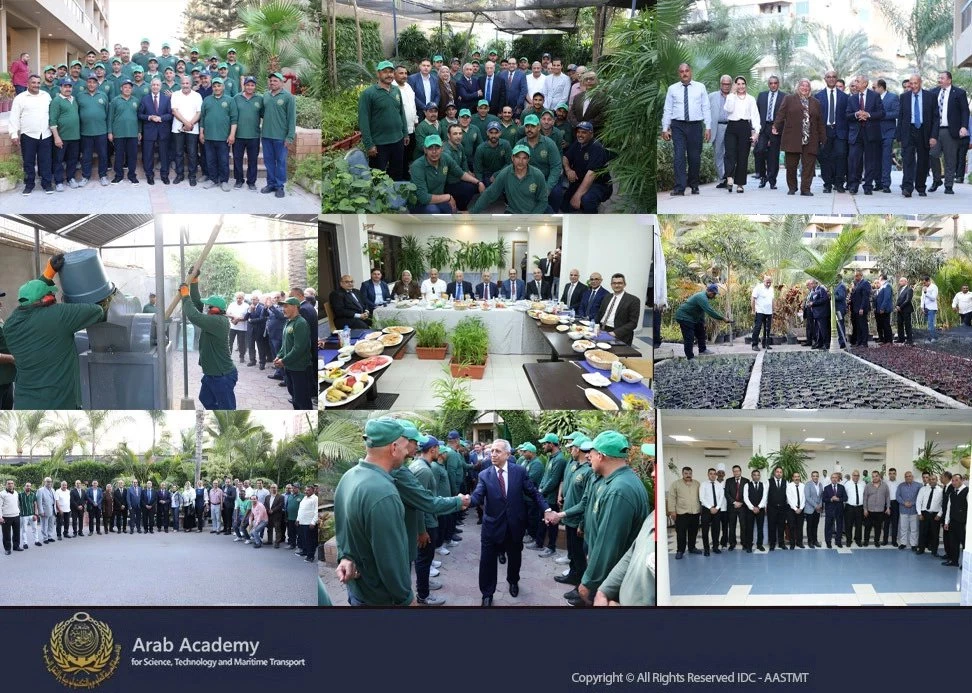
AASTMT President tour at AASTMT Campus Planting Nurseries
Campus Planting and Compost at the El Alamein Campus (14 January 2025, AASTMT El Alamein Campus, Matrouh)
In the academic year 2024-2025 AASTMT extended the vegetation, green areas and habitat of its El Alamein campus on Egypt’s North Coast through new planting and landscaping: palms, shrubs and ornamental plants were planted, planting beds were improved and walkways were landscaped. The plant selection favours drought-tolerant species, matched with irrigation suited to each plant to support water conservation. For soil conservation, AASTMT recycled agricultural waste into organic fertiliser and soil amendments, producing 15 tonnes of compost for the campus lawns, which improves soil structure and moisture retention.
AASTMT Advances Sustainable Campus Planting to Support Water Conservation
Compost and Vermicompost for Soil Conservation on Campus (2024-2025, AASTMT Abu Qir Campus, Alexandria)
AASTMT returns organic waste to its campus soils. A composter unit turns food waste from campus kitchens into compost for the gardens, and a vermicomposting unit uses red wiggler earthworms (Eisenia fetida) to turn organic waste into nutrient-rich vermicompost. This soil conservation practice restores soil structure and fertility in the campus planting beds, reduces chemical fertilisers and keeps organic waste away from contaminated landfill. In the 2024/2025 academic year AASTMT reported 15 tonnes of compost (300 bags of 50 kg) produced for lawn fertilisation.
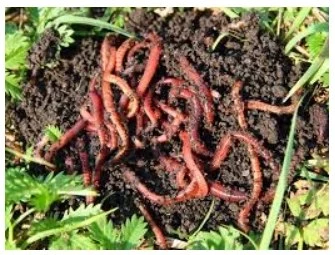
UI GreenMetric 3.8: Organic waste treatment
Water Conservation to Maintain Campus Vegetation (2024-2025, AASTMT Abu Qir Campus, Alexandria)
The green areas of the Abu Qir campus (about 62,000 m² of planted vegetation, including gardens, palm groves and lawns) are maintained as campus habitat and irrigated with non-potable water: groundwater from thirteen borehole wells, tested every month, and rainwater channelled from walkways, roofs and the greenhouse, with perforated-pipe irrigation in planting basins instead of flooding.
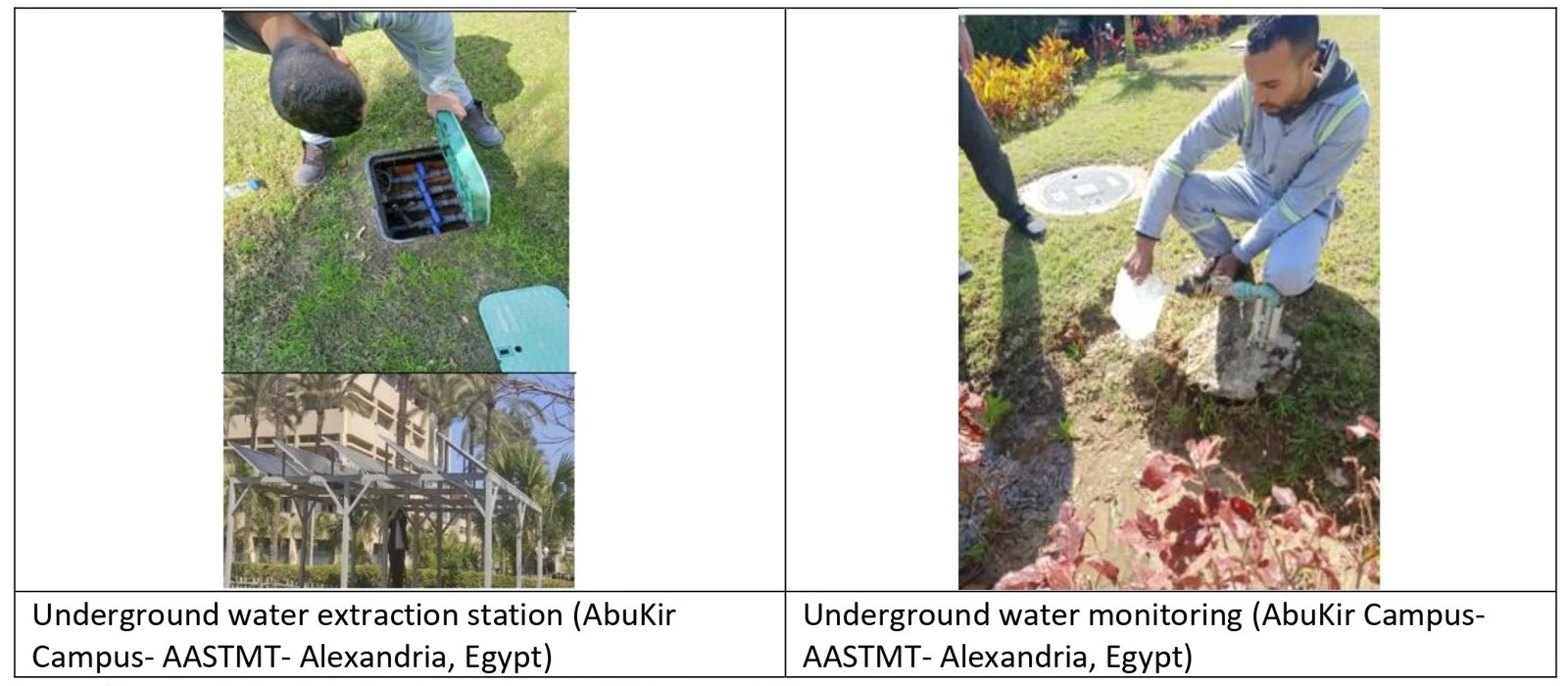
UI GreenMetric 4.3: Water Recycling Program Implementation
2023-2024
AASTMT 2025 Progress Report on Monitoring IUCN and Conservation Species Policies:
AASTMT actively monitors and protects species identified by the International Union for Conservation of Nature (IUCN), with a strong focus on preserving ecosystems under threat. The university’s Conservation Species Policy ensures ethical, non-destructive research and promotes biodiversity awareness across campuses. Special attention is given to habitats facing environmental pressures, including coastal and marine ecosystems. Through initiatives like the TouMaLi Project and participation in IMO–MEPC meetings, AASTMT contributes to regional and global conservation efforts. This commitment supports SDGs 13, 14, and 15 by safeguarding endangered species and restoring vulnerable ecosystems.

AASTMT 2025 Progress Report on Monitoring IUCN and Conservation Species Policies
Jadeed - Rally Accelerate:
Jadeed – Rally Accelerate is an initiative dedicated to promoting sustainable land and environmental stewardship by providing green energy solutions that reduce carbon emissions, lower ambient air pollution, and mitigate climate impacts. The program fosters environmental awareness, encourages energy-efficient practices, and supports a healthy, sustainable lifestyle, contributing to the protection of ecosystems, biodiversity, and land resources in alignment with SDG 15 – Life on Land.

INVOLVE Project Integration of Sustainable Development Goals in Universities for Better Climate Change Management:
The INVOLVE Project aims to integrate sustainability and climate change management practices across universities in the Mediterranean region. AASTMT’s role includes ecosystem-based climate adaptation and biodiversity conservation strategies as part of land and resource management education. The INVOLVE Project aims to integrate sustainability and climate change management practices across universities in the Mediterranean region.
AASTMT INVOLVE Project Overview
College of Engineering Symposium on Preservation and Restoration of Heritage Buildings 22 February 2024:
The event organized by College of Engineering and Technology-Heliopolis Campus, AASTMT. Although primarily focused on architectural heritage, the event emphasized the importance of maintaining land stability, reducing urban land degradation, and preserving cultural and ecological landscapes. Discussions addressed environmentally responsible restoration techniques, adaptive reuse of existing structures to reduce land exploitation, and integrating conservation practices that safeguard both the built environment and the natural land ecosystems surrounding heritage sites. Through its educational approach, the symposium contributed to SDG 15(Life on Land), Collaborating Partners are Faculty experts in architecture and environmental design, local urban-development stakeholders, and heritage-conservation professionals.
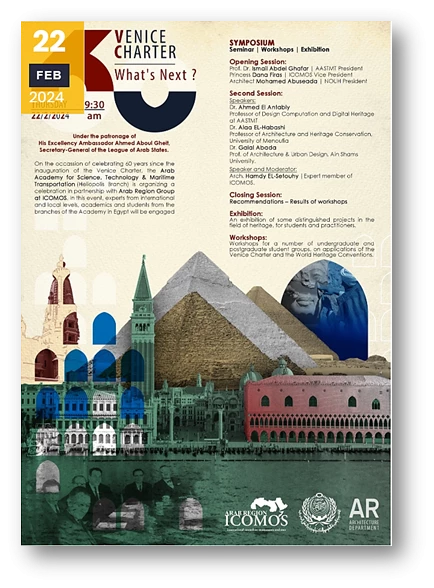
College of Engineering Symposium on Preservation and Restoration of Heritage Buildings
AASTMT Green Tourism and Sustainability Projects:
AASTMT hosted a workshop highlighting the German-Arab-African project on marine waste disposal (TouMali) and the UNIGREEN project with the Life Makers Foundation, focusing on eco-tourism, biodiversity conservation, and community engagement.
These projects contribute to maintaining coastal and land ecosystems and enhancing biodiversity by promoting environmentally friendly tourism and marine ecosystem restoration. This Cooperation with NGOs and EU-funded programs.
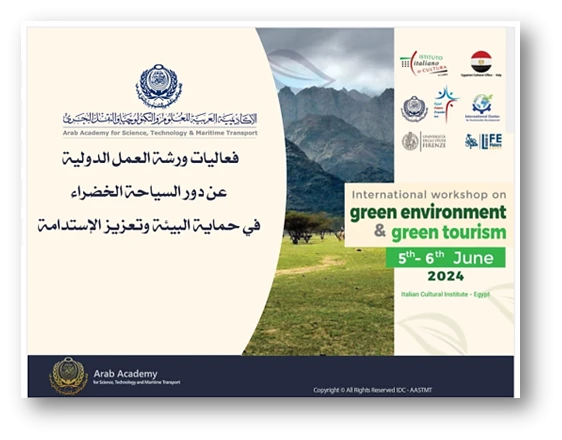
AASTMT Workshop on Green Tourism and Ecosystem Preservation
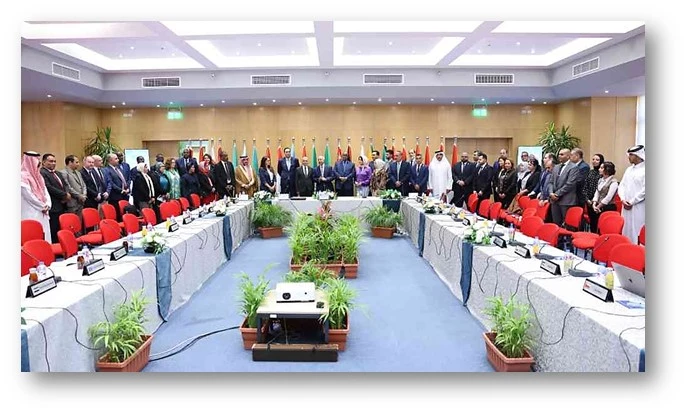
Arab States advance regional action through first coordination meeting on marine disaster risk reduction:
Alexandria, Egypt - 30 June 2025 - Representatives from 15 Arab states, regional organizations, and international partners convened from 28 to 30 June at the Arab Academy for Science, Technology and Maritime Transport (AASTMT) in Abu Qir for the First Coordination Meeting of the Arab Programme for Reducing Marine Disasters. Organized under the auspices of the League of Arab States, hosted by AASTMT, and with active participation and facilitation by the United Nations Office for Disaster Risk Reduction, Regional Office for the Arab States (UNDRR ROAS).
2022-2023
AASTMT’s students from 12 states line up to “Save Our Oceans”:
Based in Alexandria, a coastal city in Egypt, more than 200 students from 12 states of the Arab Academy for Science, Technology & Maritime Transport (AASTMT) formed a line to shout out to the world, "SAVE OUR OCEANS."