

 Goal 15. Life on Land
15.3.1 Sustainable use, conservation and restoration of land (policy)..

2024-2025
AASTMT has a policy to ensure the conservation, restoration and sustainable use of the terrestrial ecosystems associated with the Academy. The AASTMT Environmental Sustainability Policy (Climate, Ocean and Land) applies to all AASTMT campuses in Egypt, which it gives as all AASTMT campuses in Egypt (Alexandria, Cairo, Giza, Matrouh, Port Said and Aswan), and to AASTMT training ships, field training sites and research facilities. Under its commitment to protect land and biodiversity, the Academy maintains and extends the green areas and habitats of its campuses, protects threatened species, reduces the impact of alien species, and fights land degradation and desertification. The policy was created in January 2019 and reviewed in 2019–2023, 2024 and October 2026, and is published on the AASTMT website.
AASTMT Environmental Sustainability Policy
Climate, Ocean and Land
| Item | Details |
| Policy title | AASTMT Environmental Sustainability Policy (Climate, Ocean and Land) |
| Date created | January 2019 |
| Approving body | SDGs Workforce Committee |
| Versions | Versions 1–4: 2019–2023 (AASTMT Environmental Policy); Version 5: 2024 (Environmental Policy for SDGs 13, 14 and 15); Version 6: October 2026. Next review 2029, with a yearly review of targets |
| Policy owners | Dean of Scientific Research for Maritime Affairs; Head of Aquaculture Department, College of Fisheries and Aquaculture Technology; the Sea Training Institute; SDG 15 Officer |
| Approval signature | Dean of Scientific Research and Innovation |
| Campus green areas | Facilities, energy and landscape teams run campus energy, water, green areas and waste systems (Roles and Responsibilities) |
The policy as published during 2025
AASTMT Environmental Sustainability Policy, last review 2025
The version of the AASTMT Environmental Sustainability Policy published on the AASTMT ESG website, whose review table records its creation in January 2019, approval by the SDGs Workforce Committee, a last review in 2025 and approval signature by the Dean of Scientific Research and Innovation, already committed the Academy to “safeguard land ecosystems by promoting sustainable land use, combating deforestation, and fostering conservation initiatives across all AASTMT campus sites”. Its actions included promoting sustainable land use and biodiversity conservation through tree-planting initiatives and habitat restoration programmes, advocating the reduction of land degradation and desertification in AASTMT operations, developing green spaces on campus to support native flora and fauna, and partnering with local communities for afforestation projects.
AASTMT Environmental Sustainability Policy (AASTMT ESG website)
How the policy covers conservation, restoration and sustainable use of land
Version 6, October 2026, all AASTMT campuses
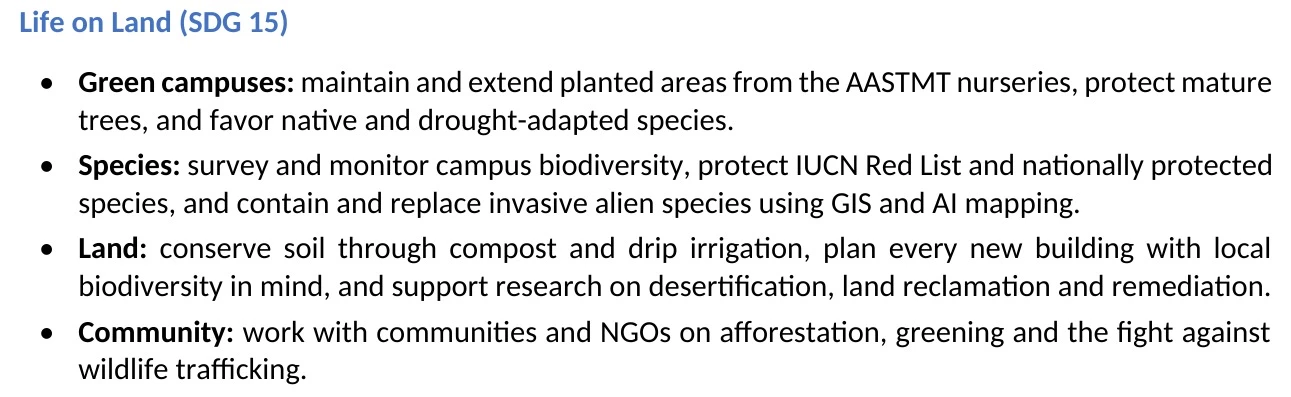
In the current published version of the policy (Version 6, October 2026), the commitment to protect land and biodiversity and the Life on Land actions address each part of the indicator:
| Part of the indicator | What the policy says |
| Terrestrial ecosystems associated with AASTMT | “maintain and extend the green areas and habitats of its campuses”; the policy applies to all AASTMT campuses in Egypt and to field training sites and research facilities |
| Conservation | “protect mature trees”; “protect threatened species”; “survey and monitor campus biodiversity, protect IUCN Red List and nationally protected species” |
| Restoration | “fight land degradation and desertification”; “work with communities and NGOs on afforestation, greening”; “contain and replace invasive alien species” |
| Sustainable use | “conserve soil through compost and drip irrigation”; “plan every new building with local biodiversity in mind” |
| Forests and tree cover | “protect mature trees”; afforestation with communities and NGOs; “maintain and extend planted areas from the AASTMT nurseries” |
| Drylands | “fight land degradation and desertification”; “favor native and drought-adapted species”, with a target of at least 70% in new planting; “support research on desertification, land reclamation and remediation” |

AASTMT Environmental Sustainability Policy (Climate, Ocean and Land), Version 6
Planting and soil protection in building projects
Construction Administration standards, issued November 2025, all campuses
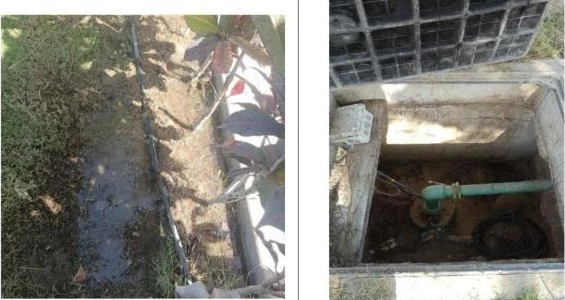
The standards that AASTMT’s Engineering Administrations follow in constructing, operating and maintaining buildings on all campuses, issued by the Construction Administration in November 2025, require many planting basins in the site of every project, the use of all vacant land around buildings for trees, shrubs and local plants, perforated-pipe irrigation instead of flood irrigation, and drainage that carries rainwater into planted areas and into the soil to recharge groundwater.
AASTMT Environmental Sustainability Policy
Description
The AASTMT Environmental Policy for Cluster 13, 14, and 15 SDGs focuses on fostering sustainability and environmental stewardship in alignment with the United Nations Sustainable Development Goals (SDGs). It emphasizes the institution's commitment to Climate Action (SDG 13), Life Below Water (SDG 14), and Life on Land (SDG 15). The policy serves as a framework for integrating environmental sustainability into education, research, campus operations, and community engagement.
This policy outlines a comprehensive approach to addressing global challenges, including mitigating climate change, conserving marine ecosystems, and preserving terrestrial biodiversity. By prioritizing sustainability in operations, enhancing education, driving innovation, and fostering collaborative partnerships, AASTMT aims to lead by example in promoting environmental resilience and sustainable practices within the academic and broader community.
The policy reflects AASTMT's role as a catalyst for positive environmental change, ensuring that the institution’s activities contribute to a greener, more sustainable future. It aligns with the global call for urgent action to combat climate change, protect marine and terrestrial ecosystems, and build a sustainable world for current and future generations.
Vision
To establish AASTMT as a leading institution in integrating environmental sustainability principles into education, research, and community initiatives, addressing global challenges related to climate action, marine ecosystems, and terrestrial biodiversity.
Mission
AASTMT is committed to fostering environmental stewardship through innovative solutions, collaborative partnerships, and sustainable practices that align with the Sustainable Development Goals (SDGs) 13, 14, and 15.
Introduction
The Arab Academy for Science, Technology, and Maritime Transport (AASTMT) recognizes its pivotal role in addressing the pressing environmental challenges of our time. Guided by the United Nations Sustainable Development Goals (SDGs), this policy aligns AASTMT’s mission with SDG 13 (Climate Action), SDG 14 (Life Below Water), and SDG 15 (Life on Land), forming a cohesive strategy to promote environmental sustainability.
Global environmental challenges, such as climate change, marine pollution, and biodiversity loss, threaten ecosystems and human well-being. Educational institutions like AASTMT bear a responsibility to lead by example, embedding sustainability into academic programs, operational practices, and community engagement.
This Environmental Policy outlines a framework for action that integrates climate resilience, marine conservation, and terrestrial ecosystem preservation. By fostering innovation, collaboration, and awareness, AASTMT aims to empower students, faculty, and stakeholders to drive meaningful change, ensuring a sustainable and resilient future.
Through this policy, AASTMT commits to reducing its environmental footprint, enhancing sustainable practices, and actively contributing to the global effort to protect the planet’s natural resources. Together, we aim to inspire a new generation of environmental stewards and contribute to a sustainable legacy for future generations.
Policy Statement
The Arab Academy for Science, Technology, and Maritime Transport (AASTMT) is committed to advancing environmental sustainability as a core institutional priority. Aligned with the Sustainable Development Goals (SDGs) 13 (Climate Action), 14 (Life Below Water), and 15 (Life on Land), this policy provides a comprehensive framework for integrating environmental stewardship into education, research, operations, and community engagement.
AASTMT acknowledges its responsibility to:
- Address Climate Change: Minimize greenhouse gas emissions, enhance energy efficiency, and promote renewable energy adoption to support global efforts in mitigating climate change.
- Conserve Marine Ecosystems: Protect aquatic biodiversity by implementing sustainable practices, reducing pollution, and fostering research that supports the health and resilience of marine environments.
- Preserve Terrestrial Biodiversity: Safeguard land ecosystems by promoting sustainable land use, combating deforestation, and fostering conservation initiatives.
Risk Assessment: Implement risk assessments for alien species to prioritize management efforts based on their potential impact on local biodiversity.
Regular Surveys: Conduct regular surveys using GIS mapping technologies to track and monitor the distribution of alien species on campus.
Through education, innovation, and collaboration, AASTMT seeks to inspire sustainable practices among students, faculty, and stakeholders while contributing to global and local efforts to ensure a sustainable future for all. This policy represents the Academy’s unwavering commitment to environmental excellence and sustainable development.
Policy Objectives
- Promote Climate Action (SDG 13):
- Reduce the institution’s carbon footprint by implementing energy-efficient practices, transitioning to renewable energy sources, and reducing greenhouse gas emissions.
- Incorporate climate change education into the curriculum to enhance awareness and understanding among students, staff, and stakeholders.
- Support research and innovation in climate adaptation and mitigation strategies, especially in the marine and aquaculture sectors.
- Engage in community outreach programs to build climate resilience and disaster preparedness.
- Protect Life Below Water (SDG 14):
- Enhance awareness and education on marine biodiversity, sustainable fisheries, and the prevention of marine pollution.
- Promote research on the conservation of marine ecosystems and the restoration of aquatic habitats affected by human activities.
- Implement waste management systems to prevent plastic and chemical pollution in aquatic environments.
-
- Collaborate with local and international organizations for sustainable fisheries and marine conservation initiatives.
- Preserve Life on Land (SDG 15):
- Promote sustainable land use practices and biodiversity conservation through tree-planting initiatives and habitat restoration programs.
- Protect and restore terrestrial ecosystems by supporting research on biodiversity and sustainable resource management.
- Advocate for the reduction of land degradation and desertification by integrating best practices into AASTMT’s operations.
- Encourage partnerships with governmental and non-governmental organizations to conserve wildlife and combat illegal poaching and trade.
Policy Commitments
- Sustainability in Operations:
- Transition to eco-friendly infrastructure, materials, and technologies.
- Monitor and report environmental performance through measurable indicators for climate action, marine conservation, and biodiversity preservation.
- Education and Capacity Building:
- Develop interdisciplinary programs, courses, and training workshops that address SDGs 13, 14, and 15.
- Encourage student-led initiatives and projects focused on climate change, marine sustainability, and biodiversity conservation.
- Community Engagement:
- Collaborate with local communities, industries, and governments to implement projects that address environmental challenges.
- Organize campaigns, events, and volunteering opportunities for environmental advocacy and awareness.
- Research and Innovation:
- Support faculty and student research on climate resilience, marine ecosystem management, and biodiversity conservation.
- Utilize cutting-edge technology and data-driven approaches to address environmental challenges.
- Sustainable Partnerships:
- Build partnerships with UN agencies, NGOs, and the private sector to promote SDG-aligned activities.
- Share knowledge and best practices on environmental management and sustainability across academic networks.
Procedures and Forms:
Procedures
To ensure the effective execution of the AASTMT Environmental Policy aligned with SDGs 13 (Climate Action), 14 (Life Below Water), and 15 (Life on Land), the following step-by-step procedures will guide implementation, monitoring, and continuous improvement:
1. Governance and Oversight
- Establish an Environmental Sustainability Committee (ESC):
- Assign representatives from faculty, administration, students, and external stakeholders.
- Define roles and responsibilities for overseeing policy implementation.
- Schedule regular meetings to review progress and address challenges.
- Develop Departmental Action Plans:
- Each department will outline specific contributions toward climate action, marine conservation, and terrestrial biodiversity.
- Ensure departmental plans align with institutional goals and targets.
2. Awareness and Capacity Building
- Training Programs:
- Organize workshops for faculty, staff, and students on sustainability practices and environmental stewardship.
- Provide specialized training on climate adaptation, waste management, and biodiversity conservation.
- Educational Campaigns:
Integrate Alien Species Education: Integrate alien species education into environmental courses and campus orientation programs.
-
- Launch awareness initiatives to promote sustainability goals, including posters, webinars, and newsletters.
- Engage stakeholders through community events like Earth Day and World Oceans Day celebrations.
3. Operational Changes
- Sustainable Campus Management:
- Conduct an environmental audit to assess current practices and identify areas for improvement.
- Transition to energy-efficient systems and reduce resource consumption (e.g., water, paper).
- Implement a comprehensive waste management system, emphasizing recycling and composting.
- Carbon Reduction Initiatives:
- Monitor energy usage and gradually transition to renewable energy sources.
- Encourage alternative transportation methods, such as carpooling, cycling, or electric buses.
- Pollution Control Measures:
- Eliminate single-use plastics from all campus facilities.
- Regularly clean surrounding coastal areas to mitigate marine debris.
4. Research and Innovation
- Promote Environmental Research:
- Allocate funding for projects focused on climate change, marine ecosystem health, and biodiversity conservation.
- Encourage interdisciplinary collaborations for innovative solutions to environmental challenges.
- Student-Led Projects:
- Support student initiatives addressing sustainability issues, such as renewable energy prototypes, marine habitat restoration, and afforestation campaigns.
5. Collaboration and Partnerships
- Local and International Engagement:
- Partner with NGOs, governmental bodies, and academic institutions to enhance sustainability efforts.
- Participate in global networks addressing SDGs 13, 14, and 15.
- Community Involvement:
- Collaborate with local communities for conservation projects, including tree planting, sustainable fishing, and marine cleanup activities.
6. Monitoring and Evaluation
- Establish KPIs (Key Performance Indicators):
- Define measurable outcomes for emissions reduction, biodiversity improvement, and waste minimization.
- Regularly monitor progress against these indicators.
- Annual Reporting:
- Publish an environmental impact report highlighting achievements, challenges, and future plans.
- Share reports with stakeholders to ensure transparency and accountability.
- Feedback Mechanism:
- Collect student, staff, and community feedback to improve procedures and address concerns.
7. Continuous Improvement
- Policy Review:
- Review the Environmental Policy and procedures every three years to align with new challenges and advancements in sustainability.
- Incorporate Innovations:
- Regularly integrate emerging technologies and methodologies for improved environmental performance.
By following these procedures, AASTMT ensures a structured and results-driven approach to fulfilling its commitment to environmental sustainability and contributing meaningfully to the global achievement of SDGs 13, 14, and 15.
Forms:
- Initiative suggestion form.
Roles and Responsibilities:
- Staff members: increasing the number of publications regarding SDG 13, 14, and 15.
- Deans: Follow up the implementation of SDG 13, 14, and 15 awareness through course updating.
- SDGs workforce committee is responsible for following up on the policy implementation and providing support as required.
- Students: Get involved in initiatives implementation as required.
Performance indicators:
- The number of initiatives carried out annually.
- The number of students involved.
- Courses provide SDG 13, 14, and 15 awareness.
Implementation and Governance
- Establish an AASTMT Environmental Sustainability Committee to oversee the implementation of this policy.
- Conduct regular reviews to ensure the policy aligns with evolving environmental challenges and SDG goals.
- Ensure transparency by publishing annual sustainability reports that measure progress in achieving the policy’s objectives.
Expected Outcomes
- Reduced carbon emissions and enhanced climate resilience across AASTMT’s operations.
- Improved marine and terrestrial biodiversity through conservation programs and pollution control.
- Increased awareness and participation in environmental sustainability among students, staff, and the community.
- Enhanced collaboration with global partners to address critical environmental challenges.
Action Plans
To achieve the objectives of the AASTMT Environmental Policy for SDGs 13 (Climate Action), 14 (Life Below Water), and 15 (Life on Land), the following action plans are proposed:
1. Climate Action (SDG 13)
Objective: Reduce carbon emissions, enhance climate resilience, and promote climate education.
- Energy Efficiency and Renewable Energy:
- Install solar panels and energy-efficient lighting across campuses.
- Transition to electric or hybrid vehicles for campus transportation.
- Conduct energy audits annually and implement recommendations.
- Carbon Footprint Reduction:
- Establish a tree-planting program to offset emissions.
- Promote digital solutions to reduce paper usage and waste.
- Implement campus-wide recycling initiatives.
- Education and Research:
- Integrate climate change topics into curricula across disciplines.
- Fund research projects focused on renewable energy and climate adaptation.
- Organize workshops and webinars on climate resilience.
- Community Outreach:
Public Awareness Campaigns: Launch campus-wide campaigns to raise awareness about the importance of preventing the spread of alien species.
-
- Partner with local authorities to create disaster preparedness and climate resilience awareness campaigns.
- Launch a volunteer program for students and staff to support local climate action initiatives.
2. Life Below Water (SDG 14)
Objective: Conserve marine biodiversity and reduce marine pollution.
- Marine Conservation Research:
- Support research on sustainable fisheries, coral reef restoration, and marine ecosystem health.
- Collaborate with marine science institutions and NGOs for joint conservation projects.
- Pollution Prevention:
- Reduce plastic usage on campus and implement strict waste management protocols.
- Organize coastal cleanup drives with student and community participation.
- Advocate for policies against single-use plastics in local communities.
- Education and Training:
- Develop courses on marine biodiversity and sustainable fisheries management.
- Conduct workshops on preventing marine pollution and the importance of marine ecosystems.
- Community Engagement:
- Partner with local fishermen to promote sustainable fishing practices.
- Host awareness campaigns on the impact of marine pollution on livelihoods and biodiversity.
3. Life on Land (SDG 15)
Objective: Promote biodiversity conservation and combat land degradation.
- Biodiversity Conservation:
- Develop green spaces on campus to support native flora and fauna.
- Launch habitat restoration programs in collaboration with environmental organizations.
- Establish a biodiversity monitoring system on campus.
- Education and Awareness:
- Include terrestrial ecology and conservation topics in academic programs.
- Organize field trips and hands-on activities for students to explore terrestrial ecosystems.
- Sustainable Land Use:
- Implement eco-friendly landscaping practices on campus.
- Minimize water usage with efficient irrigation systems.
- Promote composting and organic farming in campus green spaces.
- Community Collaboration:
- Partner with local communities for afforestation projects.
- Work with NGOs to combat deforestation and desertification.
- Support wildlife conservation efforts through awareness campaigns and volunteering.
Monitoring and Evaluation
- Progress Tracking:
Develop measurable indicators for each action and evaluate them annually. - Stakeholder Involvement:
Engage students, faculty, and external partners in policy implementation and monitoring. - Transparent Reporting:
Publish an annual sustainability report detailing achievements, challenges, and future goals. - Policy Updates:
Revise action plans every three years to reflect new challenges and opportunities in environmental sustainability.
By implementing these action plans, AASTMT aims to be a leader in sustainability and contribute to a healthier planet for current and future generations.
Review program
|
Policy title |
AASTMT Environmental Sustainability Policy |
|
Date Created: |
January 2019 |
|
Approving Body: |
SDGs Workforce Committee |
|
Version: |
5 |
|
Last Review Date |
2024 |
|
Next Review Date: |
2026 |
|
Policy Owner: |
Dean of Scientific Research for Maritime Affairs Head of Aquaculture Department, College of Fisheries & Aquaculture Technology. The Sea Training Institute |
|
Lead Contact: |
Prof. Dr. Kareem Tonbol Dr. Haiam Aboul-Ela Eng. Mohamed Elbawab |
|
Approval Signature
|
Dean of Scientfic Research and Innovation |

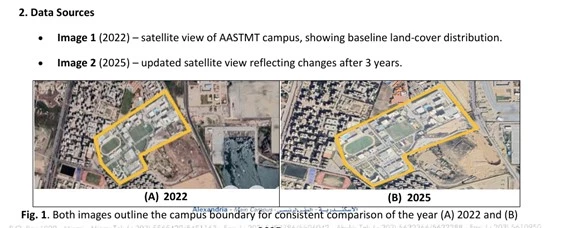
Assessment of Land Degradation and Sustainable Land Use at AASTMT (2022–2025)
This report evaluates land cover and land-use changes across the AASTMT Abu Qir campus between 2022 and 2025, – Land Degradation Neutrality (LDN). By analyzing satellite images from both years, the report assesses whether any part of the campus has undergone degradation, improvement, or stable land conditions.