|
University Name |
Arab Academy for Science and Technology and Maritime Transport |
|
About |
The Arab Academy for Science, Technology & Maritime Transport (AASTMT) has earned recognition for its strong performance in global research and sustainability metrics. In the 2024 Times Higher Education Impact Rankings, AASTMT ranked 306th globally among 1,963 universities—3rd among Egyptian universities and 19th in the Arab region—highlighted by top national positions in SDG 4 (Quality Education), SDG 7 (Affordable & Clean Energy), SDG 8 (Decent Work & Economic Growth), and SDG 14 (Life Below Water) . Internationally, it achieved 6th worldwide for SDG 7, 84th for SDG 4, and top 100 placements for SDGs 8, 12, and 14 . Regionally, AASTMT leads on SDG 7 and ranks 12th in the Arab world for SDG 4 . Beyond SDGs, it is ranked within 1001–1200 in the QS World University Rankings 2025 and is among Egypt’s top 15 universities recognized by QS subject rankings in fields such as Petroleum Engineering, Electrical & Electronics Engineering, and Computer Science . These accolades reflect AASTMT’s commitment to integrating sustainability and high-quality research into its core mission. The Arab Academy for Science, Technology & Maritime Transport (AASTMT) has cultivated a dynamic ecosystem for interdisciplinary and multidisciplinary research, aligning with global trends in knowledge integration and innovation. Through its diverse faculties—ranging from engineering, computing, and logistics to pharmacy, maritime transport, and business—AASTMT encourages research that transcends traditional academic boundaries. Initiatives like the Smart Mobility Lab, Maritime Logistics Simulation Center, and Innovation and Entrepreneurship Center facilitate collaborations across domains such as AI, urban planning, sustainable energy, and healthcare. The Academy’s research agenda also includes climate resilience, blue economy strategies, and digital transformation, often combining technical sciences with policy, management, and social impact. Moreover, AASTMT actively promotes joint supervision of graduate research across faculties and regions, further strengthening cross-cutting expertise. Supported by partnerships with global organizations and local industries, the Academy’s multidisciplinary approach not only addresses complex societal challenges but also fosters innovation ecosystems that prepare students and researchers for the demands of emerging knowledge economies. |
|
Partnering Department / Office |
Deanery of Research and Innovation |
|
About |
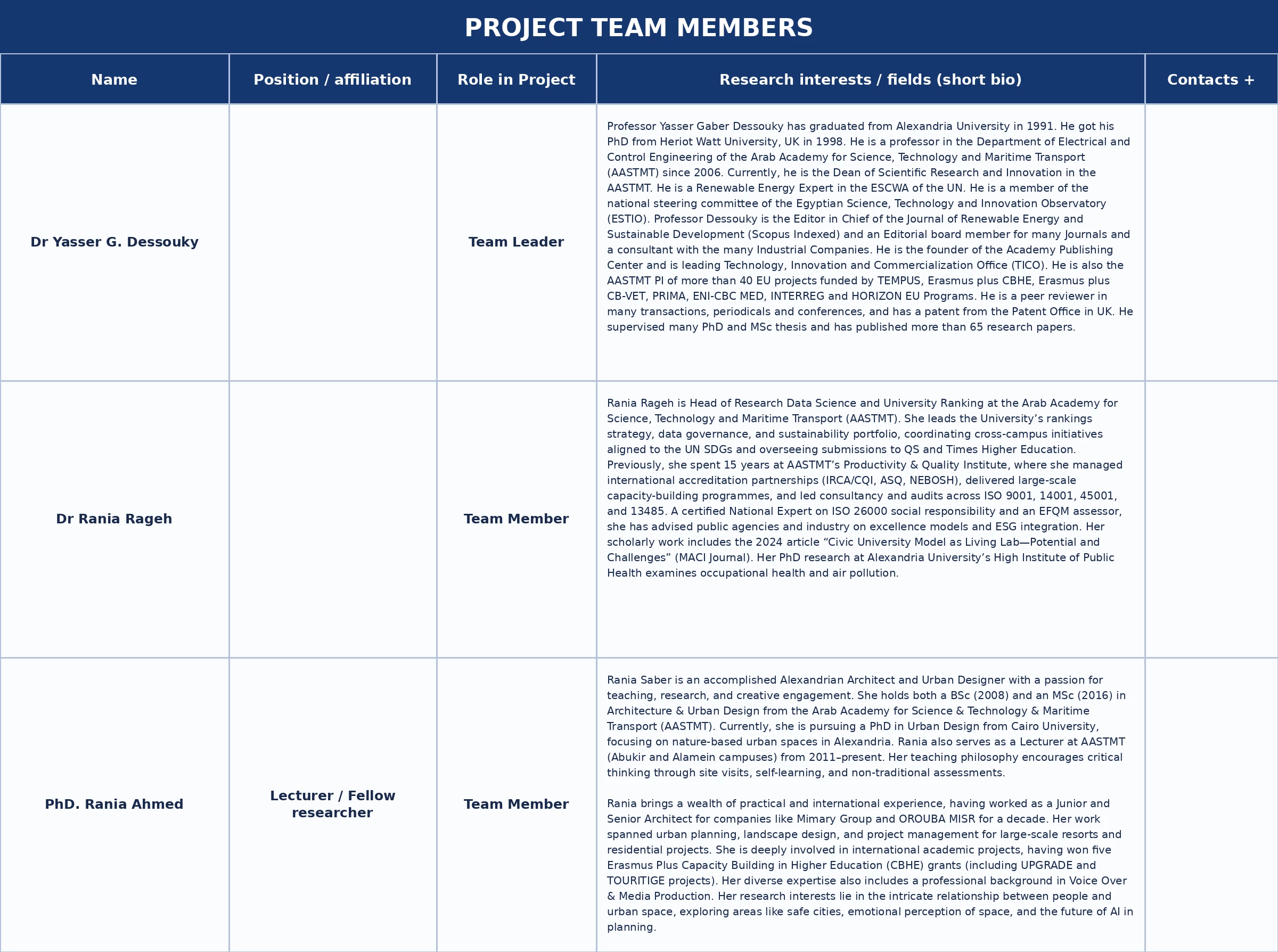
The Deanery of Scientific Research and Innovation at AASTMT, headed by Prof. Dr. Yasser Gaber Dessouky, serves as the Academy's central hub for fostering research excellence, technological advancement, and innovation across all campuses. As the Dean, Prof. Dessouky brings a distinguished pedigree—holding a PhD from Heriot Watt University and specializing in electrical engineering and renewable energy—through which he leads strategic research initiatives, grant acquisition, and knowledge transfer activities. Under his leadership, the Deanery oversees major centers and programs such as the Technology, Innovation and Commercialization Office (TICO), journals like Renewable Energy & Sustainable Development, and projects funded by EU, ITIDA, and ESCWA. Additionally, the office ensures rigorous compliance with intellectual property policies and promotes academic publishing, ethical research, capacity building workshops, and interfaculty collaboration. Serving as both a strategic and operational cornerstone, the Deanery plays a pivotal role in driving AASTMT's vision to become a leading institution in scientific research and innovation within Egypt and the MENA region. |
|
Partnering Discipline for R&D |
Cognitive Cities |
|
About |
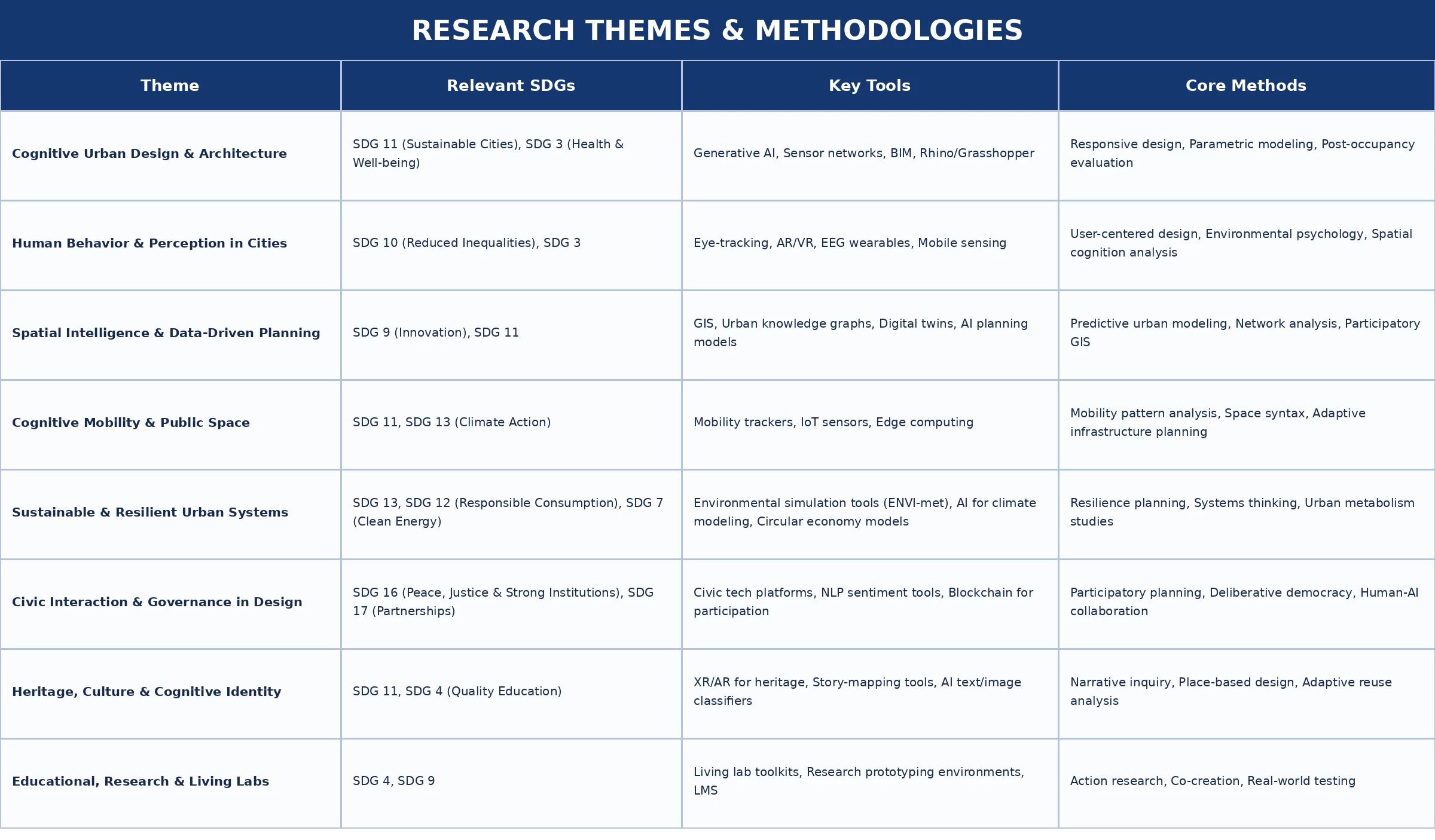
Cognitive Cities integrate intelligent systems with human-centered urbanism, aiming for cities that not only respond to data but also learn from people, adapt to context, and evolve over time. For researchers in urban planning, design, and architecture, this opens new interdisciplinary directions.
1. Cognitive Urban Design & Architecture
2. Human Behavior & Perception in Cities
3. Spatial Intelligence & Data-Driven Planning
4. Cognitive Mobility & Public Space
5. Sustainable & Resilient Urban Systems
6. Civic Interaction & Governance in Design
7. Heritage, Culture & Cognitive Identity
8. Educational, Research & Living Labs
|