The “Outsourcing Employment Practices and Equivalent Rights Policy” at the Arab Academy for Science, Technology, and Maritime Transport (AASTMT) reflects the institution’s strong commitment to Sustainable Development Goal 8 (SDG 8): Decent Work and Economic Growth. This policy ensures that all outsourced employees are treated fairly, ethically, and with full respect for their labor rights.
AASTMT requires that all outsourcing and service contracts undergo a rigorous evaluation process to guarantee that external partners uphold the same ethical and professional standards expected within the university. The policy explicitly mandates that outsourced personnel receive equivalent employment benefits, safe working conditions, and access to facilities comparable to those enjoyed by the university’s direct employees.
Moreover, AASTMT prioritizes collaboration with contractors and service providers who demonstrate clear commitments to fair wages, equal treatment, occupational health and safety, and social and environmental responsibility. Through these practices, the university not only ensures equity and justice within its operational ecosystem but also contributes to the global agenda of promoting sustainable, inclusive, and decent employment for all, in full alignment with SDG 8.
Please read AASTMT’s Employment Practice Equivalent Rights Outsourcing Policy at the following link:
8.2.5 Employment Practice Equivalent Rights Outsourcing on AASTMT webpage
AASTMT holds events to spread awareness about the rights of outsourced employees and services:
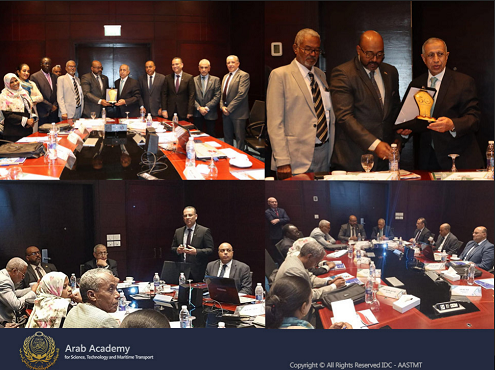
Alexandria, Egypt — May 13, 2024
AASTMT reaffirms its commitment to promoting equitable employment practices and decent work through the strategic review and strengthening of its outsourced workforce arrangements. In line with SDG 8’s objective of “promoting sustained, inclusive and sustainable economic growth, full and productive employment and decent work for all,” the Academy emphasises equal rights and fair treatment across all employment engagements—whether internal or outsourced.
By ensuring that outsourced service providers and contractors are held to the same high standards of treatment, compensation, health and safety, and professional development as direct employees, AASTMT enhances employment equity, mitigates potential labour-practice gaps, and closes the distinction between contractors and in-house staff. This approach directly supports SDG 8 target 8.5 (achieve full and productive employment and decent work for all) and 8.7 (eradicate forced labour and modern slavery).
AASTMT’s policy framework mandates that outsourcing contracts include provisions for fair wages, non-discrimination, equal access to training and career-development opportunities, and consistent working conditions. Through these formalised standards, the Academy also advances living-wage principles by requiring contractors to apply remuneration levels that reflect local living-cost requirements rather than simply minimum legal thresholds.
With this initiative, AASTMT not only fosters inclusive and dignified employment for all individuals associated with the institution, but it also sets a model for the higher-education and maritime sectors in Egypt and the region—demonstrating how outsourcing relationships can be structured in alignment with decent-work and equity principles.
By embedding fairness and equality into its outsourcing strategy, AASTMT is proactively advancing SDG 8 and contributing to sustainable economic growth through responsible employment practices.
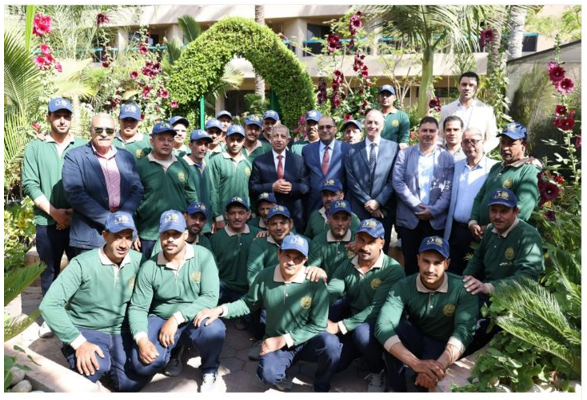
Learn about the event on AASTMT news web link
AASTMT Strengthens Outsourced Workforce Rights and Employment Equity to Advance SDG 8
Alexandria April 30-2024
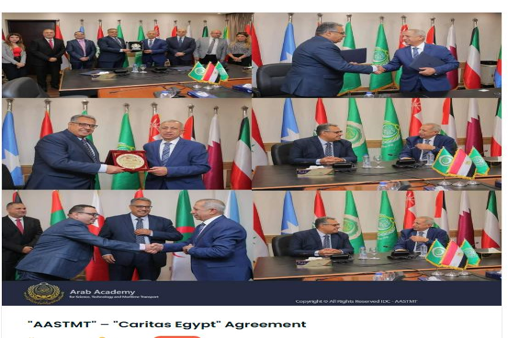
Cairo, Egypt — The Arab Academy for Science, Technology and Maritime Transport (AASTMT) signed a cooperation protocol with Caritas Egypt to enhance collaboration in social development and inclusive employment initiatives.
The partnership focuses on empowering vulnerable groups, promoting fair and non-discriminatory labor practices, and creating pathways for decent and productive work—key targets under SDG 8. By working with Caritas Egypt, a long-standing humanitarian organization dedicated to community development, AASTMT strengthens its role in advancing ethical employment standards across education and community programs.
Through this agreement, both institutions commit to ensuring equal access to training and job opportunities, fair wages, and respect for human rights, regardless of gender, background, or social status. The initiative supports sustainable economic inclusion by extending AASTMT’s employment-equity policies to community outreach and social projects coordinated through Caritas.
“This partnership reflects AASTMT’s deep belief in social responsibility and the right of every individual to decent, fair, and dignified work,” stated Prof. Ismail Abdel Ghaffar Ismail Farag, AASTMT President.
By embedding social justice and equality into its community partnerships, AASTMT continues to lead higher-education institutions in Egypt inadvancing SDG 8 — Decent Work and Economic Growth, ensuring that all employment relationships, both internal and external, uphold fairness, inclusivity, and human dignity.
Learn about the event on AASTMT news web link:
Alexandria, Egypt — AASTMT today announced that it has signed joint cooperation agreements with leading global partners during the International Conference on Machine Intelligence and Smart Innovation (ICMISI 2024).
These strategic agreements — notably with Fortinet (cyber-security company) and University of Genoa (Italy) — are aimed at building a more diverse and highly skilled workforce across Egypt and the Arab region.
In support of SDG 8’s targets of “full and productive employment” and “decent work for all”, AASTMT embeds into these collaborations principles of equal treatment and rights for outsourced and contracted staff alongside direct employees. Key practices include:
“By integrating our outsourcing and partner-workforce arrangements into the same standards we apply to our own people, we ensure that every member of the AASTMT ecosystem enjoys fair, dignified and inclusive employment,” said Prof. Ismail Abdel Ghafar Ismail Farag, President of AASTMT.
With this initiative, AASTMT reinforces that outsourcing should not compromise decent work norms — rather, it can be aligned with core institutional values and the global agenda of SDG 8. The Academy thereby sets a model for responsible employment practices across higher education, research and regional industry networks.

Learn about the event on AASTMT news web link:
AASTMT Strengthens Outsourcing Rights and Workforce Equity to Advance SDG 8
The “Outsourcing Employment Practices and Equivalent Rights Policy” at the Arab Academy for Science, Technology, and Maritime Transport is in alignment with the eighth Sustainable Development Goal (SDG 8), which advocates for fair employment and decent work. This policy underscores the importance of treating outsourced employees justly and upholding ethical employment standards. It mandates the university to rigorously vet and manage service outsourcing processes, ensuring the protection and welfare of the outsourced personnel. This includes providing them with the same employment benefits and facilities that are available to the university’s direct employees. Additionally, the policy promotes the selection of contractors who adhere to moral and ethical standards, encompassing fair wages, the safeguarding of labor rights, and a commitment to environmental and social responsibilities. In doing so, the university is actively contributing to the global objective of fostering sustainable economic growth and decent work opportunities for all, as encapsulated in SDG 8.
Description
As a responsible employer, the Arab Academy for Science, Technology, and Maritime Transport endeavors to create a safe and healthy work environment for its employees. Where outsourcing of services is necessary, the University commits to exercising due diligence in evaluating outsourcing bids and establishing appropriate mechanisms for hiring and monitoring contractors, whose employees likewise deserve equitable compensation and treatment.
Scope
This policy applies to all University Human Resources Staff responsible for hiring and
managing outsourced staff and all outsourced staff during their employment at the Arab Academy for Science, Technology, and Maritime Transport.
Aim
The "Employment Practice Equivalent Rights Outsourcing Policy" aims to establish a framework that guarantees equitable treatment of outsourced employees while upholding ethical and responsible outsourcing practices. It strives to ensure that outsourced workers receive the same employment entitlements and facilities as those directly employed by the university, promoting fairness and non-discrimination. The policy emphasizes rigorous due diligence in selecting outsourcing partners to safeguard labor rights, fair compensation, safe working conditions, and opportunities for expression and association. Additionally, it encourages contractors to engage in socially responsible practices, adhere to transparency and ethical standards, and refrain from discriminatory hiring or employment practices. The policy seeks to balance social fairness with cost-effective service delivery, promoting flexibility and accountability while striving to minimize outsourcing that could jeopardize existing workers' roles. Ultimately, the policy aims to create a safe, ethical, and equitable working environment for all, in alignment with the principles of Sustainable Development Goal 8.
Policy Statement
The Arab Academy for Science, Technology, and Maritime Transport is dedicated to ethical and equitable employment practices, even when outsourcing services. Under our "Employment Practice Equivalent Rights Outsourcing Policy," we pledge to treat outsourced workers with the same fairness and respect as our staff, ensuring they receive equivalent employment benefits
and conditions. We will be diligent in selecting and monitoring outsourcing partners, insisting on ethical labor standards, fair compensation, and safe working conditions. We encourage contractors to engage in socially responsible practices and require transparency and non-discrimination. We aim to create a safe, ethical, and fair work environment for all, in line with Sustainable Development Goal 8.
Procedures
The following are some general concepts that govern service outsourcing:
Selection criteria for outsourcing services and choosing contractors:
The methods for hiring contractors should be open, fair, and transparent, allowing any interested service provider to participate. Apart from the standard criteria such as achieving stated service needs and establishing fair costs through quotation/tendering procedures, the following criteria should be considered and, when applicable, reflected effectively in tendering/contractual documents:
Contractors should adhere to the following code of ethics:
Review program
Policy title | Employment Practice Equivalent Rights Outsourcing |
Date created | October 2020 |
Dates reviewed | October 2022 and October 2023 |
Approving body | Human Resources Affairs Department |
Version | 2 |
Next review date | October 2025 |
Policy owner | Human Resources Affairs Department |
Lead contact | Head of Human Resources Affairs Department |
Approval Signature | Dr. Yasser Gaber Dean of Scientific Research and Innovation |
AASTMT’s Employment Practice Equivalent Rights Outsourcing Policy
AASTMT holds events to spread awareness about the rights of outsourced employees and services:
On March 12, 2023, the Arab Academy for Science, Technology, and Maritime Transport (AASTMT) hosted a workshop with Sudan Ports to address and promote decent work practices in both Egypt and Sudan, advancing the objectives of Sustainable Development Goal 8 (SDG 8). This workshop provided a critical platform for discussing the importance of ethical employment practices and equitable labor rights, focusing specifically on the need to uphold workers' rights in outsourced activities. In industries like maritime transport, where outsourcing to third parties is common, it is essential to establish policies that guarantee equivalent rights for outsourced workers, ensuring they receive fair treatment, wages, and protections consistent with in-house employees. By bringing together stakeholders from both countries, AASTMT and Sudan Ports underscored the value of ethical outsourcing as a foundation for fair and inclusive employment practices across the region.
A major emphasis of the workshop was on the development and reinforcement of policies that protect the rights of workers involved in outsourced labor, directly aligning with SDG 8’s call for productive employment and decent work. Both AASTMT and Sudan Ports recognized that ensuring equivalent rights in outsourced roles is vital for reducing labor exploitation and enhancing job quality. This approach includes implementing standards that require third-party vendors to uphold fair labor practices, fair compensation, and safe working conditions. Through this workshop, AASTMT and Sudan Ports demonstrated their commitment to setting a high standard for labor practices, fostering a collaborative approach to building a workforce grounded in equality, and promoting sustainable economic growth that benefits workers throughout the supply chain.
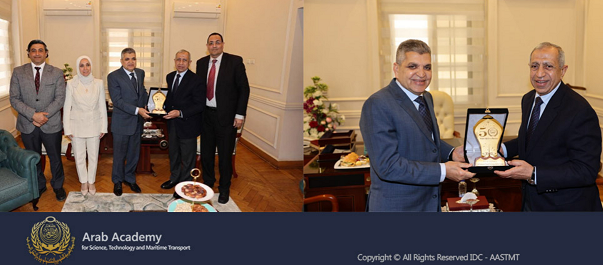
The AASTMT delegation’s visit to the Suez Canal Authority on March 20, 2023, was instrumental in advancing shared goals around decent work and sustainable economic growth, in line with Sustainable Development Goal 8 (SDG 8). Through this visit, AASTMT and the Suez Canal Authority strengthened their collaboration on creating employment opportunities that prioritize fair labor practices and inclusive growth within the maritime industry. Recognizing the Suez Canal's pivotal role in global trade, the delegation emphasized the importance of policies that ensure decent work, equal rights, and fair compensation for all workers involved. This collaborative approach is essential for setting a regional standard for ethical employment, where workers' rights are safeguarded across all roles, including outsourced positions.
A key topic during the visit was the development of a framework that upholds equivalent rights for workers when outsourcing to third-party contractors. Both AASTMT and the Suez Canal Authority acknowledged the importance of implementing fair employment policies that extend to all employees, including those indirectly employed. By supporting policies that guarantee equivalent rights for outsourced workers, such as fair pay, safe conditions, and legal protections, the two organizations contribute to a more equitable work environment in the maritime sector. This partnership demonstrates a commitment to eliminating labor disparities and promoting decent work practices that foster sustainable growth, thus aligning with SDG 8’s mission to support fair and productive employment for all.
The “Outsourcing Employment Practices and Equivalent Rights Policy” at the Arab Academy for Science, Technology, and Maritime Transport is in alignment with the eighth Sustainable Development Goal (SDG 8), which advocates for fair employment and decent work. This policy underscores the importance of treating outsourced employees justly and upholding ethical employment standards. It mandates the university to rigorously vet and manage service outsourcing processes, ensuring the protection and welfare of the outsourced personnel. This includes providing them with the same employment benefits and facilities that are available to the university’s direct employees. Additionally, the policy promotes the selection of contractors who adhere to moral and ethical standards, encompassing fair wages, the safeguarding of labor rights, and a commitment to environmental and social responsibilities. In doing so, the university is actively contributing to the global objective of fostering sustainable economic growth and decent work opportunities for all, as encapsulated in SDG 8.
Please read AASTMT’s Employment Practice Equivalent Rights Outsourcing Policy
AASTMT holds events to spread awareness about the rights of outsourced employees and services:
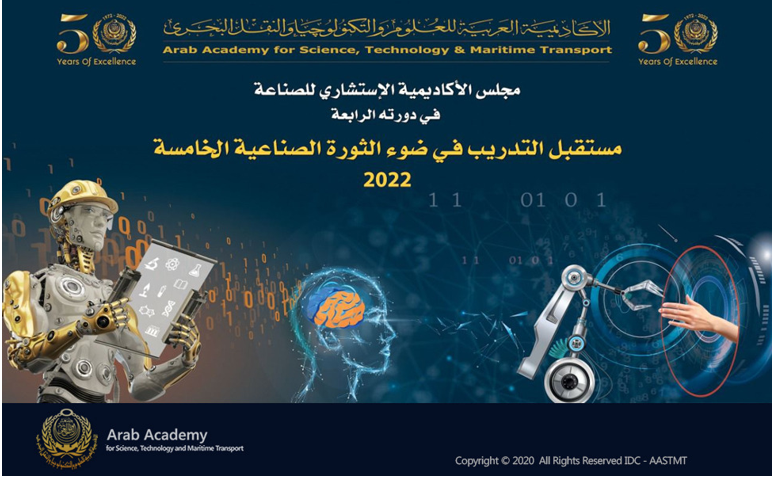
Cooperation between AASTMT and industrial organizations at this session underscores the commitment to employment practice equivalent rights outsourcing. The 4th Session of the AASTMT Industrial Advisory Council, which took place on May 26, 2022, was a pivotal event in the realm of education-industry collaboration. This session, hosted at the AASTMT Abu Kir Campus, was centered around the theme of "Training within the Fifth Industrial Revolution." The gathering brought together a diverse array of industrial entities and AASTMT officials, fostering a dynamic exchange of ideas and insights. Read more...
Learn about the event on AASTMT news weblink