SUSTAINABLE DEVELOPMENT GOAL 13
SDG13 Report (2024/2025)
This report presents a concise account of the Arab Academy for Science, Technology & Maritime Transport’s (AASTMT) actions and outcomes under SDG 13: Climate Action for the 2024–2025 academic year. AASTMT introduced its Climate Action Plan 2025–2030: Pathway to Net Zero, and its published historical emissions series for the Alexandria campuses recorded a 32.8% reduction in greenhouse gas emissions in 2024 compared with the 2019 baseline. The 2024–2025 carbon footprint assessment expanded monitoring to four campuses (Abu Qir, Misr El-Gedida, Smart Village and South Valley) across Scopes 1, 2 and 3, while energy from low-carbon sources reached 17,682.84 GJ in 2025 and electricity consumption fell from 19,055,865 kWh in 2024 to 18,585,647 kWh in 2025.
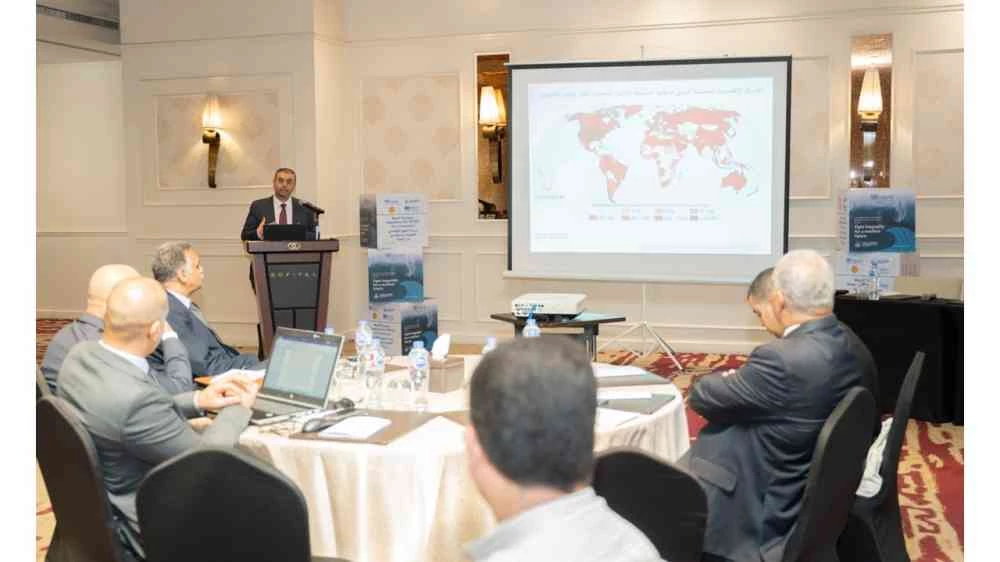
AASTMT’s commitment extends beyond its campuses. In 2025 it delivered eight climate-related education and awareness programmes for the public, school communities, trainees and students; it hosted the first coordination meeting of the Arab Programme for Reducing Marine Disasters in June 2025 with representatives of 15 Arab states; it took part in the Multi-Hazard Resilience Forum with the UNDRR Regional Office for Arab States, the Government of Egypt and UNESCO; and it reaffirmed its pledge under the UNFCCC Race to Zero campaign to reach net-zero greenhouse gas emissions by 2050.
SDG13 Report (2023/2024)
This report presents a concise account of the Arab Academy for Science, Technology & Maritime Transport’s (AASTMT) actions and outcomes under SDG 13: Climate Action for the 2023–2024 academic year. Across campuses and partner networks, AASTMT advanced a practical low-carbon transition by expanding CO₂/greenhouse gas (GHG) emissions tracking and disclosure, scaling renewable and energy-efficiency measures, and strengthening mitigation and adaptation capacity through education, community outreach, and technical support to public authorities.
AASTMT’s commitment is embedded in institutional practice: students and community members engaged in targeted climate-literacy programs; staff collaborated with NGOs and government bodies on early-warning, disaster risk reduction, and climate policy design; and the university reaffirmed a pathway to carbon neutrality, supported by transparent reporting on Scopes 1 & 2 and selected Scope 3 trends. The pages that follow highlight milestones in local education on climate change, a publicly shared roadmap for CO₂ reduction and low-carbon energy, co-operative planning for climate-related hazards, government support initiatives, and a culture of accountable governance that underpins a resilient, net-zero future
AASTMT Carbon Emissions 2018-2021
AASTMT Carbon Emissions 2022-2023
AASTMT Carbon Emissions 2024
AASTMT Climate Action Plan_2021-2022
AASTMT Climate Action Plan_2022-2023
AASTMT Climate Action Plan_2024
Race to Zero Current Signatories
The Arab Academy for Science, Technology & Maritime Transport (AASTMT) is unwavering in its commitment to a sustainable future, focusing notably on SDG 13 - Climate Action, aligning with the United Nations Sustainable Development Goals. Acknowledging our pivotal role in the Arab region's educational landscape, we prioritize instilling a sustainability mindset in our students and community. Our comprehensive Climate Action Plan integrates international efforts, emphasizing greenhouse gas mitigation and climate resilience. AASTMT pledges to embed sustainability across curricula, research, and campus operations, inviting active participation from our community. Together, our collaborative efforts aim to impact our institution and contribute meaningfully to a sustainable global future.
Please explore our Campus Carbon Footprint for 2018-2021, along with our Climate Action Plan and our Pledge for Race to Zero.