



 UI-Green Metric
[3.1]3R (Reduce, Reuse, Recycle) program for university waste
|
|
|
Example of Organic Waste Treatment |
|
|
|
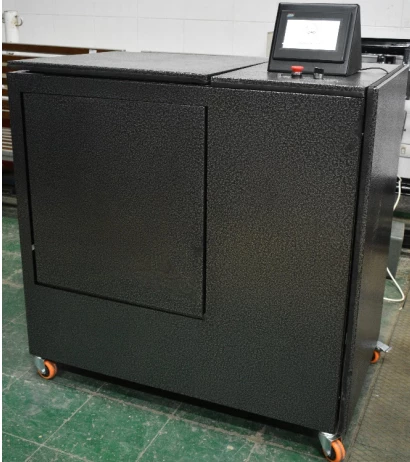
AASTMT Composter Unit converts the common Kitchen Food Wastes into organic fertilizer |
|
|
|
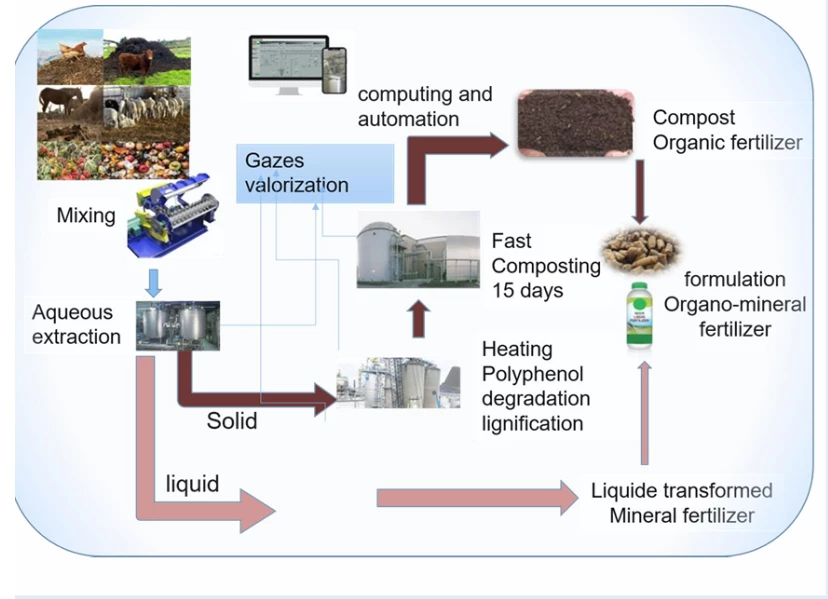
Eco-FertiS Innovative processing of manures and biowastes of Eco-friendly Fertilizer |

|
|
|||
|
|
|||
|
|
|||
|
Proposed Electrical Furnace Unit |
Campus Smart Recycling System (CSRC) [Proposed Composter[Unit] |
||
Description:
The Arab Academy for Science, Technology and Maritime Transport (AASTMT) has established a comprehensive 3R program that outlines strategic methods to manage campus waste through reduction, reuse, and recycling initiatives. This program is anchored in the institution's Consumption and Recycling Policy, which reflects AASTMT's commitment to advancing the Sustainable Development Goals by promoting a culture of sustainability across all campuses and operations.
The policy applies to all AASTMT employees, students, and contractors involved in handling, managing, or storing any form of waste, including hazardous and non-hazardous materials. It establishes a framework ensuring that all waste management activities priorities recycling, reuse, and responsible disposal in line with the university's sustainability objectives. Recycling must be integrated at every stage of the waste management process—beginning with proper segregation and collection, followed by safe processing and reuse wherever feasible.
1. Reduce: Waste Prevention and Minimization
AASTMT targets waste prevention by implementing measures to limit the use of single-use plastics and disposables across campuses. The university mandates that all campus food outlets replace single-use packaging (such as disposable coffee cups and cutlery) with compostable alternatives. Through its Consumption and Recycling Policy, AASTMT aims to minimize environmental impact by prioritizing waste prevention, reusing materials whenever possible, and ensuring proper recycling and disposal in compliance with environmental regulations.
Key Reduction Initiatives:
- Utilizing less material in design and keeping items for longer periods
- Reducing the usage of single-use packaging such as coffee cups and increasing the usage of reusable packaging
- Promoting awareness and training programs to encourage responsible consumption and waste minimization across all departments
- Reducing landfill waste and boosting the usage of reusable, biodegradable, and recyclable materials
- AASTMT Free of Plastic Bags initiative, reflecting the institution's commitment to climate change adaptation and environmental sustainability
The policy considers end-of-life disposal costs and environmental impacts when making acquisition decisions involving the construction of new or renovated facilities. AASTMT executes cycles, methods, and activities that guarantee consistency with ecological enactment and best practice, to lessen the general waste produced and forestall waste creation at every possible opportunity.
2. Reuse: Extending Product Lifecycles
The university promotes keeping items for longer and using reusable packaging. It encourages students and staff to repurpose containers and donate unused items. AASTMT is committed to reducing food waste through food preservation methods and vermicomposting practices.
Key Reuse Initiatives:
- Getting ready for re-use through cleaning, fixing, and restoring items
- Reducing single-use packaging and increasing the usage of reusable packaging
- Encouraging repurposing of containers and donation of unused items across the campus community
3. Recycle: Comprehensive Recycling Infrastructure
AASTMT features a robust recycling infrastructure. The academy tracks its waste output across campuses—aiming to recycle the vast majority of its generated waste (organic and inorganic). Only a minimal percentage—primarily hazardous medical waste from university clinics—is sent to safe landfills. The Academy measures the amount of waste generated in the university environment, with around 7 metric tons of waste generated in 2021-2022, of which approximately 6 metric tons are recycled. The amount of waste sent to landfills is approximately 1 metric ton, primarily consisting of hazardous medical waste from clinics and faculties.
Key Recycling Initiatives:
- Transforming waste into another substance or item, including fertilizing the soil
- Anaerobic digestion – transformation to biogas for power generation; incineration with energy recovery
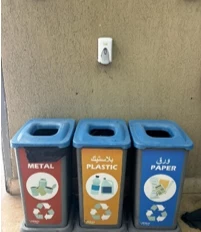
- Establishing accessible recycling stations across campus and ensuring regular collection and monitoring of recyclable materials
- Waste recirculation through optimizing resource management (water/solids)
4. Campus Smart Recycling System (CSRS)
AASTMT launched the Campus Smart Recycling System (CSRS) project to create a sustainable self-sufficient recycling model on campus. The project, funded by AASTMT with a total value of EGP 350,000, focuses on transforming campus wastes into reusable and economically beneficial products while helping reduce operational costs and environmental impacts.
Project Details:
- Project Name: Campus Smart Recycling System to turn Food Organic Wastes and Recyclables into Economic Value Products
- Reference No: 2068
- Duration: 12 months (October 2021 – September 2022)
- Estimated Total Cost: Approximately EGP 500,000
Targeted Waste Types:
The proposed system targets three types of campus wastes:
- Organic food remains
- Plastic tableware
- Aluminum cans
Main Objectives:
- Adding an economic value to the organic food wastes instead of dumping it
- Reducing the campus running cost by:
- Producing a percentage of the campus disposable plastic tableware using AASTMT's owned plastic injection machine located at the Industry Service Complex (ISC)
- Reducing the campus budget for purchasing fertilizers used in campus cultivated areas
- Reducing the campus budget for purchasing aluminum raw materials for students' graduation projects
Manufactured Components:
These objectives will be achieved by manufacturing:
- Portable compost unit that produces organic fertilizer from garbage
- 2 moulds for the AASTMT plastic injection machine
- Plastic washing, drying and disinfection unit to recycle the plastic tableware
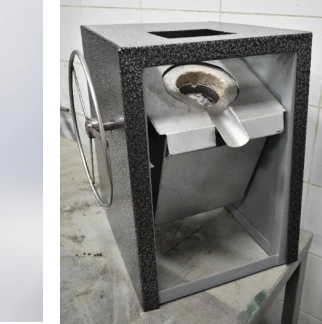
- Aluminum can crusher machine to reduce the storing size of the cans until melting
- Electrical furnace to melt aluminum cans into raw bars
Electrical Furnace Unit:
The electrical furnace unit plays a crucial role in the recycling and production of aluminums bars from aluminum scrap by providing an efficient, controlled, and environmentally responsible melting process. Through the application of electrical energy, aluminum scrap is transformed into high-quality molten metal while impurities are separated and removed to enhance product purity. The integration of temperature monitoring and casting systems ensures consistent product quality and operational efficiency. Furthermore, the use of electrical furnaces supports sustainable manufacturing practices by promoting aluminum recycling, reducing energy consumption compared to primary aluminum production, minimizing waste generation, and conserving natural resources. Consequently, the electrical furnace unit represents an essential technology for achieving both economic and environmental benefits in the aluminum recycling industry.
Project Background:
The Research and Developments Department at the Industry Service Complex in AASTMT Abu Qir campus built a prototype for a small size composter unit that can be used in recycling home kitchen wastes into organic fertilizer in 2016. The prototype proved the concept and succeeded in producing organic fertilizers as expected from kitchen food wastes. The prototype was presented at many events at AASTMT, including the environmental day in 2019, and at exhibitions such as the "Bedaia" exhibitor in 2020.
5. Vermicomposting and Organic Waste Treatment
AASTMT has implemented comprehensive organic waste treatment systems that convert kitchen food waste and agricultural waste into valuable resources through vermicomposting and other sustainable methods.
Vermicomposting Process:
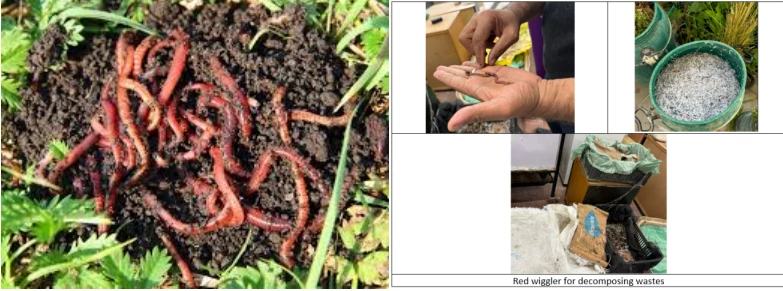
The Aquaculture Research Centre (ARC) on the main campus is responsible for recycling agricultural wastes and water produced from landscape activities, as well as waste from the main kitchen. The recycling system consists of two pathways:
First Pathway – Vermicomposting:
Wastes are collected and introduced into earthworm composting pens. The produced vermicompost is then used as an organic fertilizer in landscaping activities. The reproduction of worms leads to a threefold increase in their population. Part of the produced worms is then used in fish culture activities at the ARC.
Second Pathway – Biogas and Soluble Fertilizers:
Wastes are processed to produce biogas and soluble fertilizers. The produced biogas is used in various ARC activities as an alternative source of energy.
Composting Kitchen Food Waste:
Composting kitchen food waste is a sustainable and eco-friendly practice that not only reduces the amount of waste sent to landfills but also produces nutrient-rich organic fertilizer. By diverting food scraps from the trash bin and instead allowing them to decompose naturally, composting helps create a closed-loop system where waste is transformed into a valuable resource. Kitchen food waste, including fruit and vegetable peels, coffee grounds, eggshells, and leftovers, contains valuable nutrients that can be recycled back into the soil. Through the composting process, microorganisms break down these organic materials into a dark, crumbly substance known as compost. This compost can then be used to enrich soil in gardens, lawns, and plant beds, promoting healthy plant growth, improving soil structure, and reducing the need for chemical fertilizers.
AASTMT Composter Unit:
The AASTMT Composter Unit converts common kitchen food wastes into organic fertilizer, demonstrating the practical application of composting technology on campus.
Eco-FertiS Project:
The Eco-FertiS project focuses on the innovative processing of manures and biowastes into eco-friendly fertilizers. The project aims to improve agricultural soil quality through integrated waste management, providing effective rich fertilizers (mineral, organic, and organo-mineral) using an improved recycling process employing adapted technologies, at low cost and healthier for farmers and for the soil. Financed by the European Union PRIMA Program and TÜBİTAK 1071 Program, the project was launched in 2024.
Composting Infrastructure:
AASTMT provides composting bins and collection points around campus, making it easier for students and staff to compost their food waste. This initiative supports the reduction of food waste and the creation of organic fertilizer for AASTMT green areas.
6. Entrepreneurial Spin-offs and Innovation
AASTMT has launched and supported a diverse portfolio of entrepreneurial spin-offs that reflect its strong commitment to innovation, sustainability, and social impact. Among these ventures are:
- HELFEX Robotics: Develops rehabilitation exoskeletons for children with mobility disabilities
- Carbocycle: Focuses on solar-powered clean energy solutions for agriculture
- ReNile: Provides IoT-based smart farming and environmental monitoring systems
- Aqua Valley: Recycles and reuses fish farm water for organic irrigation
- Biomass, SH-N Formulation, and Kadry Group: Contribute to waste recycling, green energy production, and sustainable food systems
Enactus AAST Sheraton:
The Enactus AAST Sheraton team implemented "Rose Carbon" and "Aquatica" projects to remove pollutants, recycle water, and reuse materials, contributing to clean water systems, solid waste reduction, and healthier urban environments. Littless creates high-quality, need-based, sustainable textiles and merchandise that can be recycled or upcycled, reducing textile waste in the environment and providing affordable products to lower-income families.
Through these initiatives, AASTMT continues to empower innovators, promote circular economy practices, and strengthen Egypt's position as a regional leader in sustainable technological development.
7. Conferences and Partnerships
The 2nd International Conference on Green Climate and Smart Waste Management:
AASTMT (as a strategic partner) hosted the Second International Conference on Green Climate and Smart Waste Management. The second edition of the conference was entitled "Accelerating to Stop Food Waste and Loss for a Net Zero Emission Future". The conference was organized by the Global Center for Creativity, Environmental Innovation and Entrepreneurship in cooperation with many global, regional, and local organizations. The event highlighted recent and significant advances in research and development in advanced technology, focusing on the fact that unsustainable consumption and production patterns are a major cause of climate change, land degradation, and resource depletion.
Workshops and Training:
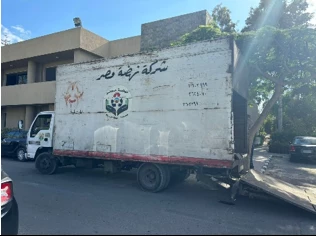
AASTMT organized a specialized workshop on waste management in collaboration with Alexandria Governorate and Nahdet Misr Company. Sessions focused on sustainable waste-handling practices, including waste reduction, recycling, reuse, and safe disposal, and highlighted the importance of integrated waste systems for resource efficiency and environmental protection.
Partnership with Nahdet Misr:
A Memorandum of Understanding was signed between Nahdet Misr Company and AASTMT for sustainable environmental management and training collaboration. This partnership strengthens the Academy's capacity for responsible waste management and environmental stewardship.
8. Zero-Waste Strategy and Waste Tracking
AASTMT continuously tracks and measures waste generation across campuses as part of its waste management strategy.
Zero-Waste Campus Vision:
AASTMT's main goal is to achieve Zero-waste Campus status by the year 2049, while simultaneously decreasing total waste output by 15% before 2030. To effectively tackle all aspects of campus waste, the university seeks innovative solutions and establishes new collaborations encompassing all dimensions.
Waste Tracking System:
AASTMT will implement a digital waste tracking and reporting system to monitor waste generation, recycling rates, and disposal activities across all campuses, ensuring transparency, accountability, and continuous improvement in sustainability performance.
Waste Generation Data:
- 2021-2022: Approximately 7 metric tons of waste generated, with 6 metric tons recycled and 1 metric ton sent to landfills (primarily hazardous medical waste from clinics and faculties)
- 2023-2024: Approximately 3.78 metric tons of waste recycled
Reduction of Single-Use Plastics:
AASTMT has established comprehensive waste management and recycling systems, focusing on reducing plastic waste in catering, events, and daily operations. The institution intends to keep diminishing waste by investigating new items and administrations that will help accomplish decreased plastic utilisation and waste.
9. Scope Across All Campuses
The 3R program applies to:
- All AASTMT campuses and branches
- Students, faculty members, staff, contractors, suppliers, and campus service providers
- Academic buildings, residences, cafeterias, laboratories, workshops, and campus events
Summary of 3R Program Components
| Component | Implementation | Key Outcomes |
|
Reduce |
Single-use plastic ban, compostable alternatives, awareness programs |
Waste prevention, reduced environmental impact |
|
Reuse |
Reusable packaging, item repurposing, donation programs |
Extended product lifecycles, reduced waste generation |
|
Recycle |
Recycling stations, waste tracking, material recovery |
6 metric tons recycled annually, reduced landfill waste |
|
CSRS Project |
Compost units, plastic recycling, aluminium melting |
Economic value from waste, reduced operational costs |
|
Vermicomposting |
Earthworm composting, biogas production |
Organic fertiliser, renewable energy, waste reduction |
|
Zero-Waste Vision |
2049 target, 15% reduction by 2030 |
Long-term sustainability, circular economy |
|
Spin-offs |
Entrepreneurial ventures in recycling and sustainability |
Innovation, green economy, social impact |
Contribution to Sustainable Development Goals
AASTMT's 3R program contributes significantly to multiple SDGs:
| SDG | Contribution |
|
SDG 4 (Quality Education) |
Raising awareness and educating students about sustainability and responsible waste management through workshops, training, and academic programs |
|
SDG 6 (Clean Water and Sanitation) |
Preventing contamination through safe waste disposal and recycling systems |
|
SDG 9 (Industry, Innovation and Infrastructure) |
Supporting innovation in recycling systems through CSRS, spin-offs, and research projects |
|
SDG 11 (Sustainable Cities and Communities) |
Promoting sustainable campus operations and environmental responsibility |
|
SDG 12 (Responsible Consumption and Production) |
Encouraging recycling, waste reduction, reuse, and sustainable resource use through comprehensive policies and programs |
|
SDG 13 (Climate Action) |
Reducing waste-related emissions through composting, biogas production, and waste-to-energy initiatives |
|
SDG 14 (Life Below Water) |
Minimizing plastic and solid waste pollution affecting marine ecosystems |
|
SDG 15 (Life on Land) |
Protecting terrestrial ecosystems through sustainable waste management and vermicomposting |
|
SDG 17 (Partnerships for the Goals) |
Strengthening cooperation with environmental organisations, government authorities, and private sector partners |
Additional Evidence Links
| Resource | URL |
|
AASTMT Recycling Policy |
|
|
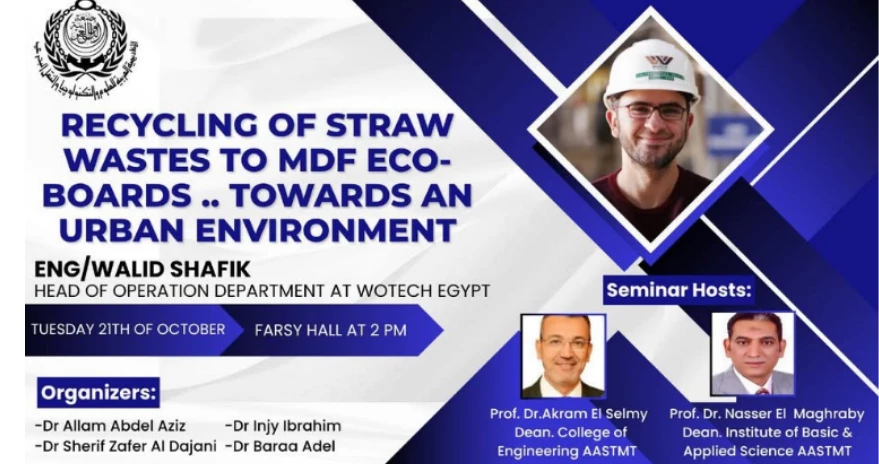
AASTMT Seminar on Straw Waste Recycling |
|
|
AASTMT Spin-Offs Promote Innovation and Sustainability |
https://aast.edu/en/sdg/goals.php?unit_item=1206&page_id=120600018 |
|
Enactus AAST Sheraton |
https://aast.edu/en/sdg/goals.php?unit_item=1206&page_id=120600018 |
|
The 2nd International Conference on Green Climate and Smart Waste Management |
|
|
Incorporating Waste Management System |
https://aast.edu/en/sdg/goals.php?unit_item=1212&page_id=121200027 |
|
Consumption and Recycling Policy |
|
|
Campus Smart Recycling System Project |
https://aast.edu/en/scientific-research/projects/project.php?uid=16&proj_id=2916 |