



 UI-Green Metric
[6.20] Impact of Education and Research programs in supporting the Sustainable Development Goals (SDGs).
Very High Impact (Supporting all 17 Sustainable Development Goals)
Executive Summary
The Arab Academy for Science, Technology and Maritime Transport (AASTMT) is a regional institution of excellence operating under the League of Arab States, with a strategic commitment to advancing sustainable development through education, scientific research, innovation, entrepreneurship, community engagement, and international collaboration. Sustainability is embedded throughout the Academy's institutional strategy and academic mission, ensuring that graduates, researchers, industry partners, and surrounding communities contribute meaningfully to the implementation of the United Nations 2030 Agenda for Sustainable Development.
AASTMT adopts a whole-institution approach to sustainability. Rather than treating sustainability as a standalone discipline, the Academy integrates sustainability principles into academic curricula, multidisciplinary research, professional training, innovation ecosystems, student activities, community services, and international partnerships. This institutional approach enables sustainability concepts to be embedded across engineering, maritime transport, logistics, management, artificial intelligence, computing, pharmacy, medicine, dentistry, fisheries, archaeology, law, political science, languages, and other academic disciplines.
During the current reporting period, AASTMT demonstrated significant institutional achievements that collectively support the Sustainable Development Goals, including:
|
Indicator |
Institutional Achievement |
|
Sustainability-related courses/modules |
11,474 |
|
Total courses/modules offered |
13,330 |
|
Sustainability-related academic programmes |
31 |
|
Sustainability publications (Scopus 2022–2025) |
1,397 |
|
International sustainability collaborations |
78 |
|
Sustainability-related events |
578 |
|
Student sustainability activities |
≈45 annually |
These achievements demonstrate that sustainability has become an integral component of AASTMT's educational philosophy, research agenda, and institutional development.
Institutional Commitment to Sustainable Development
AASTMT recognises higher education as a catalyst for sustainable transformation. Accordingly, sustainability principles are incorporated into strategic planning, curriculum design, scientific research priorities, campus operations, international partnerships, and community outreach initiatives.
The Academy's sustainability framework aligns with:
- United Nations Sustainable Development Goals (SDGs)
- Egypt Vision 2030
- National Climate Change Strategy 2050
- African Union Agenda 2063
- League of Arab States sustainable development priorities
This alignment ensures that graduates are equipped with the knowledge, competencies, and leadership skills required to address global sustainability challenges.
Institutionally, sustainability is promoted through:
- curriculum integration,
- interdisciplinary research,
- innovation and entrepreneurship,
- experiential learning,
- community engagement,
- international capacity building,
- policy development,
- strategic partnerships with industry and government.
Education as a Driver of Sustainable Development
AASTMT has transformed sustainability education from isolated environmental courses into an institution-wide educational philosophy.
Sustainability concepts are integrated across undergraduate, postgraduate, executive education, and professional development programmes offered by all academic colleges.
Major educational themes include:
- Renewable Energy
- Climate Change
- Sustainable Engineering
- Green Buildings
- Circular Economy
- Sustainable Maritime Transport
- Blue Economy
- Smart Cities
- Artificial Intelligence for Sustainability
- Sustainable Supply Chains
- Environmental Management
- Water Resources
- Biodiversity Conservation
- Public Health
- Heritage Conservation
- Responsible Business
- Digital Transformation
- Sustainable Tourism
Students acquire theoretical knowledge together with practical competencies through:
- laboratory-based learning,
- field studies,
- industrial placements,
- interdisciplinary projects,
- entrepreneurship programmes,
- innovation competitions,
- living laboratories,
- international mobility programmes.
This educational model contributes directly to producing graduates capable of leading sustainable development across Egypt, the Arab region, Africa, and internationally.
Research Excellence Supporting Sustainable Development
Scientific research represents one of the strongest pillars of AASTMT's contribution to the SDGs.
During the reporting period, researchers produced 1,397 sustainability-related scholarly publications indexed in Scopus, covering nearly all SDG themes, with particularly strong performance in affordable and clean energy, industry and innovation, climate action, sustainable cities, clean water, health, and responsible consumption.
Research activities address strategic challenges including:
- Renewable Energy Systems
- Green Hydrogen
- Climate Change Adaptation
- Sustainable Construction
- Circular Economy
- Smart Manufacturing
- Maritime Decarbonisation
- Marine Ecosystem Protection
- Water Security
- Sustainable Agriculture
- Public Health
- Artificial Intelligence
- Digital Twins
- Sustainable Logistics
- Cultural Heritage Conservation
The Academy actively participates in international collaborative research funded through programmes such as Erasmus+, Horizon Europe, PRIMA, Interreg NEXT MED, EMFAF, the British Council, and other international funding mechanisms. During the reporting period, AASTMT participated in numerous sustainability-focused projects with a combined portfolio exceeding USD 31 million, addressing topics including engineering education, sustainable agriculture, blue economy, renewable energy, smart cities, climate resilience, and green innovation.
Institutional Sustainability Ecosystem
AASTMT has developed an integrated sustainability ecosystem in which education, research, innovation, entrepreneurship, and community engagement reinforce one another.
The ecosystem connects:
- Academic Colleges
- Research Centres
- Innovation and Entrepreneurship Units
- Student Affairs
- Industry Partners
- Government Authorities
- International Universities
- Civil Society Organisations
- Local Communities
Through this integrated model, academic knowledge is translated into practical solutions addressing environmental protection, economic resilience, technological innovation, social inclusion, and sustainable governance.
The Academy also promotes sustainability through student organisations, awareness campaigns, volunteering initiatives, international competitions, professional development programmes, and community service activities, ensuring that sustainability becomes an essential part of students' academic and personal development.
AASTMT Qualifies for "Very High Impact"
The collective evidence demonstrates that sustainability is embedded throughout AASTMT's institutional ecosystem rather than confined to individual projects or departments.
AASTMT contributes directly to:
- Sustainable education
- Applied scientific research
- Innovation and entrepreneurship
- Capacity building
- Community engagement
- International cooperation
- Policy support
- Knowledge transfer
These institutional efforts support all 17 Sustainable Development Goals, with particularly strong contributions to SDGs 4, 7, 8, 9, 11, 12, 13, 14, and 17, while also contributing to SDGs 1, 2, 3, 5, 6, 10, 15, and 16 through interdisciplinary education, research, public health initiatives, gender empowerment, water management, biodiversity conservation, social inclusion, governance, and international partnerships.
Educational Impact Supporting Sustainable Development
Education represents the cornerstone of the Arab Academy for Science, Technology and Maritime Transport's contribution to sustainable development. Through its multidisciplinary academic portfolio, AASTMT equips graduates with the scientific knowledge, technical competencies, ethical values, leadership skills, and innovation capabilities necessary to address global sustainability challenges.
Rather than restricting sustainability education to environmental sciences, AASTMT adopts a university-wide approach that integrates sustainability principles across engineering, maritime sciences, logistics, business, artificial intelligence, computing, medicine, pharmacy, dentistry, fisheries, archaeology, law, political science, language studies, and community engagement. This comprehensive educational model ensures that graduates understand sustainability within the context of their professional disciplines while contributing to Egypt Vision 2030 and the United Nations Sustainable Development Goals (SDGs).
During the 2025/2026 academic year, AASTMT offered 13,330 undergraduate and postgraduate courses and modules, of which 11,474 incorporated sustainability-related knowledge, competencies, or applications. Sustainability education was delivered through 31 academic programmes distributed across multiple colleges and supported by interdisciplinary teaching, practical training, fieldwork, laboratory experiences, industry placements, and community-based learning.
Table 1 Institutional Educational Indicators
|
Indicator |
Value |
|
Total Courses and Modules |
13,330 |
|
Sustainability-related Courses and Modules |
11,474 |
|
Sustainability-related Academic Programmes |
31 |
|
Colleges Contributing to Sustainability Education |
16+ |
|
Student Sustainability Activities |
Approximately 45 annually |
These indicators demonstrate that sustainability has become an integral component of AASTMT's educational philosophy rather than an isolated curricular element.
College of Engineering and Technology
The College of Engineering and Technology integrates sustainability throughout undergraduate and postgraduate education by embedding environmental protection, renewable energy, sustainable infrastructure, climate resilience, circular economy principles, and smart engineering solutions into its curricula.
Students develop competencies in:
- Sustainable construction and green buildings.
- Renewable energy systems.
- Smart electrical networks.
- Water and environmental engineering.
- Sustainable transportation.
- Sustainable materials and recycling.
- Climate-resilient infrastructure.
- Artificial intelligence applications in engineering.
Educational activities are reinforced through laboratory experimentation, industrial training, engineering competitions, technical workshops, scientific visits, and multidisciplinary design projects. Recent educational initiatives included workshops on sustainable design, water treatment systems, pneumatic energy efficiency, women's leadership in engineering, and environmental engineering field visits. These initiatives directly support SDGs 4, 6, 7, 9, 11, 12, and 13.
College of Maritime Transport and Technology
As one of AASTMT's flagship colleges, the College of Maritime Transport and Technology contributes significantly to sustainable maritime development by preparing graduates capable of addressing decarbonisation, maritime safety, marine environmental protection, port sustainability, and blue economy challenges.
Educational programmes integrate:
- Green shipping.
- Maritime decarbonisation.
- Sustainable ports.
- Marine environmental management.
- Navigation safety.
- Maritime logistics.
- International maritime regulations.
Students participate in simulator-based learning, onboard training, international maritime competitions, and collaborations with maritime authorities, supporting SDGs 8, 9, 13, 14, and 17.
College of International Transport and Logistics
The College of International Transport and Logistics prepares graduates to design sustainable supply chains and resilient transport systems that minimise environmental impacts while enhancing economic competitiveness.
Curricula include:
- Green logistics.
- Sustainable supply chain management.
- Artificial intelligence in logistics.
- Transport economics.
- Port management.
- Digital transformation.
- Smart logistics.
The college hosts international logistics camps, industry workshops, and quality education initiatives focusing on innovation and sustainability. These educational activities support SDGs 4, 8, 9, 11, 12, and 17.
College of Management and Technology
The College of Management and Technology integrates sustainability into business education by preparing future leaders capable of balancing economic growth with environmental stewardship and social responsibility.
Key educational themes include:
- Sustainable business strategies.
- Corporate social responsibility.
- Entrepreneurship.
- Digital transformation.
- Sustainable finance.
- Ethical leadership.
- Innovation management.
Students engage in field visits, industry seminars, entrepreneurship competitions, and professional development workshops linking academic knowledge with real-world sustainability challenges. These initiatives contribute to SDGs 4, 8, 9, 11, 12, and 17.
College of Computing and Information Technology and College of Artificial Intelligence
Digital technologies play a central role in sustainable development. Both colleges contribute by integrating artificial intelligence, data science, cybersecurity, digital twins, and smart systems into sustainability education.
Students develop solutions addressing:
- Smart cities.
- Climate modelling.
- Healthcare.
- Intelligent transportation.
- Resource optimisation.
- Industrial automation.
- Environmental monitoring.
Educational programmes promote interdisciplinary collaboration between engineering, business, healthcare, and environmental sciences while supporting SDGs 4, 8, 9, 11, and 13.
Health Sciences
The Colleges of Medicine, Pharmacy, Dentistry, and Nursing contribute directly to SDG 3 through education focusing on public health, disease prevention, pharmaceutical innovation, digital health technologies, nutrition, patient safety, and community healthcare.
Educational approaches include:
- Clinical training.
- Community outreach.
- Preventive medicine.
- Pharmaceutical research.
- Health awareness campaigns.
- Interdisciplinary healthcare education.
These programmes also contribute to SDGs 4, 5, 10, and 17 through inclusive healthcare education and community engagement.
College of Fisheries and Aquaculture Technology
The College of Fisheries and Aquaculture Technology promotes sustainable management of marine and aquatic resources through education supporting:
- Sustainable fisheries.
- Aquaculture technologies.
- Marine biodiversity.
- Blue economy.
- Marine ecosystem conservation.
- Climate adaptation.
Students participate in marine fieldwork, international workshops, community outreach, and research addressing sustainable fisheries management. Educational activities contribute directly to SDGs 2, 4, 12, 13, 14, and 17.
College of Archaeology and Cultural Heritage
AASTMT recognises cultural heritage as an essential component of sustainable development. The College of Archaeology and Cultural Heritage integrates sustainability through programmes in archaeology, conservation science, museum studies, and heritage management.
Educational activities address:
- Heritage preservation.
- Sustainable tourism.
- Community participation.
- Conservation science.
- Cultural identity.
- Responsible heritage management.
These programmes directly support SDGs 4, 8, 11, and 17 while preserving cultural resources for future generations.
Experiential Learning and Sustainability Competencies
Across all colleges, sustainability education extends beyond the classroom through:
- Industrial internships.
- Community service.
- Student competitions.
- Innovation challenges.
- Living laboratories.
- Scientific conferences.
- Field studies.
- International mobility.
- Entrepreneurship programmes.
- Volunteering initiatives.
This experiential learning model enables students to apply theoretical knowledge to real-world sustainability challenges while developing leadership, teamwork, communication, and problem-solving skills aligned with the SDGs.
Educational Contribution to the Sustainable Development Goals
AASTMT's educational ecosystem contributes to all 17 Sustainable Development Goals through multidisciplinary teaching, practical learning, and international engagement.
Table 2 Educational Contribution to the SDGs
|
SDG |
Educational Contribution |
|
SDG 1 |
Employability, entrepreneurship, inclusive education |
|
SDG 2 |
Sustainable agriculture, fisheries, food security |
|
SDG 3 |
Medicine, pharmacy, nursing, public health |
|
SDG 4 |
Quality education across all colleges |
|
SDG 5 |
Gender equality, women empowerment, inclusive learning |
|
SDG 6 |
Water management, environmental engineering |
|
SDG 7 |
Renewable energy, sustainable engineering |
|
SDG 8 |
Entrepreneurship, logistics, sustainable business |
|
SDG 9 |
Engineering, AI, digital transformation, innovation |
|
SDG 10 |
Inclusive education and accessibility |
|
SDG 11 |
Smart cities, heritage conservation, urban sustainability |
|
SDG 12 |
Circular economy, sustainable production, green logistics |
|
SDG 13 |
Climate action, renewable energy, resilience |
|
SDG 14 |
Maritime transport, fisheries, marine ecosystems |
|
SDG 15 |
Biodiversity, ecosystem protection |
|
SDG 16 |
Governance, ethics, public policy |
|
SDG 17 |
International partnerships, academic mobility, collaborative education |
The educational activities of AASTMT demonstrate a comprehensive institutional commitment to sustainability by integrating the principles of sustainable development throughout curricula, teaching methodologies, practical training, research-informed education, international mobility, community engagement, and lifelong learning. Through more than 11,474 sustainability-related course occurrences, 31 sustainability-related academic programmes, interdisciplinary learning experiences, and extensive engagement with industry and international partners, AASTMT equips graduates with the competencies required to contribute effectively to the achievement of all 17 Sustainable Development Goals.
Research, Innovation and International Projects Supporting the Sustainable Development Goals
Research and innovation are central pillars of AASTMT's institutional mission and play a fundamental role in supporting sustainable development at the local, regional, and international levels. Through multidisciplinary research, international partnerships, technology development, and innovation-driven education, the Academy contributes to addressing global challenges associated with climate change, clean energy, sustainable transport, food security, public health, digital transformation, biodiversity conservation, and resilient communities.
AASTMT promotes an integrated research ecosystem that combines academic excellence, industrial collaboration, technology transfer, entrepreneurship, and international cooperation. This ecosystem enables researchers, students, governmental agencies, industries, and international organizations to jointly develop practical solutions aligned with the United Nations Sustainable Development Goals (SDGs).
Institutional Research Performance
AASTMT has established itself as one of the leading research-intensive universities in the region, producing high-quality scientific outputs addressing sustainability challenges across multiple disciplines.
During the reporting period (2022–2025), the Academy produced:
Table 3 Sustainability Research Performance
|
Indicator |
Value |
|
Sustainability-related scholarly publications |
1,397 |
|
Field Weighted Citation Impact |
1.32 |
|
Total citations |
14,970 |
|
Data source |
Scopus |
The research portfolio demonstrates strong international visibility and impact, particularly in renewable energy, engineering, climate action, health sciences, sustainable cities, water management, responsible production, and industrial innovation.
Research Contribution Across the Sustainable Development Goals
AASTMT research contributes to virtually every Sustainable Development Goal through multidisciplinary scientific investigations.
Table 4 Sustainability Publications by SDG
|
SDG |
Publications |
|
SDG 1 No Poverty |
14 |
|
SDG 2 Zero Hunger |
52 |
|
SDG 3 Good Health and Well-being |
287 |
|
SDG 4 Quality Education |
56 |
|
SDG 5 Gender Equality |
18 |
|
SDG 6 Clean Water and Sanitation |
113 |
|
SDG 7 Affordable and Clean Energy |
487 |
|
SDG 8 Decent Work and Economic Growth |
115 |
|
SDG 9 Industry, Innovation and Infrastructure |
300 |
|
SDG 10 Reduced Inequalities |
37 |
|
SDG 11 Sustainable Cities and Communities |
207 |
|
SDG 12 Responsible Consumption and Production |
174 |
|
SDG 13 Climate Action |
210 |
|
SDG 14 Life Below Water |
68 |
|
SDG 15 Life on Land |
25 |
|
SDG 16 Peace, Justice and Strong Institutions |
37 |
The strongest research performance is observed in:
- Renewable Energy
- Health Sciences
- Industry and Innovation
- Climate Action
- Sustainable Cities
- Responsible Consumption
- Water Resources
These themes directly support Egypt Vision 2030 and the global sustainability agenda.
International Sustainability Research Projects
AASTMT actively participates in numerous internationally funded research and capacity-building programmes addressing sustainable development.
During the reporting period, the Academy participated in major projects funded by:
- Horizon Europe
- Erasmus+
- PRIMA
- Interreg NEXT MED
- EMFAF
- British Council
- European Union
The international sustainability research portfolio exceeds USD 31 million, covering climate resilience, renewable energy, sustainable agriculture, engineering education, maritime sustainability, smart cities, digital transformation, sustainable logistics, blue economy, and higher education innovation.
Flagship International Sustainability Projects
Table 4 Major International Sustainability Projects
|
Project |
Main Contribution |
SDGs |
|
PYTHAGORAS |
Digital transformation of engineering education |
4, 9, 17 |
|
TOURITAGE |
Sustainable heritage tourism |
8, 11, 17 |
|
RURALITIES |
Climate-smart rural development |
2, 11, 13 |
|
Green MED |
Industrial decarbonisation |
7, 9, 13 |
|
BLUE-ERA |
Sustainable Blue Economy |
4, 8, 14 |
|
PRO Green |
Green architectural education |
4, 11, 13 |
|
InovFarmer.MED |
Sustainable agriculture |
2, 12, 13 |
|
RESILINK |
Climate resilience |
2, 13 |
|
EmpowerHER |
Women in STEM |
4, 5, 8 |
|
Health-Tech |
Biomedical engineering |
3, 9 |
|
Equal City |
Sustainable urban communities |
11, 13 |
|
SOFT |
Smart organic farming |
2, 13 |
|
AquaVET |
Aquatic ecosystem health |
3, 14 |
|
GEMS-TECH |
Green maritime technologies |
7, 9, 14 |
|
MED-UP |
Innovation measurement |
8, 9, 17 |
|
GREENMEDPORTS |
Green ports |
9, 13, 14 |
|
RESt4GREEN |
Renewable energy |
7, 13 |
|
HEEFTA |
Environmental education |
4, 13 |
|
SPEEDUP |
Sustainable SMEs |
8, 9 |
|
Eco-FertiS |
Eco-friendly fertilizers |
2, 12 |
Innovation Ecosystem
Innovation at AASTMT extends beyond academic research into technology development, entrepreneurship, industrial partnerships, and practical implementation.
The Academy promotes innovation through:
- Applied research.
- Technology transfer.
- Industry collaboration.
- Business incubation.
- Digital innovation.
- Student innovation competitions.
- Living laboratories.
- Prototype development.
- Multidisciplinary research teams.
Innovation themes include:
- Artificial Intelligence.
- Digital Twins.
- Renewable Energy.
- Smart Ports.
- Green Buildings.
- Sustainable Transportation.
- Climate Technologies.
- Circular Economy.
- Smart Agriculture.
- Blue Economy.
Internally Funded Sustainability Research
In addition to internationally funded programmes, AASTMT supports sustainability research through institutional research funding.
Examples include:
- Green Ports Technologies.
- Renewable Energy Applications.
- Wind Energy Potential Assessment.
- Maritime Transport Integration.
- Blue Carbon Assessment.
- Campus Smart Recycling Systems.
- Sustainable Fertiliser Development.
- Climate Change Forecasting.
- Sustainable Construction Materials.
- Sustainable Photovoltaic Systems.
- Medical AI Applications.
These projects strengthen institutional research capacity while addressing national sustainability priorities.
Research Supporting Innovation and Community Development
Research outcomes are translated into practical societal benefits through:
- Government advisory activities.
- Industrial consultancy.
- Technology commercialization.
- Community awareness programmes.
- Policy development.
- Professional training.
- Capacity building.
- Technical services.
This approach enables research outputs to contribute directly to sustainable economic growth, environmental protection, public health, and social inclusion.
International Research Networks
AASTMT researchers actively collaborate with universities, governmental organizations, industries, NGOs, and international agencies across Europe, Africa, the Middle East, and Asia.
Research collaboration includes partners from:
- United Kingdom
- Italy
- Spain
- France
- Germany
- Greece
- Tunisia
- Jordan
- Algeria
- Cyprus
- Portugal
- Belgium
- Netherlands
These collaborations facilitate:
- Joint publications.
- Academic mobility.
- Research infrastructure sharing.
- Capacity building.
- Knowledge exchange.
- Technology development.
- Cross-border sustainability initiatives.
Innovation Supporting the Sustainable Development Goals
Table 5 Research Contribution to the SDGs
|
SDG |
Research Contribution |
|
SDG 1 |
Innovation supporting economic resilience |
|
SDG 2 |
Sustainable agriculture and food security |
|
SDG 3 |
Healthcare innovation |
|
SDG 4 |
Research-informed education |
|
SDG 5 |
Women in STEM |
|
SDG 6 |
Water technologies |
|
SDG 7 |
Renewable energy |
|
SDG 8 |
Entrepreneurship and innovation |
|
SDG 9 |
Engineering research |
|
SDG 10 |
Inclusive technologies |
|
SDG 11 |
Smart cities and heritage |
|
SDG 12 |
Circular economy |
|
SDG 13 |
Climate adaptation |
|
SDG 14 |
Marine sustainability |
|
SDG 15 |
Biodiversity conservation |
|
SDG 16 |
Evidence-based governance |
|
SDG 17 |
International partnerships |
Research and Innovation Impact Statement
AASTMT has established an internationally connected research and innovation ecosystem that generates scientific knowledge, technological solutions, and multidisciplinary partnerships addressing the most pressing sustainability challenges of the twenty-first century. Through 1,397 sustainability-related publications, participation in 29 major internationally funded sustainability projects, a research portfolio exceeding USD 31 million, and extensive institutionally funded research initiatives, the Academy contributes directly to all 17 Sustainable Development Goals. Research outcomes are translated into practical applications through technology transfer, innovation, policy engagement, industrial collaboration, and community partnerships, reinforcing AASTMT's role as a regional leader in sustainable development.
International Collaboration Supporting Sustainability
International collaboration is a defining feature of AASTMT's sustainability strategy. The Academy collaborates extensively with universities, research institutions, governmental agencies, international organizations, and development partners to exchange knowledge, build institutional capacity, and implement sustainability initiatives.
Between 2023 and 2026, AASTMT implemented 78 sustainability programmes involving international collaboration, demonstrating continuous growth in global engagement.
Table 6 International Sustainability Collaboration
|
Academic Year |
Number of Programmes |
|
2023–2024 |
17 |
|
2024–2025 |
24 |
|
2025–2026 |
37 |
|
Total |
78 |
These collaborations strengthen educational quality, research capacity, innovation, and international knowledge exchange.
International Capacity Building Programmes
AASTMT actively develops students' global competencies through international mobility, field training, joint workshops, and collaborative educational programmes.
Examples include:
- International field training programmes in Spain.
- River Cities Network (RCN).
- Heritage restitution research with international universities.
- Marine sustainability collaborations.
- Fisheries management programmes.
- International logistics camps.
- Robotics and AI events.
- International youth forums.
- Cultural exchange programmes.
These initiatives expose students to international best practices while promoting intercultural understanding and global citizenship.
Strategic International Partnerships
AASTMT maintains strategic partnerships with numerous international organizations including:
- European Commission.
- Erasmus+ Programme.
- Horizon Europe.
- PRIMA.
- Interreg NEXT MED.
- British Council.
- University of Oxford.
- University of the Western Cape.
- University of Ghana.
- FAO.
- Numerous universities across Europe, Africa, and the Mediterranean.
These partnerships facilitate:
- Student mobility.
- Faculty exchanges.
- Joint research.
- Curriculum development.
- Capacity building.
- Technology transfer.
- Sustainability education.
- Policy dialogue.
They directly contribute to SDG 17 while reinforcing educational and research excellence across the institution.
Research, Innovation, and Sustainable Engineering Solutions for the Sustainable Development Goals
|
A research paper by a faculty member of the department was published entitled )Circular economy transition barriers in the construction and demolition sector) This research contributes an early empirical assessment of CE adoption in Egypt’s construction sector, offering a robust roadmap for a more sustainable, resource-efficient industry aligned with national environmental and economic objectives. Circular economy transition barriers in the construction and demolition sector | PLOS One |
SDG 12: Responsible Consumption and Production SDG 11: Sustainable Cities and Communities. |
|
A research paper by a faculty member of the department was published entitled (The Economic Replacement Ratios Of Recycled Concrete Aggregate In Structural Elements Based On Mechanical Properties Evaluation) This study focuses on Recycled Concrete Aggregate (RCA), which constitutes a significant portion of CDW. With a two-fold objective, the research aims to investigate the properties of RCA from various sources through an experimental campaign and compare them with Natural Coarse Aggregate (NCA) through four different mixtures till 100% replacement ratios compared to a control mix. |
SDG 12: Responsible Consumption and Production SDG 9: Industry, Innovation and Infrastructure.
|
|
A research paper by a faculty member of the department was published entitled (Framework for a circular economy on precast concrete curbs containing recycled aggregates: mechanical, environmental, and cost viability.) This study promotes circular economy (CE) principles by recycling damaged PCCs, reduced to less than 50% of their original volume, into recycled concrete aggregate (RCA) to replace natural aggregate (NA). |
SDG 12: Responsible Consumption and Production and SDG 13: Climate Action.
|
|
A research paper by a faculty member of the department was published entitled (Incorporating coarse and fine recycled aggregates into concrete mixes: mechanical characterization and environmental impact.). This research aims to assess the feasibility of using recycled concrete aggregates (RCA) as a surrogate for natural aggregates (NA) in concrete applications and reduce the environmental impact associated with the depletion of natural resources and landfill space. |
SDG 12: Responsible Consumption and Production SDG 11: Sustainable Cities and Communities.
|
|
A research paper by a faculty member of the department was published entitled (BIM-integrated life cycle assessment of decentralized cement-based waste recycling in renovation projects.). This study employs an integrated BIM-Life Cycle Assessment (LCA) framework to evaluate the use of recycled concrete aggregate as a substitute for natural aggregates in non-structural concrete. |
SDG 9: Industry, Innovation and infrastructure SDG 12: Responsible Consumption and Production SDG 13: Climate Action. |
|
A research paper by a faculty member of the department was published entitled (Thermal Performance Evaluation of Vertical Greening Systems for Residential Buildings in Hot Arid Climates). This study evaluates the effectiveness of vertical greening systems in improving thermal performance and reducing energy consumption in residential buildings located in hot arid regions. |
SDG 7: Affordable and Clean Energy.
|
|
A research paper by a faculty member of the department was published entitled (Smart Mobility Adoption in Cairo: Barriers, Perceptions, and Policy Pathways). This research aims to investigate the challenges and perceptions influencing the adoption of smart mobility solutions in Cairo and to propose policy pathways that support sustainable urban transportation systems. |
SDG 11: Sustainable Cities and Communities.
|
|
A PhD thesis by a faculty member of the department was published entitled (A Machine Learning Approach to Enhance Energy Efficiency in Residential Buildings of Hot Arid Regions: Application to Agriculture Waste-Based Bricks). This research aims to utilize machine learning techniques to improve energy efficiency in residential buildings through the application of sustainable, agriculture waste-based construction materials. |
SDG 7: Affordable and Clean Energy. |
|
A research paper by a faculty member of the department was published entitled (Energy efficiency and economic feasibility of bio-waste-enhanced clay bricks in hot-arid climates). This study assesses both the energy performance and economic viability of incorporating bio-waste materials into clay bricks for sustainable construction in hot-arid environments. |
SDG 12: Responsible Consumption and Production.
|
|
A research paper by a faculty member of the department was published entitled (AI integration in architectural education: prioritizing educational capabilities for AI prompt engineering, a Friedman–AHP framework based on UNESCO-UIA standards). This research aims to explore the integration of artificial intelligence in architectural education by identifying and prioritizing key competencies required for effective AI prompt engineering.
|
SDG 4: Quality Education.
|
|
A research paper by a faculty member of the department was published entitled (Socio-cultural needs for residents of middle-class apartments in Aswan). This study investigates the socio-cultural requirements of residents in middle-class housing in Aswan to inform more context-sensitive and inclusive residential design strategies. |
SDG 11: Sustainable Cities and Communities.
|
|
A research study was conducted entitled “Performance and Emission Analysis of a Gasoline–HHO–LPG Triple-Fuel System”. This study investigates the use of gasoline as a primary fuel combined with hydrogen-oxygen (HHO) and liquefied petroleum gas (LPG) to improve combustion efficiency and reduce emissions. The results showed a significant reduction in brake-specific fuel consumption and emissions of NOx and CO₂ compared to conventional gasoline operation. However, slight increases in CO and HC emissions were observed due to incomplete combustion under certain conditions. |
SDG 7: Affordable and Clean Energy, SDG 9: Industry, Innovation and Infrastructure SDG 13: Climate Action.
|
|
A research chapter was published entitled “Nanocellulose-Reinforced UHMWPE Biocomposites: Properties and Applications”. This work analyzes the role of nanocellulose as a sustainable reinforcement material in Ultra-High Molecular Weight Polyethylene (UHMWPE) composites. It examines the fundamental properties of nanocellulose, the characteristics of UHMWPE as a biomedical polymer, and how the incorporation of nanocellulose enhances mechanical strength, wear resistance, and durability. The study highlights the potential of renewable nanomaterials to improve the performance of biocompatible polymers while supporting sustainable material development. |
SDG 3: Good Health and Well-being, SDG 9: Industry, Innovation and Infrastructure SDG 12: Responsible Consumption and Production.
|
|
A research paper by a faculty member of the department was published entitled “Dynamic Analysis of Cosine Efficiency and Intermittency in Solar Power Tower Heliostat Fields”. This study investigates the performance of heliostat fields in solar power tower systems, focusing on the dynamic behavior of cosine efficiency rather than relying on traditional annual averages. Using advanced techniques such as Proper Orthogonal Decomposition (POD) and intermittency mapping, the research reveals spatial and temporal fluctuations affecting system stability and energy efficiency. The results highlight the relationship between efficiency and operational stability, providing new insights for optimizing solar energy systems. |
SDG 7: Affordable and Clean Energy, SDG 9: Industry, Innovation and Infrastructure SDG 13: Climate Action.
|
|
A research paper by a faculty member of the department was published entitled “Structural and Spectroscopic Characterization of Doped Zinc–Bismuth Borate Glasses for Advanced Applications”. This study explores the development of eco-friendly, lead-free bismuth-based glasses as alternatives for optical and radiation shielding applications. The research investigates the effect of Sm₂O₃ and CuO doping on the physical, structural, mechanical, and photoluminescence properties of the glass matrix using techniques such as XRD, FTIR, and ultrasonic measurements. The results confirm the amorphous structure and demonstrate enhanced material properties, supporting their potential use in advanced and sustainable technologies. |
SDG 9: Industry, Innovation and Infrastructure SDG 12: Responsible Consumption and Production SDG 3: Good Health and Well-being.
|
|
A research paper by a faculty member of the department was published entitled “AI-Assisted Optimization of Epoxy Nanocomposites Reinforced with Hybrid Nanofillers for Enhanced Tribological Performance”. This study investigates epoxy composites reinforced with a hybrid nanofiller of paraffin oil and Al₂O₃ nanoparticles to improve mechanical and wear properties. Experimental results demonstrated significant enhancements in hardness, strength, and wear resistance, with up to 43% reduction in the coefficient of friction and 34% reduction in wear rate. Additionally, an ANFIS-based artificial intelligence model was developed to accurately predict material performance and optimize composite design, highlighting the effectiveness of combining experimental and AI approaches. |
SDG 9: Industry, Innovation and Infrastructur SDG 12: Responsible Consumption and Production SDG 13: Climate Action. |
|
|
|
|
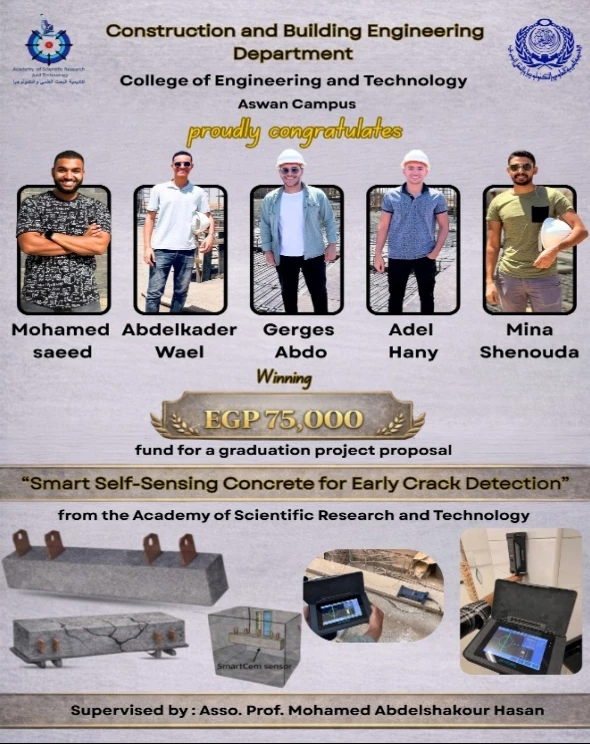
A project titled "Smart Self-sensing Concrete for early Crack Detection" presented by students of Construction and Building Engineering Department, was awarded 75000 EGP fund from the Academy of Scientific Research and Technology under the research competition "My Project, My Beginning Program" 2025/2026. This is the sixth year of participation and award through various disciplines. |
|
|
|
|
|
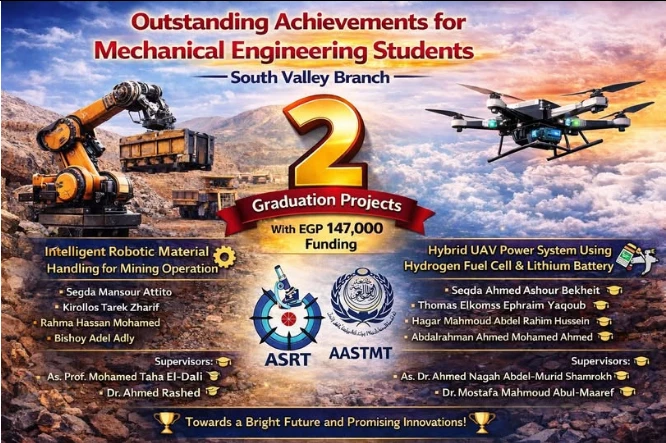
These projects strongly contribute to sustainability by integrating advanced engineering solutions that enhance efficiency while reducing environmental impact. The intelligent robotic material handling system in mining operations minimizes human intervention, improves resource utilization, and reduces energy waste and operational hazards. Meanwhile, the hybrid UAV power system combining hydrogen fuel cells with lithium batteries promotes clean energy usage, significantly lowering carbon emissions and improving energy efficiency. Together, these innovations support the transition toward greener industrial practices and sustainable energy systems, aligning with modern environmental and Industry 4.0 goals. |
|
Advancing Sustainable Development through Fisheries, Aquaculture, and Marine Researc
Description
The Arab Academy (AASTMT), specifically through the College of Fisheries and Aquaculture Technology (CFAT), has developed a robust framework of education and research that directly advances the 2030 Agenda for Sustainable Development. By integrating scientific innovation with maritime expertise, the Academy serves as a regional hub for sustainability.
Key Strategic Impacts:
- SDG 4 (Quality Education): CFAT has pioneered specialized curricula such as the Aquatic Animals and Ecosystem Health (AMEH) postgraduate program. These modules synchronize biochemistry and toxicology with international standards (e.g., USF and WMU), ensuring that the next generation of marine scientists is equipped with sustainability-focused competencies.
- SDG 13 (Climate Action): Research programs focus on the Impact of Climate Change on Mediterranean Fisheries, providing data-driven strategies for climate resilience. The academy’s participation in the "Towards Clean Blue Seas" initiative and the Uni-Green Project fosters climate literacy and low-carbon school practices among youth.
- SDG 14 (Life Below Water): This is a core institutional priority. CFAT leads research in Marine Biotechnology and Toxicology, specifically investigating tetrodotoxin (TTX) in invasive species (Lagocephalus sceleratus) to manage ecological balance and human health. Sustainable aquaculture models, including high-density Tilapia farming, promote food security while protecting natural marine resources.
- SDG 17 (Partnerships for the Goals): The impact is amplified through international collaborations like the TouMaLi Project (with Germany, Tunisia, and Morocco) which addresses marine litter, and joint degree programs that facilitate global knowledge exchange in maritime sustainability.
- Environmental Literacy & Living Labs: The Academy utilizes its coastal campus as a "Living Lab," where students conduct real-world research on antifouling paint alternatives and waste recycling, bridging the gap between theoretical research and community impact.
|
Goal |
Primary Program/Initiative Contribution |
|
SDG 3 |
Marine toxin research and food safety in aquaculture. |
|
SDG 4 |
AMEH curriculum and dual-degree programs with USF/WMU. |
|
SDG 13 |
Climate literacy campaigns and coastal resilience research. |
|
SDG 14 |
Sustainable fisheries management and marine biodiversity protection. |
|
SDG 17 |
TouMaLi Project and Erasmus+ sustainability mobility. |
- AASTMT SDG Dashboard: Sustainable AASTMT-Alexandria | AASTMT
- Research Outputs & Sustainable Development: https://aast.edu/en/sdg/goals.php?unit_item=1209 - Google Search
- Community & Regional Environmental Impact: 15.2.4 Educational programmes on ecosystems - Life on Land
- FAO running projects (CFAT-AASTMT labs)
Political Science Education and Global Engagement for Sustainable Development
|
|
Description:
The Political Science Department has undertaken a wide range of education and research programs that contribute significantly to the achievement of the 17 Sustainable Development Goals (SDGs). These initiatives demonstrate a strong institutional commitment to sustainability integration across teaching, learning, and community engagement. Key programs include:
- Integration of sustainability themes across the curriculum in courses such as Human Rights, Foreign Policy Analysis, International Organizations, Conflict Management and Resolution, Economic Development, and Constitutional Law.
- Development of interdisciplinary programs focused on climate policy, global governance, peacebuilding, and sustainable development, including the dual degree with the University of Hull.
- Annual participation in Model United Nations (MUN) where students negotiate climate action, SDG implementation, and international cooperation.
- Organization of workshops and awareness campaigns with Caritas Egypt and UNHCR on climate change, gender equality, and sustainable entrepreneurship.
- Student-led initiatives including the Polisci Weekly Reporter (covering environmental policy and climate news), Go Green Charity Day, and Political Science International Day.
- International collaboration through the World Youth Forum in Sharm El Sheikh, addressing youth-led climate action and global governance.
- Cultural and regional events such as Arab League Day (discussing joint Arab action on water security and desertification), Sudan–Egypt Day (environmental peacebuilding), and International Women's Day (gender-responsive climate policies).
- Field visits and conferences at the Egyptian Parliament, Arab League, Egyptian Senate, and Bibliotheca Alexandrina, exposing students to real-world sustainability policymaking.
These efforts directly support SDGs 4, 5, 8, 10, 13, 16, and 17, and contribute indirectly to SDGs 1, 2, 3, 11, and 12.
Advancing Sustainable Healthcare and Pharmaceutical Education for the Sustainable Development Goals
Contribution of the College of Pharmacy – AASTMT (El Alamein Campus) to the UN Sustainable Development Goals (SDGs)
The College of Pharmacy at the Arab Academy for Science, Technology and Maritime Transport (AASTMT) – El Alamein Campus contributes to the achievement of several United Nations Sustainable Development Goals (SDGs) through its academic programs, partnerships, community engagement, infrastructure, and student development initiatives.
SDG 3 – Good Health and Well Being
Key Contributions
The College of Pharmacy actively promotes public health, preventive care, and equitable access to healthcare services through education, training, and community outreach.
- Integration of clinical pharmacy education and patient centered care within the curriculum, including mandatory community pharmacy training and internship programs https://aast.edu/en/colleges/pharmacy/ElAlamein/
- Participation of pharmacy students in medical convoys and health outreach programs serving underserved communities in Matrouh, El Dabaa, El Hammam, and Kafr El Dawar aast.edu/en/colleges/pharmacy/ElAlamein/
- Organization of health awareness activities, including antimicrobial resistance awareness campaigns for students and the wider community College of Pharmacy-El Alamein | AASTMT
- Availability of on campus health services, including 24/7 clinics, ambulance services, and partnerships with hospitals and laboratories [aast.edu]
SDG 4 – Quality Education
Key Contributions
AASTMT delivers inclusive, high quality pharmacy education aligned with international standards and continuous improvement frameworks.
Activities and Evidence
- Delivery of internationally benchmarked pharmacy programs aligned with ACPE standards [aast.edu], [aast.edu]
- Investment in state of the art laboratories, clinical simulation facilities, and smart classrooms to enhance experiential learning
College of Pharmacy-El Alamein | AASTMT
- Integration of advanced educational technologies, including clinical simulation platforms and computational drug design tools (BIOVIA).pdf) College of Pharmacy-El Alamein | AASTMT
- Body Interact® virtual patient simulation software is employed within the practical components of THERAPEUTICS-II (CPP 312), THERAPEUTICS-III (CPP 413), and THERAPEUTICS-IV (CPP 414) as an advanced digital platform to support experiential learning across a wide range of body systems therapeutics. The software provides interactive, case-based clinical scenarios that simulate real-life patient encounters, enabling students to integrate pathophysiological knowledge with pharmacotherapeutic decision-making, interpret diagnostic findings, and monitor therapeutic outcomes
- in a dynamic and risk-free environment. Within cardiovascular therapeutics (CPP 312), the platform emphasizes the management of conditions such as hypertension, heart failure, and acute coronary syndromes, allowing students to optimize hemodynamic parameters and tailor evidence-based pharmacological regimens. In infectious diseases therapeutics (CPP 413), it facilitates the development of antimicrobial stewardship skills through simulated cases requiring appropriate selection, dosing, and monitoring of anti-infective agents based on microbiological data and patient-specific factors. In THERAPEUTICS-IV (CPP 414), which encompasses endocrine, renal, and inflammatory disorders, the software enables learners to manage complex, multi-system conditions such as diabetes mellitus, chronic kidney disease, and autoimmune diseases, with a focus on individualized therapy, dose adjustments, and the prevention of complications. Across these courses, Body Interact® promotes progressive competency development by increasing case complexity, enhancing clinical reasoning, and bridging the gap between theoretical instruction and real-world therapeutic practice
College of Pharmacy-El Alamein | AASTMT
- Continuous curriculum review to ensure graduates are equipped with competencies relevant to evolving healthcare needs [aast.edu]
SDG 8 – Decent Work and Economic Growth
Key Contributions
The College supports employability, professional readiness, and workforce development in the healthcare and pharmaceutical sectors.
Activities and Evidence
- Mandatory internship year (36 weeks) and structured community pharmacy training that prepares students for labor market integration.pdf) https://aast.edu/en/colleges/pharmacy/ElAlamein/
- Regular training visits to pharmaceutical companies and medicinal plant farms, linking education with industry practice.pdf) https://aast.edu/en/colleges/pharmacy/ElAlamein/
- International training opportunities that enhance graduates’ global employability, including training programs abroad (e.g., Belarus).pdf) https://aast.edu/en/colleges/pharmacy/ElAlamein/
SDG 9 – Industry, Innovation, and Infrastructure
Key Contributions
The College fosters innovation and applied research through modern infrastructure and digital technologies.
Activities and Evidence
- Establishment of advanced pharmaceutical laboratories meeting international standards.pdf). College of Pharmacy-El Alamein | AASTMT
- On 25 March 2024, the College of Pharmacy – El Alamein Campus (AASTMT) hosted the official opening event for the Central Lab for Pharmaceutical Analysis. This event is listed among the College’s key upcoming activities, signaling its commitment to enhanced research infrastructure and analytical capabilities. College of Pharmacy-El Alamein | AASTMT
SDG 10 – Reduced Inequalities
Key Contributions
AASTMT promotes equitable access to education and healthcare services.
Activities and Evidence
- Provision of free medical consultations and medications during community medical convoys [aast.edu]
- Engagement of students in outreach programs targeting underserved and rural populations [aast.edu]
- Inclusive educational services and student support systems at the El Alamein Campus.pdf) College of Pharmacy-El Alamein | AASTMT
SDG 11 – Sustainable Cities and Communities
Key Contributions
The College contributes to community resilience and well being through health services and educational outreach.
Activities and Evidence
- Collaboration with local authorities, hospitals, and civil society organizations to deliver healthcare services in surrounding communities [aast.edu]
- Student participation in community awareness campaigns focused on preventive health and responsible medicine use [aast.edu]
SDG 12 – Responsible Consumption and Production
Key Contributions
Through pharmacy education and awareness, the College promotes responsible medication use and waste reduction.
Activities and Evidence
- Education on safe and rational use of medicines as part of clinical pharmacy training.pdf) College of Pharmacy-El Alamein | AASTMT
- Awareness initiatives on antimicrobial resistance to reduce misuse of antibiotics [aast.edu]
- Alignment with AASTMT wide sustainability guidelines and environmental initiatives [aast.edu]
- On May 9, 2025, the College of Pharmacy at AASTMT El Alamein officially launched the VapeEscape campaign aimed at reducing e cigarette use among students
3.3.6 Smoke-free policy - Good Health and Well-being
SDG 17 – Partnerships for the Goals
Key Contributions
The College actively engages in national and international partnerships to advance education, healthcare, and sustainability.
Activities and Evidence
- International accreditation partnership with the Accreditation Council for Pharmacy Education (ACPE), USA [aast.edu], [aast.edu]
- Cooperation with the Pharmacists’ Syndicate, pharmaceutical companies, and healthcare providers for training and outreach College of Pharmacy-El Alamein | AASTMT, [aast.edu]
- Participation in AASTMT’s institutional SDG framework and sustainability initiatives [aast.edu]
- The College of Pharmacy at the Arab Academy for Science, Technology and Maritime Transport (AASTMT) is represented in the institutional SDG workforce through the appointment of one of its staff members as an SDG Officer.
This representation supports the College’s active participation in planning, coordinating, and reporting SDG aligned academic and community initiatives.
Pharmaceutical Education, Research, and Community Engagement for Sustainable Development
|
|
Description:
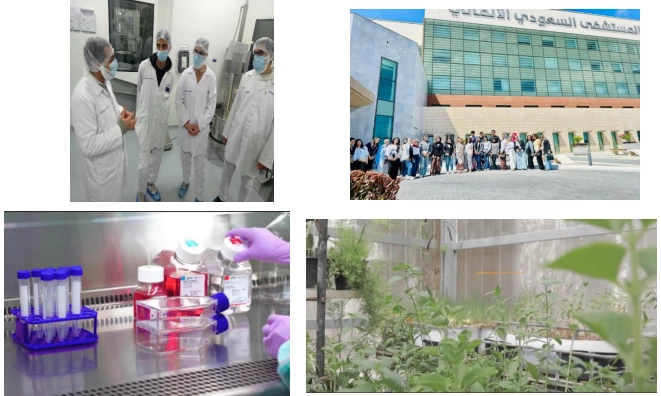
College of Pharmacy has established a comprehensive and integrated framework of undergraduate (Pharm D and Pharm D clinical programs) and postgraduate programs that significantly contribute to the achievement of the 17 Sustainable Development Goals (SDGs), reflecting a strong institutional commitment to sustainability in education, research, and community service.
- The Pharm D and Pharm D clinical programs adopt a multidisciplinary and practice-oriented curriculum that integrates pharmaceutical sciences, clinical and biological sciences, and pharmacy practice, including courses such as pharmacology, pharmacognosy, medicinal chemistry, biotechnology, public health, and pharmacoeconomics, preparing graduates to address global health and sustainability challenges.
- Sustainability-related concepts are embedded across the curriculum through subjects like public health and preventive medicine, clinical pharmacy, toxicology, and pharmacovigilance, equipping students with competencies in disease prevention, patient safety, and rational drug use.
- The program emphasizes experiential learning through laboratory work, field training, and clinical placements in hospitals, community pharmacies, and pharmaceutical industries, ensuring alignment with real-world healthcare systems and sustainable development needs.
- Postgraduate programs and research activities promote innovation and evidence-based practice in areas such as drug development, pharmaceutical analysis, and clinical research, addressing challenges like drug safety, and emerging diseases.
- The College supports interdisciplinary research through its specialized divisions—Pharmaceutical Sciences, Clinical and Biological Sciences, and Pharmacy Practice—enabling integrated solutions to complex health and environmental issues.
- Students are encouraged to engage in research and critical thinking through courses such as biostatistics, clinical literature appraisal, scientific writing, and drug information resources, fostering a culture of lifelong learning and innovation.
- A diverse set of elective courses, including pharmacogenomics, marine drugs, complementary and alternative medicine, and biomedical informatics, supports specialization and aligns with emerging global trends in sustainable healthcare.
- The College maintains strong partnerships with hospitals, regulatory authorities, pharmaceutical companies, and research centers, enhancing training opportunities and contributing to healthcare system strengthening and pharmaceutical innovation.
- Community engagement is a key pillar, with students participating in public health initiatives, awareness campaigns, and community pharmacy services that promote rational drug use, infection control, and disease prevention.
- The College organizes workshops, seminars, and professional training programs in areas such as clinical research, pharmacovigilance, and pharmaceutical care, facilitating knowledge exchange and capacity building.
- These initiatives directly support SDGs 3, 4, 5, 6, 7, 9, 11, 12, 13, 15, and 17 by advancing healthcare quality, education, innovation, sustainability in pharmaceutical production, environmental awareness, and global partnerships.
- Specifically, the College contributes to:
• SDG 3 – Improving health and well-being through clinical and public health pharmacy education
• SDG 4 – Delivering high-quality, inclusive pharmaceutical education
• SDG 5 – Promoting equal access to education and research opportunities
• SDG 6 – Supporting safe water and sanitation through microbiological and pharmaceutical research
• SDG 7 – Encouraging sustainable practices in pharmaceutical production
• SDG 9 – Driving innovation in drug development and healthcare technologies
• SDG 11 – Strengthening community healthcare services
• SDG 12 – Promoting responsible consumption and rational use of medicines
• SDG 13 – Addressing climate-related health impacts
• SDG 15 – Supporting biodiversity through medicinal plant research
• SDG 17 – Enhancing partnerships with healthcare and academic institutions for sustainable development.
CITL Contributions to Sustainable Development through Logistics, Innovation, and Capacity Building
CITL’s education, research, and applied project activities make a meaningful contribution to the Sustainable Development Goals by linking logistics, transport, trade, sustainability, innovation, and institutional development.
The LEAD-MENA Erasmus+ CBHE Project supports SDG 4 and SDG 17 through higher education capacity building, academic cooperation, and sustainability-oriented institutional development.
The Global Innovative Unit for Economic Growth contributes to SDG 8, SDG 9, SDG 13, and SDG 17 through its focus on sustainable logistics, transport systems, climate resilience, and Africa–Europe cooperation. The SOFT Project supports SDG 4, SDG 9, and SDG 17 through capacity building, lab development, mobility, academic modernization, and professional program development. The SPEEDUP Entrepreneurship Media & Acceleration Hubs initiative contributes to innovation, skills development, entrepreneurship support, and institutional capacity building. CITL also contributed through the Air Transport Policy and Operational Efficiency Study for the Arab Region, which supported evidence-based discussion on improving transport system efficiency, coordination, and competitiveness. The Arab Economic Observatory for Artificial Intelligence Study supports anticipatory economic decision-making, supply chain resilience, and smart monitoring. The Damietta Furniture City Development, Growth and Sustainability Study contributes to sustainable industrial and local development, while the Study on Establishing a Logistics Zone on the Sudanese Border supports regional trade integration, logistics resilience, and food-security-related connectivity.
The Integrated Green Hydrogen Supply Chain Study contributes to SDG 7, SDG 9, SDG 12, SDG 13, and SDG 17 through its focus on clean energy supply chains, infrastructure, and sustainable transition. The Study on Establishing an Arab Mechanism and Database to Support the Shipbuilding and Ship Repair Industry in Arab Countries contributes to sustainable industrial development, maritime sector modernization, and environmentally responsible shipbuilding and repair.
The Saleh Kamel Excellence Scholarship Initiative contributes to SDG 4 and SDG 10 by expanding educational opportunity for academically outstanding and financially needy students. Together, these activities show CITL’s wider contribution to sustainability through applied research, international collaboration, knowledge exchange, capacity building, and sector-focused development.
Language, Media, and Communication Studies for Sustainable Development
College of Language and Communication (CLC) has undertaken a wide range of research initiatives that contribute significantly to the achievement of the 17 Sustainable Development Goals (SDGs). These initiatives demonstrate a strong institutional commitment to sustainability integration across teaching and research:
- Organization of the 3rd International Conference (4th – 5th May 2025) on SDGs-related themes titled:
Intercultural Dialogue and Sustainable Horizons in Media, Language and Literature
- Interdisciplinary Studies in The Digital Era | AASTMT CLC
- Semi-annual publication of the CLC scientific peer-reviewed journal Insights into Language, Culture and Communication including sustainability-related research papers.
Insights into Language, Culture and Communication
- Development of interdisciplinary programs and courses. An example is the Diploma and MA programmes in Literature and Film. The aim of these interdiscipinary programmes is to help students explore theoretical and contextual approaches to literature and film through an analysis and interpretation of documantary films, global political film, film adaptation and post-war and Cold War European and American film in addition to a variety of literary modules.
- Research proposals in postgraduate programmes including:
- Applied Linguistics (PhD and MA programmes)
- English for Specific Purposes (PhD and MA programmes)
- Literature and Film (MA programme)
align with the 2030 Agenda for Sustainable Development Goals.
These academic initiatives directly support:
- SDG 4 – Providing quality education that empowers learners for sustainability
- SDG 5 – Promoting gender equality through inclusive academic opportunities
Integrating Climate Education, Research, and Innovation for Sustainable Development at AASTMT
Examples of the impact of AASTMT education and research programs in supporting the SDGs:
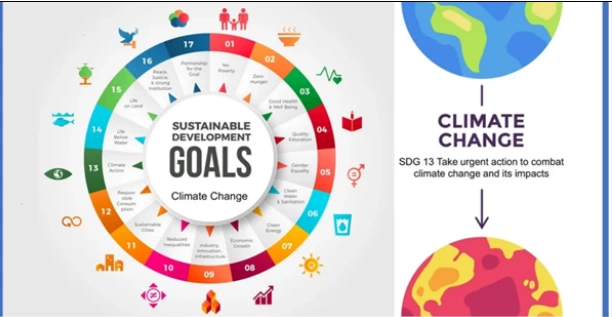
1. Climate literacy, Meteorology courses and SECCM pathways supporting SDG education and early-warning skills.
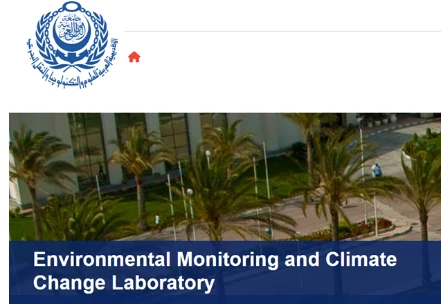
2. Environmental Monitoring and Climate Change Laboratory supporting climate-risk monitoring, air-quality and coastal analytics for evidence-based decisions.
3. Education and community engagement programs supporting youth climate action, renewable energy, waste solutions and national energy-transition dialogue.
4. Applied research projects supporting green ports, renewable energy integration and nearly zero-energy buildings.
5. AASTMT Climate Action Plan 2024 linking emissions reduction, renewable energy, education, research, community engagement and reporting.
|
Climate literacy, Meteorology courses and SECCM pathways supporting SDG education and early-warning skills.
Environmental Monitoring and Climate Change Laboratory supporting climate-risk monitoring, air-quality and coastal analytics for evidence-based decisions. |
Description:
AASTMT’s education and research programs have a direct and measurable impact on the Sustainable Development Goals by integrating sustainability into academic programs, strengthening climate and environmental research, supporting applied innovation, engaging students and communities, and building international partnerships for sustainable development.
Education and research programs at AASTMT support SDGs through six main pathways:
1. Sustainability integration in education
AASTMT integrates climate and sustainability learning into academic programs and student learning pathways. The Climate Action Plan 2024 sets an academic goal to reach at least 90% integration of climate and sustainability learning outcomes across undergraduate and postgraduate programs. The 2024 Carbon Emissions Reduction and Sustainability Progress Report confirms that AASTMT maintained climate and sustainability content across approximately 90% of undergraduate programs in 2024.
This integration supports students across disciplines in understanding climate mitigation, climate adaptation, renewable energy, environmental management, circular economy, sustainable transport, sustainable resource use, and responsible consumption.
Key education examples include:
- Climate Change & Water Management (UNR1601), which builds adaptation capacity for water resources under climate stress.
- Meteorology courses, which strengthen early-warning skills for flood, drought and climate-risk monitoring.
- Master of Science in Smart Environmental Management of Climate Change (SECCM), which provides graduate-level education in climate resilience, renewable energy, environmental management and sustainable development.
- Climate and sustainability modules embedded in undergraduate programs.
- Applied capstones, research projects and practical learning linked to campus and community sustainability needs.
SDG impact:
This pathway directly supports SDG 4 by strengthening quality education for sustainable development. It also supports SDG 6, SDG 7, SDG 11, SDG 12 and SDG 13 by equipping students with practical skills in water management, clean energy, sustainable cities, responsible consumption and climate action.
2. Climate action, emissions reduction and net-zero education
AASTMT’s education and research programs are connected to the university’s Climate Action Plan 2024 and emissions-reduction pathway. The 2024 verified greenhouse gas inventory recorded total emissions of 103,862,750 kg CO2e, representing a 3.0% reduction from 2023 and a 32.8% reduction below the 2019 baseline. The inventory recorded Scope 1 emissions of 1,092,500 kg CO2e, Scope 2 emissions of 897,250 kg CO2e and selected Scope 3 emissions of 101,873,000 kg CO2e.
AASTMT’s Climate Action Plan 2024 sets an interim target to maintain at least a 30% reduction in total carbon emissions relative to 2019 by 2025 and a long-term target of 50% reduction by 2040. Education and research activities support these targets by promoting climate literacy, energy-efficiency awareness, responsible consumption, waste minimization, renewable-energy understanding and evidence-based decision-making.
AASTMT also operated approximately 215 kW of on-site solar PV capacity in 2024, maintained approximately 24–25% contribution to campus electricity needs and sustained approximately 95% LED lighting coverage. These operational achievements are used as learning and research opportunities through renewable-energy walk-throughs, HVAC/BMS awareness sessions, energy monitoring, student projects and climate-action education.
SDG impact:
This pathway directly supports SDG 7, SDG 12 and SDG 13 by linking education and research with renewable energy, energy efficiency, greenhouse gas reduction and responsible resource management.
3. Research output and applied sustainability innovation
AASTMT’s 2024 Carbon Emissions Reduction and Sustainability Progress Report confirms that the 2022–2024 climate research portfolio included 15 new research projects and 10 peer-reviewed papers addressing renewable-energy technologies, sustainable transportation and climate resilience across the MENA region.
Research themes include maritime emissions, bio-remediation using macroalgae, crop heat-stress resilience, climate justice, coastal groundwater monitoring, plastics biodegradation, renewable energy, green ports, nearly zero-energy buildings, sustainable transport and environmental resilience.
Examples of applied research and innovation include:
- Renewable Energy Technologies for Green Ports: a case study on Egyptian ports, exploring solar panels, offshore wind turbines and fuel cells to reduce the carbon footprint of port operations.
- Innovative Photovoltaic Envelopes for adaptive energy and comfort management in harsh climates, supporting nearly zero-energy buildings in Upper Egypt.
- Carbon Stock Assessment of Mangrove Forests along the Red Sea Coast of Egypt, supporting ecosystem-based climate mitigation and carbon-sink education.
- MACI Journal – Multidisciplinary Adaptive Climate Insights, which provides a platform for climate resilience, adaptation and mitigation research.
- Environmental Monitoring and Climate Change Laboratory, which supports meteorological, air-quality and coastal analytics for evidence-based climate decisions.
SDG impact:
This pathway supports SDG 9 by advancing innovation and applied research, SDG 11 by supporting resilient cities and infrastructure, SDG 13 by advancing climate action, SDG 14 through maritime and coastal sustainability, and SDG 15 through ecosystem-based research such as mangrove carbon stock assessment.
4. Student engagement and community-based learning
AASTMT education and research programs are connected to community engagement and student-led sustainability activities. The 2024 Carbon Emissions Reduction and Sustainability Progress Report confirms that AASTMT sustained strong student engagement through recycling drives, energy-awareness activities, tree planting, hands-on audits, responsible consumption campaigns, waste sorting, renewable-energy walk-throughs and HVAC/BMS awareness sessions.
The report also confirms that AASTMT built on 25+ climate and sustainability workshops and seminars hosted in 2022–2023 with 7,000+ student participants. Community workshops on waste reduction, energy conservation and sustainable mobility had previously drawn 1,500+ participants and were held again during 2024.
Examples of student and community-based learning include:
- Go Green campaign at the College of Pharmacy, Alamein Campus, focused on reducing single-use plastics and shrinking the campus carbon footprint.
- UniGreen Project Workshops and national competition, engaging youth in GHG/CO2 reduction, renewable energy, waste solutions and Water-Energy-Food-Ecosystems innovation.
- Green Peace and Sustainable Resilience Forum, supporting climate-aware student leadership.
- Community workshops on waste reduction, energy conservation and sustainable mobility.
- Coastal Cities NGO and multi-partner workshops addressing sea-level rise, erosion, extreme weather and adaptation literacy.
SDG impact:
This pathway supports SDG 4, SDG 11, SDG 12, SDG 13 and SDG 17 by connecting education with practical community action, climate literacy, responsible consumption, sustainable urban resilience and partnerships.
5. International sustainability research and collaboration
AASTMT maintains an international project portfolio that supports education and research for sustainability. Verified AASTMT projects include international cooperation through Erasmus Plus, Horizon Europe, PRIMA, ENI CBC MED, EMFAF, Interreg NEXT, Newton Institutional Links and other funding frameworks.
Examples of sustainability-related international programs include:
- RURALITIES – Climate-smart, ecosystem-enhancing and knowledge-based rural expertise and training centres, supporting climate-smart rural innovation, living labs, digital platforms and training.
- Green MED – Green Shipping Pathways Towards a Clean Energy Transition in the Mediterranean, supporting maritime decarbonization, alternative fuels and the Mediterranean Sustainable Shipping Observatory.
- BLUE-ERA – Curriculum Development for the Sustainable Blue Economy Study toward the achievement of Ocean Decade in Tunisia, Egypt and Jordan.
- PRO Green – Promoting integrated green competences for sustainable development in architectural education.
- InovFarmer.MED – Improving Mediterranean agro-food supply chains through eco-friendly techniques and crisis-resilient business models.
- RESILINK – Increasing resilience of smallholders through digital resource-sharing platforms and decision-support systems.
- TECHLOG – Technology transfer for logistics innovation and sustainable transport/port operations.
- GREENLAND – Green skills for sustainable development and green/circular economy training.
- YEP MED – Youth employment in Mediterranean ports with training addressing environmental issues.
- MAIA-TAQA – Resource efficiency, micro-grids, photovoltaics, energy storage, solar thermal technologies and water sanitation.
These projects strengthen research capacity, student skills, international mobility, professional training, technology transfer and applied sustainability innovation.
SDG impact:
This pathway supports SDG 7, SDG 8, SDG 9, SDG 11, SDG 12, SDG 13, SDG 14, SDG 15 and SDG 17 through clean energy, green jobs, innovation, sustainable cities, responsible production, climate action, marine sustainability, ecosystem protection and international partnerships.
6. Institutional governance and sustainability reporting as educational tools
AASTMT’s Climate Action Plan 2024 links education, research, carbon-emissions reduction, renewable energy, energy efficiency, sustainable resource management, community engagement and reporting. The plan includes an action table assigning responsibilities for carbon emissions reduction, renewable energy adoption, energy efficiency, sustainable resource management, education and research, community engagement and reporting accountability.
The plan also establishes monitoring and reporting practices such as annual GHG inventory, monthly data checks, quarterly internal reviews, semester dashboards, annual sustainability reporting and biennial third-party assurance. These governance mechanisms create a living-learning environment where students and researchers can connect sustainability theory to real institutional performance.
SDG impact:
This pathway supports SDG 4, SDG 9, SDG 12, SDG 13 and SDG 17 by integrating sustainability governance, transparent reporting, applied learning and stakeholder partnerships.
Overall SDG impact:
AASTMT’s education and research programs directly support the following SDGs:
- SDG 2 – Zero Hunger:
Supported through sustainable fisheries, aquaculture, agro-food value-chain innovation, smallholder resilience, smart farming and food-system research projects such as FishAqu, InovFarmer.MED and RESILINK.
- SDG 3 – Good Health and Well-being:
Supported through public-health climate seminars, environmental monitoring, climate resilience education, air-quality and coastal analytics, and community awareness activities.
- SDG 4 – Quality Education:
Supported through sustainability integration across approximately 90% of undergraduate programs, SECCM, Meteorology courses, climate and water-management education, workshops, student projects and sustainability learning outcomes.
- SDG 5 – Gender Equality:
Supported through inclusive education and programs such as EmpowerHER and gender-inclusive energy transition activities, as well as youth and women green-skills initiatives.
- SDG 6 – Clean Water and Sanitation:
Supported through Climate Change & Water Management education, water-efficiency practices, SMARTWATIR, solar-powered water desalination, water monitoring, coastal groundwater research and community water-resource adaptation.
- SDG 7 – Affordable and Clean Energy:
Supported through renewable-energy education, on-site solar PV, energy-efficiency learning, smart grids, solar-energy projects, Green MED, MEDSOL, SEM-SEM, SGT-MAP, and renewable-energy training.
- SDG 8 – Decent Work and Economic Growth:
Supported through green-skills training, youth employment in port sectors, sustainable entrepreneurship, green and circular economy programs and industry-linked sustainability projects.
- SDG 9 – Industry, Innovation and Infrastructure:
Supported through applied research, technology transfer, smart energy systems, green ports, TECHLOG, environmental laboratories, digital platforms, and innovation-driven sustainability projects.
- SDG 10 – Reduced Inequalities:
Supported through inclusive education, refugee-support education initiatives, accessibility and inclusion projects, and youth/women-oriented green-skills programs.
- SDG 11 – Sustainable Cities and Communities:
Supported through sustainable urban development, climate-smart urbanism, coastal cities workshops, PRO Green, urban transportation regeneration, climate-risk monitoring and community resilience projects.
- SDG 12 – Responsible Consumption and Production:
Supported through waste sorting, recycling, sustainable procurement, paper-use reduction, plastic-reduction campaigns, circular economy education, sustainable agriculture and responsible consumption campaigns.
- SDG 13 – Climate Action:
Supported through the Climate Action Plan 2024, emissions reduction, climate education, early-warning skills, disaster-risk planning, climate-risk monitoring, climate research and carbon-footprint reduction.
- SDG 14 – Life Below Water:
Supported through maritime sustainability, green shipping, blue economy education, marine environmental protection, port decarbonization, fisheries and aquaculture research, and coastal resilience.
- SDG 15 – Life on Land:
Supported through mangrove carbon-stock assessment, biodiversity education, ecosystem-based adaptation, rural resilience, sustainable agriculture and land/resource education.
- SDG 17 – Partnerships for the Goals:
Supported through international collaborations with EU, Mediterranean, Horizon Europe, PRIMA, EMFAF, Erasmus Plus, NGOs, government bodies, universities, research centers and industry partners.
Conclusion:
AASTMT’s education and research programs create a measurable institutional impact by combining curriculum integration, applied research, international collaboration, community engagement, student participation and transparent climate governance. These programs support multiple SDGs through practical education, research outputs, climate action, emissions reduction, sustainability innovation, public engagement and partnerships. AASTMT’s 2024 emissions performance, research portfolio, Climate Action Plan, sustainability education integration, international projects and community engagement activities demonstrate that education and research are central tools for advancing sustainable development across the university and its wider regional context.
- AASTMT main website: Arab Academy for Science, Technology & Maritime Transport - AASTMT
- AASTMT Carbon Emissions Reduction and Sustainability Progress Report 2023–2024: Microsoft Word - AASTMT Carbon Emissions 2024.docx
- AASTMT Climate Action Plan / 2024 Plan toward Clean Sustainable Energy: pdf_retreivefileNew_open.php
- Energy Consumption, Low-Carbon Share and CO2/GHG Trends Insights: pdf_retreivefileNew_open.php
- Green Energy and Energy Management Policy: pdf_retreivefileNew_open.php
- AASTMT Energy Research Unit: Energy Research Unit
- UniGreen Workshop: Arab institute for leadership development-Alexandria | AASTMT
- Go Green Workshop: Arab Academy for Science, Technology and Maritime Transport- | AASTMT
- International Workshop on Green Environment and Green Tourism: Arab Academy for Science, Technology and Maritime Transport- | AASTMT
- Alexandria Workshop on Weather Routing and Carbon Emissions Reduction: Institute of Maritime Upgrading Studies-Alexandria | AASTMT
- Mediterranean Ports and Shipping Summit: Climate Action-Alexandria | AASTMT
- TuoMali International Conference: Climate Action-Alexandria | AASTMT
- Strategic Ocean Alliance Forum at COP28: Climate Action-Alexandria | AASTMT