



 UI-Green Metric
[6.14] University sustainability programs with international collaboration
|
Year |
Number of Events |
|
2023-2024 |
17 |
|
2024-2025 |
24 |
|
2025-2026 |
37 |
|
Total |
78 |
University Sustainability Programs with International Collaboration and Capacity Building Initiatives
The University is committed to promoting sustainability through the implementation of various programs in collaboration with international partners. These initiatives contribute to the exchange of knowledge and expertise while facilitating the adoption of global best practices across the campus. The programs are implemented under the supervision of the Deanship of Student Affairs and in cooperation with international institutions and organizations.
The main sustainability programs involving international collaboration include:
International Sports Events with Sustainable Practices
Organizing international championships and sporting events while incorporating environmentally sustainable practices, thereby promoting cultural exchange and raising awareness of sustainability principles.
Joint Workshops and Training Programs
Conducting training programs in collaboration with international organizations in areas such as recycling, energy efficiency, and sustainable resource management.
International Seminars and Lectures
Hosting international experts and specialists to raise awareness of sustainability issues, climate change challenges, and the United Nations Sustainable Development Goals (SDGs).
Student Affairs-Alexandria | AASTMT
Sports competitions - Student Affairs
International Research Programme on Cultural Heritage Restitution and African Heritage Futures (Action for Restitution to Africa)
|
Programme / Project |
International Partners |
Scope & Funding |
Duration |
|
Action for Restitution to Africa |
University of Oxford (UK), University of the Western Cape (South Africa), University of Ghana |
Restitution of African cultural heritage. Funded by Open Society Foundations — £157,000 |
July 2020 — ongoing |
Description:
The 'Action for Restitution to Africa' programme is an internationally funded research initiative focused on redrawing the boundaries and possibilities for the restitution of African tangible and intangible heritage. It explores African anthropological and archaeological collections in European museums as material and immaterial resources for building a new African future. The programme builds a trans-continental network to support source communities in recovering their cultural heritage, directly aligning with SDGs 4, 10, and 17.
International Field Training and Sustainability Program in Spain – Global Exposure to Sustainable Management and Business Practices
|
|
|
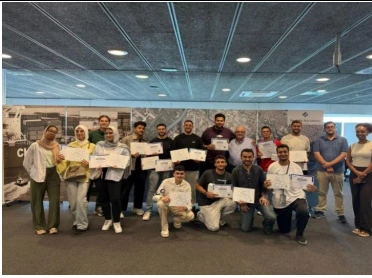
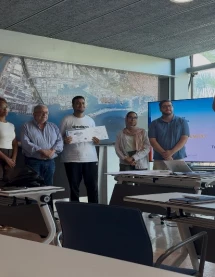
International Field Training and Sustainability Program – Spain This international program |
Description:
International Field Training and Sustainability Program – Spain This international program is designed to bridge the gap between academic theory and global professional practices, focusing on how international management can foster sustainable economic growth. During the 11-day intensive program in Spain, students engage with European institutional frameworks to understand how businesses adapt to global sustainability standards and socially responsible governance.
The program emphasizes the "Internationalization" of student skills by providing a multicultural learning environment. It addresses the complex interplay between local economic activities and global environmental requirements, helping students develop solutions for financial disaster-resilience and sustainable business operations in a post-pandemic world. Through field visits and workshops, students explore how international coordination and cross-border cooperation are essential for achieving long-term sustainability in the management and technology sectors.
Strategic International Partnerships for Capacity Building As part of the college’s commitment to internationalization, this collaboration serves as a cornerstone for developing high-level human capital. By exposing students to international markets and diverse organizational cultures in Spain, the program fosters a global mindset necessary for sustainable development. This initiative involves academic exchange and practical training components that align with international benchmarks, ensuring that graduates are not only locally competent but also globally competitive and aware of their role in promoting an environmentally durable and socially inclusive future.
Student Engagement in Leadership, Innovation, Cultural Exchange, and Sustainable Development Initiatives (South Valley Branch – AASTMT)
She, the driver of sustainability
Date: 15 February 2026
Description:
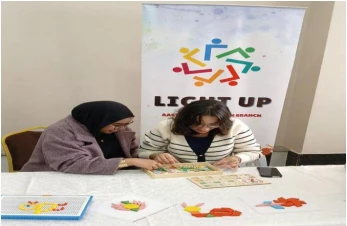
Students of the Light Up Family participated under the supervision of the Student Affairs Department in the “She is the Engine of Development” Forum held at the Academy’s main campus in Abu Qir, in collaboration with the National Council for Women and under the auspices of the League of Arab States. The forum showcased inspiring leadership stories and highlighted women’s empowerment as a cornerstone of sustainable development, reflecting the academy’s commitment to engaging students in impactful national initiatives.
جانب من مشاركة طلاب اسرة... - AAST Aswan Student Affairs | Facebook
Volunteer Leadership Camp – Storytelling Skills Training
Date: 15 December 2025
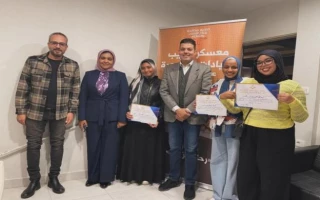
Description:
A group of students from the South Valley Branch participated, under the supervision of the Student Affairs Department and in collaboration with the Fund for Drug Control and Treatment of Addiction, in a volunteer leadership training camp on the art of storytelling held in Ismailia. The program aimed to develop communication skills and empower students to effectively raise awareness on critical social issues.
إستكمالاً لفعاليات البرامج... - AAST Aswan Student Affairs | Facebook
Robotics & Innovative Technologies Week – Student Councils Participation
Date: 25 November 2025
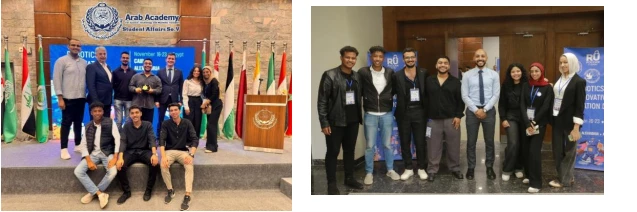
Description:
Student councils of the South Valley Branch colleges participated, under the supervision of the Student Affairs Department, in organizing the “Robotics and Innovative Scientific Technologies Week” in partnership with Stavropol State Agrarian University (Russia). The event reflected students’ active role in supporting scientific innovation and fostering international academic collaboration.
جانب من مشاركة مجالس طلاب... - AAST Aswan Student Affairs | Facebook
Our Strength Lies in Our Youth Camp – Student Participation
Date: 5 November 2025
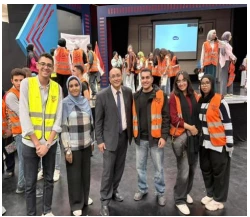
Description:
A group of students from the South Valley Branch participated, under the supervision of the Student Affairs Department, in the “Our Strength Lies in Our Youth” camp held at the Youth City in Abu Qir, Alexandria. Organized in collaboration with the Fund for Drug Control and Treatment of Addiction and the Ministry of Youth and Sports, the camp aimed to build students’ capacities and prepare them as volunteers in awareness programs addressing the risks of drug abuse.
بناءً علي توجيهات سعادة... - AAST Aswan Student Affairs | Facebook
International Youth Day – Youth Engagement Forum
Date: 13 August 2025
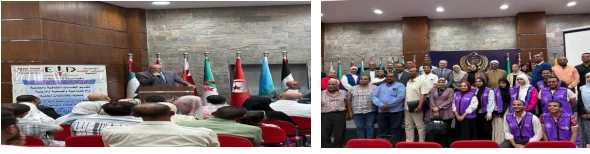
Description:
on International Youth Day, the Arab Academy for Science, Technology and Maritime Transport – South Valley Branch hosted a youth engagement forum in collaboration with Misr Youth Foundation for Development. The event brought together academy students and graduates from Aswan to foster dialogue, share experiences, and empower youth for active community participation.
في يوم الشباب العالمي بمشاركة... - AAST Aswan Student Affairs | Facebook
7th Arab Conference on Communication & Public Relations – Student Participation
Date: 8 December 2024
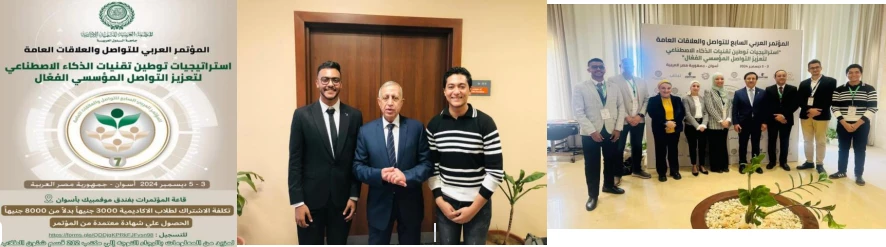
Description:
Students of the South Valley Branch participated in the 7th Arab Conference on Communication and Public Relations, held under the theme “Strategies for Localizing Artificial Intelligence Technologies to Enhance Effective Institutional Communication.” The participation enriched students’ exposure to modern communication practices and emerging AI-driven strategies in the field.
بدعوة كريمة من المنظمة... - AAST Aswan Student Affairs | Facebook
Aswan International Women Film Festival – Workshops & Fully Funded Grant Opportunity
Date: February 2024
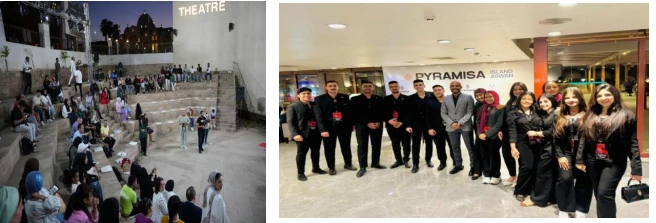
Description:
The festival announces the opening of applications for a fully funded grant for short film development and production, alongside specialized workshops in cinematography, editing, sound, acting, screenwriting, and animation. Interested applicants are required to complete the workshop application form to be considered.
Financial Inclusion & Entrepreneurship Seminar – Student Engagement
Date: 11 December 2024
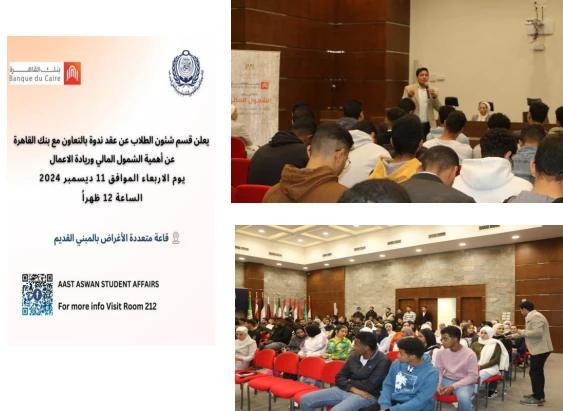
Description:
The Student Affairs Department (Cultural and Social Activities) organized a seminar on the importance of financial inclusion and entrepreneurship under the auspices of the Central Bank of Egypt, in collaboration with Banque du Caire. The event brought together students from various faculties of the South Valley Branch to enhance their financial awareness and entrepreneurial mindset.
قام قسم شئون الطلاب (النشاط... - AAST Aswan Student Affairs | Facebook
American Cultural Exchange Seminar – Student Engagement
Date: 23 October 2024
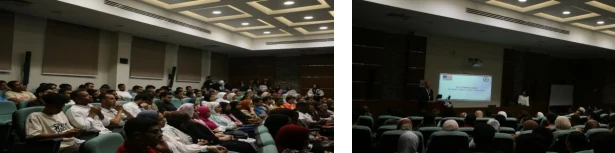
Description:
The Student Affairs Department (Cultural Activities) organized an American Cultural Exchange Seminar in collaboration with the Cultural Center of the U.S. Embassy in Cairo. The event aimed to enhance cross-cultural understanding, promote dialogue, and provide students with insights into diverse cultural perspectives.
جانب من حضور طلاب فرع جنوب... - AAST Aswan Student Affairs | Facebook
International Collaboration on River Systems, Climate Transition, and Sustainable Urban Water Design (River Cities Network – RCN Meeting 2026)
|
|
|
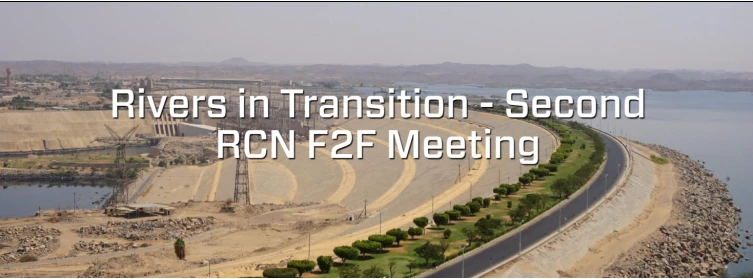
The Department of Architectural Engineering and Environmental Design hosts the second global meeting of River Cities Network (RCN) entitled Rivers in Transition in April 2026 where researchers from across the world examine the wide-ranging transitions that rivers are undergoing due to human interventions and Anthropocene climate change, including global warming and sea level rise. This international collaboration directly supports several UN Sustainable Development Goals. By investigating water quality changes and sustainable management of riverine resources, the program advances SDG 6 (Clean Water and Sanitation). Through research on riverside rehabilitation, waterfront urban design, and resilient riverine infrastructure, it contributes to SDG 11 (Sustainable Cities and Communities). Addressing the impacts of climate change on river ecosystems aligns with SDG 13 (Climate Action), while recognizing the rights of rivers and protecting riparian biodiversity supports SDG 15 (Life on Land). Above all, the network's cross-cultural and interdisciplinary nature embodies SDG 17 (Partnerships for the Goals). Through this program, our department strengthens its commitment to sustainable environmental design, connecting faculty and students with global scholars to develop research and design solutions that respond to the critical transitions shaping the future of rivers and the cities that depend on them. |
International Marine Sustainability and Fisheries Management Collaboration Programs (CFAT – AASTMT)
Description
The Arab Academy (AASTMT), specifically through its College of Fisheries and Aquaculture Technology (CFAT), maintains several high-impact sustainability programs in collaboration with international academic and governmental partners. These programs focus on marine litter management, sustainable fisheries, and cross-border maritime education.
Key sustainability programs with international collaborations include:
The TouMaLi Project (Tourism Marine Litter): AASTMT develops sustainable waste management solutions for the tourism sector to protect marine ecosystems in the MENA region.
Workshop on harvest strategy development and the use of management strategy evaluation (MSE), held at Tolip Hotel in Alexandria, Egypt, from 27-29 January 2026.
Working groups on “Stock assessment of demersal species (WGSAD) for invertebrates, held at FAO-HQ, Rome, ITALY, 15-19 December 2025.
Working groups on “Stock assessment of small pelagic species (WGSASP), held at FAO-HQ, Rome, ITALY, 8-12 December 2025.
Participate in Data preparation meeting for Deep-water red shrimps in the Eastern-Central Mediterranean and Data preparation meeting for Eastern Mediterranean stocks, held at FAO-HQ, Rome, ITALY, 10-14 November 2025.
- TouMaLi Project Overview:
- International Collaboration Data for SDGs:
17.2.3 International collaboration data gathering for SDG - Partnerships to achieve the Goal
- AASTMT SDG 14 (Life Below Water) Initiatives:
SUSTAINABLE DEVELOPMENT GOAL 14 - Life Below Water
International Dual Degree Programme in Political Science and Sustainable Global Governance (AASTMT – University of Hull, UK)
|
|
|
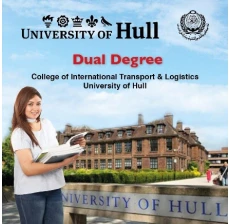
Dual Degree Programme in Political Science and International Relations, hosted by the Political Science Department (College of Management and Technology) and the University of Hull (Faculty of Arts, Cultures and Education), United Kingdom. |
|
This dual degree programme offers students the opportunity to earn two bachelor's degrees: one from the Arab Academy for Science, Technology and Maritime Transport (AASTMT) and one from the University of Hull. The program integrates sustainability and global governance themes across the curriculum, including courses on international political economy, human rights, and sustainable development. Students benefit from cross-cultural academic experiences, joint supervision of research projects, and exposure to British and Egyptian perspectives on contemporary political challenges. The collaboration fosters international partnerships for quality education (SDG 4) and global cooperation for sustainable development (SDG 17). |
Description:
Integration of sustainability-related themes
The curriculum integrates sustainability themes such as climate governance, environmental policy, human rights, and sustainable development goals (SDGs) into core political science courses. Students engage in comparative analyses of Egyptian and British approaches to climate action, renewable energy policy, and sustainable urban development. The program also encourages undergraduate research projects on topics such as the political economy of climate change, international environmental agreements, and the role of regional organizations in promoting sustainability.
Beyond coursework
Students participate in cross-cultural exchange that addresses real-world sustainability challenges. The partnership fosters global citizenship, intercultural competence, and academic excellence in line with SDG 4 (Quality Education) and SDG 17 (Partnerships for the Goals). Since its establishment, the dual degree program has produced graduates who are well-prepared for careers in international organizations, diplomacy, policy analysis, and sustainability-focused roles in both the public and private sectors.
Internationally Collaborative University Sustainability Programs and Climate Action Initiatives
Examples of AASTMT sustainability programs with international collaborations:
1. AASTMT international sustainability programs active in 2023: TECHLOG, YEP MED, GREENLAND and UPGRADE.
2. AASTMT international sustainability programs active in 2023–2024: RURALITIES, Green MED, BLUE-ERA, PRO Green, InovFarmer.MED and RESILINK.
3. UniGreen Project Workshops – international youth climate action and sustainability collaboration with Life Makers Foundation and EU support.
4. PRIMA and INVOLVE – international collaboration supporting WEFE innovation, ecosystem-based adaptation and SDG integration for climate change management.
|
|
|
|
AASTMT international sustainability programs active in 2023–2024: RURALITIES, Green MED, BLUE-ERA, PRO Green, InovFarmer.MED and RESILINK. |
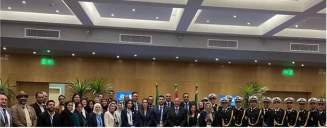
PRIMA and INVOLVE – international collaboration supporting WEFE innovation, ecosystem-based adaptation and SDG integration for climate change management. |
Description:
AASTMT maintains a strong portfolio of university sustainability programs with international collaborations. These programs involve international funding bodies, EU and Mediterranean cooperation frameworks, universities, research institutions, NGOs, industry partners, and public authorities. The programs address climate change, green shipping, sustainable transport, green and circular economy skills, sustainable blue economy, sustainable agriculture, rural resilience, sustainable urban development, food-supply-chain innovation, youth climate action, Water-Energy-Food-Ecosystems innovation, and climate adaptation.
Reporting period: 2023–2024 evidence period
Total number of verified university sustainability programs with international collaborations:
13 programs
The 13 verified sustainability programs with international collaborations are:
- Trace & Trust Hubs for MED Food
International collaboration framework: PRIMA – Partnership for Research and Innovation in the Mediterranean Area
Duration: April 2020 – April 2023
Sustainability focus: food traceability, authenticity control, shorter supply chains, food-fraud reduction, business model development, stakeholder training and dissemination to research, business, consumer and policy communities.
Reason for inclusion: active during 2023 and linked to sustainable Mediterranean food systems and supply-chain innovation.
- Technological Transfer for Logistics Innovation in Mediterranean Area – TECHLOG
International collaboration framework: ENI CBC MED Program 2020–2023
Duration: December 2020 – December 2023
Sustainability focus: logistics innovation, transport and port-sector efficiency, academia-industry technology transfer, advanced simulation, common training protocols, and sustainable transport/port operations.
Reason for inclusion: active during 2023 and directly related to sustainable logistics, port innovation and Mediterranean cooperation.
- Youth Employment in Ports of the Mediterranean – YEP MED
International collaboration framework: ENI CBC MED Program 2020–2023
Duration: 9 September 2020 – 8 March 2023
Sustainability focus: port logistics training, environment and sustainability, digitization, job-oriented education, and training courses addressing environmental issues.
Reason for inclusion: active during 2023 and linked to sustainability education and port-sector capacity building.
- GREENLAND – Green Skills for a Sustainable Development
International collaboration framework: ENI CBC MED Program 2020–2023
Duration: 16 October 2020 – 15 April 2023
Sustainability focus: green and circular economy skills, social inclusion, youth and women employment, market-based curricula, and cooperation between TVETs and SMEs.
Reason for inclusion: active during 2023 and directly focused on green skills and sustainable development.
- Urban and Transportation Regeneration for Reducing Automobile Dependency in MENA Area – UPGRADE
International collaboration framework: Erasmus Plus
Duration: October 2020 – October 2023
Sustainability focus: urban transportation challenges, reducing automobile dependency, innovative transportation solutions, social equity, mobility for refugees and disadvantaged groups, and university-business-community engagement.
Reason for inclusion: active during 2023 and linked to sustainable urban mobility and transport-related sustainability.
- Climate-smart, ecosystem-enhancing and knowledge-based rural expertise and training centres – RURALITIES
International collaboration framework: Horizon Europe
Duration: October 2023 – October 2026
Sustainability focus: climate-smart rural expertise, ecosystem enhancement, living labs, digital platforms, rural innovation, training and coaching of 1,000+ facilitators, and coordination with local and regional authorities.
Reason for inclusion: active during 2023–2024 and directly related to climate resilience, ecosystem-based development and sustainability training.
- Green Shipping Pathways Towards a Clean Energy Transition in the Mediterranean – Green MED
International collaboration framework: EMFAF
Duration: October 2023 – October 2025
Sustainability focus: green shipping, clean energy transition, scenario-based decarbonization pathways, alternative fuels, energy-consumption analysis, fuel-supply-chain mapping, Mediterranean Sustainable Shipping Observatory and policy recommendations.
Reason for inclusion: active during 2023–2024 and directly linked to maritime decarbonization and climate neutrality in Mediterranean shipping.
- Curriculum Development for the Sustainable Blue Economy Study toward the achievement of Ocean Decade in Tunisia, Egypt and Jordan – BLUE-ERA
International collaboration framework: Erasmus Plus
Duration: January 2024 – December 2026
Sustainability focus: sustainable blue economy, sustainable ocean resource use, environmental conservation, youth empowerment, new master’s program development, laboratory installations, field trips, capacity building and international training.
Reason for inclusion: active during 2024 and directly related to sustainable ocean and blue economy education.
- Promoting Integrated Green Competences for Sustainable Development in Architectural Education through Experiential Lab-based, Active Learning – PRO Green
International collaboration framework: Erasmus Plus
Duration: January 2024 – December 2026
Sustainability focus: green competences in architectural education, sustainable urban development, social and ecological integration, joint labs, practice-oriented training modules and global climate challenges.
Reason for inclusion: active during 2024 and directly related to sustainability education and sustainable urban development.
- Improving Mediterranean supply chain through innovative agro-food business models to strengthen small-scale farmers competitiveness, using prickly pear and fig as case study – InovFarmer.MED
International collaboration framework: PRIMA Section II
Duration: January 2024 – December 2026
Sustainability focus: eco-friendly farming techniques, sustainable agro-food value chains, smart farming, crisis-resilient business models, food security, market access, digital tools, and rural employment.
Reason for inclusion: active during 2024 and linked to sustainable agriculture, climate resilience and Mediterranean food-system innovation.
- Increasing Resilience of Smallholders with Multi-Platforms Linking Localized Resource Sharing – RESILINK
International collaboration framework: PRIMA Section II
Duration: January 2024 – December 2026
Sustainability focus: smallholder resilience, localized resource sharing, digital platforms, IoT, AI, decision-support systems, living-lab pilot testing, local agri-food value chains and adaptive supply chains.
Reason for inclusion: active during 2024 and directly related to sustainability, resource efficiency and climate-resilient agriculture.
- UniGreen Project
International collaboration framework: UniGreen initiative with Life Makers Foundation and European Union support
Reporting evidence period: 2023–2024
Sustainability focus: youth climate action, climate literacy, greenhouse gas and CO2 emissions reduction, renewable energy, waste solutions, Water-Energy-Food-Ecosystems innovation, bootcamps, workshops and national competition activities.
Reason for inclusion: documented in AASTMT’s SDG 13 evidence as an international and NGO-supported sustainability education program.
- INVOLVE – Integration of Sustainable Development Goals in Universities for Better Climate Change Management
International collaboration framework: international sustainability and climate-change management collaboration documented in AASTMT SDG 13 evidence
Reporting evidence period: 2023–2024
Sustainability focus: SDG integration in universities, ecosystem-based adaptation, biodiversity, land and resource education, climate change management and low-carbon climate-resilient development.
Reason for inclusion: documented in AASTMT’s SDG 13 report as part of civil-society and international collaboration for climate education and sustainability.
Summary:
AASTMT has 13 verified university sustainability programs with international collaborations during the 2023–2024 evidence period. These programs demonstrate active international cooperation in sustainability education, applied research, green and circular economy skills, climate action, renewable energy transition, green shipping, sustainable blue economy, sustainable agriculture, sustainable transport, rural resilience, food-supply-chain innovation and community engagement.
These programs also support AASTMT’s wider sustainability and climate-action pathway. They complement the AASTMT Climate Action Plan 2024, the university’s greenhouse gas emission reduction program, and the 2024 Carbon Emissions Reduction and Sustainability Progress Report. The 2024 emissions evidence confirms that AASTMT’s total carbon footprint was 103,862,750 kg CO2e, representing a 3.0% reduction from 2023 and a 32.8% reduction below the 2019 baseline. The international sustainability programs listed above support this pathway by strengthening education, research, innovation, technology transfer, capacity building and climate-resilient development.
Important accuracy note:
The number reported here is a conservative count of verified sustainability programs with international collaborations documented in the uploaded AASTMT evidence files. Programs were counted once only, even where they appeared in more than one file. Future programs starting in 2025 or later were not counted as 2023–2024 active programs. Events, seminars and one-off workshops were not counted as separate programs unless they were part of a documented broader international sustainability program.
AASTMT main website: Arab Academy for Science, Technology & Maritime Transport - AASTMT
AASTMT Carbon Emissions Reduction and Sustainability Progress Report 2023–2024: Microsoft Word - AASTMT Carbon Emissions 2024.docx
AASTMT Climate Action Plan / 2024 Plan toward Clean Sustainable Energy: pdf_retreivefileNew_open.php
UniGreen Workshop: Arab institute for leadership development-Alexandria | AASTMT
AASTMT Energy Research Unit: Energy Research Unit
International Research Collaboration, Academic Partnerships, and Pharmaceutical Innovation Programs
|
|
|
The College of Pharmacy, AASTMT, Main campus, collaborated with various international institutions in the field of education, training and scientific research. |
|
|
|
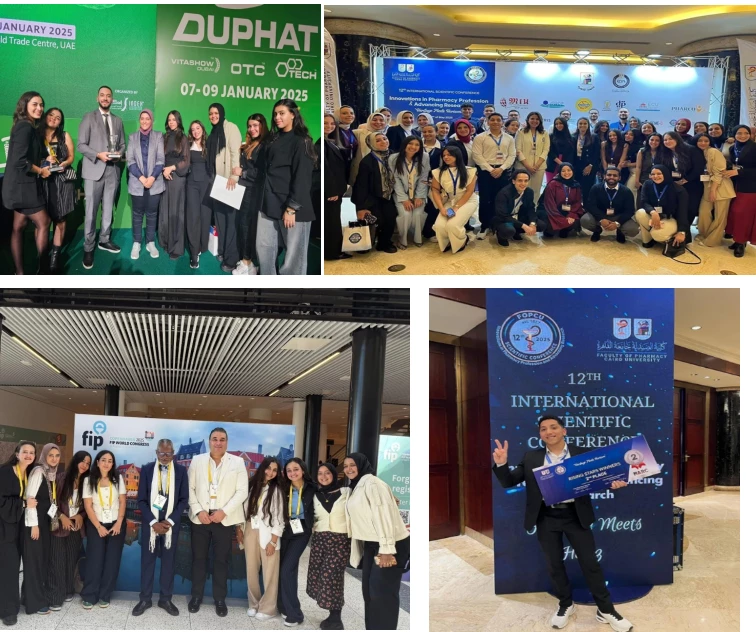
Through active engagement of the College of Pharmacy, AASTMT, main campus, with International Pharmaceutical Federation (FIP) and regular participation in Dubai International Pharmaceuticals and Technologies Conference and Exhibition (DUPHAT), students gain valuable international exposure and demonstrate research excellence, consistently achieving top awards |
Description:
International Collaborations and Training
The College of Pharmacy, AASTMT, main campus, has successfully collaborated with various national and international institutions In the field of education, training and scientific research, such as Bradford University, Belarusian Medical State University, Philipps Universitat Marburg and Universitat De Saarlandes Germany, University of the Basque Country Spain, Ahfad University for Women, Sapienza Roma University, Lebanese American University and Western University of Health Sciences.
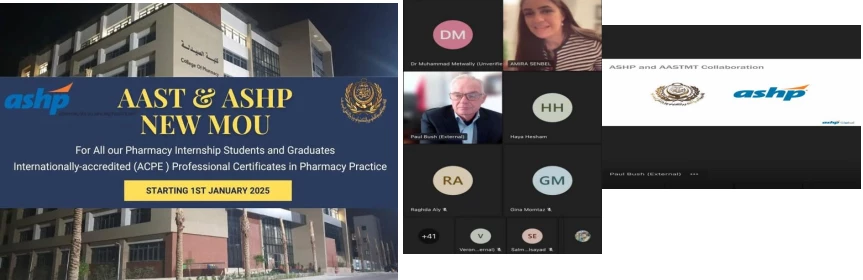
The College of Pharmacy, AASTMT, main campus, has renewed its collaboration with the American Society of Health-System Pharmacists (ASHP) for the fifth consecutive year. The partnership provides advanced training in clinical pharmacy through internationally accredited programs certified by the Accreditation Council for Pharmacy Education (ACPE), supporting the development of students’ skills and enhancing graduates’ career readiness.
College of Pharmacy - Arab Academy for Science and Technology | Facebook
College of Pharmacy - Arab Academy for Science and Technology | Facebook
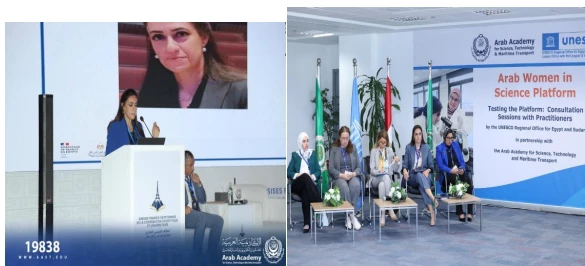
In collaboration with the UNESCO Regional Office in Egypt and Sudan, the College of Pharmacy, AASTMT, main campus, announced the launch of the “Arab Women in Science” platform, a regional initiative aimed at empowering women in scientific research and innovation.
Developed over two years, the platform provides a digital space for Arab women scientists to connect, share knowledge, and access mentorship and training. This milestone reflects a strong culture of inclusion, international collaboration, and knowledge exchange, supporting sustainable development and advancing the role of women in science across the Arab region
College of Pharmacy - Arab Academy for Science and Technology | Facebook
College of Pharmacy - Arab Academy for Science and Technology | Facebook
Advancing Egypt–France Scientific Collaboration through Research and Innovation
Prof. Amira Mostafa Sanbel, Dean of the College of Pharmacy at AASTMT Main Campus, chaired a key session at the first Egyptian–French Conference on Scientific and Research Cooperation, held alongside the official visit of Emmanuel Macron to Egypt. The session, organized in collaboration with the Embassy of France in Egypt, focused on strengthening research capacity and innovation through international partnerships. It brought together leading experts from both countries to explore strategic opportunities for collaboration and highlighted the importance of joint research programs in supporting young scientists and advancing innovation.
College of Pharmacy - Arab Academy for Science and Technology | Facebook
Research Engagement and Scientific Participation
The College of Pharmacy, AASTMT, main campus, fosters strong international collaboration through engagement in joint research projects with leading global pharmaceutical companies, including Pfizer, Pharco and other international industry and educational partners. These collaborations enhance research innovation, support knowledge exchange, and global best practices.
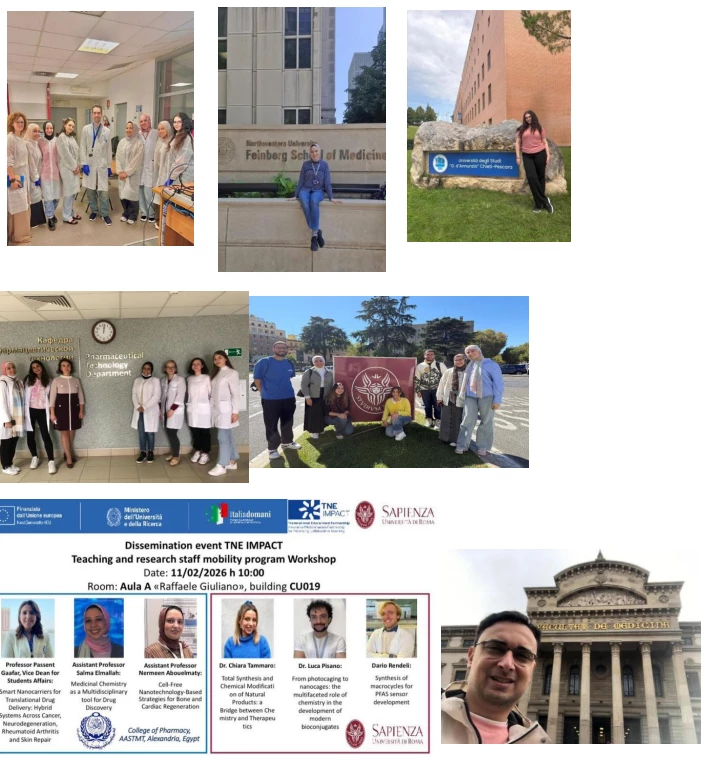
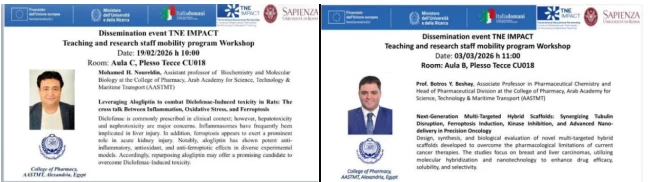
Staff and Student International Mobility Programs
International training and exchange opportunities through strategic partnerships such as Erasmus+ and IPSF programs in addition to several MOUs expose students to diverse academic environments, intercultural competence, global best practices and readiness for the international job market.
College of Pharmacy - Arab Academy for Science and Technology | Facebook
College of Pharmacy - Arab Academy for Science and Technology | Facebook
College of Pharmacy - Arab Academy for Science and Technology | Facebook
International Scientific Publications
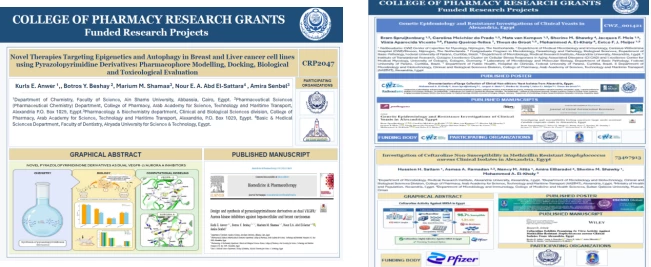
The College of Pharmacy, AASTMT, main campus, is committed to advancing research excellence through the publication of high-quality studies in internationally recognized peer-reviewed journals. These contributions reflect the college’s dedication to innovation, scientific rigor, and global knowledge exchange;
Anwer, K. E., Beshay, B. Y., Shamaa, M. M., Abd El-Sattar, N. E., & Senbel, A. (2025). Design and synthesis of pyrazolopyrimidinone derivatives as dual VEGFR/Aurora kinase inhibitors against hepatocellular and breast carcinomas. Biomedicine & Pharmacotherapy, 192, 118679.
Gerges, E. M., Helmy, M. M., Daabees, T. T., & Senbel, A. M. (2025). Effect of some prostanoid receptor modulators on cholinergic and purinergic pathways in rat model of hemorrhagic cystitis: potential beneficial action of selexipag and alprostadil. Naunyn-Schmiedeberg's Archives of Pharmacology, 1-17.
Abdou, R. M., Fahmy, H. A., Khattab, A. R., & Farag, M. A. (2025). Metabolomic and antioxidant characterization of seven Egyptian and Saudi date syrups via GC-MS and UHPLC/MS with sensory bioactive insights. Scientific Reports, 15(1), 32604.
Elghonemy, M. M., Khattab, A. R., Abdelhameed, M. F., Ahmed, R. F., Eid, M. M., Ali, A. M., ... & Elshamy, A. I. (2025). Bioactive-rich Mangifera indica leaf extracts alleviate inflammation, pain, and fever via suppression of pro-inflammatory cytokines and activation of Nrf2 pathways. Tissue and Cell, 103237.
Hassan, H., Kamr, A., El-Gendy, A. N., Toribio, R., Khattab, A. R., Mousa, W., ... & Arbaga, A. (2025). Clinicobiochemical and gas chromatography-mass spectrometry-based serum metabolomics for determining the therapeutic efficacy of silymarin in pneumonic Barki sheep. Open Veterinary Journal, 15(12), 6268-6268.
Ibrahim, N., Khattab, A. R., Mohammad, A. S., Al-Hammady, M. A., Ayoub, I. M., & Farag, M. A. (2026). GC–MS-based metabolome classification of sturgeon caviar and fish roe samples reveals unique caviar signatures, interspecies and gender variabilities. Scientific Reports, 16(1), 7195.
El Meidany, W. M., El-Mamlouk, E. A., El-Kholy, M. A., & Mahgoub, M. A. (2025). Exploring the In-Vitro activity of the combination of Manuka honey and Cinnamomum verum bark oil against carbapenem-resistant Acinetobacter baumannii clinical isolates. Microbes and Infectious Diseases, 6(4), 6677-6688.
Ateeba, M. T., El-Kholy, M. A., Alseqely, M., Edward, E. A., & El-Nakeeb, M. (2025). Dissemination of carbapenem and colistin resistance in Gram-negative bacteria: the emerging role of novel β-lactam/β-lactamase inhibitors for managing a global dilemma. Advances in Medical, Pharmaceutical and Dental Research, 5(2), 291-313.
Zeweil, M. M., Ali, M. M., Shamaa, M. M., Mohammed, F. I., Kamal, M., Zaki, M. S. A., ... & Khafaga, A. F. (2026). Complementary neuroprotective effects of semaglutide and papaya in diabetic encephalopathy via antioxidant and insulin-signaling pathways. Scientific Reports.
Rageh, B., Shamaa, M., Agami, M., El-Yazbi, A., & Wahid, A. (2025). Mitigation of thromboinflammation by rivaroxaban ameliorates metabolic and structural manifestations of metabolic dysfunction-associated steatohepatitis in rats: Comparison to other antithrombotic drugs. The Journal of Pharmacology and Experimental Therapeutics, 103749.
Farghaly, A. M., AboulWafa, O. M., Baghdadi, H. H., Abd El Razik, H. A., Farag, E. M., & Shamaa, M. M. (2025). New thieno [2, 3-d] pyrimidinone-based derivatives: Design, synthesis, biological potential, and in silico studies against breast cancer. Journal of Molecular Structure, 144530.
ElHady, S. A., Abd-Elmawla, M. A., Shamaa, M. M., & Abdelgawad, H. M. (2025). Prophylactic and therapeutic role of Betulin in mitigating obesity-related metabolic dysfunction in rats fed on high-fat diet. Bioorganic Chemistry, 109156.
Baher, N. K., Heikal, L. A., El-Salamouni, N. S., Gaafar, P. M., Bakr, B. A., Badea, N. M., & El-Gamal, S. (2025). Intranasal Dabigatran Etexilate Lipid Nanoparticles: A Targeted Approach for Management of Alzheimer’s Disease. Journal of Drug Delivery Science and Technology, 107925.
Zewail, M., Abbas, H., Aboukilila, H. Y., Ragab, M. F., Kamal, M. F., & Gaafar, P. M. (2026). L-Carnosine loaded chondroitin sulphate functionalized proposomes as an effective tool for transdermal rheumatoid arthritis management. Journal of Drug Targeting, 34(3), 424-439.
Gaber, D. M., Nafee, N., Helmy, M. W., & Abdallah, O. Y. (2026). Inhalable herbal nanotherapeutics targeting lung carcinoma. Scientific Reports.
Mousli, H. M., Mosly, M. M., Abdelmonem, S., & El Sayed, I. (2025). Adding enoxaparin to intermittent pneumatic compression in postoperative venous thromboembolism prophylaxis: cost-effectiveness analysis results. Research and Opinion in Anesthesia & Intensive Care, 12(4), 342-349.
Mousli, H. M., El-Masry, H. A., Farag, H., & Mosly, M. M. (2025). Lean Six Sigma interventions for enhancing patient safety-related outcomes: a systematic review. International Journal of Lean Six Sigma, 1-18.
Mousli, H. M., Elmasry, H., Mousa, E., Ouda, M., Elsayed, N., & Mosly, M. M. (2025). Assessing the hospital pharmacy preparedness to mass casualty incidents. International Journal of Health Care Quality Assurance, 1-12
Elmallah, S. (2025). Repurposing of selected antivirals and anthelmintics for treatment of COVID-19 (in silico study). Advances in Medical, Pharmaceutical and Dental Research, 5(2), 248-253.
Mosbah, S., Saadi, S., Anak, B., Elmallah, S., & Djedouani, A. (2026). Synthesis, crystal structure, DFT analysis, and molecular docking studies of a novel thiophene-containing acrylonitrile Schiff base as a potential tyrosine kinase inhibitor. Journal of Molecular Structure, 1353, 144652.
Eltoukhy, M., Elsir, M., & Khattab, W. (2025). Recent advanced technologies for ocular drug delivery: the transformative impact of nanotechnology on treating eye disorders. Advances in Medical, Pharmaceutical and Dental Research, 5(2), 320-340.
Kamal, N. H., Heikal, L. A., Helmy, M. W., & Abdallah, O. Y. (2025). Bromelain-functionalized omega-3 nanocarriers for targeted icariin delivery: a multifunctional shield for cardiac repair in doxorubicin-induced injury. Journal of Materials Science: Materials in Medicine.
Khalil, H. A., El-Sayed, N. W., Elmoslhy, R. M., & El-Yazbi, A. F. (2026). Recent advances in the analysis of the evolutionary RNA based therapeutics; a review. International Journal of Biological Macromolecules, 150466.
El Sayed, N. F., Noureldin, M. H., El Sayed, I., El Banna, Y. Y., & Ghoneim, M. E. S. (2025). Alogliptin repositioning confers protection against diclofenac-induced liver injury by inhibiting TLR4/NF-κB, ROS/TXNIP, and NLRP3 inflammasome-mediated pyroptosis in rats. Naunyn-Schmiedeberg's Archives of Pharmacology, 1-17.
International Academic Collaboration in Sustainable Logistics, Supply Chain Resilience, and Climate-Oriented Transport Studies
|
|
|
|
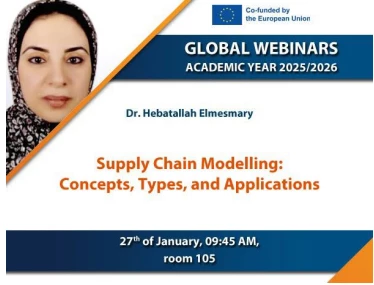
“Supply Chain Modelling: Concepts, Types, and Applications,” delivered by Dr. Hebatallah Elmesmary, representing AASTMT – Egypt. January 27, 2026 The session explored key concepts, various modelling approaches, and real-world applications of supply chain modelling, emphasizing sustainable practices and fostering global knowledge exchange to support environmentally responsible and resilient supply chains. |
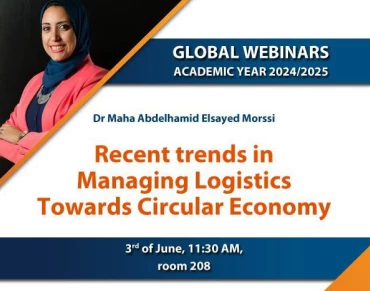
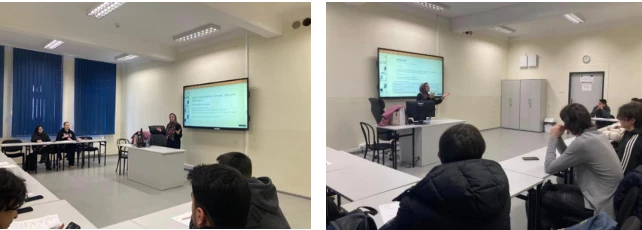
“Recent Trends in Managing Logistics Towards Circular Economy”,deliverd by Dr. Maha Abdelhamid Elsayed Morssi representing AASTMT – Egypt June 3, 2026.
The lecture addressed recent trends in managing sustainable logistics within the framework of circular economy practices, highlighting key concepts, environmentally responsible strategies, and real-world applications, fostering cross-border academic learning and international collaboration. |
|
In cooperation with the International University of Logistics and Transport in Wroclaw, the College of International Transport and Logistics, Arab Academy for Science, Technology and Maritime Transport (AASTMT) participated in a number of seminars as part of the staff mobility agreement between both colleges. |
|
Description:
International University of Logistics and Transport Global Webinars Series on Supply Chain Modelling and Circular Economy
The webinars series were designed to undergraduate-level to provide an in-depth understanding of:
Sustainable logistics and circular economy practices,
1
addressing one of the most pressing challenges of our time: how can global supply chains operate efficiently while minimizing environmental impact and promoting social responsibility?
2
- exploring the complex interactions between logistics management, environmental sustainability, and economic development,
- offering solutions to enhance resilience and reduce the ecological footprint of supply chains.
3
- Contemporary approaches in supply chain modelling and sustainable logistics strategies.
- contextualizing these practices for international audiences and fostering cross-border academic knowledge exchange.
The program exemplifies international collaboration on sustainability, combining expertise from Egypt, Poland, and other global partners to equip students and academic staff with the skills and knowledge
- GLOBAL WEBINARS – THE GUEST SPEAKER DR. HEBATALLAH ELMESMARY
- GLOBAL WEBINARS – GUEST DR MAHA ABDELHAMID ELSAYED MORSSI
|
Lecture on Mitigating Water Risk: Logistical Strategies for Climate-Induced Challenges, delivered by Dr. Maha Abd El-Hamid Morssi, representing CILT. Hosted by Instituto Cervantes, the Spanish institue, Alexandria, on June 3, 2026, highlighting cultural activities and the promotion of scientific thought. The session examined strategies to manage water-related risks in global supply chains affected by climate change, emphasizing sustainable and resilient logistics practices, environmentally responsible resource management, and innovative solutions to ensure long-term ecological and operational sustainability. |
|
The lecture expanded the knowledge of participants by demonstrating how effective logistics and supply chain management are indispensable tools for building resilience against climate-induced resource shortages, focusing on sustainable supply chain practices, resilient logistics strategies, and effective resource management to address climate-induced water shortages in global transport and trade |
CITL is actively engaged in sustainability-related programs and studies that involve international and regional collaboration. A major example is the LEAD-MENA Erasmus+ Project, which brings together international academic partners to work on curriculum development, innovation support, skills enhancement, and sustainability-focused higher education activities. Another important example is the Global Innovative Unit for Economic Growth, developed in partnership with a Romanian university, which focuses on strengthening logistics, supply chain management, and transportation between Africa and Europe while emphasizing environmental sustainability, climate resilience, and sustainable finance. CITL has also contributed to the SOFT Project, implemented by AASTMT–CITL from November 2025 to October 2028, which includes governance, infrastructure development, mobility and training, academic modernization, and professional program development in cooperation with international partners. In addition, CITL contributed in the Study on Establishing a Logistics Zone on the Sudanese Border, and the Integrated Green Hydrogen Supply Chain Study. These activities show CITL’s strong involvement in internationally and regionally connected sustainability work through research, consultation, technical analysis, and institutional cooperation.
|
The Autonomous University of Barcelona, Spain The Autonomous University of Barcelona was officially created by legislative decree on June 6, 1968. The Arab Academy for Science, Technology and Maritime Transport, represented by the College of Language and Communication (CLC), signed a Memorandum of Understanding with Autonoma University in Barcelona (AUB) on June 19, 2013. According to the MOU, CLC students can study summer courses in AUB. Students of both departments can also spend a semester at the university. All students graduating from the CLC also receive a certificate from AUB in addition to that of the AASTMT. The CLC received its validation from AUB in March, 2016.
|
University of Central Lancashire (UCLan), UK The University of Central Lancashire is a prestigious university, tracing its roots back to 1828 and leading the way in modern learning today. It is one of the UK’s largest universities with a staff and student community approaching 38,000. They are ranked in the top 7% of universities worldwide according to the Centre for World University Rankings (2021-22) and the first for the money invested into student wellbeing services according to the 2020 Student Welfare League Table. CLC students have the opportunity to spend their summer training at UCLan. and obtain professional training.
|
|
Sheridan University, Canada The CLC offers its students summer training opportunities at Sheridan University in Canada in the branches of journalism, radio and television. The training focuses on a variety of disciplines in the field of media such as sound, mixing, lighting and editing through using the latest software available in the field.
|
University of Leicester, UK The CLC offers professional training opportunities to graduates and non-graduates of the CLC, including the ELTTC, an intensive English language teacher training certificate accredited from the University of Leicester in England.
|
|
University of Geneva, Switzerland Based in the city that hosts several international organizations, the University of Geneva was established in 1559. Students of the Language and Translation Departments have the chance to study for one or two semesters at the Faculty of Translation and Interpreting, University of Geneva, Switzerland.
|
University of Valladolid, Spain Through Erasmus+ mobility program, the CLC can send both staff and students to European universities, particularly the University of Valladolid. The benefits for the organisations include an increased capacity to operate at an international level, improved management skills, access to more funding opportunities and projects, increased ability to prepare, manage, and follow-up projects, and a more attractive portfolio of opportunities for students and staff.
|
|
International cooperation with partner universities constitutes a central pillar of the CLC’s strategic vision, reflecting its commitment to advancing the global agenda for sustainable development. Through carefully cultivated academic partnerships, the college fosters the exchange of knowledge, research, and pedagogical innovation, thereby contributing directly to the achievement of the United Nations Sustainable Development Goals, particularly Goal 4: Quality Education. These collaborations enable the development of inclusive, equitable, and high-quality learning opportunities by promoting joint programs, student and staff mobility, and shared research initiatives. |
|
Our partners - College of Language and Communication
University of Autonoma - College of Language and Communication
AASTMT Practical Training-Alexandria | AASTMT
University of Central Lancashire (UCLAN) – England - College of Language and Communication
College of Language and Communication-Alexandria | AASTMT