



 Goal 17. Partnerships to achieve the Goal
17.3.6 SDG6 Report

Key Milestones in 2024-2025
AASTMT Supports Groundwater Protection through Three Sanitary Landfill Projects in Sohag
The Arab Academy for Science, Technology and Maritime Transport (AASTMT) helped oversee three sanitary landfill projects in Juhayna, Dar El-Salam and Edfa as part of Sohag Governorate’s integrated solid waste management programme. AASTMT served on the joint committee responsible for monitoring infrastructure works and overseeing their handover, alongside government and technical partners. Egypt’s Ministries of Environment and Local Development handed over the Juhayna landfill cell on 16 November 2024. The EGP 60 million facility covers 10 feddans and serves Juhayna and El-Maragha. The ministries also announced the handover of the Dar El-Salam landfill, which will receive residual waste from the local treatment plant, and the preliminary handover of the Edfa landfill, which will serve Sohag city and district. The facilities support safe solid waste disposal and help manage leachate, the liquid that drains through waste. The Dar El-Salam and Edfa sites include dedicated leachate drainage channels designed to reduce the risk of groundwater contamination. Through its work on the joint committee, AASTMT supported water pollution prevention and the protection of groundwater resources beyond campus.
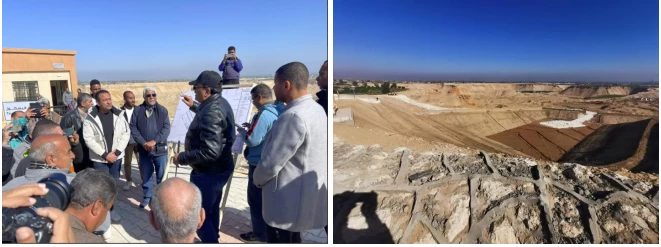
Dar El-Salam and Edfa handover announcement · Juhayna handover announcement
AASTMT Supports Groundwater Protection Through Three Sanitary Landfill Projects in Sohag on EEAA Page
AASTMT Supports Groundwater Protection through Three Sanitary Landfill Projects in Sohag on AASTMT website
TOuMaLi Project Brings AASTMT and Parliament Committee Together to Tackle Marine Litter in Alexandria
TOuMaLi (Prevention of Tourism Marine Litter) is a project that aims to reduce tourism-related waste entering the sea. In Alexandria, AASTMT combines beach cleaning with systematic litter monitoring to identify where waste accumulates and guide efforts to protect coastal water quality. As part of the project, AASTMT hosted the Egyptian Parliament’s Local Development Committee for a field visit to Alexandria’s beaches on 27 June 2025. The team demonstrated beach-cleaning equipment and explained how it collects, records and analyses litter along the coastline. These data help identify priority areas for clean-up and guide measures to prevent waste from reaching coastal waters. Committee members reviewed the pilot activities and discussed how legislative support could help extend these practices to other coastal areas in Egypt. The visit gave policymakers a first-hand look at how field data can inform waste management and water pollution prevention.
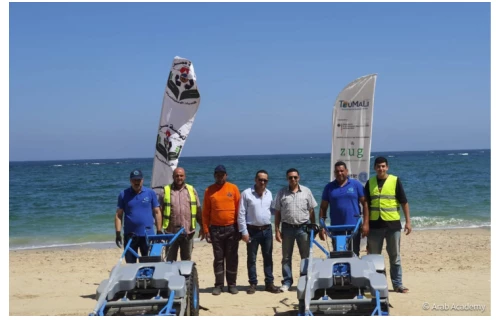
Community Engagement
AASTMT Promotes Water Awareness in the Wider Community through the “By Fisher to Fisher” Initiative
On 21 December 2024, students from AASTMT’s Port Training Institute and College of Fisheries and Aquaculture Technology joined the “By Fisher to Fisher” initiative at Alexandria’s Eastern Harbour. As part of the “Green & Clean” campaign, they helped remove litter from the harbour and surrounding waters, supporting local fishers and helping protect coastal water quality. The initiative brought together AASTMT, civil society organisations and private-sector partners to collect waste for recycling and raise community awareness of how everyday waste disposal affects shared waters. By linking responsible waste management with water pollution prevention, AASTMT encouraged the wider community to take an active role in protecting water resources.
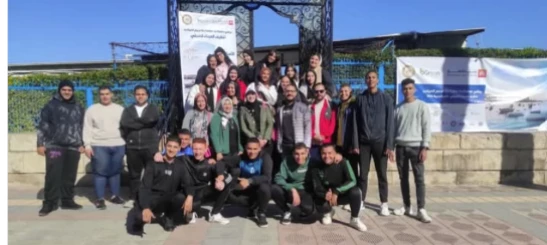
AASTMT Promotes Water Awareness in the Wider Community through the “By Fisher to Fisher” Initiative on AASTMT website
Strengthening Arab–Japanese Cooperation: Expanding Opportunities for Investment, Trade, and Sustainable Innovation
Published on July 10, 2024, this report highlights remarks by Ahmed Aboul Gheit, Secretary-General of the League of Arab States, at the Arab–Japanese Economic and Business Conference in Tokyo regarding deeper strategic and economic ties. Through public-private partnerships and trade, his address emphasizes expanding two-way investment—particularly for small and medium-sized enterprises—and leveraging the Arab region's strategic maritime routes and infrastructure to drive resilient growth. Praising Japan's ongoing support, he calls for expanded collaboration across key strategic sectors including water management, water resources sustainability, energy transition, artificial intelligence, digital transformation, and education. This vision underscores how international partnerships foster innovation, strengthen knowledge-based economies, and advance sustainable resources management and long-term economic development across both regions.
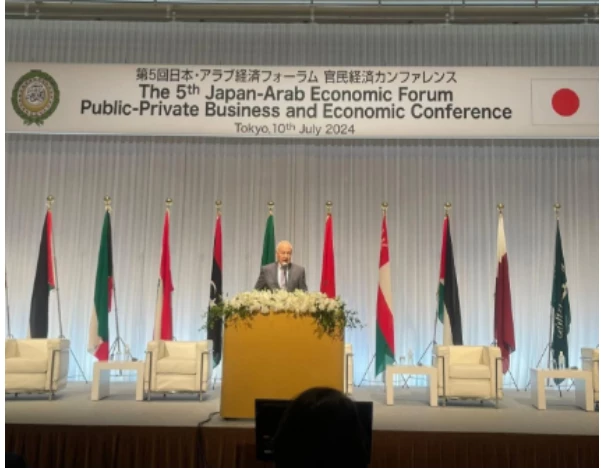
Strengthening Arab–Japanese Cooperation: Expanding Opportunities for Investment, Trade, and Sustainable Innovation on AASTMT website
Training & Events
AASTMT’s PQI Contributes to Training for Water and Wastewater Professionals
The Holding Company for Water and Wastewater and the Alexandria Drinking Water Company organised a training course on the Egyptian Government Excellence Model at the company’s Regional Training and Consultancy Centre. A specialist lecturer from AASTMT’s Productivity and Quality Institute (PQI) contributed to the programme. The course brought together local professionals working in drinking water safety, wastewater services, quality and customer service. Participants explored institutional excellence, performance assessment and Egypt Vision 2030, with the aim of improving the quality and sustainability of water and sanitation services.
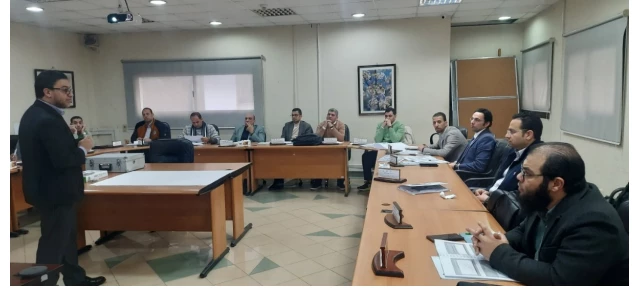
AASTMT’s PQI Contributes to Training for Water and Wastewater Professionals on ElBalad News website
From Upper Egypt to International Recognition AAST Student Achieves Top Position in Emerging Engineers 2025 Award
Mahmoud Abdel Aziz Mohamed, a student from the Construction and Building Engineering Department at the Arab Academy for Science, Technology and Maritime Transport's (AAST) South Valley Campus in Aswan, secured 5th place in the Emerging Engineers 2025 Award in the United Arab Emirates among competitors from 38 universities across the Middle East and North Africa. His award-winning research project, titled "Sustainable Cooling and Heat Recovery System for Concrete Structures Using Water Regeneration," introduces an innovative approach to infrastructure development that cools concrete structures while recovering thermal energy through advanced water regeneration and reuse technologies. Integrating circular economy principles and green infrastructure, the system addresses critical challenges in water management, water quality, and climate adaptation, demonstrating how applied engineering research promotes wastewater treatment reuse, optimizes water resources, and advances sustainable resources management in alignment with SDG 6.
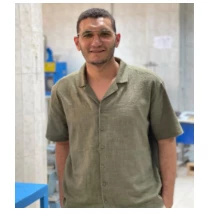
From Upper Egypt to International Recognition AAST Student Achieves Top Position in Emerging Engineers 2025 Award on AASTMT website
AASTMT Tech-Innovation Challenge Highlights AI Solutions for Clean Water and the SDGs
The third round of the Tech-Innovation Challenge 2024 at AASTMT’s Smart Village Campus invited students to develop AI solutions for challenges linked to the Sustainable Development Goals (SDGs). Held under the theme “Artificial Intelligence for a Prosperous Life”, the competition drew nearly 90 teams and more than 380 students from schools and universities. Twenty school teams and eight university teams reached the finals. Two award-winning projects addressed SDG 6 (Clean Water and Sanitation). RC Water Cleaner placed second in the school track, and Aqua Sense placed third in the university track. Their recognition highlighted how student innovation can contribute to water pollution prevention, water quality monitoring and sustainable water management. The competition also featured projects in agriculture, healthcare and education, giving students a platform to apply AI to practical sustainability challenges.
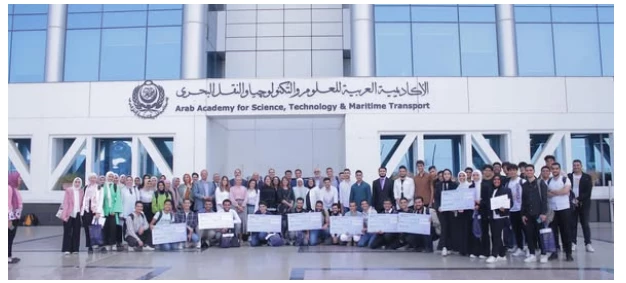
AASTMT Tech-Innovation Challenge Highlights AI Solutions for Clean Water and the SDGs on AASTMT website
Campus Upgrades for Water Conservation
Incorporating a Discharge System and Policy for Safe Aquarium Water Discharge and Pollution Prevention
AASTMT’s internal Aquarium Water Recirculation, Reuse and Discharge Policy establish guidelines for responsible water management within the Aquaculture Laboratory at the College of Fisheries and Aquaculture Technology. The policy promotes water conservation through recirculation and reuse, maintenance of appropriate aquarium water quality, and safe wastewater management to minimize pollution and protect aquatic ecosystems. It provides a framework for environmentally responsible laboratory practices and the prevention of harmful discharges into natural aquatic environments. Developed under SDG 14 (Life Below Water), the policy also supports SDG 6 (Clean Water and Sanitation) through its emphasis on water reuse and pollution prevention.
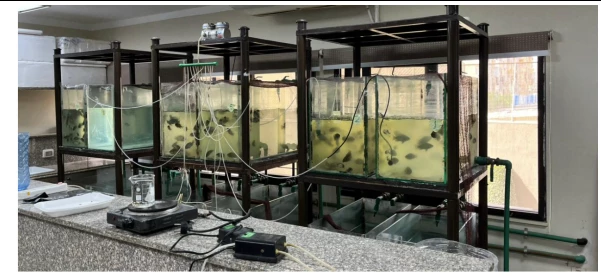
Incorporating a Discharge System and Policy for Safe Aquarium Water Discharge and Pollution Prevention on AASTMT website
AASTMT Supports Water Quality Protection through Sustainable Organic Waste Management
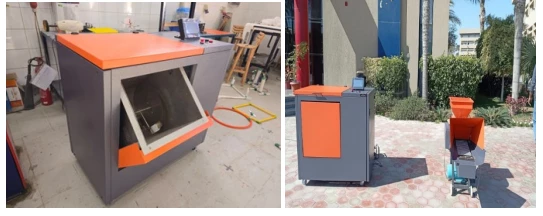
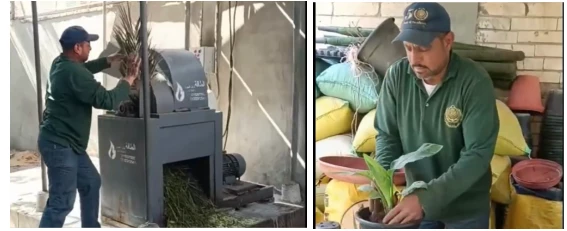
The AASTMT is advancing sustainable organic waste management through source separation, mechanical composting and vermicomposting. These initiatives support water management and water quality protection by addressing organic waste that, when improperly managed, can contribute to water pollution and threaten groundwater. Organic waste generated by cafeterias, restaurants, student accommodation and campus food services is collected through the Academy’s integrated waste management programme. A dedicated composter processes kitchen food residues into organic fertiliser under controlled temperature, moisture and mixing conditions. Complementing this system, vermicomposting uses Eisenia fetida earthworms to transform organic materials into nutrient-rich soil amendments. These practices address the environmental risks associated with uncontrolled organic waste disposal, including potential groundwater contamination. Separating and processing organic waste at source supports a preventive approach to water contamination, alongside the recovery of valuable nutrients and the protection of water resources. During the 2024/2025 academic year, AASTMT’s agricultural waste recycling activities produced 15 tonnes of compost, designated for lawn fertilisation. The resulting products support campus landscaping and soil improvement, while reducing waste sent for disposal and encouraging the reuse of organic resources. Through these activities, AASTMT prevents water system pollution. The initiatives demonstrate how responsible management of campus organic waste can support pollution prevention and the protection of surrounding ecosystems.
AASTMT Supports Water Quality Protection through Sustainable Organic Waste Management on AASTMT website
Water Conservation through Drought-Tolerant Planting and Soil Improvement
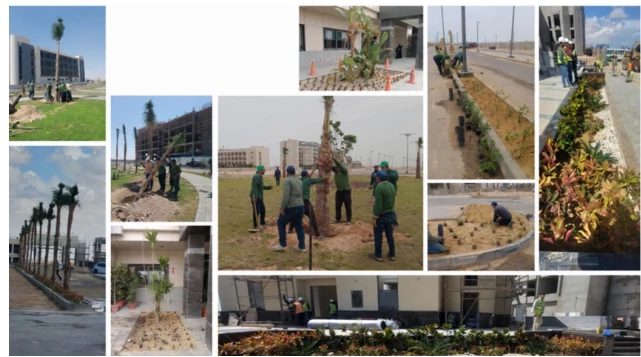
The AASTMT enhanced campus green spaces through planting, landscaping and soil improvement activities. At the Alamein Campus, the work included planting palms, shrubs and ornamental plants, alongside improvements to planting beds and landscaped walkways. The plant selection included 50 yellow bells plants (Tecoma stans), a drought-tolerant flowering shrub with relatively low water requirements once established. Incorporating such species supports water conservation, particularly when irrigation management reflects the needs of each plant type. Alongside these activities, AASTMT recycled agricultural waste to produce 15 tonnes of compost, designated for lawn fertilisation. Compost application can improve soil structure and moisture retention, helping reduce irrigation requirements while recovering valuable organic resources.
Water Conservation through Drought-Tolerant Planting and Soil Improvement on AASTMT website
In 2023–2024, AASTMT advanced its commitment to SDG 6 by strengthening water efficiency, enhancing sustainable water management systems, and expanding its role in local and regional water initiatives. Key achievements included major upgrades to on-campus water infrastructure, advanced monitoring and extraction systems for groundwater, and the adoption of solar-powered pumping and nanofiltration technologies. AASTMT also played an active role in international projects and community engagement events focused on wastewater treatment, irrigation efficiency, pollution control, and resilient agri-food systems. Together, these efforts contributed to improved water quality, optimized water use, and enhanced resilience across campuses and partner communities.