



 Goal 17. Partnerships to achieve the Goal
17.3.2 SDG2 Report
 SDG2 report 2024-2025
Key Milestones in 2024-2025
AASTMT made substantial advances in food security and sustainable food systems during the 2024-2025 academic year, with key achievements including:
- Renewed Food Policy Commitments: The Prosperous Life Policy (Version 3, reviewed January 2025, approved by the SDGs Workforce Committee) commits AASTMT to serving wholesome, locally sourced, seasonal and sustainably produced food across campuses, to prioritizing fair-trade, organic and sustainably farmed items from Egyptian suppliers, particularly in the Nile Delta, and to regular supplier audits, compostable packaging and mandatory sustainability training for food service staff. All purchasing is also governed by the Sustainable Procurement Policy (Version 4, reviewed 2025).
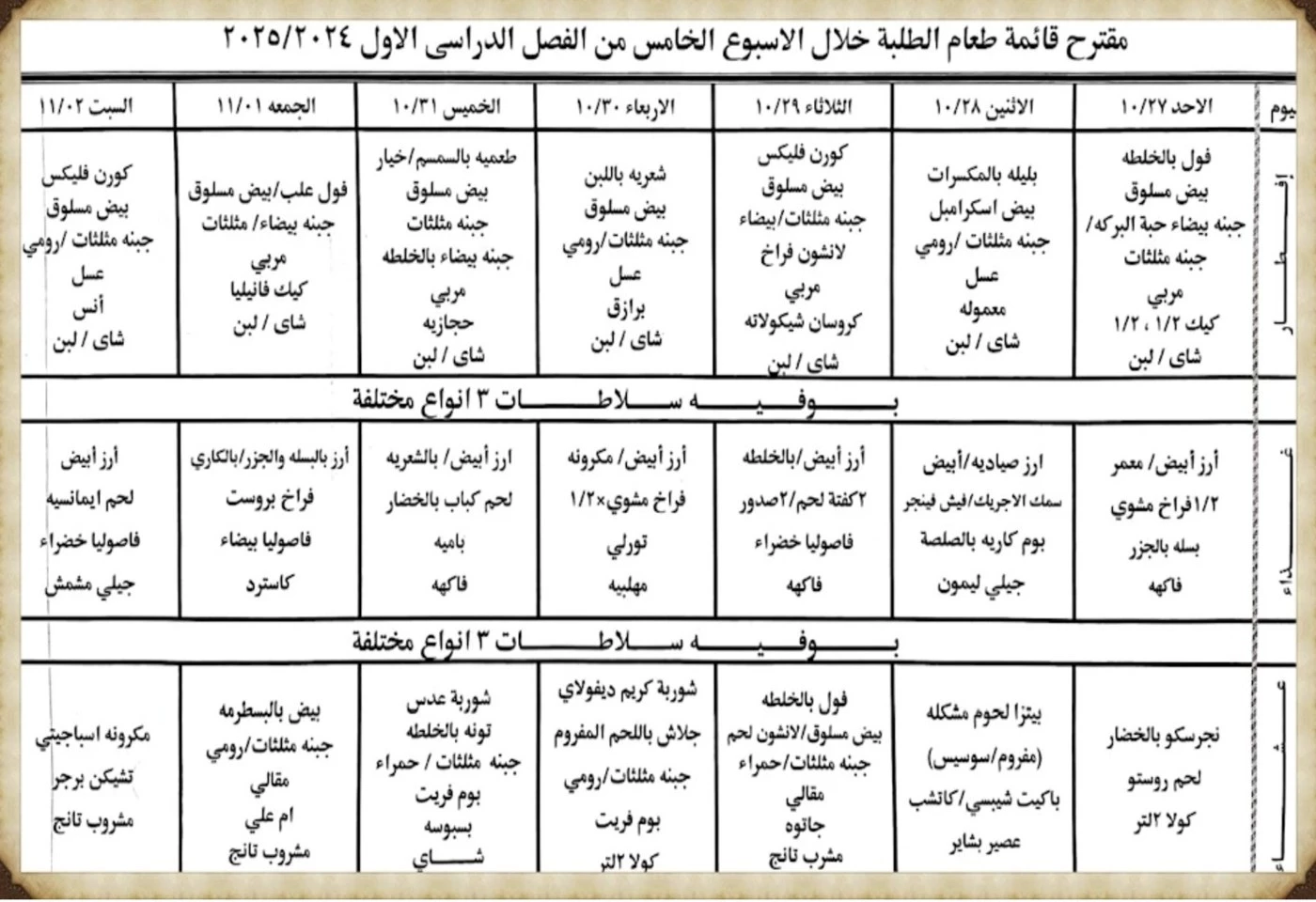
- Published Menus with Daily Vegetarian Choices: The Catering Service published the 2024/2025 weekly student menu (for example, 27 October – 2 November 2024), offering vegetarian dishes at every meal and a buffet of three different salads at lunch and dinner. Dedicated vegan menus were served during the Advent Fast (November 2024 – January 2025) and Great Lent (February – April 2025).
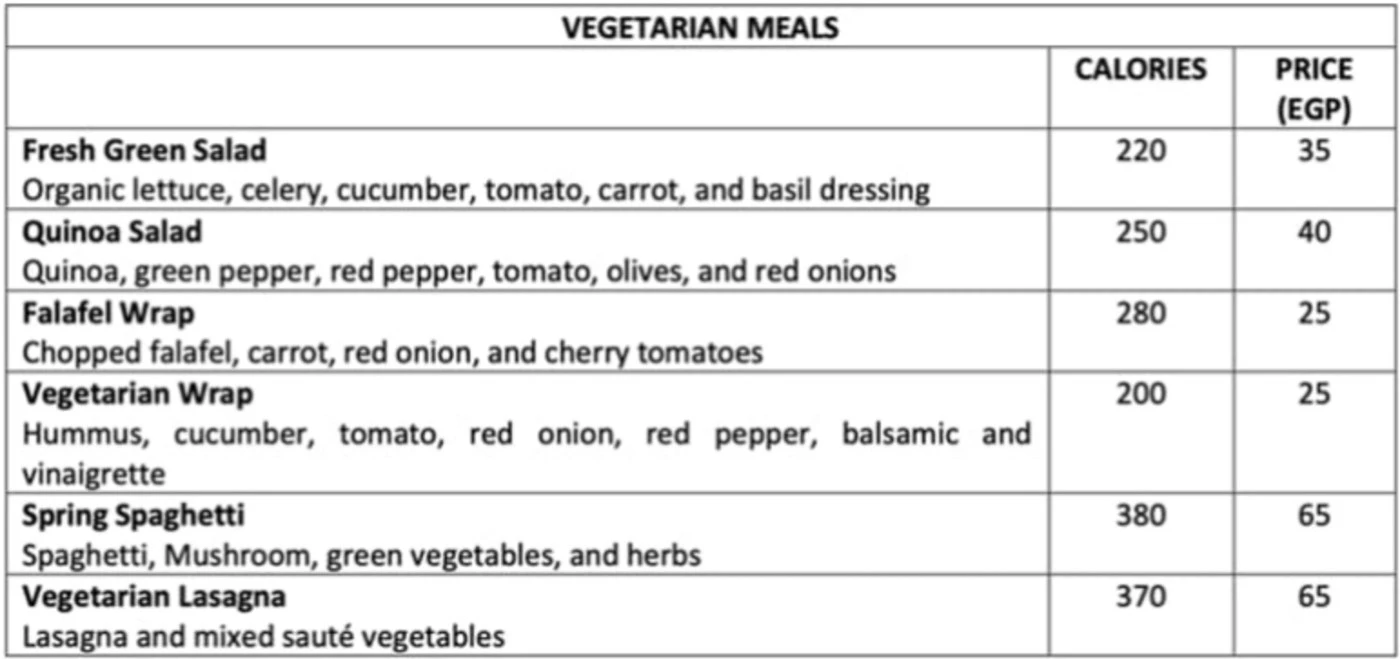
- Healthy, Calorie-Labelled and Affordable Food: A calorie-labelled menu, reviewed and approved in 2024, lists every dish with its price, with vegetarian meals from 25 EGP and main dishes from 65 EGP. The Nutrition Affairs Department's nutritional standards, approved in 2024, set daily portion targets for protein, carbohydrates, vegetables and fruit, and limit soft drinks to twice a week to prevent obesity.
- Meal Support for Students: Campus outlets sell food 5–15% below prices outside the campus gates; the Cilantro branch at the Miami campus, for example, is 15% cheaper than its other Alexandria branches. Prices are based on actual supply costs, daily meal services reach more than 1,000 students and staff at Abu Qir, and low-income students in the residences receive subsidized or free meal plans.
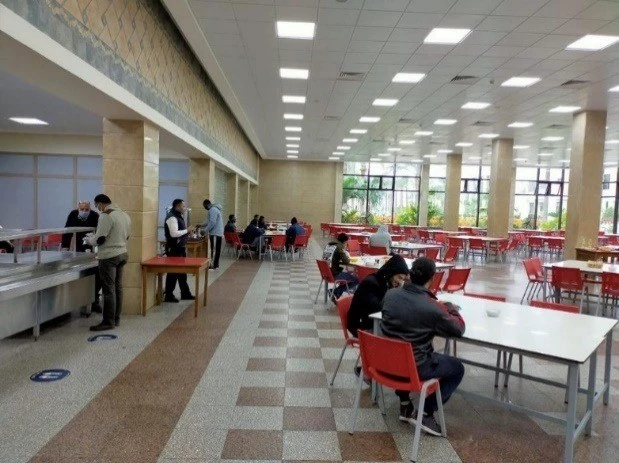
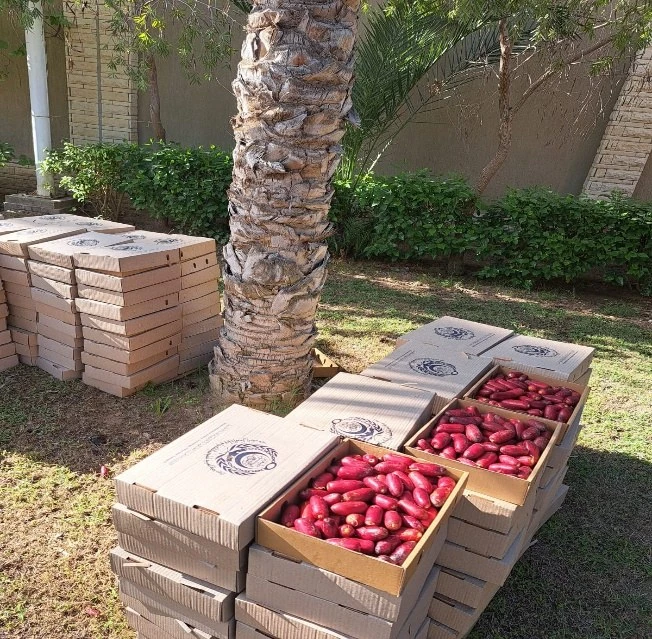
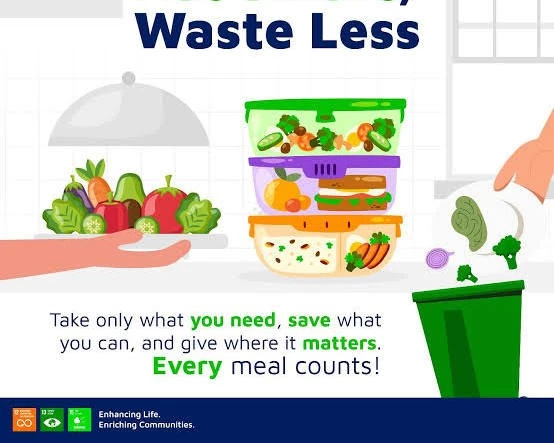
- Staff Hunger Interventions: About 900 staff eat daily in campus dining halls at cost. Staff receive 5–30% discounts at partner restaurants such as Abdel Wahab Grills, Pablo Café & Restaurant and Pizza Hut, and 15% off at the Espresso Fellows cafeteria. The annual Abu Qir date-palm and fruit harvest is given free to all staff, and safe surplus food from cafeterias and events is passed to support workers through the Lokmet Kheir (Eat Smart, Waste Less) programme.
- Food Waste Measured and Transformed: AASTMT recorded 4 tonnes of food waste in 2024-2025 for a campus population of 38,823. The Campus Smart Recycling System turns organic food remains into compost and recovers plastic tableware and aluminium cans. The Aquaculture Research Center converts used cooking oil into biodiesel in a 1,000-litre reactor and kitchen scraps into vermicompost, and compostable catering supplies have replaced single-use plastic in all college food outlets.
- Graduates for Sustainable Food Production: 213 of AASTMT's 10,846 graduates in 2024-2025 (1.96%) completed agriculture and aquaculture courses that include sustainability aspects.
- Strategic Partnership with MAFI: On 23 September 2024 AASTMT signed a cooperation protocol with MAFI for Agricultural Produce Industries at the Heliopolis campus, followed by a technical meeting on artificial intelligence for agriculture on 28 November 2024. Producers gain access to AASTMT's R&D laboratories, precision agriculture technologies and smart supply-chain modelling.
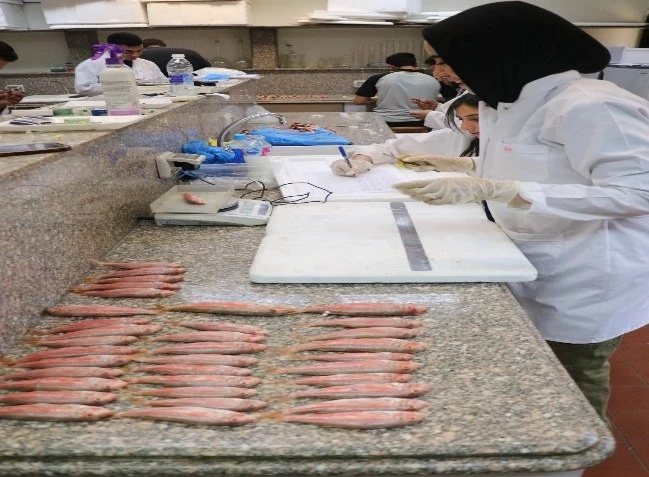
- Sustainable Fisheries Research: The College of Fisheries and Aquaculture Technology, with the Lakes and Fish Resources Protection and Development Agency, supervised three research projects funded by the FAO General Fisheries Commission for the Mediterranean, assessing fish stocks and monitoring discards and bycatch.
- Internationally Accredited Food Safety Training: The Productivity and Quality Institute's FSSC 22000 Version 6 Lead Auditor Course was accredited by CQI and IRCA on 15 August 2025, and the 4th cohort of the Professional Diploma in Food Industries Quality and Safety graduated with the Agricultural Professions Syndicate on 10 August 2025.
|
Weekly student menu 2024/2025 (2.3.3)
|
Calorie-labelled vegetarian menu with prices (2.3.4)
|
Staff and students in a campus dining hall (2.3.5)
|
|
Espresso Fellows Gold Card: 15% off for staff (2.3.5)
|
Boxed campus dates given free to staff (2.3.5)
|
Lokmet Kheir: Eat Smart, Waste Less (2.2.1)
|
|
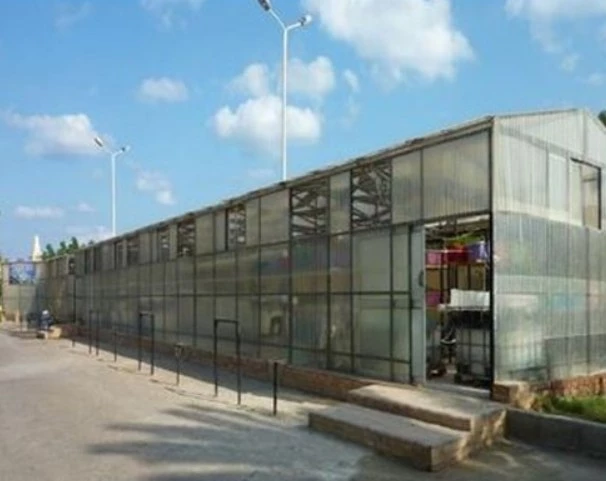
Aquaculture Research Center, Abu Qir (2.2.1, 2.5.3)
|
CFAT researchers on a GFCM-supported fish stock assessment (2.5.1)
|
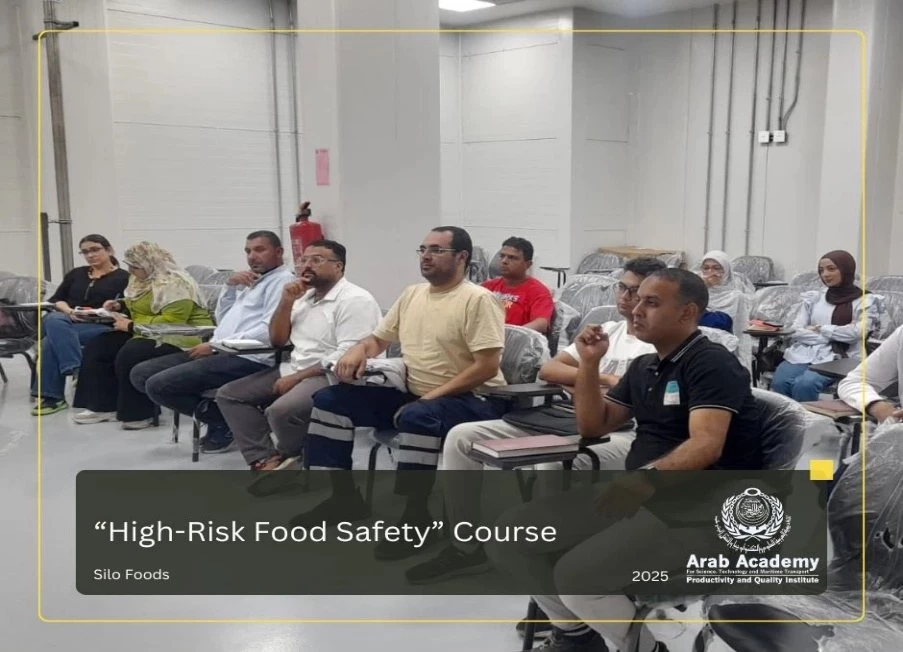
PQI High-Risk Food Safety course, Silo Foods (2.5.1)
|

Community Engagement
AASTMT continues to engage with its society and community through its food security initiatives and focuses on building strong relationships with partners:
- Ramadan 2025 Communal Meals: The annual Staff and Students Suhoor with the Academy President (12 March 2025, Miami) was followed by collective Iftars at Miami (12 March) and Abu Qir (20 March), an Iftar with the Egyptian Authority for Maritime Safety (23 March) and a staff and leadership Iftar at El Alamein (24 March). The meals were free and open to every student and employee.
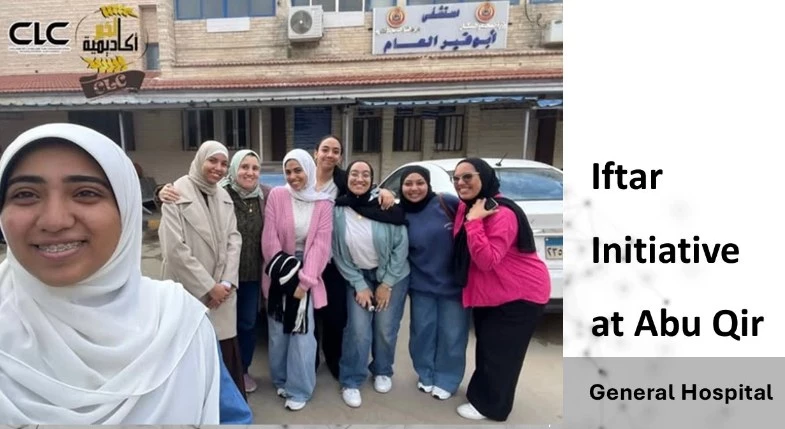
- Iftar El-Saem Meal Distribution: On 19 March 2025 students and staff of the College of Language and Communication, through the charity group Academy ElKher-CLC, distributed iftar meals to workers at Abu Qir General Hospital and residents of an underprivileged area of Abu Qir.
- Orphans Day ("Mercy Day"): On 23 April 2025 the Abu Qir campus welcomed more than 370 children from orphanages and care centers, offering meals, gifts and activities with the support of faculty, students and charitable organizations.
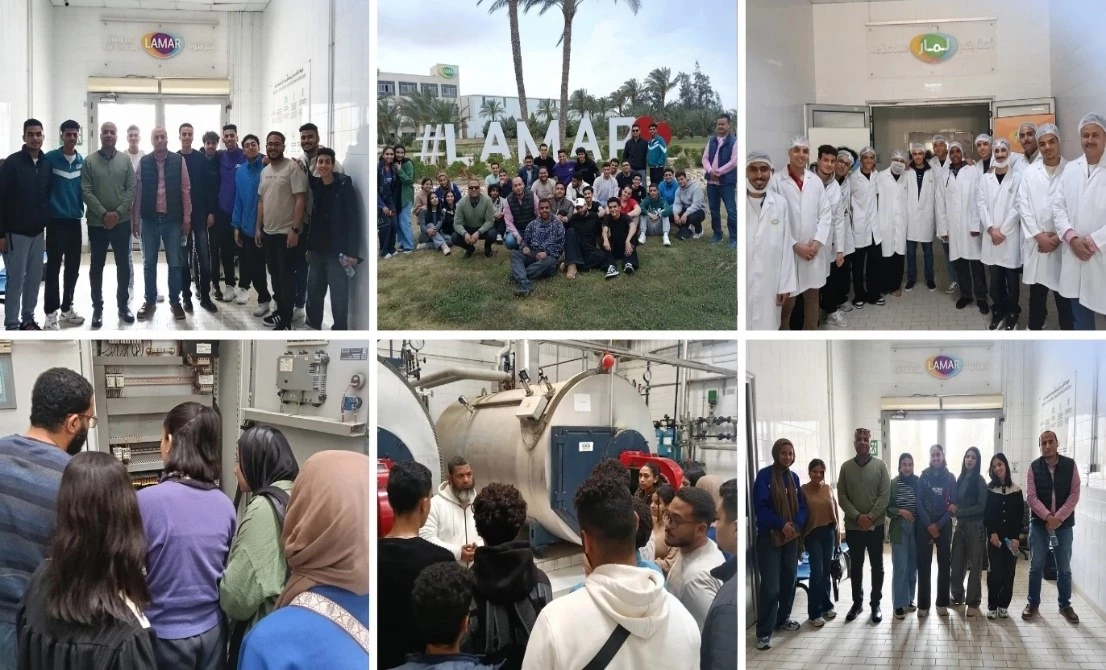
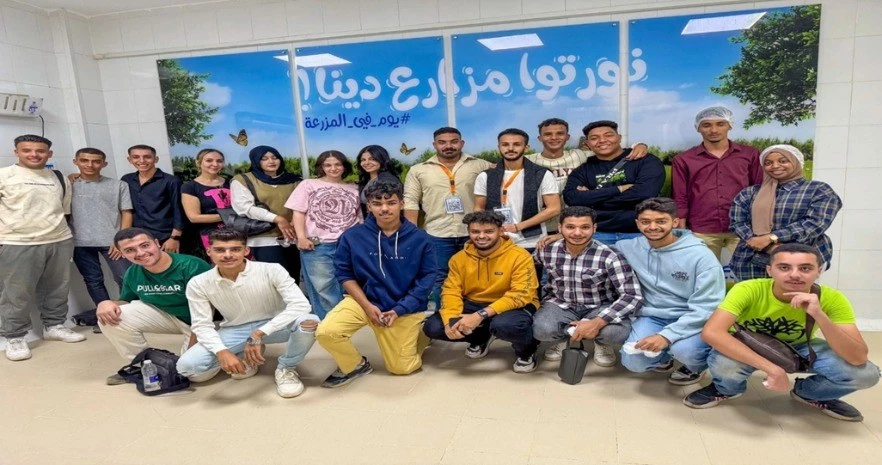
- Industry Engagement with Food Producers: Students trained at SEKEM for Food Industries, a pioneer of organic and biodynamic farming (February 2025), and at Kellanova and Mass Food (July – September 2025), and visited Dina Farms (3 November 2024), Edita Food Industries (28 November 2024) and Lamar Farm and Factory in Nubaria (30 April 2025). The Faculty of Agriculture at Minya University visited the Abu Qir campus on 7 April 2025.
- Food Safety Training for Local Producers: PQI trained Silo Foods in GMP (28 August 2024), statistical quality control (16 October 2024), the BRCGS Food Safety Standard (11 November 2024), high-risk food safety (July 2025) and ISO 17025 calibration (August 2025); trained Food Craft engineers in ISO 45001 (10 May 2025); and began qualifying Fathalla Wholesale Markets for ISO 9001 (18 May 2025).
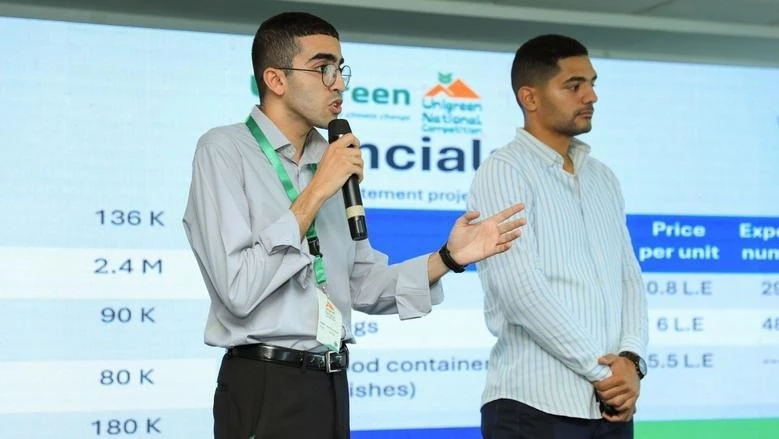
- Mentoring Agri-Food Startups: AASTMT continued to work with the Egyptian Food Bank to mentor Uni Green sustainability startups free of charge, covering agroforestry, post-harvest loss prevention and organic farming practice.
- Access to University Facilities: Local fish farmers and producers can use the Aquaculture Research Center and CFAT water quality, fish pathology and AQAMEH diagnostic laboratories, aquaponics greenhouses and vermicomposting beds. The TWT Agribusiness Incubator supports smallholder innovators in Upper Egypt and the New Valley, and the Erasmus+ RADIO project (from November 2024) is building IoT agronomy and satellite remote-sensing laboratories.
- Nutrition Research and Awareness: El Alamein College of Pharmacy students published a study on how food bloggers shape the eating habits of Gen Z and won the Best Women in STEM Student Oral Presentation Award (1 February 2025), and the Faculty of Medicine's 3rd Annual Student Conference (26 April 2025) addressed the gastrointestinal system and obesity.
|
Annual Staff and Students Ramadan Suhoor, Miami, 12 March 2025
|
Uni Green startup team presenting its project (2.5.1)
|
Iftar El-Saem meal distribution at Abu Qir General Hospital
|
|
Orphans Day at Abu Qir, 23 April 2025
|
Students at Lamar Farm and Factory, Nubaria, 30 April 2025
|
Logistics and Supply Chain students at Dina Farms, 3 November 2024
|


Events
- Minister of Agriculture at El Alamein: On 24 August 2024 H.E. Mr. Alaa Farouk, Minister of Agriculture and Land Reclamation, took part in a ceremony at the El Alamein campus and praised the Academy's role in agricultural and technological education.
- Climate-Smart Agriculture Research Showcase: On 29 October 2024 the Maritime Postgraduate Studies Institute highlighted its MSc in Smart Environmental Management of Climate Change, including research on bio stimulants that improve tomato resilience to heat stress.
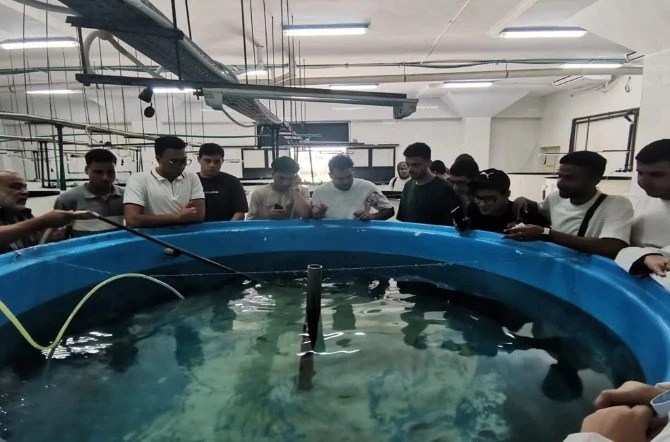
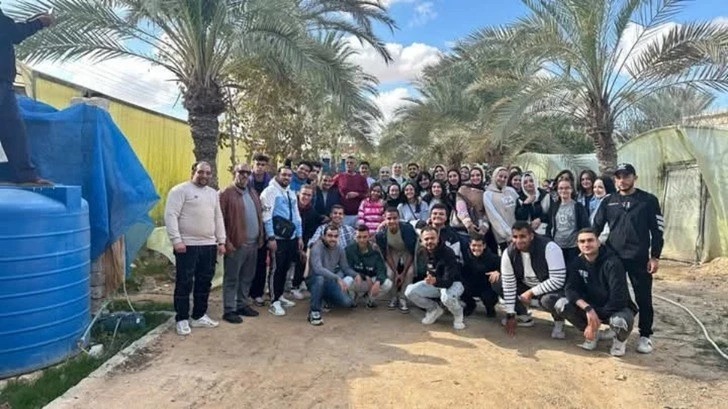
- Fish Farm and Hatchery Field Visit: On 28 November 2024 CFAT students and faculty visited the Basa Fish Farm and Hatchery at Km 21 and intensive fish farms in Borg El Arab, exchanging knowledge with operators on hatchery rearing, feed conversion and biological control of aquatic diseases.
- Food Africa 2024, Cairo: On 8 December 2024 PQI took part in Food Africa, Africa's largest trade exhibition for agriculture and food processing, meeting agricultural exporters, smallholder cooperatives and food manufacturers about quality and food safety needs.
- NET-Work-YOU Agri-Food Dialogue: On 2 July 2025 the AAST Entrepreneurship Center held a focus group with CIHEAM Bari, CEEBA and Noncooperative Puglia under the EU co-funded Migration Partnership Facility, bringing together young people, small-scale food producers and the agriculture and food processing sectors.
- Agricultural Robot Showcase: On 10 July 2025 Technical and Vocational Institute students presented a Jet Engine Agricultural Robot and a Smart Solar Waste Compactor, evaluated for pest control, orchard spraying and farm waste handling.
- GREENLAND Green Skills Training: AASTMT continued to lead the training work package of the EU ENI CBC Med GREENLAND project, which trains young people and women in the circular economy, green agribusiness, organic waste valorization and vermicomposting.
|
CFAT students at a fish rearing tank, 28 November 2024
|
CFAT field visit to fish farms, 28 November 2024
|
Upcoming Goals
In the coming years, AASTMT aims to build on these achievements to create a campus food system that is more inclusive, environmentally sustainable and supportive of national food security:
- Digital Food Waste Tracking: Introduce a digital waste tracking and reporting system across all campuses, explore AI for waste sorting and forecasting, establish Waste Management Centers, and monitor surplus food redistributed through donations, working towards a zero-waste campus by 2049.
- Expanded Staff Meal Support: Load digital monthly meal-subsidy credits onto the ID cards of lower-income technical and service staff, plant fruit trees and agroforestry plots at the El Alamein and Port Said campuses, and open a weekly on-campus farm stand run with local smallholder farmers and organic cooperatives.
- Wider Community Food Initiatives: Hold Orphan Day celebrations at campuses beyond Alexandria, continue student-led Ramadan meal distribution while documenting meals and partners, and strengthen collaboration with food banks and charitable organizations.
- Open-Access Knowledge for Producers: Launch a bilingual Arabic and English extension portal with free video modules for smallholders and fish hatchery operators on precision agriculture, integrated pest management, crop rotation and FSSC 22000 compliance.
- Farmers' Expo and Mobile Diagnostic Clinic: Host an annual Smart Agri-Aqua Summit and Farmers' Expo at the Abu Qir and El Alamein campuses, and take soil, water and fish health testing to smallholder farms in Beheira, Kafr El-Sheikh, Nubaria and Matrouh through a mobile diagnostic clinic.
AASTMT advances SDG 2: Zero Hunger through an integrated model that combines operational sustainability, targeted social support, and regional partnerships. In parallel, AASTMT safeguards food security for its community by offering free and discounted meals and scholarships to financially constrained students, ensuring that economic hardship does not impede access to nutritious food or a conducive learning environment.
This inclusive approach is reinforced by the provision of diverse plant-based options and sustainable menus across campus outlets, encouraging healthy dietary practices and lowering the ecological footprint of food consumption. Beyond campus boundaries, AASTMT collaborates with strategic partners to provide full scholarships, practical training, mentoring, and agribusiness incubation, directly supporting vulnerable groups and emerging entrepreneurs in the agri-food sector. Through these combined efforts, the academy links daily food provision to broader goals of regional food security, sustainable agriculture, and inclusive economic development.