



 Goal 17. Partnerships to achieve the Goal
17.3.1 SDG1 Report
 SDG1 report 2024-2025
Key Milestones in 2024-2025
- Bottom-Quintile Admission Target (10%–15% Semester Benchmark)
AASTMT reserves 10% to 15% of newly admitted seats each semester for bottom-financial-quintile and low-income applicants. Applicants submit official income, social-solidarity, or refugee documentation, which a joint committee from Student Affairs, Admissions and Registration, and Financial Affairs audits prior to registration to match confirmed students with tuition waivers, sponsorships, housing, and meal subsidies.
- Cohort Retention, Completion & the Students First Initiative
During 2024–2025, AASTMT recorded 10,846 total graduates across all campuses. Within the tracked cohort of 10,498 financial-aid recipients, 525 students graduated in 2024–2025 and 9,973 students remained actively enrolled in good standing. Under the flagship Students First initiative, faculty advisors monitor mid-semester progress against the 2.40 GPA benchmark, arrange peer tutoring, and coordinate with Student Affairs to resolve non-academic barriers.
-Academic Continuity & Renewal Rules: Recipients of recurring merit and social waivers must maintain a 2.40 GPA minimum, carry a standard full-time credit load, maintain a clean disciplinary record, and submit updated original documentation annually. Students facing sudden household income loss or medical crises are reviewed confidentially for mid-year tier upgrades.
- Support for Students from Low-Income, Lower-Middle-Income & Conflict-Affected Countries
In 2024–2025, AASTMT administered externally sponsored scholarships—alongside internal fee waivers and Egyptian-rate parity—for students from Sudan, Palestine, Yemen, Syria, Somalia, Djibouti, Comoros, Mauritania, Eritrea, Chad, Nigeria, and Tanzania, co-administered with the League of Arab States, African Union, Egyptian Agency of Partnership for Development (EAPD), and accredited embassies. Displaced students receive flexible credit transfers, expedited placement exams, fee deferrals, and Arabic/English academic bridging.
- Entrepreneurship Milestones: Spin-offs & Start-up Capital Mobilized
Through the AAST Entrepreneurship Center (AASTEC), AASTMT formalized 23 university spin-off ventures across logistics, agri-tech, clean energy, fintech, and health-tech, and mobilized over EGP 29 million in co-financed start-up capital alongside direct seed prizes for 45 youth projects.
Community Engagement
- Charity & Foundation Scholarship Partners
AASTMT teams up with leading Egyptian and international charities so money never stops a talented student from studying. Key partners include Misr El-Kheir Foundation, Sawiris Foundation for Social Development, Abu El-Enein Foundation, Children’s Cancer Hospital Foundation (57357), Agricultural Bank of Egypt (Matrouh), Ezz Steel, Institute of International Education (IIE), the League of Arab States, UN ESCWA, and the African Union.
- Refugee & Displaced Youth Job Training
- Caritas Egypt & ILO Partnership: Under our April 2024 cooperation agreement, the Industry Service Complex ran five ILO-funded courses in small-business digital transformation (graduating 60 trainees between Feb and Apr 2025), Caritas Austria-funded car repair diagnostics courses, EU-funded solar energy workshops, and factory electrical maintenance courses for Sudanese refugees.
- UNHCR Livelihoods Program: Following our June 2024 agreement with UNHCR, AASTMT launched a technical training program targeting 280 refugees in electrical work, mechanics, refrigeration, and air conditioning. Students from the College of Language and Communication (CLC) also led digital media and marketing workshops at UNHCR headquarters.
2. Healthcare Convoys, Charity Drives & Public Discounts
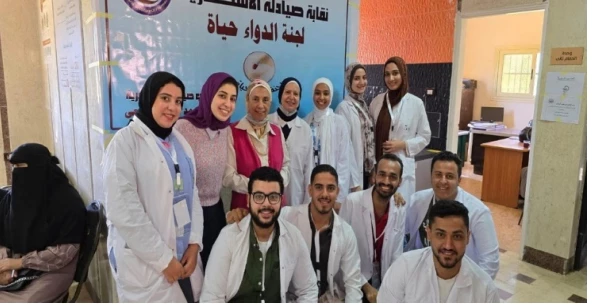
- El-Hamam City Medical Convoy (Dec 2024): Students and professors from the Colleges of Medicine and Pharmacy (El Alamein Campus) teamed up with the Ministry of Social Solidarity to provide free checkups across medical specialties and free medicines to local residents.
- CLC Ramadan Food Drive (Feb 2025): Faculty and students at the College of Language and Communication (Smart Village) packed and delivered Ramadan food boxes directly to underprivileged families.
- Affordable Public Courses & Industry Links: The Community Service and Continuing Education Sector kept discounts above 50% on career training courses for low-income learners. AASTMT also worked with 18+ universities, the Ministry of Housing, Etisalat Misr, and Smart Factory to expand practical training.
Events
Obeikan Company and AASTMT Collaboration to Support Innovation and Entrepreneurship in the Industrial Sector
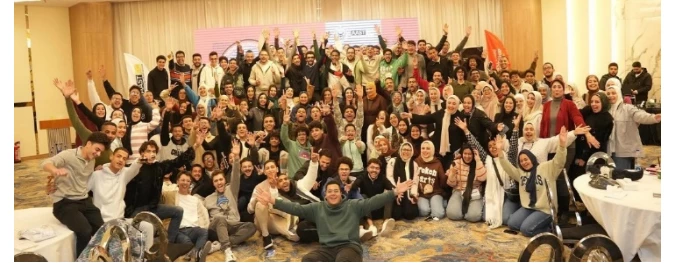
Rally Society 2025 Bootcamp: Student Innovators from more than 35 Universities
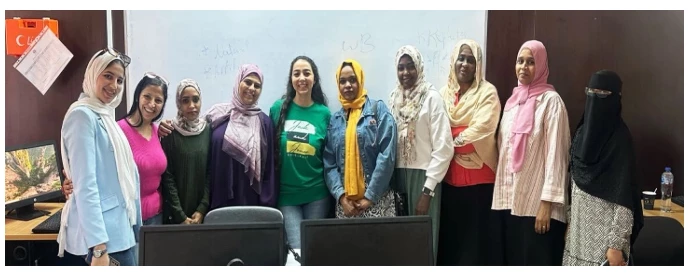
Activation of the MoU between AASTMT and Caritas Egypt
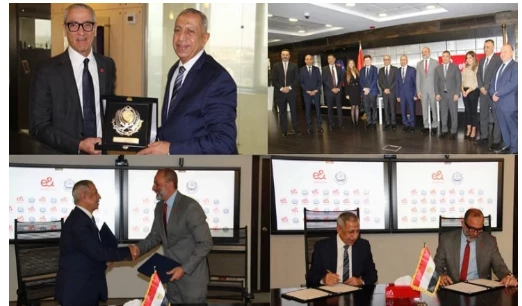
AASTMT–Etisalat Misr: Technical Services, Community Support and Electronic Payments
Healthcare Convoys and Direct Community Aid (2024)
Upcoming Goals
Goal 1: Expand Financial and Social Support for Low-Income Students
- Initiatives: Expand scholarships, tuition-fee reductions, subsidized housing, meals, and transportation for economically disadvantaged students.
- Implementation: Strengthen coordination between Student Affairs, Financial Affairs, and external funding partners to identify eligible students and provide appropriate support.
- Expected Results: Improved access to higher education, reduced financial barriers, and increased student retention and academic success.
Goal 2: Promote Economic Empowerment through Skills Development and Entrepreneurship
- Initiatives: Expand vocational training, digital skills programmes, entrepreneurship support, and SME development opportunities for disadvantaged youth and vulnerable groups.
- Implementation: Strengthen partnerships with Caritas Egypt, ILO, and other development organizations, while providing practical training, mentoring, and business-development support.
- Expected Results: Improved employability, increased income-generation opportunities, and stronger local entrepreneurship.
Goal 3: Enhance Community-Based Poverty Alleviation
- Initiatives: Expand community outreach programmes, free or subsidized healthcare, food assistance, and educational support for vulnerable families.
- Implementation: Collaborate with NGOs, charitable organizations, healthcare providers, and local authorities to deliver targeted community services.
- Expected Results: Improved access to essential services, greater social inclusion, and enhanced support for disadvantaged communities.
During the 2023/2024, the Arab Academy for Science, Technology and Maritime Transport (AASTMT) reinforced its commitment to Sustainable Development Goal 1: No Poverty by expanding its role in promoting equitable access to education and social empowerment. The Academy increased financial aid and scholarship opportunities, strengthened partnerships with charitable organizations and scientific institutions, and reduced economic barriers for students from low-income backgrounds. In parallel, AASTMT broadened its community outreach through the Academy centres and institutes delivering extensive training programmes, workshops, and skills-development initiatives that enhance employability and improve access to essential services. The Academy also advanced targeted initiatives for refugees and vulnerable groups, reflecting its mission to support inclusive development across the Arab and African regions. This report outlines AASTMT’s key achievements and initiatives in 2023/2024, demonstrating its sustained commitment to poverty alleviation and sustainable human development.