Istanbul Nişantaşı University (INU) is a dynamic foundation university located in the heart of Istanbul, offering a comprehensive and interdisciplinary academic environment. Since its establishment in 2012, INU has grown rapidly with a strong commitment to applied learning, social impact, and global relevance. The university encompasses a wide range of faculties, including Engineering and Architecture, Economics and Administrative Sciences, Arts and Design, Health Sciences, Dentistry, and Medicine, along with vocational schools and a conservatory. With over 100 undergraduate and graduate programs, INU prepares students for the future through hands-on learning in more than 100 specialized labs, creative studios, and innovation spaces in fields such as artificial intelligence, virtual reality, communication design, and health technologies.
INU’s NeoTech Campus is recognized as Türkiye’s first technological campus, uniquely designed with a student-centered and technology-driven approach. It features smart classrooms, simulation centers, and immersive learning platforms, supporting interdisciplinary education across both physical and virtual environments. The university’s commitment to the UN Sustainable Development Goals is reflected in its strong performance in the THE Impact Rankings, particularly in SDG 4 (Quality Education), SDG 5 (Gender Equality), and SDG 7 (Affordable and Clean Energy). Through smart campus initiatives, curriculum integration, and community engagement, INU embeds sustainability across its academic and operational practices, fostering a socially responsible and forward-thinking generation.
The Department of Electric-Electronic Engineering aims to train innovative, initiative, questioning and knowledgeable engineers and experts who pioneer in training and education, scientific research and technological studies, who improve themselves, who make analyses and syntheses and who are aware of their moral, ethical, legal and professional responsibilities to the society and their profession. Another purpose is to train engineers and researchers inclined to team work, having national and international experience of working and knowledge. Our ultimate purpose is to be a nationally and internationally-acclaimed department of engineering that carries out training, education and scientific research and contributes to the transformation of the produced information and technologies into social advantage and use.
The courses taught in the electrical and electronics engineering department consist of vocational courses such as electrical circuits, electronics, electrical machines, power systems, power electronics, communications, signal processing, and support courses such as mathematics, probability, statistics, physics, and discrete mathematics. Term projects and assignments support vocational courses. In addition to theoretical and applied courses, students go to on-site vocational practice at the companies.
Istanbul Nişantaşı University (INU) advances interdisciplinary research that bridges artificial intelligence, digital transformation, sustainability, creative industries, social sciences, and electrical & electronics engineering. The university’s R&D strategy fosters innovation ecosystems where technology and human-centered design meet to address global and local challenges
Project Team members
Prof. Dr. Selcuk Paker
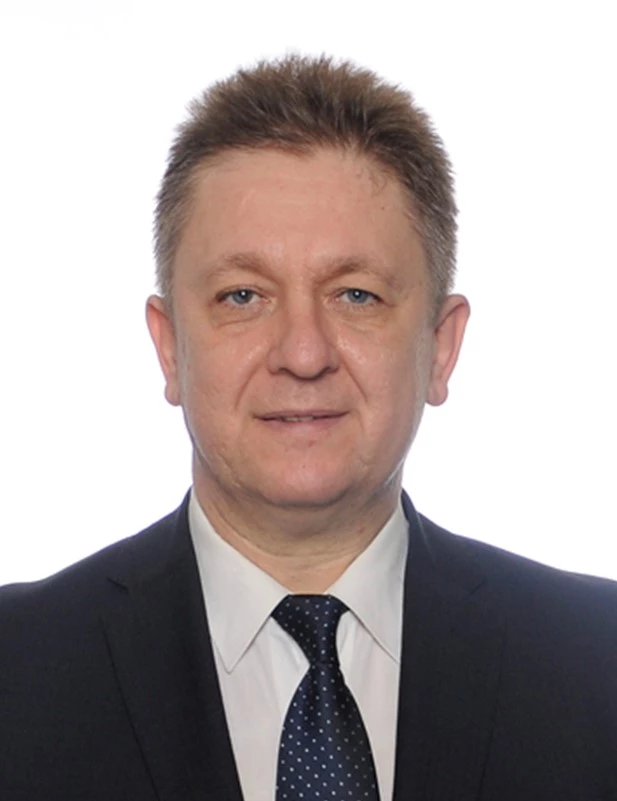
Head of Department Electrical and Electronic Engineering (Team Leader)
Selcuk Paker earned bachelor's, master's, and doctoral degrees in Electronic and Communication Engineering from Istanbul Technical University in 1988, 1992, and 1998, respectively.
From 2000 until 2024, he worked as an assistant, associate, and full professor in Istanbul Technical University's Department of Electronic and Communication Engineering. He is a full professor in the Department of Electrical and Electronics Engineering at Nisantası University. His research focuses on electromagnetics, antennas, communication systems, radars, remote sensing and wireless communication
selpaker@gmail.com
Başak Tüzün

Scientific Projects Consultant (Expert)
Başak Tüzün Görduk is a Senior Consultant at Istanbul Nişantaşı University’s Scientific Activities Coordination Office, where she provides strategic guidance in technology transfer, entrepreneurship, sustainability, and international cooperation. She has played a leading role in the design and implementation of entrepreneurship centers and innovation ecosystems, supporting the development of university-industry-society linkages. With extensive experience collaborating with United Nations agencies and international organizations, she has contributed to policy-driven programs focused on entrepreneurship, social innovation, and sustainable development. Her work bridges academic excellence with practical impact, fostering inclusive and forward-looking institutional transformation
Basakzeynep.tuzun@nisantasi.edu.tr