



 UI-Green Metric
[3.18]Impact of Waste Management programs in supporting the Sustainable Development Goals (SDGs).
|
|
|
|
|
|
|
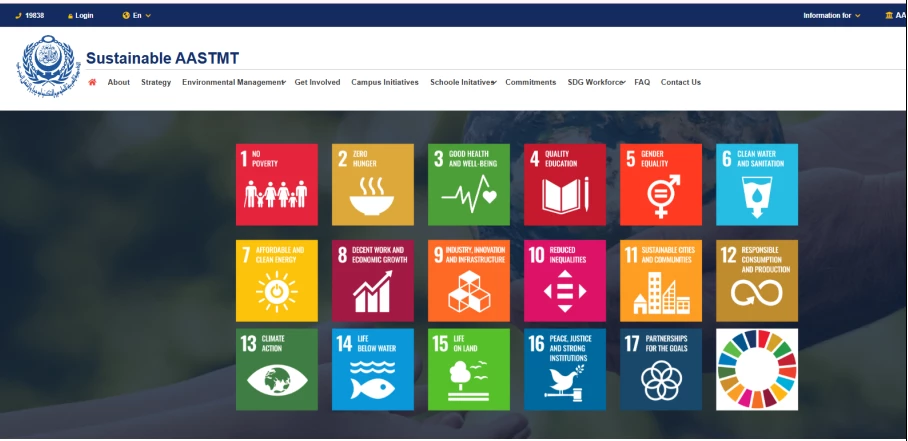
Sustainable AASTMT – Institutional Sustainability Portal (SDGs, ESG, and UI GreenMetric Framework) |
|
|
|
|
|
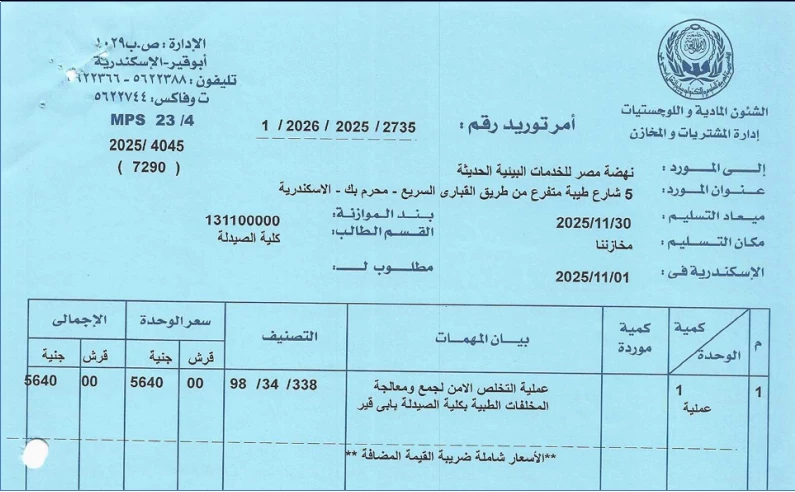
Purchase Order for Hazardous and Medical Waste Disposal Services AASTMT College of Pharmacy (Nahdet Misr for Modern Environmental Services, November 2025) |
|
|
|
|
|
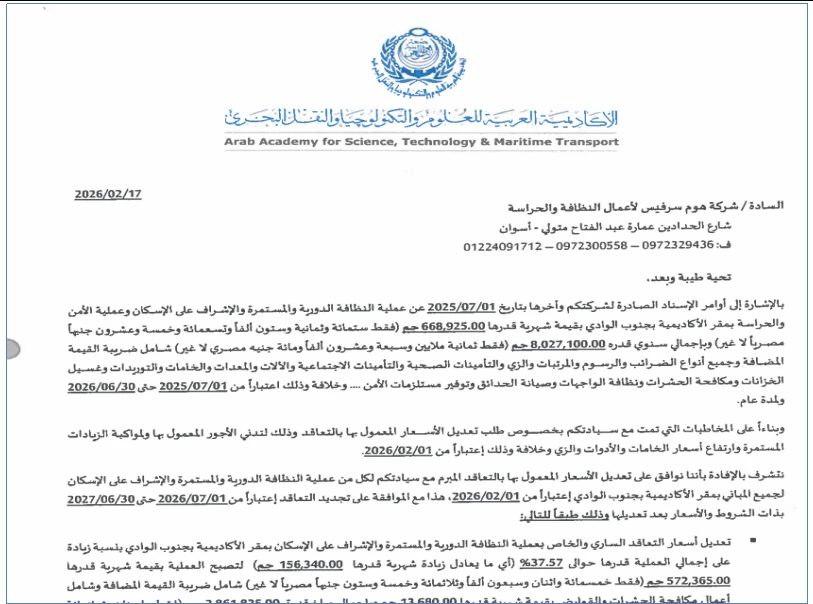
Official Letter of Contract Amendment and Price Adjustment for Cleaning, Security, and Facility Management Services AASTMT South Valley Campus (Home Service Company, 2025–2027) |
|
|
|
|
|
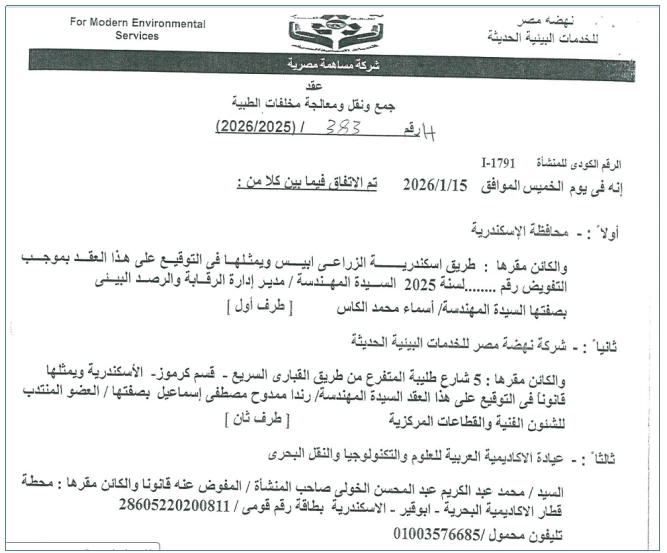
Service Contract for the Collection, Transport, and Treatment of Medical Waste AASTMT Abu Qir Campus Clinic (Nahdet Misr for Modern Environmental Services, Contract No. 383/2025–2026) |
|
|
|
|
|
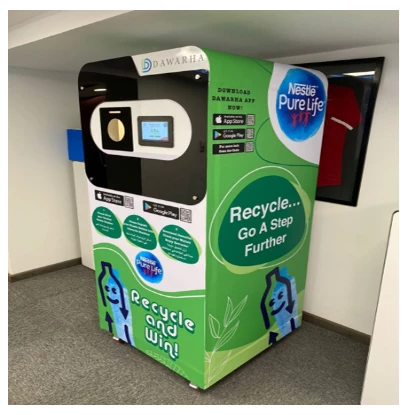
Recycling Incentive Campaign "Recycle and Win" (Nestlé PureLife & Dawarha App Partnership) |
|
|
|
|
|
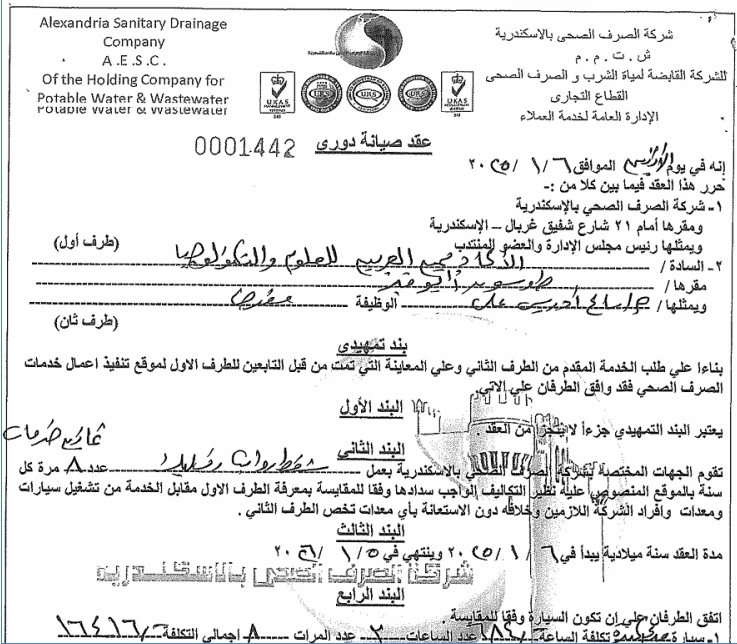
Periodic Maintenance Contract for Sanitary Drainage Services Alexandria Sanitary Drainage Company (AESC) with AASTMT (Contract No. 0001442, 2020) |
|
|
|
|
|
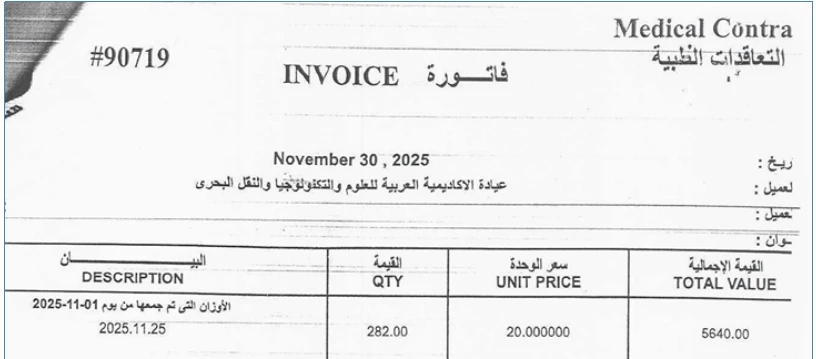
Invoice for Medical Waste Collection and Disposal Services AASTMT Abu Qir Campus Clinic (Invoice No. 90719, November 2025) |
|
|
|
|
|
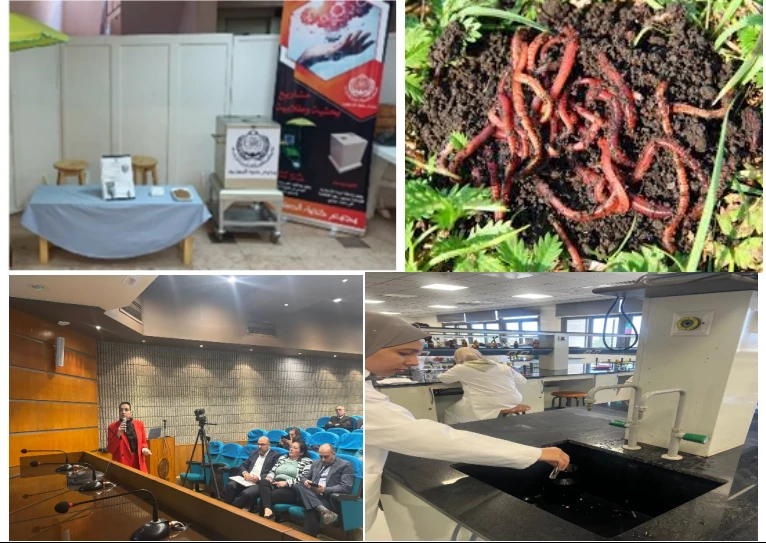
Campus Smart Recycling System Vermicomposting of agricultural wastes Advancing Circular Innovation at HOPE26 Workshop Spotlight on GREENOLIVE Project Medical waste disposal procedures within the Arab Academy |
|
Description:
The Arab Academy for Science, Technology and Maritime Transport (AASTMT) has implemented several waste management and sustainability initiatives that contribute significantly to achieving the Sustainable Development Goals (SDGs). These initiatives demonstrate the university's commitment to environmental protection, responsible consumption, climate action, and sustainable campus management. The Academy's waste management programs are not merely operational necessities but are strategically designed as integral components of its sustainability framework, serving as a living laboratory for circular economy principles and environmental stewardship.
AASTMT's comprehensive waste management approach encompasses waste segregation, composting, recycling, hazardous waste disposal, e-waste collection, zero-waste campaigns, digitalization of administrative processes, academic integration, smart monitoring systems, and multi-stakeholder collaboration. These efforts directly support SDGs 3, 4, 6, 9, 11, 12, 13, 14, 15, and 17, and contribute indirectly to others.
SDG 3 – Good Health and Well-being
Reducing Environmental and Health Risks Associated with Improper Waste Disposal
AASTMT is dedicated to the proper management of hazardous waste disposal as part of its commitment to sustainability, safety, and environmental responsibility. Through its Consumption and Recycling Policy, the institution provides clear guidelines for handling, storing, and disposing of hazardous materials in alignment with national and international safety standards. Hazardous substances must be stored in designated, secure cabinets, such as those for flammable materials, with strict enforcement both before and after use to mitigate risks, protect human health, and prevent environmental contamination.
Medical Waste Disposal:
AASTMT implements comprehensive medical waste disposal procedures to protect public health and prevent the spread of infections. Medical waste is safely managed through a certified partnership with Nahdet Misr Environmental Services, ensuring responsible collection, transportation, and treatment of medical and toxic waste. Laboratory waste is carefully categorised, with licensed contractors managing on-site packaging and handling based on waste type, ensuring compliance with necessary treatment methods.
Public Health Protection:
By preventing hazardous chemical leaks into the water system through stringent waste disposal practices, guided by the Environmental Standard ISO-14001, AASTMT safeguards the health of its campus community and surrounding populations. The Academy's drainage infrastructure, featuring independent sewage, stormwater, and greywater networks with sealed UPVC piping and inspection chambers, prevents leakage and groundwater contamination, protecting public health from waterborne pathogens and environmental contaminants.
Alignment with Egyptian Regulations:
AASTMT adheres to Egyptian Law for Disposal of Hard Materials No. 6 of 2009 and No. 9 of 1982 for governmental protection, ensuring that all waste management practices meet national standards for public health and environmental safety.
SDG 4 – Quality Education
Raising Awareness and Educating Students about Sustainability and Responsible Waste Management
AASTMT actively embeds waste management topics into its curriculum, research, and campus operations, targeting a zero-waste campus status. Academic programs feature dedicated coursework—like the Management of Solid, Hazardous, and Radioactive Waste—and students regularly apply Life Cycle Analysis (LCA) and waste-to-energy technologies in their research.
Journal of Renewable Energy and Sustainable Development (RESD):
Renewable Energy and Sustainable Development (RESD) is a biannual international peer-reviewed journal which presents a global forum for dissemination of research articles, case studies and reviews focusing on all aspects of renewable energy and its role in sustainable development. The topics of focal interest to RESD include, but are not limited to, all aspects of wind energy, wave/tidal energy, solar energy, as well as energy from biomass and biofuel. The integration of renewable energy technologies in electrical power networks and smart grids is another topic of interest to RESD. Experimental, computational and theoretical studies are all welcomed to RESD.
Research Publications:
Eliminating food loss and waste using lean tools in the agri-food supply chain study by Sahar Elbarky, College of International Transport and Logistics, Arab Academy for Science, Technology and Maritime Transport, Alexandria, Egypt, has been published in Int. J. Logistics Systems and Management, Vol. 50, No. 3, 2025. This research demonstrates the Academy's commitment to addressing food waste through academic inquiry and practical solutions.
Student Engagement and Awareness:
AASTMT fosters climate literacy and sustainable practices through student-led initiatives. In collaboration with Empower Hub, AASTMT hosted the Leaders Hub event, aimed at promoting climate awareness and sustainable practices through student-led initiatives. Participants created impactful content on climate change, plastic pollution, and sustainable agriculture. This event demonstrated AASTMT's ongoing commitment to fostering climate literacy and supporting collaborations with civil society organizations for sustainable development.
Professional Training:
Through the Productivity and Quality Institute (PQI), AASTMT offers comprehensive training programs in environmental management, sustainable development, and circular economy, including ISO 14001, ISO 50001, NEBOSH Process Safety, and Sustainable Development and Circular Economy diplomas. These programs build national capacity in sustainability fields, creating opportunities for green employment and advancing SDG 4.
SDG 6 – Clean Water and Sanitation
Preventing Contamination through Safe Disposal of Hazardous and Chemical Waste
AASTMT's waste management programs play a crucial role in protecting water resources from contamination. Through its comprehensive waste segregation and disposal systems, the Academy prevents hazardous chemicals, biological contaminants, and pollutants from entering water sources.
Wastewater and Solid Waste Integration:
The Academy's wastewater management system, detailed in the Sewage Disposal section (WS.6), is complemented by robust solid waste management practices that prevent leachate and hazardous runoff from contaminating water supplies. The drainage network, with separate lines for sewage, stormwater, and greywater, prevents cross-contamination between polluted water and clean rainwater or harvesting systems.
Hazardous Waste Management:
AASTMT's Consumption and Recycling Policy provides clear guidelines for handling, storing, and disposing of hazardous materials, preventing toxic chemical leaks into the water system. Laboratory waste is collected, temporarily stored on campus, and scheduled for disposal twice a week through certified disposal companies adhering to Egyptian regulations.
Safe Disposal of General Wastes:
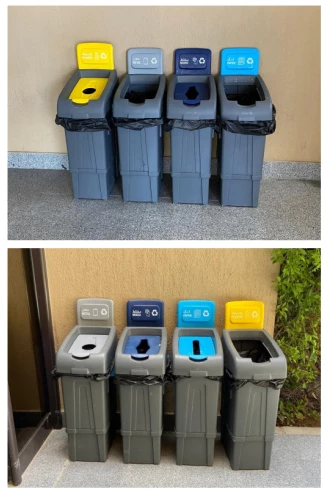
The sustainable waste and water management system at AASTMT – Alamein Branch introduces an efficient segregation and recycling system using stainless steel and color-coded bins to ensure proper collection, disposal, and resource recovery. By preventing leachate and hazardous runoff, the system actively protects water quality, prevents contamination, and supports sustainable sanitation management.
Groundwater and Ecosystem Protection:
Use of underground UPVC pipes and sealed joints prevents leakage, seepage, and groundwater contamination, maintaining the integrity of subsurface water systems. Sand bedding and proper trenching absorb vibrations and prevent pipe cracking, avoiding the infiltration of polluted water into soil and groundwater. The Environmental Monitoring & Climate Change Laboratory regularly tests water quality to ensure system efficiency and compliance with environmental standards.
Composting and Organic Waste Management:
The vermicomposting project utilizing earthworms contributes to eliminating agricultural waste while producing high-quality organic fertilizer, preventing organic waste from contaminating water sources through improper disposal.
SDG 9 – Industry, Innovation and Infrastructure
Supporting Innovation in Recycling Systems and Environmental Management
AASTMT fosters innovation in waste management through cutting-edge research, pilot projects, and the development of sustainable technologies. The Academy serves as a living laboratory for circular economy solutions and green infrastructure.
Campus Smart Recycling System:
AASTMT has implemented a Campus Smart Recycling System to turn food organic wastes and recyclables into economic value products. This innovative system utilizes smart technology to monitor waste generation, optimize collection routes, and maximize resource recovery.
Vermicomposting and Organic Waste Valorization:
AASTMT is composting organic wastes into organic fertilizer using the earthworm Eisenia fetida (red wiggler). The current project aims to build a sustainable composting unit for the disposal of organic wastes using earthworms which will feed on them. After digesting these organic wastes, the worms produce a cast called vermicompost which is very rich in organic nutrients as well as growth hormones which will be very useful for plant growth. Moreover, the production rate of these worms is very high and its protein content reaches 70%. The dried worm meal can be used as a supplementary feed for fish and poultry. This innovative approach transforms waste into valuable agricultural inputs, demonstrating circular economy principles in practice.
Smart Autonomous IoT Agricultural Monitoring System:
The Academy has developed a Smart Autonomous IoT Agricultural Monitoring System that integrates waste management with sustainable agriculture, optimizing resource use and minimizing environmental impact.
EC-AASTMT Spin-offs:
AASTMT supports entrepreneurship and innovation through spin-off companies that commercialize sustainable technologies and waste management solutions, contributing to green economic development.
Converting Agricultural Engines to Run on Hydrogen:
AASTMT is advancing research on converting agricultural engines to run on hydrogen as a sustainable solution to climate challenges, demonstrating the Academy's commitment to clean technology innovation.
Infrastructure Innovation:
The Academy's integrated water distribution network features drip irrigation, pressure-compensating bubblers, solenoid valves, and automated controllers that collectively enhance water productivity and reduce pollution. Smart monitoring systems provide real-time data that supports identification of energy-intensive areas, tracking of progress towards energy efficiency targets, and continuous optimization of building performance.
Green Building Implementation:
AASTMT has demonstrated strong commitment to green building implementation across its campuses through the integration of energy-efficient technologies, renewable energy systems, sustainable design principles, and smart monitoring infrastructure. Building G at the College of Engineering and Technology, Abu Qir Campus, features a 50 kW PV plant (roof-mounted) with all lighting replaced with LED lamps. The College of Engineering and Technology building at Aswan Campus is supplied by renewable energy with a 150 kW on-grid installation, featuring a 50-kW roof-mounted PV plant and a 2 kW Vertical Axis Wind Turbine (VAWT) being installed through the Innovation Research Grant (IRG).
SDG 11 – Sustainable Cities and Communities
Promoting Sustainable Campus Operations and Environmental Responsibility
AASTMT's waste management programs contribute to creating sustainable, resilient, and inclusive campus communities that serve as models for urban sustainability.
Campus-Wide Zero-Waste Campaigns:
AASTMT ESG - Environmental, Social and Governance initiatives include the ban or reduction of single-use plastics in canteens, vending machines, and university events, replacing them with reusable alternatives. The Academy has announced long-term sustainability targets aligned with achieving a Zero-Waste Campus vision by 2049.
Waste Tracking and Monitoring:
AASTMT established a waste monitoring and tracking system to assess waste quantities, recycling performance, and sustainability progress. According to university reports, approximately 3.78 metric tons of waste were recycled during 2023–2024. This data-driven approach enables continuous improvement in waste management practices.
Digitalization of Administrative Processes:
AASTMT fosters sustainable urban practices by enabling remote working, digital learning, and online collaboration. These initiatives reduce campus congestion, lower commuting emissions, optimize resource use, and improve efficiency while maintaining high-quality education and administrative operations. The Academy's approach highlights the importance of smart digital infrastructure for resilient and sustainable urban campuses.
Paperless Administrative Workflows:
AASTMT implemented digital workflows to reduce paper use, minimise campus movement, and enhance operational efficiency. This initiative supports remote approvals, eco-friendly campus management, and resilient, sustainable administrative operations.
Hybrid & Virtual Conferences:
Hosting online and hybrid academic events reduces travel, mitigates traffic noise, and lowers greenhouse gas emissions. It also contributes to urban sustainability by reducing the strain on public transport and urban infrastructure.
Digital Textbook Platform (Kortext & Moodle):
AASTMT partnered with Kortext to deliver approximately 60,000 e-textbooks integrated into its LMS for 13 colleges and 8 campuses, enabling offline/online access and reducing the need for physical attendance and printed materials.
Online Master's Program:
AASTMT partnered with Steinbeis University – Schools of Next Practices to launch an innovative online master's program in Data Analytics and Artificial Intelligence. The program combines advanced theory with practical application, preparing students to become digital leaders while enabling full remote learning and virtual collaboration.
Green Open Spaces:
The campus includes landscaped green areas, gardens, and open spaces that contribute to biodiversity and provide a healthy environment for students and staff. The Academy maintains and expands eco-friendly grounds, as highlighted by its campus hosting the U-17 World Championship 2023. These spaces provide habitats for local flora and fauna, contribute to ecosystem maintenance, and offer recreational areas for students and staff, promoting mental and physical health.
Sustainable Urban Mobility:
AASTMT contributes to sustainable urban mobility by implementing practical solutions that reduce traffic congestion, lower air pollution, and improve access to public spaces. Initiatives include pedestrian walkways, bicycle lanes, integration with public transport, "Pedestrian Priority on Campus," and motor-vehicle-free zones. The Sustainable Urban Mobility Lab, funded by the EU Erasmus+ UPGRADE project, demonstrates AASTMT's commitment to research and education in sustainable transportation.
SDG 12 – Responsible Consumption and Production
Encouraging Recycling, Waste Reduction, Reuse, and Sustainable Resource Use
AASTMT's waste management programs are fundamentally aligned with SDG 12, promoting circular economy principles and responsible consumption patterns across all campus operations.
Waste Segregation Systems:
AASTMT applies waste segregation practices across its campuses through designated collection points for recyclable and non-recyclable waste. Recycling activities are supported through sustainability campaigns and waste tracking initiatives to reduce landfill waste and improve environmental performance.
E-Waste Collection Drives:
AASTMT organizes e-waste collection drives and disposal campaigns, ensuring that electronic waste is properly managed and valuable materials are recovered for reuse.
Recycling Stations and Partnerships:
AASTMT has established recycling stations and partnerships to enhance waste recovery and promote circular economy practices. The Academy partnered with Nahdet Misr (an Egyptian environmental services company) for waste management services, ensuring responsible collection, transportation, and treatment of waste.
Consumption and Recycling Policy:
AASTMT adopts a consumption and recycling policy to anticipate, reuse, repurpose, and reduce the amount of trash resulting from institutional activities to mitigate the adverse natural effects arising from increased waste production. The policy also intends to ensure that AASTMT manages waste concerns through the prevention of contamination and by natural legislation. The Academy adopts a waste disposal policy for waste management services to reduce, reuse, recycle, and recover waste products in preference to the disposal of waste to landfill.
Vermicomposting and Organic Waste Management:
The vermicomposting project utilizing earthworms contributes to eliminating agricultural waste while producing high-quality organic fertilizer, raising the financial return for farmers and reducing production costs. This initiative produces good organic food, converts agricultural waste into added value, and contributes to sustainable resource management.
Sustainable Agriculture Integration:
At the Aquaculture Research Center, hydroponic and aquaponic systems have been utilized for over 12 years to reduce water consumption by 90%, significantly enhancing water-use efficiency in food production. The developed hydroponic system uses no chemical fertilizers or pesticides, instead employing natural products made from Neem Oil or garlic solution. Various crops, including tomatoes, cucumbers, and cereals like rice and maize, have been successfully cultivated. The aquaponic system achieves a threefold increase in crop yield over conventional land farming.
Biodiesel Production from Waste:
The Aquaculture Research Center has developed a 1000-litre capacity mixer reactor for biodiesel production using the transesterification process. Biodiesel is produced from waste cooking oil generated from kitchen wastes on the main Abu Qir campus and from surrounding restaurants and hotels in Alexandria city. The produced biodiesel is used to generate electricity via a diesel generator, with the energy utilized in the general activities of the Aquaculture Research Center.
Composting of Organic Waste:
Organic wastes produced from the landscape areas of the main Abu Qir campus and from kitchen scraps are converted into soluble organic fertilizers. These fertilizers are used in the earthworm production unit, which primarily produces vermicompost for use as an organic fertilizer in the hydroponic system, while the worms produced are used in experiments for animal feed production.
Reducing Single-Use Plastics:
AASTMT has implemented the "AASTMT Free of Plastic Bags" initiative, reflecting its commitment to climate change adaptation and environmental sustainability. The Academy promotes the ban or reduction of single-use plastics in canteens, vending machines, and university events, replacing them with reusable alternatives.
SDG 13 – Climate Action
Reducing Waste-Related Emissions and Supporting Climate Mitigation Efforts
AASTMT's waste management programs contribute to climate change mitigation by reducing greenhouse gas emissions from waste decomposition, promoting sustainable consumption patterns, and supporting low-carbon infrastructure.
Waste-to-Energy and Resource Recovery:
By diverting organic waste from landfills through composting and vermicomposting, AASTMT reduces methane emissions—a potent greenhouse gas. The production of biodiesel from waste cooking oil provides a renewable energy source that displaces fossil fuels.
Zero-Waste Campus Vision:
AASTMT's long-term sustainability targets aligned with achieving a Zero-Waste Campus vision by 2049 demonstrate a commitment to eliminating waste and its associated climate impacts.
Sustainable Agriculture and Carbon Sequestration:
The Academy's green spaces, planted vegetation areas (62,000 m², representing 30% of total campus area), and landscaped gardens contribute to carbon sequestration and climate regulation. The vegetation around AASTMT Abu Qir is a mix of coastal, Mediterranean, and urban landscaping species, with plants adapted to the hot, dry summers and mild winters of the region, as well as the saline conditions near the Mediterranean Sea.
Reduced Emissions through Digitalization:
Digitalization of administrative processes, hybrid and virtual conferences, and online learning platforms reduce commuting emissions and the carbon footprint of campus operations. The digital textbook platform (Kortext) delivering approximately 60,000 e-textbooks reduces the need for physical materials and associated transportation emissions.
Renewable Energy Integration:
The combination of on-site solar and the growing share of renewables in the national grid increased AASTMT's average renewable energy share to approximately 24% in 2022/2023. The 2022/2023 Energy Progress Report shows a 13.59% decrease in total energy load on the Alexandria campus compared to 2018, despite operational expansions. Carbon emissions in 2023 were reduced by 4.6% from 2022 and by a notable 30% from 2019.
RESILINK Project:
The RESILINK project focuses on farmer education for water-reduced and IoT solutions, building climate resilience in agricultural communities and promoting sustainable resource management.
Sustainable Urban Mobility:
By discouraging private car use through pedestrian walkways, bicycle lanes, and motor-vehicle-free zones, AASTMT directly contributes to lowering the campus's carbon footprint. The Sustainable Urban Mobility Lab, funded by the EU Erasmus+ UPGRADE project, demonstrates commitment to research and education in sustainable transportation.
SDG 14 – Life Below Water
Minimizing Plastic and Solid Waste Pollution Affecting Marine Ecosystems
As a maritime-focused institution located near the Mediterranean Sea, AASTMT plays a significant role in protecting marine ecosystems from waste pollution.
Marine Pollution Prevention:
The Prevention of Tourism Marine Litter "TOUMALI" Project addresses marine pollution prevention through research, awareness, and community engagement. The Fisher-to-Fisher Program promotes clean seas and recycling among students, building awareness of marine conservation.
Waste Segregation and Recycling:
By implementing comprehensive waste segregation and recycling systems, AASTMT prevents plastic and solid waste from reaching coastal waters. The sustainable waste and water management system at Alamein Branch prevents leachate and hazardous runoff, protecting water quality and preventing contamination of marine ecosystems.
Hazardous Waste Management:
Proper handling and disposal of hazardous laboratory waste prevent harmful chemicals, biological contaminants, and pollutants from entering water sources and ultimately reaching the sea. AASTMT's yearly contract with Nahdet Misr ensures transport and disposal into Alexandria Governorate Hazardous Waste Management (Naseria) for inorganic waste disposal, preventing contaminants from reaching coastal waters.
Educational and Research Activities:
AASTMT's strategic location near the Mediterranean Sea facilitates educational and research activities related to marine ecosystems and environmental protection. The Academy is committed to conserving marine ecosystems by implementing sustainable practices, reducing pollution, and fostering research that supports the health and resilience of marine environments.
Marine and Coastal Awareness:
AASTMT plays a significant role in marine and coastal environmental awareness through academic programs, research activities, and community engagement. The institution supports the conservation of marine ecosystems by implementing sustainable practices, reducing pollution, and fostering research that supports the health and resilience of marine environments.
SDG 15 – Life on Land
Protecting Terrestrial Ecosystems through Sustainable Waste Management
AASTMT's waste management programs protect terrestrial ecosystems from contamination and degradation through comprehensive pollution prevention measures.
Groundwater and Soil Protection:
Use of underground UPVC pipes and sealed joints prevents leakage, seepage, and groundwater contamination, maintaining the integrity of subsurface water systems. Sand bedding and proper trenching absorb vibrations and prevent pipe cracking, avoiding the infiltration of polluted water into soil and groundwater.
Hazardous Waste Disposal:
AASTMT is dedicated to the proper management of hazardous waste disposal as part of its commitment to sustainability, safety, and environmental responsibility. Hazardous substances are stored in designated, secure cabinets, with strict enforcement both before and after use to mitigate risks, protect human health, and prevent environmental contamination.
Biodiversity Support:
The campus green spaces provide habitats for local flora and fauna, contributing to ecosystem maintenance. The UniGreen Project, led by AASTMT and funded by the European Union, promotes sustainable land management, biodiversity conservation, and climate adaptation through environmental education and community engagement.
Vermicomposting and Soil Health:
The vermicomposting project produces high-quality organic fertilizer that enriches soil health and supports sustainable agriculture. By converting agricultural waste into valuable compost, the project prevents organic waste from contaminating soil and water resources while enhancing soil fertility.
Composting of Organic Waste:
Organic wastes from landscape areas and kitchen scraps are converted into soluble organic fertilizers, preventing waste accumulation and supporting sustainable land management practices.
Green Open Spaces:
AASTMT maintains and expands eco-friendly grounds, with landscaped green areas, gardens, and open spaces that contribute to biodiversity and provide a healthy environment for students and staff. The Academy emphasizes providing public access to green spaces, aligning with the goal of inclusive, safe, and resilient communities.
SDG 17 – Partnerships for the Goals
Strengthening Cooperation with Environmental Organizations and Governmental Authorities
AASTMT actively collaborates with government agencies, NGOs, and the private sector to strengthen regional waste governance and drive circular economy innovation.
Partnership with Nahdet Misr:
AASTMT partnered with Nahdet Misr (an Egyptian environmental services company) for waste management services, ensuring responsible collection, transportation, and treatment of medical and toxic waste. The company manages the transport and disposal of wastes into Alexandria Governorate Hazardous Waste Management (Naseria) for inorganic waste disposal.
Leaders Hub Event:
In collaboration with Empower Hub, AASTMT hosted the Leaders Hub event, aimed at promoting climate awareness and sustainable practices through student-led initiatives. Participants created impactful content on climate change, plastic pollution, and sustainable agriculture, demonstrating ongoing commitment to fostering climate literacy and supporting collaborations with civil society organizations for sustainable development.
Advancing Circular Innovation at HOPE26 Workshop:
AASTMT actively collaborates with government agencies, NGOs, and the private sector to strengthen regional waste governance and drive circular economy innovation. Through participatory research, joint technology development, and EU-funded initiatives, the Academy bridges academia and industry to implement sustainable practices across the region. The GREENOLIVE Project spotlight at the HOPE26 Workshop demonstrates AASTMT's commitment to advancing circular innovation.
MAIA-TAQA Project:
AASTMT collaborates through the EU-funded MAIA-TAQA project on energy and wastewater treatment, producing pilot outcomes for sustainable resource management. This project mobilizes new areas of investments and aims to increase quality of life for all.
UPGRADE Project:
The Sustainable Urban Mobility Lab, funded by the EU Erasmus+ UPGRADE project, demonstrates AASTMT's commitment to research and education in sustainable transportation and urban sustainability.
Government Partnerships:
AASTMT actively collaborates with government agencies, including the Ministry of Environment, Ministry of Local Development, and Ministry of Agriculture, extending the impact of infrastructure and research beyond the campus walls. Partnerships with the Ministry of Agriculture on sustainable agriculture contribute to national food-water security strategies.
National Conference Participation:
AASTMT participated as a key partner in the National Conference on the Sustainability of the Water and Wastewater Industry, held in Alexandria under the patronage of the Ministry of Housing, the European Union Delegation in Cairo, and the Alexandria Governorate. The event brought together national and international experts to discuss innovative solutions for sustainable water and wastewater management, infrastructure development, and industrial localization in alignment with Egypt's Vision 2030. AASTMT's involvement highlights its continued efforts to bridge academia, industry, and government in promoting environmental sustainability and supporting Egypt's strategic initiatives toward integrated resource management and climate resilience.
AASTMT Leads Workshop on Plastic Waste and EPR Policy:
AASTMT has taken a leadership role in addressing plastic waste through workshops on Extended Producer Responsibility (EPR) policy, demonstrating the Academy's commitment to policy engagement and sustainable waste governance.
Summary of SDG Contributions
| SDG | Contribution | Key Programs |
| SDG 3 – Good Health and Well-being | Reducing environmental and health risks associated with improper waste disposal | Medical waste disposal, hazardous waste management, ISO-14001 compliance |
| SDG 4 – Quality Education | Raising awareness and educating students about sustainability and responsible waste management | RESD Journal, waste management coursework, Leaders Hub event, PQI training programs |
| SDG 6 – Clean Water and Sanitation | Preventing contamination through safe disposal of hazardous and chemical waste | Waste segregation, hazardous waste disposal, groundwater protection |
| SDG 9 – Industry, Innovation and Infrastructure | Supporting innovation in recycling systems and environmental management | Smart Recycling System, vermicomposting, IoT monitoring, green building implementation, renewable energy integration |
| SDG 11 – Sustainable Cities and Communitie | Promoting sustainable campus operations and environmental responsibility | Zero-waste campaigns, waste tracking, digitalization, green open spaces, sustainable urban mobility |
| SDG 12 – Responsible Consumption and Production | Encouraging recycling, waste reduction, reuse, and sustainable resource use | Waste segregation, e-waste collection, recycling partnerships, vermicomposting, biodiesel production, hydroponic/aquaponic systems |
| SDG 13 – Climate Action | Reducing waste-related emissions and supporting climate mitigation efforts |
Zero-waste vision, waste-to-energy, digitalization, renewable energy integration, sustainable agriculture |
| SDG 14 – Life Below Water | Minimising plastic and solid waste pollution affecting marine ecosystems | Toumali Project, Fisher-to-Fisher Program, waste segregation, hazardous waste management |
| SDG 15 – Life on Land | Protecting terrestrial ecosystems through sustainable waste management | Groundwater protection, hazardous waste disposal, biodiversity support, vermicomposting |
| SDG 17 – Partnerships for the Goals | Strengthening cooperation with environmental organisations and governmental authorities | Nahdet Misr partnership, MAIA-TAQA, UPGRADE, HOPE26 Workshop, national conferences |
Conclusion
Through these integrated waste management programs, AASTMT demonstrates a comprehensive commitment to environmental sustainability, circular economy principles, and the Sustainable Development Goals. By embedding waste management into its core operations, education, research, and community engagement, the Academy creates a tangible model of sustainable campus management that:
- Directly reduces environmental impact through waste segregation, recycling, composting, and hazardous waste management
- Fosters an inclusive and healthy community through safe waste disposal practices and public health protection
- Serves as a platform for innovation, research, and education through smart recycling systems, vermicomposting, and academic integration
- Demonstrates the power of collaboration through partnerships with government, NGOs, and the private sector
AASTMT's waste management programs not only contribute to achieving the SDGs but also position the Academy as a leader in environmental stewardship and sustainable development in Egypt and the region. Through its Zero-Waste Campus vision by 2049 and ongoing commitment to innovation and partnership, AASTMT continues to advance the 2030 Agenda for Sustainable Development.
Additional Evidence Links