



 UI-Green Metric
[3.17]Sewage disposal
|
AASTMT campus of Smart Village in Cairo.
|
|
Example of Sewage Disposal AASTMT Branches, Egypt |
Description:
AASTMT applies an integrated wastewater management system to ensure safe treatment, reuse, and environmental protection across all campuses. The Academy's comprehensive framework ensures that wastewater is collected, treated, and safely disposed, while potable water remains strictly separated and safeguarded. Through awareness programs, stakeholder engagement, and certified hazardous waste disposal, AASTMT demonstrates its commitment to sustainable water management and environmental stewardship.
The Academy reinforces its wastewater management system through a comprehensive network of water supply, drainage, and irrigation infrastructure, all of which contribute to the overall wastewater treatment and reuse cycle in support of SDG 6 (Clean Water and Sanitation).
Regulatory Framework and Compliance
AASTMT follows mandatory regulations and processes to prevent polluted water entering the water system, including pollution caused by accidents and incidents at the university, as per Egyptian governmental authority regulations. All domestic sewage is connected to public treatment networks operated by government facilities in compliance with:
- Law No. 93 (1962): Concerning the Disposal of Wastewater
- Decree No. 44 (2000): Amending the Executive Regulations for Law No. 93 of 1962
- Egyptian Standard for Waste Disposal: Establishes guidelines for safe and sustainable wastewater disposal to prevent contamination of watercourses
Wastewater is directed to a governmental treatment plant through a centralized sewage collection system found in all AASTMT campuses, which is then connected to the public utility treatment company owned by each city. This framework is adopted across all public and private sector buildings in Egypt and is thus a compulsory act to ensure water is treated at national accepted levels and standards.
AASTMT also adheres to the Egyptian Code of Sanitary Installations in Buildings, which provides guidelines for the design, installation, and maintenance of plumbing systems within buildings, ensuring the safe and efficient distribution of potable water and the proper disposal of wastewater. The plumbing system design follows best practices to guarantee safe distribution of potable water, effective wastewater disposal, and environmental protection against contamination. Applicable international codes include:
- International Plumbing Code (IPC): Governs the design and installation of plumbing systems, ensuring safe and sanitary water supply and drainage practices.
- Uniform Plumbing Code (UPC): Provides design standards that safeguard public health through sustainable plumbing design and water conservation.
Campus-Specific Sewage Disposal Systems
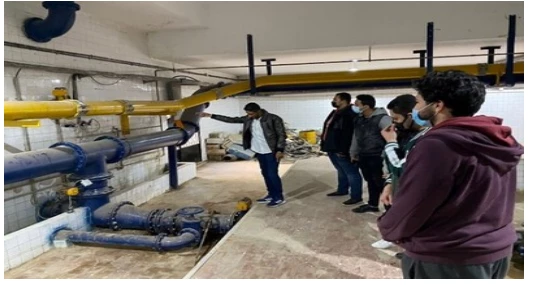
Abu Qir Campus Central Wastewater Station
At the Abu Qir Campus, a central wastewater station collects sewage from campus buildings. The sewage plant and rainwater system is designed to handle wastewater and rainwater from specified areas, including buildings for the College of Engineering, College of Computing, student housing, hotels, administration buildings, and the main cafeteria. The drainage network extends between these buildings and reaches the wastewater and rainwater collection pit located behind the buildings of the College of Architecture and Computers.
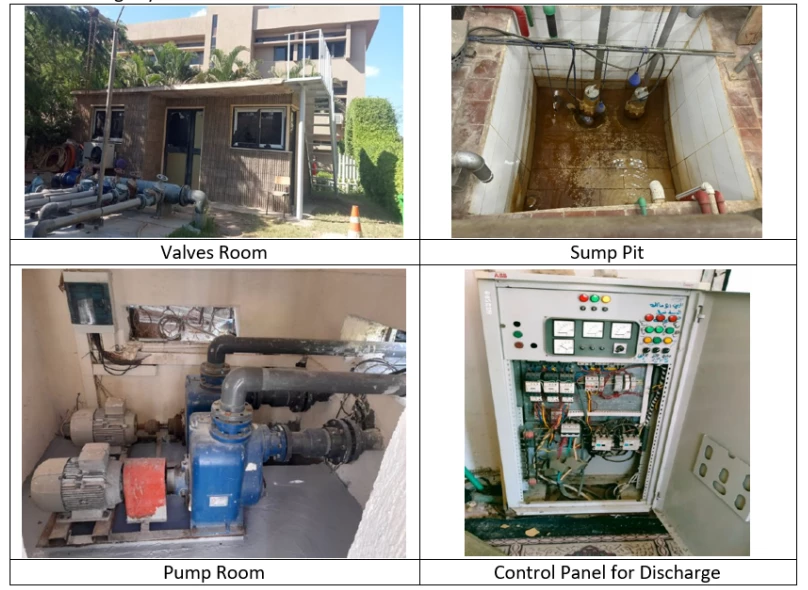
Sump Specifications:
- Dimensions: The main sump has a 12-inch diameter and measures approximately 2 x 2 meters
- Storage Capacity: Effective storage capacity of approximately 12 cubic meters, capable of handling high inflows during peak times and heavy rain events
Pump Room Specifications:
- Submersible Pumps: Two submersible pumps (EBARA), each operating at 10 horsepower, discharging water at 60–70 cubic meters per hour
- Self-Priming Horizontal Dry Pumps: Two additional Siemens dry pumps, each with 15 horsepower, offering self-priming capabilities and reliable backup
Battery and Valve Configuration:
- Battery System: Features five outlets, each 12 inches in diameter, providing flexibility in discharge regulation
- Check and Shut-off Valves: Include four 4-inch and one 6-inch check valves, and a matching set of shut-off valves, allowing for precise flow control and isolation during maintenance
Control Room and Electrical Panels:
- Control Panels: Two electrical control panels manage pump operations and discharge flow, ensuring optimized, safe operations
- Redundant Systems: The dual control panel setup ensures that, in the event of a failure, one panel will maintain functionality to prevent overflow or other discharge issues
Wastewater Network and Outflow Connections:
- Pipeline Dimensions: The network starts with a 12-inch diameter line tapering to an 8-inch diameter before connecting to the main external discharge line
- External Discharge Line: Wastewater is channeled to an external drainage system, aligning with local standards for safe water discharge
- Pressurized Outflow: The discharge line begins with an 8-inch diameter that transitions to 12 inches, connected to the main external drainage line, supporting continuous pressure to facilitate wastewater movement and ensure compliance with local drainage standards
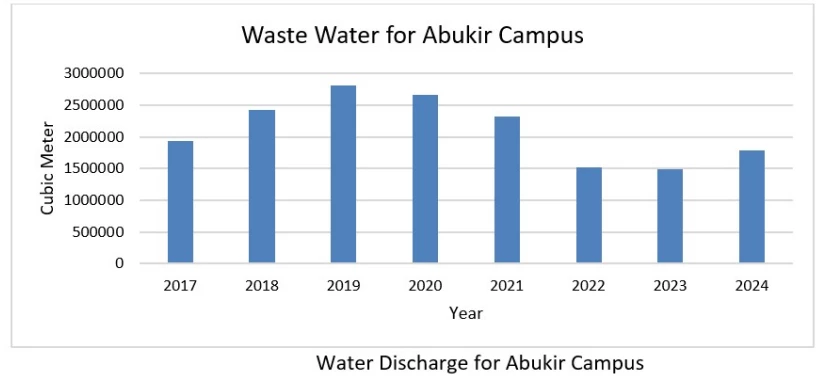
Flow Monitoring: The wastewater discharge system is equipped with flowmeters for monitoring and recording wastewater discharge monthly.
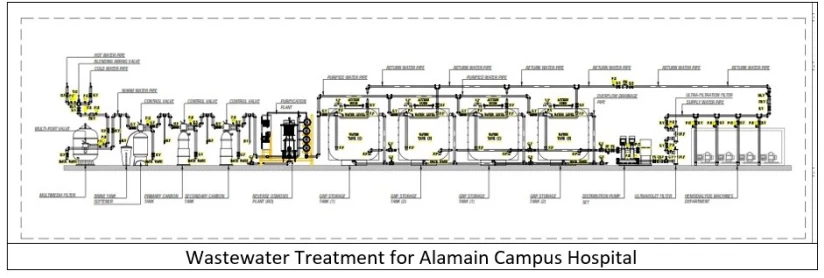
Alamein Campus Hospital Wastewater Treatment System
AASTMT – Alamein Campus has established a specialized wastewater treatment system serving its medical and laboratory facilities, ensuring that all discharged water is safely treated and reused while preventing pollution of natural water bodies. This advanced medical wastewater treatment unit is designed to remove biological, chemical, and physical contaminants, providing safe effluent that complies with environmental health standards. The system plays a vital role in protecting both human health and the surrounding ecosystem by minimizing the risks associated with untreated medical effluents.
System Components and Process:
| Component | Description |
| Collection Network |
Gathers wastewater from medical laboratories, clinics, and sanitary facilities through sealed pipelines to prevent leakage or contamination |
| Screening and Sedimentation Units |
Remove large particles, suspended solids, and organic matter to prepare the water for further treatment |
| Biological Treatment Unit |
Uses aerobic bacteria to break down organic pollutants and reduce biochemical oxygen demand (BOD) |
| Chemical Disinfection Stage |
Employs chlorine dosing and UV sterilization to eliminate pathogens, bacteria, and viruses, ensuring hygienic safety |
| Filtration and Reverse Osmosis (RO) |
Advanced filtration membranes remove dissolved salts, heavy metals, and chemical residues, producing high-quality treated water |
| Reuse and Recycling Loop |
Treated water is safely reused for non-potable applications such as irrigation, flushing, and cleaning operations, reducing water consumption and supporting sustainable resource management |
Smart Village Campus – Cairo
The Western Treatment Plant in the city of Sixth of October is one of the sewage treatment stations serving the campus of Smart Village in Cairo. All wastewater from the Smart Village campus is directed to this governmental treatment plant through the centralized sewage collection system.
Infrastructure Design for Pollution Prevention
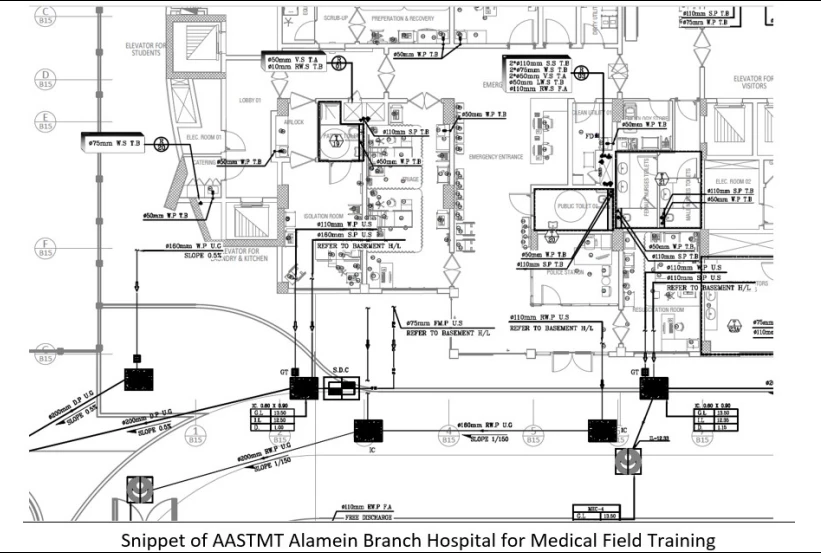
AASTMT's drainage infrastructure demonstrates the institution's commitment to preventing contamination, protecting groundwater, and ensuring safe wastewater management across campus facilities. The drainage system design provides a clear model of how engineering systems can actively prevent pollution of water systems and ensure safe effluent conveyance and disposal.
Pollution Control by Design:
- Separate Drainage Networks: Separate lines for sewage, stormwater, and greywater prevent cross-contamination between polluted water and clean rainwater or harvesting systems
- Controlled Slopes: Slope gradients of 0.5%–1% ensure continuous water flow, preventing stagnation, bacterial buildup, and sludge formation, which are common causes of water pollution
- Inspection Chambers and Manholes: Allow for periodic maintenance, early detection of blockages, and prevention of overflow or surface contamination, ensuring continuous and sanitary operation
Integration with Wastewater Treatment and Reuse:
- The network layout is compatible with future wastewater treatment plants (WWTPs) or constructed wetlands for effluent polishing and reuse in irrigation systems, promoting sustainable water recycling
- It supports sequencing batch or activated sludge processes for treating sanitary sewage
- Free discharge outlets are positioned for controlled release into potential treatment basins or filtration systems, reducing risks of untreated wastewater discharge into the environment
Protecting Groundwater and Ecosystems:
- Use of underground UPVC pipes and sealed joints prevents leakage, seepage, and groundwater contamination, maintaining the integrity of subsurface water systems
- Sand bedding and proper trenching absorb vibrations and prevent pipe cracking, avoiding the infiltration of polluted water into soil and groundwater
Supporting Sanitation and Hygiene Goals:
- The drainage network ensures clean collection and conveyance of wastewater from toilets, kitchens, and medical facilities, thereby improving sanitation and public health protection
- Rainwater runoff control measures prevent flood-related contamination and protect campus infrastructure from waterborne pathogens and polluted surface water
Integration with Irrigation and Water Reuse
The irrigation system reflects AASTMT's readiness to integrate treated wastewater reuse in landscape irrigation, reducing freshwater demand and promoting resource efficiency:
- The use of drip tubing, pressure-compensating bubblers, and sealed distribution piping ensures that treated effluents can be safely reused for non-potable purposes
- The network supports deficit irrigation, water-saving practices, and sustainable landscape management
- AASTMT's network separates sewage and stormwater lines, prevents contamination, and supports reuse of treated water in irrigation, aligning with SDG 6
Water Supply System – Safe Distribution and Separation:
- The water supply layout complements wastewater treatment by maintaining strict separation between potable and wastewater networks
- Dual pipeline systems prevent backflow or cross contamination, ensuring drinking water safety and sanitary compliance under Egyptian Code 102 (2010)
- Valves, inspection points, and backflow prevention devices provide control and monitoring across the water distribution system, safeguarding public health and water quality
Monitoring, Maintenance, and Quality Assurance
Environmental Monitoring & Climate Change Laboratory:
The Environmental Monitoring & Climate Change Laboratory regularly tests water quality to ensure system efficiency and compliance with environmental standards.
Operational Guidelines and Maintenance Standards:
- Routine Inspections: Bi-annual inspections of sump, pump room, and valve configurations to ensure optimal performance and compliance with safety and environmental standards
- Discharge Quality Monitoring: Regular testing of discharge water for pH, turbidity, and pollutant levels to ensure alignment with environmental regulations
- Seasonal Adjustments: Adjust discharge operations based on seasonal rainfall patterns to prevent overflow and maintain a balanced ecosystem impact
- Emergency Protocols: Two electrical control panels manage pump operations and discharge flow, ensuring optimized, safe operations
- Daily Maintenance: A contract with a company of workers and plumbers is in place to carry out cleaning and disinfection work for all pump rooms on a daily basis to ensure that no blockage occurs in the pipes that could lead to leakage
Awareness and Capacity Building:
AASTMT continuously spreads awareness about wastewater treatment through different initiatives and funded projects. The Academy participates in national conferences on sustainable water and wastewater management, bridging academia, industry, and government in promoting environmental sustainability.
Sustainable Waste and Water Management at Alamein Branch
In alignment with the United Nations Sustainable Development Goals, AASTMT – Alamein Branch has launched a comprehensive sustainable waste and water management system aimed at reducing pollution and protecting vital natural resources. This initiative introduces an efficient segregation and recycling system using stainless steel and color-coded bins to ensure proper collection, disposal, and resource recovery, minimizing landfill waste and promoting circular economy practices. By preventing leachate and hazardous runoff, the system actively protects water quality, prevents contamination, and supports sustainable sanitation management, ensuring a cleaner and safer environment for the campus and surrounding communities.
Alignment with Sustainable Development Goals
AASTMT's sewage disposal and wastewater management programs contribute to multiple SDGs:
| SDG | Contribution |
| SDG 6 (Clean Water and Sanitation) |
Safe wastewater collection, treatment, and reuse; pollution prevention; groundwater protection |
| SDG 12 (Responsible Consumption and Production) |
Water recycling and reuse; circular economy practices; waste minimization |
| SDG 14 (Life Below Water) |
Prevention of untreated wastewater discharge into coastal waters; marine pollution prevention |
| SDG 15 (Life on Land) |
Groundwater and ecosystem protection; prevention of soil and water contamination |
By integrating infrastructure, policy, research, and awareness, AASTMT sets a benchmark for Egyptian universities in managing water responsibly, protecting ecosystems, and contributing to the Sustainable Development Goals.
Additional Evidence and References
- AASTMT Wastewater Treatment:
https://aast.edu/en/sdg/goals.php?unit_item=1206&page_id=120600040
- Wastewater Treatment System Established at AASTMT Alamein Campus Hospital:
- Preventing Water System Pollution:
https://aast.edu/ar/sdg/contenttemp.php?page_id=120600041
- AASTMT Water Discharge Guidelines and Standards: