



 UI-Green Metric
[3.16]Toxic waste treatment
|
|
|
|
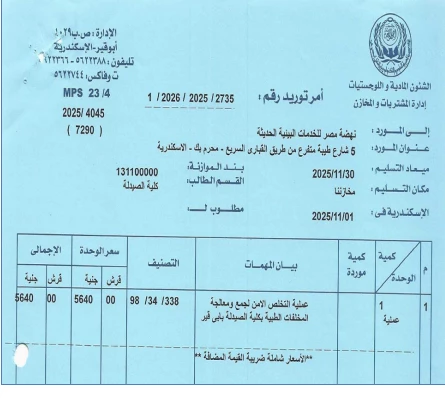
Purchase Order for Hazardous and Medical Waste Disposal Services AASTMT College of Pharmacy (Nahdet Misr for Modern Environmental Services, November 2025) |
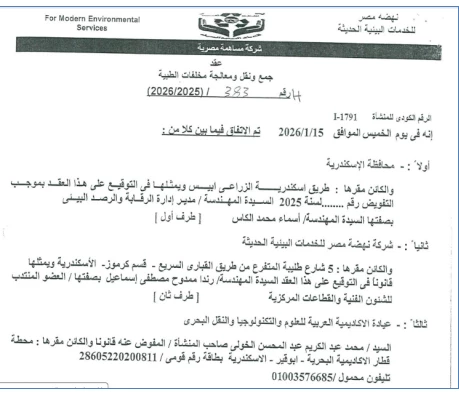
Service Contract for the Collection, Transport, and Treatment of Medical Waste AASTMT Abu Qir Campus Clinic (Nahdet Misr for Modern Environmental Services, Contract No. 383/2025–2026) |
|
|
|
|
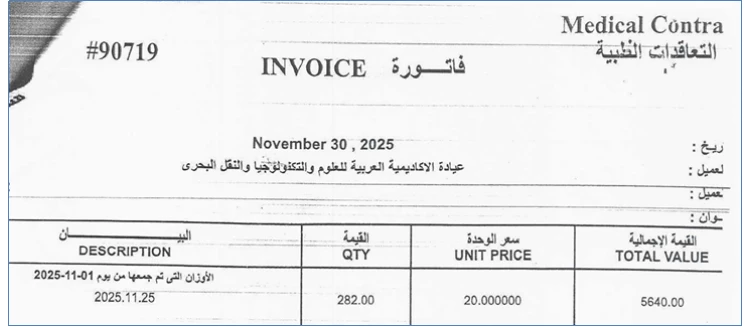
Invoice for Medical Waste Collection and Disposal Services AASTMT Abu Qir Campus Clinic (Invoice No. 90719, November 2025) |
|
Description:
The Arab Academy for Science, Technology and Maritime Transport (AASTMT) applies comprehensive environmental and safety procedures for the management and treatment of hazardous waste generated from laboratories, medical facilities, workshops, and educational activities across its campuses. The university is committed to minimizing environmental and health risks associated with hazardous waste through safe collection, segregation, storage, transportation, and disposal practices in accordance with Egyptian environmental regulations and occupational health and safety standards.
AASTMT's toxic waste treatment framework is built upon a multi-layered approach that encompasses policy development, infrastructure design, operational procedures, staff training, and continuous monitoring. This integrated system ensures that hazardous materials are managed responsibly from generation to final disposal, protecting both human health and the environment while supporting the university's sustainability commitments.
Policy Framework and Regulatory Compliance
AASTMT has established a comprehensive policy framework for hazardous waste disposal that provides clear guidelines for handling, storing, and disposing of toxic materials in alignment with national and international safety standards. The Academy adheres to Egyptian environmental regulations including:
- Egyptian Regulations for Waste Management (Law No. 202 of 2020): Focuses on improving water quality by reducing pollution, minimizing the release of hazardous chemicals, and ensuring safe waste disposal and management.
- Egyptian Law for Disposal of Hard Materials No. 6 of 2009 and No. 9 of 1982: Establishes standards for governmental protection and safe waste disposal.
- Egyptian Standard of Ministry of Housing, Utilities, and Urban Communities Concerning Liquid Waste Disposal (Resolution No. 44 of 2000): Focuses on improving water quality by reducing pollution, eliminating hazardous dumping, and minimizing the release of harmful chemicals.
- Environmental Standard ISO-14001: Provides a structured approach to managing environmental responsibilities and preventing hazardous chemical leaks into water systems.
AASTMT has implemented a strategy in all laboratories and clinics to segregate hazardous waste, categorizing it as chemical, biological, and medical waste to ensure safe handling and disposal.
Waste Segregation and Categorization
AASTMT implements rigorous waste segregation practices across all laboratories and medical facilities to ensure proper handling and disposal of different types of hazardous waste:
|
|
|
|
Example of laboratrory Toxic Waste Treatment ( College of pharmacy, AASTMT, Alexandria) |
Example of Toxic Waste Treatment (College of pharmacy, AASTMT, Alexandria) |
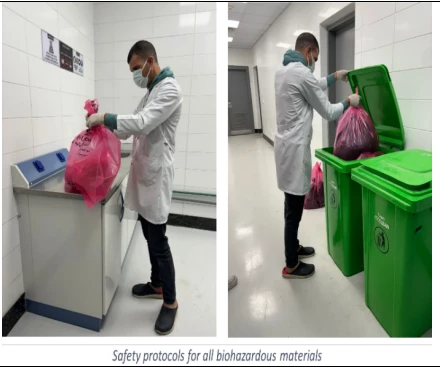
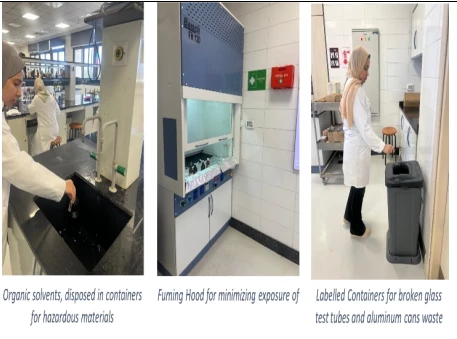
Chemical Waste:
All chemical waste generated from biochemistry and microbiology labs is initially stored in designated containers for each type. In the College of Pharmacy, proper disposal of waste generated during practical work in organic chemistry labs is essential to protect both students and the environment. All chemical waste, particularly from organic solvents, acids, and bases, is carefully disposed of in designated waste containers labelled for hazardous materials. Liquid chemical waste is collected in designated bottles within each laboratory and then transferred to larger containers for safe storage and subsequent disposal.
Biological Waste:
All biological hazardous materials, including cultures, specimens, and materials contaminated with microorganisms, are handled with stringent safety protocols to protect students, staff, and the environment. In AASTMT's biochemistry and microbiology laboratories at the College of Pharmacy, all biological hazardous materials are handled with stringent safety protocols. Biological waste is sterilized through autoclaving prior to disposal, effectively neutralizing pathogens and reducing contamination risks.
Medical Waste:
Clinical labs and medical facilities on AASTMT campuses follow strict procedures for hazardous biological waste, including medical waste like used syringes, swabs, and other contaminated materials. This waste is initially sterilized as needed, then stored in biohazard-safe containers and managed through certified disposal services.
Broken Glass and Sharps:
Broken glass is stored in separate containers for safe disposal, preventing injury and contamination risks.
Treatment and Sterilization Procedures
AASTMT employs multiple treatment methods to ensure hazardous waste is safely neutralized before disposal:
Autoclaving for Biological Waste:
Before disposal, all biohazardous waste is sterilized using autoclaves, which effectively neutralize pathogens and reduce contamination risks. Once autoclaved, the waste is securely contained and transferred to AASTMT's certified waste management partner for safe, compliant disposal.
Chemical Waste Management Protocols:
AASTMT strictly adheres to safety protocols for chemical waste management, including storing chemicals in fume hoods to minimize toxic vapors, protecting both students and staff members during laboratory activities. Students are instructed to perform all reactions that emit fumes, including volatile or hazardous compounds, within a fume hood. This practice enhances safety by effectively venting harmful vapors and reinforces environmentally responsible lab practices.
Neutralization of Liquid Chemical Waste:
The College of Pharmacy at AASTMT is reinforcing its commitment to environmental safety with a waste disposal initiative in its laboratories. Liquid chemical waste is collected in designated bottles within each lab and then transferred to larger containers for safe handling and subsequent disposal.
Partnership with Nahdet Misr for Certified Disposal
AASTMT collaborates with Nahdet Misr, an accredited waste disposal national company, for the collection and safe disposal of hazardous materials, ensuring compliance with environmental regulations. All waste is ultimately handed over to Nahdet Misr Company, a certified provider, to ensure environmentally responsible disposal.
Supervised Handover Process:
Hazardous waste handover to Nahdet Misr is supervised by AASTMT staff members to verify safe containment and proper documentation, guaranteeing secure transport and disposal. This oversight ensures that all hazardous materials are properly contained, documented, and tracked throughout the disposal chain.
Service Contracts and Documentation:
AASTMT maintains formal service contracts with Nahdet Misr for the collection, transport, and treatment of medical and hazardous waste. These contracts, such as Contract No. 383/2025–2026 for the AASTMT Abu Qir Campus Clinic, establish the legal framework for safe and compliant waste disposal services. Invoices and purchase orders document the ongoing relationship, with regular collections and payments reflecting the Academy's commitment to proper waste management. Approximately 0.5 metric tons of waste are sent to landfills annually, primarily consisting of hazardous medical waste from clinics and faculties.
Medical Waste Disposal Documentation:
AASTMT maintains comprehensive documentation for medical waste disposal, including service contracts, purchase orders, and invoices. These documents provide evidence of the Academy's commitment to safe and compliant hazardous waste management, with regular collections and payments reflecting the ongoing nature of these services.
Training and Awareness Programs
AASTMT promotes awareness about hazardous waste management among students and staff through training sessions and workshops, reinforcing a culture of safety and environmental responsibility.
Laboratory Staff Training:
Regular training on the use of fume hoods and hazardous waste disposal further supports AASTMT's commitment to a safe and sustainable educational environment in the College of Pharmacy and all practical colleges across all campus branches.
Student Education:
Students are educated on proper waste disposal procedures, including the segregation of chemical, biological, and medical waste, the use of fume hoods for hazardous reactions, and the importance of environmental responsibility in laboratory practices.
Workshops and Campaigns:
AASTMT conducts workshops and environmental campaigns focused on waste management, pollution control, and climate action, engaging the campus community in sustainability efforts.
Monitoring and Environmental Impact Assessment
The university supports sustainable practices by monitoring waste disposal activities and assessing the environmental impact to align with Egypt's environmental goals and AASTMT's commitment to a safe campus.
Waste Tracking System:
AASTMT has established a waste monitoring and tracking system to assess waste quantities, recycling performance, and sustainability progress. According to university reports, approximately 3.78 metric tons of waste were recycled during 2023–2024.
Environmental Monitoring:
The Environmental Monitoring & Climate Change Laboratory regularly tests water quality and environmental parameters to ensure system efficiency and compliance with environmental standards, preventing contamination from hazardous waste disposal.
Collaborative Research and Innovation
AASTMT actively engages in collaborative research and innovation projects that address toxic waste management and environmental sustainability:
EU-Funded "Green Maritime Horizons" Project (GEMS-TECH):
Under the patronage of Prof. Mohamed Diaa Zain El Abedeen, President of Ain Shams University, and Prof. Amany Osama, Vice President for Postgraduate Studies and Research, the Innovation and Training Sector, represented by the Training and Development Center, in collaboration with the Faculty of Engineering, has secured the EU Erasmus+ Capacity Building Project titled "GEMS-TECH – Green Maritime Horizons: Collaborative Innovation in Ship Engineering and Sustainable Technologies."
The project, implemented in partnership with AASTMT and other international institutions, is funded by the European Union's Erasmus+ Programme. It aims to modernise maritime education in Egypt and Kenya by integrating sustainable maritime practices, green technologies, and innovative curricula into higher education. This collaboration demonstrates AASTMT's commitment to advancing sustainable technologies and environmental protection through international partnerships.
World Urban Forum (WUF12) Collaboration:
On the sidelines of the fourth day of the 12th World Urban Forum (WUF12), H.E. Eng. Sherif El-Sherbiny signed two cooperation protocols between AASTMT and the Egyptian Ministry of Housing, Utilities and Urban Communities. The first protocol focuses on technical consultancy in New Alamein City, developing a comprehensive proposal for managing marine and coastal resources of the city's beach and artificial lake. The plan aims to ensure environmental safety, sustainable resource use, and economic efficiency, while supporting marine ecosystem conservation and sustainable urban planning. The second protocol covers training, postgraduate studies, and joint research, offering AASTMT students practical training opportunities and promoting capacity building for Ministry employees in urban management and sustainability.
Contribution to Sustainable Development Goals
AASTMT's toxic waste treatment programs contribute significantly to multiple Sustainable Development Goals:
| SDG | Contribution |
|
SDG 3 (Good Health and Well-being) |
Reducing environmental and health risks associated with improper hazardous waste disposal through safe treatment and handling procedures |
|
SDG 4 (Quality Education) |
Raising awareness and educating students about hazardous waste management and environmental safety through training programs and workshops |
|
SDG 6 (Clean Water and Sanitation) |
Preventing contamination of water sources through safe disposal of chemical and biological waste, protecting groundwater and surface water quality |
|
SDG 11 (Sustainable Cities and Communities) |
Promoting sustainable campus operations and environmental responsibility through comprehensive waste management systems |
|
SDG 12 (Responsible Consumption and Production) |
Encouraging proper hazardous waste management, safe disposal, and minimisation of toxic waste generation |
|
SDG 13 (Climate Action) |
Reducing pollution and supporting climate mitigation efforts through responsible waste management practices |
|
SDG 14 (Life Below Water) |
Minimising hazardous waste pollution affecting marine ecosystems through proper treatment and disposal |
|
SDG 15 (Life on Land) |
Protecting terrestrial ecosystems through safe hazardous waste disposal and contamination prevention |
|
SDG 17 (Partnerships for the Goals) |
Strengthening cooperation with certified waste management providers (Nahdet Misr), government agencies, and international partners |
Summary of Toxic Waste Treatment Framework
| Component | Implementation | Key Outcomes |
|
Policy Framework |
Hazardous waste disposal policy, ISO-14001 compliance, Egyptian regulations |
Legal compliance, environmental protection |
|
Waste Segregation |
Separation of chemical, biological, and medical waste in designated containers |
Safe handling, reduced contamination risks |
|
Chemical Waste Treatment |
Storage in fume hoods, designated containers, neutralization |
Minimized toxic vapor exposure, safe disposal |
|
Biological Waste Treatment |
Autoclaving for sterilization, secure containment |
Pathogen neutralization, reduced contamination |
|
Medical Waste Treatment |
Sterilization, biohazard-safe containers, certified disposal |
Public health protection, infection prevention |
|
Partnership with Nahdet Misr |
Supervised handover, service contracts, certified disposal |
Compliant, documented, and tracked disposal |
|
Training and Awareness |
Workshops, student education, staff training |
Safety culture, environmental responsibility |
|
Monitoring and Assessment |
Waste tracking, environmental monitoring |
Data-driven improvement, compliance verification |
Additional Evidence Links
| Resource | URL |
|
Medical and Biohazardous Waste Disposal Program |
|
|
Medical Waste Disposal Procedures within the Arab Academy |
|
|
Policy on Hazardous Waste Disposal (SDG 15) |
https://aast.edu/en/sdg/goals.php?unit_item=1215&unit_item=1215&unit_item=1215&page_id=121500035 |
|
AASTMT Collaboration Highlighted at WUF12 |
|
|
Ain Shams University and AASTMT Collaborate on EU-Funded "Green Maritime Horizons" Project |