



 UI-Green Metric
[3.4]Program to reduce the use of paper and plastic on campus
|
|
|
|
General Framework of the Arab Strategy for Integrated Solid Waste Management This document presents the General Framework of the Arab Strategy for Integrated Solid Waste Management, developed collaboratively by the League of Arab States and the Arab Academy for Science, Technology and Maritime Transport (AASTMT). Published in June 2026, the framework provides a strategic vision for improving solid waste management across Arab countries through integrated and sustainable approaches. It is intended to support national policies, promote resource recovery and recycling, strengthen the circular economy, reduce environmental impacts, and encourage regional cooperation in achieving sustainable waste management practices. |
|
|
|
|
|
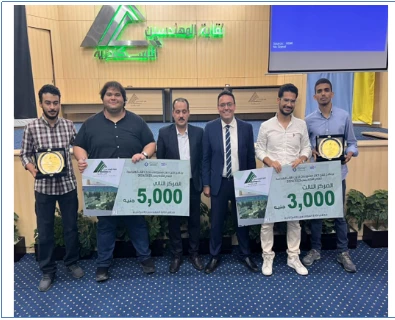
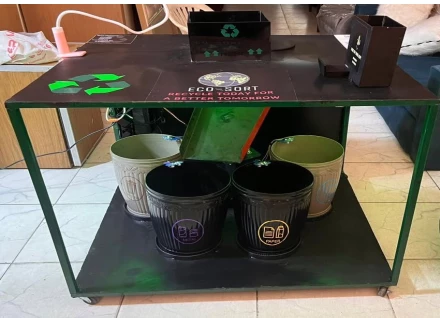
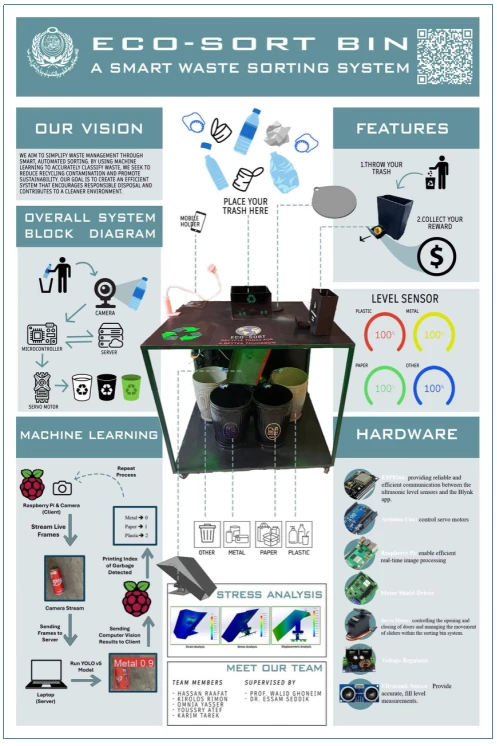
AASTMT Students win the second place for participation with ECO-Sort BIN [A smart Waste Sorting Ststem] at the level of the Alexandria Governorate |
|
|
|
|
|
“LiDAR Navigation IoT Solar Agribot’’/ Smart Solar Waste Compactor |
|
|
|
|
|
Example of Program to Reduce the Use of Paper and Plastic in Campus (AASTMT, Egypt) |
|
|
|
AASTMT’s leadership have a profound responsibility on how to use the campus as an educational opportunity to promote sustainability awareness. |
Description:
AASTMT's leadership recognizes a profound responsibility to utilize the campus as an educational platform for promoting sustainability awareness. The Academy has implemented a comprehensive, multi faceted program to reduce the consumption of paper and single use plastics across all campus operations and activities. This program supports environmental sustainability, waste reduction, resource efficiency, and climate action goals by promoting digital transformation, sustainable consumption, and environmentally responsible practices among students, staff, and visitors. The initiative aligns with AASTMT's broader commitment to the Sustainable Development Goals, the United Nations Global Compact principles, and the Global Reporting Initiative framework.
Student Innovation and Award Winning Projects
Eco Sort: Smart Trash Sorting Bin
The Arab Academy for Science, Technology and Maritime Transport (AASTMT) proudly celebrates the achievement of students from the Mechanical Engineering Department, College of Engineering and Technology – Alexandria Campus, who secured second place among more than 100 competing teams across Alexandria Governorate with their innovative graduation project, "Eco Sort: Smart Trash Sorting Bin."
Developed by Yousry Atef, Hassan Raafat, Omnia Yasser, Kyrillos Raymond, and Karim Tarek, the project demonstrates an intelligent approach to waste segregation and sustainable waste management. The team was supervised by Prof. Walid Ghoneim, Head of the Electrical Engineering and Control Department (Main Campus), and Dr. Essam Seddik, Head of the Mechanical Engineering and Construction Engineering Departments (Port Said Branch).
The project was honored during the Best Graduation Projects Ceremony for the Academic Year 2023/2024, organized by the Engineers Syndicate in Alexandria, highlighting AASTMT's dedication to innovation, applied engineering solutions, and environmental sustainability.
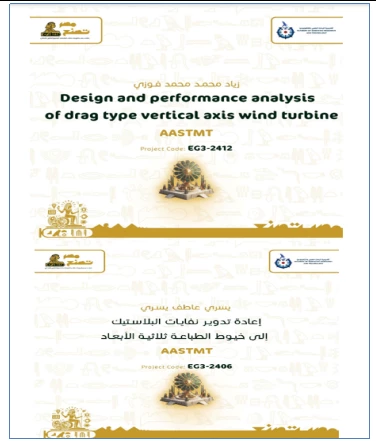
Recycling Plastic Waste into 3D Printing Filaments
Building on this success, the same student team achieved another national distinction with their graduation project, "Recycling Plastic Waste into 3D Printing Filaments." The project was selected among the top 28 university projects in Egypt under the "Egypt Makes" Initiative, part of the University Students' Project Support Alliance for Local Component Development, funded by the Academy of Scientific Research and Technology (ASRT) for the 2023/2024 academic year.
The project focuses on converting plastic waste into high-quality filaments for 3D printing, promoting resource efficiency, circular economy principles, and sustainable manufacturing. Guided by Prof. Walid Ghoneim and Dr. Essam Seddik, this national recognition further demonstrates AASTMT's commitment to empowering students to develop practical engineering solutions that address environmental challenges while advancing innovation and local industrial development.
Recycling Plastic Waste into 3D Printing Filaments
The Arab Academy for Science, Technology and Maritime Transport (AASTMT) further announces that a graduation project from the Mechanical Engineering Department, College of Engineering and Technology – Alexandria Campus, has been selected among the top 28 university projects nationwide as part of the "Egypt Makes" Initiative under the University Students' Project Support Alliance for Local Component Development, funded by the Academy of Scientific Research and Technology for the 2023/2024 academic year. The selected project, titled "Recycling Plastic Waste into 3D Printing Filaments," was developed by the same student team—Yousry Atef, Hassan Raafat, Omnia Yasser, Kyrillos Raymond, and Karim Tarek—under the supervision of Prof. Walid Ghoneim and Dr. Essam Seddik. This remarkable achievement reflects AASTMT's ongoing commitment to promoting innovation, sustainability, and applied research in engineering education.
Smart Solar Waste Compactor
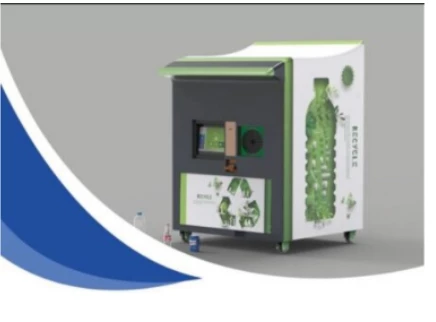
In support of innovation and the development of practical, implementable solutions, AASTMT students have presented a groundbreaking senior graduation project titled "Smart Solar Waste Compactor". This intelligent device compresses plastic waste in various institutions—such as schools, hospitals, and factories—using solar energy as its sole power source. Key features include:
- Fully solar powered operation, eliminating reliance on conventional electricity
- Compression capacity of up to half a ton of waste per cycle
- Compact and robust design, facilitating easy transportation and installation at any location
- Automated receipt issuance indicating the compressed waste's value, redeemable for cash at plastic recycling facilities
This project offers a practical solution to plastic pollution, promotes the circular economy, and incentivises institutions to sort their waste while generating financial returns.
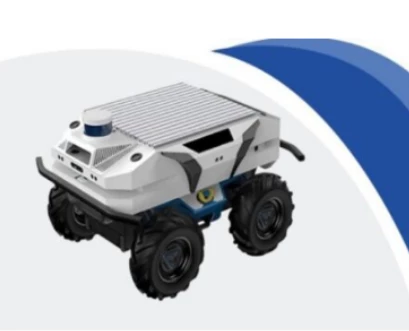
LiDAR Navigation IoT Solar Agribot
The second student project is a fully integrated solar powered agricultural robot, the second of its kind in the region, co funded by the Arab Academy and Egyptian businessman and industrialist Eng. Ahmed Abu Hashima. Designed to address labour shortages—especially in challenging environments like desert and clay soils—the robot performs a wide range of farming tasks with high precision. Specifications and technologies include:
- Autonomous irrigation, planting, harvesting, and pest control
- LiDAR technology for generating 3D environmental maps and precise navigation
- Rugged, adaptable structure with interchangeable tyres for mobility across diverse soil types
- Intelligent seeding mechanism adjustable based on crop type
- Real time decision making algorithms for on the go adjustments
This project represents a major advancement in digital agriculture, offering cost effective, high yield solutions while ensuring environmental sustainability and resource efficiency.
These projects reflect the Academy's strategic commitment to empowering students to transform theoretical knowledge into real world applications that serve society and the environment—while enhancing the competitiveness of technical education in Egypt.
Paper Reduction Program
AASTMT has adopted several measures to minimize paper consumption across all campus operations:
- Digital Administration Systems
Most administrative procedures, student services, internal communications, and academic processes are conducted electronically through online platforms, emails, and digital management systems instead of printed documents. This digital transformation reduces paper usage while improving efficiency and accessibility.
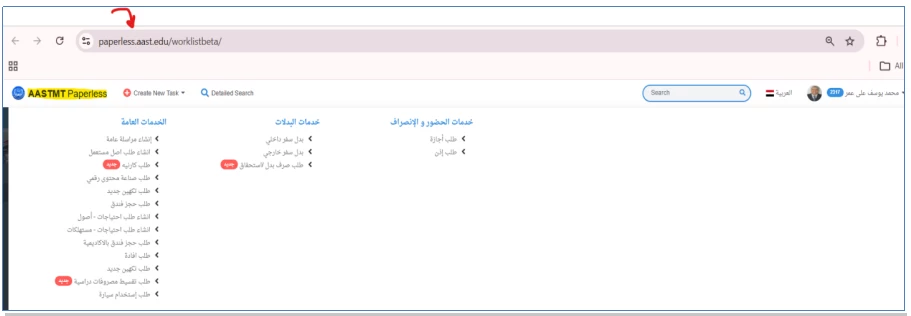
The AASTMT Paperless electronic workflow portal, which provides digital administrative services grouped into three main categories.
AASTMT Paperless is a web-based electronic workflow management system that digitizes administrative and academic processes within the Arab Academy for Science, Technology and Maritime Transport (AASTMT). It enables employees and faculty members to submit, track, and manage requests electronically, including leave applications, official missions, HR services, academic requests, and administrative workflows, thereby improving efficiency, transparency, and reducing paper-based procedures.
1. Employee Services
This section includes requests related to staff administration, such as:
- Leave requests
- Leave cancellation
- Official missions / business trips
- New employee requests
- Staff transfer requests
- Financial entitlements (e.g., travel allowances and advances)
- Salary-related requests
- Annual performance appraisal
- Issuing certificates
- Academic promotion requests
- Vehicle use requests
2. Faculty Services
This section is dedicated to academic staff and includes:
- Travel mission requests
- Official mission requests
- Teaching load requests (appears to be marked as New)
3. Administration & Supervision Services
This section provides management functions, including:
- Task reservation/assignment
- Task completion
Additional Features
- Create New Task – Allows users to initiate a new workflow.
- Detailed Search – Enables searching for existing requests and tasks.
- Search Bar – Quick search across the system.
- Language Selection – Arabic interface is currently selected.
- User Profile & Notifications – Displays the logged-in user information and pending notifications/tasks.
1.E Learning and Digital Materials
Course materials, lecture notes, assignments, and announcements are uploaded through Learning Management Systems (LMS), reducing the need for printed handouts and paper based submissions. This approach supports flexible learning while significantly decreasing paper consumption.
2.Electronic Meetings and Documentation
Many reports, meeting agendas, memoranda, and official correspondences are shared digitally to encourage paperless communication. The Academy promotes the use of digital documentation for all official proceedings.
3.Awareness Campaigns
Awareness activities encourage students and employees to reduce unnecessary printing, print double sided when needed, and use recycled paper whenever possible. These campaigns foster a culture of resource consciousness and environmental responsibility.
4.Online Registration and Forms
Student registration, surveys, evaluations, and requests are increasingly completed through electronic forms and digital signatures, eliminating the need for paper based processes.
Plastic Reduction and Recycling Policies
- Policy Framework
AASTMT has implemented a comprehensive policy framework to align its practices with Egyptian environmental laws, specifically targeting the reduction of non biodegradable plastic products on campus. Acknowledging the environmental challenges posed by plastic waste, the policy promotes the adoption of sustainable, eco friendly alternatives to minimize reliance on plastics, thereby reducing the university's environmental footprint and contributing to national efforts to combat plastic pollution. Beyond legal compliance, this initiative reflects AASTMT's broader commitment to environmental sustainability and fostering a culture of responsibility within its community. By educating students, faculty, and staff about the harmful impacts of plastic waste and encouraging sustainable habits, AASTMT aspires to inspire collective action toward environmental conservation.
The Consumption and Recycling Policy applies to all AASTMT employees, students, and contractors involved in handling, managing, or storing any form of waste, including hazardous and non hazardous materials. It establishes the framework for ensuring that all waste management activities priorities recycling, reuse, and responsible disposal in line with the university's sustainability objectives. Recycling must be integrated at every stage of the waste management process—beginning with proper segregation and collection, followed by safe processing and reuse wherever feasible. A designated responsible person or unit oversees the recycling and disposal of materials to ensure compliance with environmental standards and the adoption of the most sustainable methods available.
The policy considers end of life disposal costs and environmental impacts when making acquisition decisions involving the construction of new or renovated facilities. AASTMT adopts the waste hierarchy of prevention, reuse, recycling, other recovery, and disposal. The Academy executes cycles, methods, and activities that guarantee consistency with environmental legislation and best practice, to lessen overall waste produced and prevent waste creation at every possible opportunity. Moreover, AASTMT is committed to measuring and weighing the amount of waste generated to track waste and find the best methods to reduce or recycle it.
- Policy for Minimization of Plastic Use
AASTMT is implementing a policy to establish a set of guidelines that will ensure the university follows Egyptian environmental law by reducing the use of non biodegradable plastic products on campus. This policy explicitly requires that by 2022, AASTMT has halted the utilization of "single use" plastics on campus, utilizing a blend of alternative materials and suspending the sale of plastic filtered water on campus.
- Policy on Plastic Waste Reduction
Through this policy, AASTMT aims to minimise environmental impact by prioritising waste prevention, reusing materials whenever possible, and ensuring proper recycling and disposal in compliance with environmental regulations. AASTMT intends to continue diminishing waste by investigating new products and services that will help achieve decreased plastics utilisation and waste.
- Policy for Minimization of Disposable Items
The Consumption and Recycling Policy of AASTMT emphasises the dedication to reducing the use of disposable items on its campus, in accordance with waste reduction and resource conservation principles. Through this policy, AASTMT aims to minimise environmental impact by prioritising waste prevention, reusing materials whenever possible, and ensuring proper recycling and disposal in compliance with environmental regulations. The policy also extends to suppliers and subcontractors, requiring them to comply with AASTMT's sustainability and procurement standards to ensure environmentally responsible services and operations.
- Practical Actions Implemented
As part of the implementation, AASTMT has taken several practical actions, including:
- Halting the utilization of single use plastic products and disposable packaging on campus
- Replacing plastic cups, cutlery, and food packaging with compostable and eco friendly alternatives across all food outlets
- Providing reusable cups to staff during onboarding to reduce disposable cup waste, with reusable cups available for purchase at campus retail outlets and discounts to encourage their use
- Installing water stations around campus to promote bottle reuse and lessen reliance on packaged water
- Establishing recycling initiatives for plastic, aluminum, paper, carton, and organic waste
- Encouraging reuse practices and awareness campaigns among students and employees
- Tracking waste quantities and cooperating with specialized third party companies for safe disposal and recycling processes
- Supporting sustainable food management through food preservation, composting, vermicomposting, and bio fertiliser production from food waste
- For conferences and events, using reusable glassware to eliminate plastic waste from bottled water
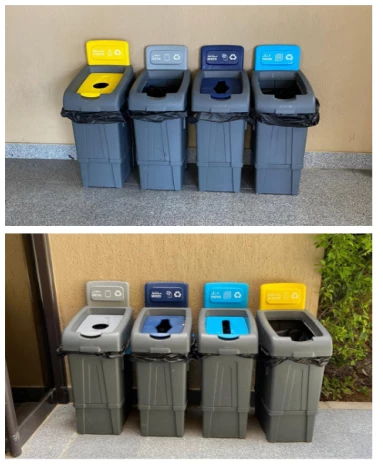
Waste Segregation System
AASTMT has implemented a waste segregation system with labelled bins across campuses, as demonstrated at the Abu Qir Campus. This system ensures that waste is properly sorted at source, facilitating efficient recycling and reducing contamination.
Campus Smart Recycling System (CSRS)
Project ID: 2068
Project Title / Acronym: Campus Smart Recycling System (CSRS) to turn Food Organic Wastes and Recyclables into Economic Value Products
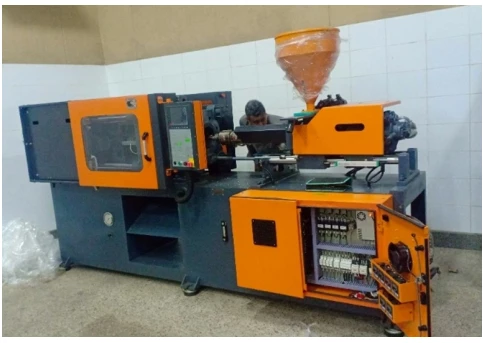
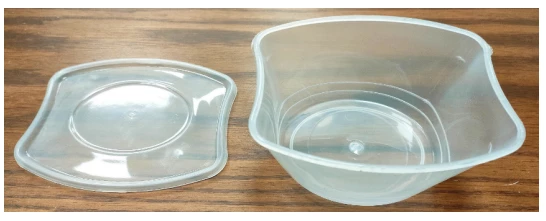
Abstract: The proposed project involves building and implementing a sustainable self sufficient recycling system to transform AASTMT campus food organic waste and recyclables into valuable products with economic value, which can be used to reduce campus running expenses. The proposed system targets three types of campus waste: organic food remains, plastic tableware, and aluminum cans.
Main Objectives:
- Add economic value to organic food waste instead of dumping it
- Reduce campus running costs by:
- Producing a percentage of campus disposable plastic tableware/products using the AASTMT owned plastic injection machine located at ISC
- Reducing the campus budget for purchasing fertilizers used in campus cultivated areas
- Reducing the campus budget for purchasing aluminum raw materials for student graduation projects
Manufacturing Components:
- Portable compost unit that produces organic fertiliser from garbage
- Two moulds for the AASTMT plastic injection machine
- Plastic washing and disinfection units to recycle plastic tableware
- Electrical furnace to melt aluminium cans into raw bars
Student Sustainability and Awareness Activities
.Student Sustainability Community
AASTMT actively offers, manages, and delivers a wide range of outreach programmes for local, regional, and international communities. These programmes span education and literacy, health and wellbeing, environmental awareness, innovation, cultural engagement, and social inclusion, delivered through its colleges. The student sustainability community leads student led sustainability campaigns, Zero Waste Week, Earth Day activities, climate action initiatives, awareness workshops, and eco friendly campaigns.
- Sustainability Initiative
The Sustainability Initiative, led by the SDG workforce members of AASTMT, focuses on introducing the campus community to the SDGs, discussing their global importance and relevance to AASTMT, and demonstrating how the Academy can lead the academic community in the region in implementing and advancing them.
- "Academy Free of Plastic Bags" Initiative
Prof. Dr. Alaa Abdel Bari, Vice President of the Arab Academy for Science, Technology and Maritime Transport, announced that the Academy's President decided to launch the "Academy Free of Plastic Bags" initiative by the new academic year, indicating the Academy's interest in adapting to climate change by rationalising the use of energy and water and relying on renewable energy.
- "Always Green Academy" Campaign
From the headquarters of the Academy at the Smart Village, AASTIANS Go Green is an initiative that started in 2020 and continues to the present, exhibiting a series of awareness and activity events within AAST and the community. This initiative is part of the Academy's social responsibility and in line with the cooperation agreement signed with the Minister of Local Development and the President of the Arab Academy regarding the planning and implementation of the "Always Green Academy" campaign.
- "Blue Color Initiative"
Because children have the power to change our future, AAST decided that awareness must start with them. The Academy initiated the "Blue Color Initiative" to spread awareness among children on the hazards of plastic.
- "No Plastic Bags" Environmental Initiative
An environmental initiative to raise awareness among students of the Arab Academy, focusing on reducing plastic bag usage and promoting sustainable alternatives.
International Collaboration and Capacity Building
International Waste Management Workshop
AASTMT organised a specialised workshop on waste management in collaboration with Alexandria Governorate, Nahdet Misr Company, and the German Retech Foundation, under the auspices of the Ministry of Environment and the Waste Management Regulatory Agency. The workshop focused on recent advancements in waste management and the implementation of international standards—particularly the Extended Producer Responsibility (EPR) system. The event was organised in coordination with the German side, the Alexandria Governorate, and the Arab Academy.
Dr. Manal Awad, Minister of Local Development, announced that since 2019, local investments totalling EGP 25 billion have been directed toward municipal solid waste management and environmental improvement projects across Egyptian governorates. The event was attended by high level officials, including the Governor of Alexandria, the Governor of Kafr El Sheikh, the Governor of Dakahlia, Dr. Ismail Abdel Ghaffar (President of AASTMT), Dr. Alaa Abdel Bary (Vice President of AASTMT), and international development partners from the German side.
Capacity Building Initiative
AASTMT students won second place in the Hackathon competition held in the first round of the Capacity Building Initiative for Universities in the field of graduation projects for final year students, in the presence of many Egyptian university professors, industrialists, and representatives.
Sustainability Reporting and Commitments
AASTMT issued its first Sustainability Report in 2018 and periodically issues further reports demonstrating commitment to sustainability, the SDGs, and the UN Global Compact principles. These reports are produced on an annual basis and cover all dimensions of the institution's financial position. AASTMT's financial reports are prepared and published on an annual basis, externally audited to international standards, signed by the Chief Accountant and the President of Financial Affairs, and verified by KPMG Hazem Hassan.
AASTMT aims to achieve a 50% reduction in carbon emissions by 2040, taking a leadership role in renewable energy adoption and environmental stewardship. The Academy publishes an annual sustainability report and conducts third party audits every two years. In 2024, AASTMT achieved a −3.0% reduction in total emissions from 2023 and −32.8% relative to the 2019 baseline, demonstrating sustained decarbonization momentum and strategic alignment with broader climate goals.
This comprehensive paper and plastic reduction framework positions AASTMT as a leader in sustainable resource management within the higher education sector in Egypt and the broader region, demonstrating how academic institutions can drive meaningful change and contribute to a greener, more sustainable future.
Additional Evidence Links
- AASTMT Students Win Second Place in Alexandria Engineering Competition for Smart Waste Sorting Project
- AASTMT Sustainability Report – Sustainable AASTMT
https://www.aast.edu/en/sdg/contenttemp.php?page_id=120000010
https://www.aast.edu/en/sdg/?utm_source=
- AASTMT Mechanical Engineering Students Selected Among Top 28 National Projects in "Egypt Makes" Initiative
- Policy for Minimization of Plastic Use and Waste Reduction
https://www.aast.edu/en/sdg/goals.php?unit_item=1215&unit_item=1215&unit_item=1215&page_id=121500034
- Student Sustainability Community
https://www.aast.edu/en/sdg/goals.php?lnselect=1&page_id=101010006&unit_item=10101&utm_source
- AASTMT Policy for Minimization of Disposable Items
https://www.aast.edu/en/sdg/goals.php?unit_item=1215&unit_item=1215&unit_item=1215&page_id=121500035
- AASTMT Organizes International Waste Management Workshop
- AASTMT Students Develop Smart Waste and Agri Tech Solutions