



 UI-Green Metric
[4.7] Impact of Water Management programs in supporting the Sustainable Development Goals (SDGs)
Description:
The Arab Academy for Science, Technology and Maritime Transport (AASTMT) adopts a holistic approach to sustainable water management that integrates education, technology, renewable energy, and environmental protection. Through smart infrastructure, water-efficient fixtures, and treatment systems, the Academy reduces potable water consumption and promotes the reuse of treated, reclaimed, and harvested water, directly advancing SDG 6 (Clean Water and Sanitation). Solar-powered pumping and renewable irrigation systems link water conservation with clean energy (SDG 7) and climate action (SDG 13).
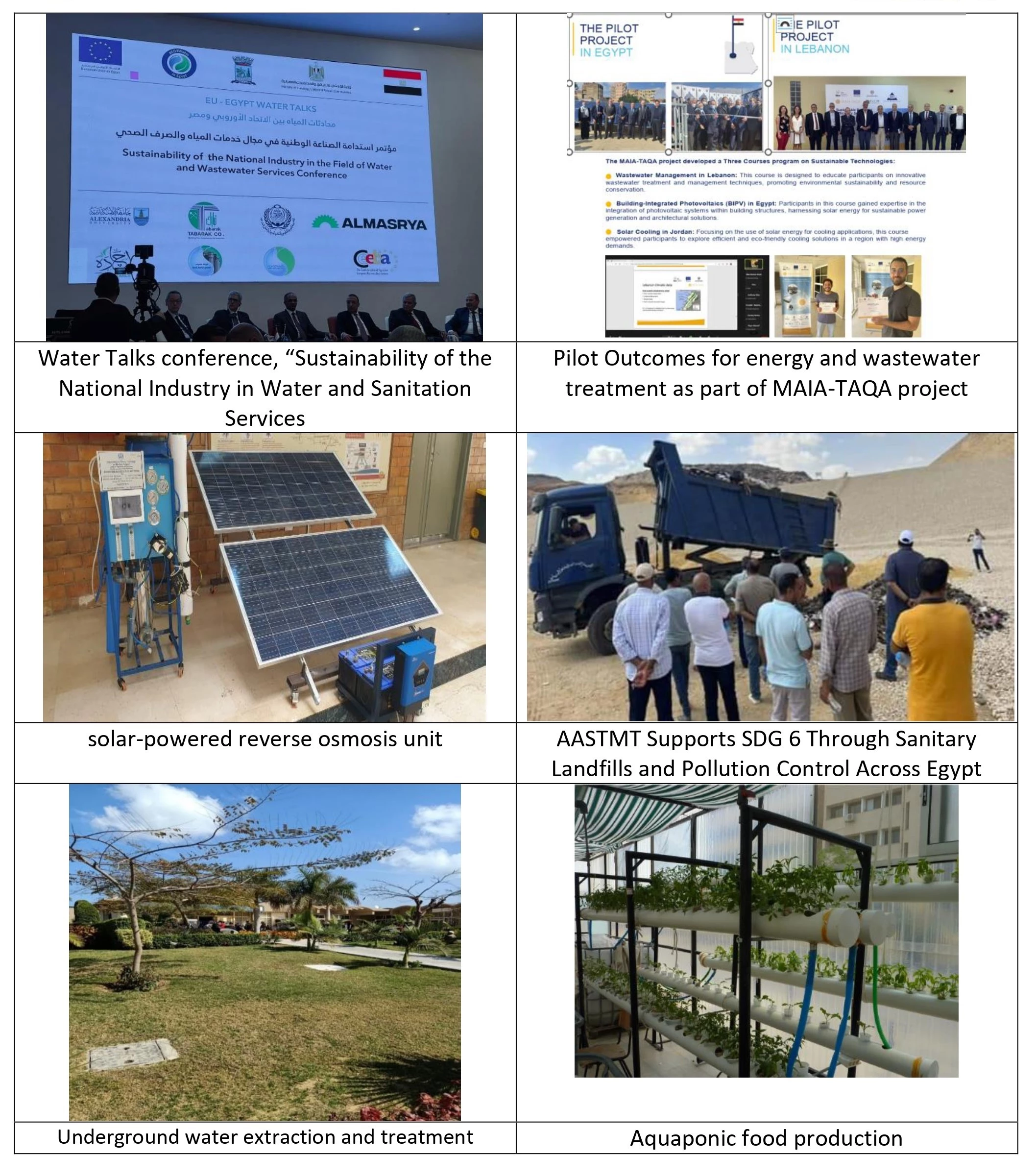
Innovative hydroponic and aquaponic systems at the Aquaculture Research Center support food security (SDG 2) while optimizing water use. Pollution control measures, including separate sewage and stormwater networks and safe waste management, protect ecosystems and public health (SDG 3, SDG 14, SDG 15).
Through research, professional training, and awareness programs offered by the Productivity and Quality Institute, AASTMT builds national capacity in sustainable resource management, aligning with education, innovation, and decent work (SDG 4, SDG 8, SDG 9).
AASTMT has undertaken a wide range of water management programs that contribute significantly to the achievement of the 17 Sustainable Development Goals (SDGs). These initiatives reflect a strong institutional commitment to water conservation, sustainable usage, and climate resilience. Key programs include:
- Water Conservation and Efficiency (SDG 9, SDG 11, SDG 4, SDG 8)
All campuses are equipped with low-flow faucets, dual-flush toilets, and water-saving aerators, reducing potable water use by up to 30 %. Continuous leak detection and smart metering systems enhance operational efficiency and support the development of green jobs in facilities management.
Professional courses in Environmental Management (ISO 14001) and Sustainable Infrastructure Design train engineers and staff in water-efficient construction and building maintenance — linking education (SDG 4), innovation (SDG 9), and decent work (SDG 8) while promoting sustainable urban operations (SDG 11).
- Reuse and Recycling of Treated Water (SDG 12, SDG 4, SDG 13)
Around 27.8 % of AASTMT’s total water consumption originates from treated wastewater, reclaimed groundwater, and harvested rainwater, reused for irrigation and cleaning.
Through PQI training programs on wastewater treatment, reuse technologies, and environmental auditing. AASTMT empowers students and professionals to implement circular water systems, fostering responsible consumption (SDG 12), climate adaptation (SDG 13), and quality education (SDG 4).
- Solar-Powered Water Extraction (SDG 7, SDG 9, SDG 13)
AASTMT operates photovoltaic-powered groundwater extraction pumps to supply irrigation and service systems using renewable energy. This innovation reduces emissions, eliminates fossil-fuel dependency, and serves as a living laboratory for students in renewable energy and smart systems — combining clean energy (SDG 7) with infrastructure innovation (SDG 9) and climate action (SDG 13).
- Sustainable Agriculture and Food Security (SDG 2, SDG 8, SDG 13, SDG 4)
The Aquaculture and Hydroponics Research Center apply water-efficient aquaponic systems that cut water use by 90 % while producing organic vegetables and fish.
These systems enhance campus food security (SDG 2), support green-economy employment (SDG 8), and provide training opportunities (SDG 4). Their low-carbon production model also contributes to climate-resilient agriculture (SDG 13) and national food-water security strategies.
- Pollution Prevention and Wastewater Control (SDG 15, SDG 3, SDG 14, SDG 4)
AASTMT’s infrastructure features independent sewage, stormwater, and greywater networks with sealed UPVC piping and inspection chambers to prevent leakage and groundwater contamination.
Hazardous waste is safely managed through a certified partnership with Nahdet Misr Environmental Services, protecting soil, biodiversity, and public health. These measures safeguard terrestrial (SDG 15) and aquatic ecosystems (SDG 14) by preventing contaminants from reaching rivers and coastal waters. Complementary courses on Pollution Control, Environmental Legislation, and Hazardous Waste Handling strengthen workforce expertise — advancing SDG 3 (Good Health and Well-Being) and SDG 4 (Quality Education).
- Smart Irrigation and Sustainable Landscaping (SDG 9, SDG 11, SDG 13, SDG 15)
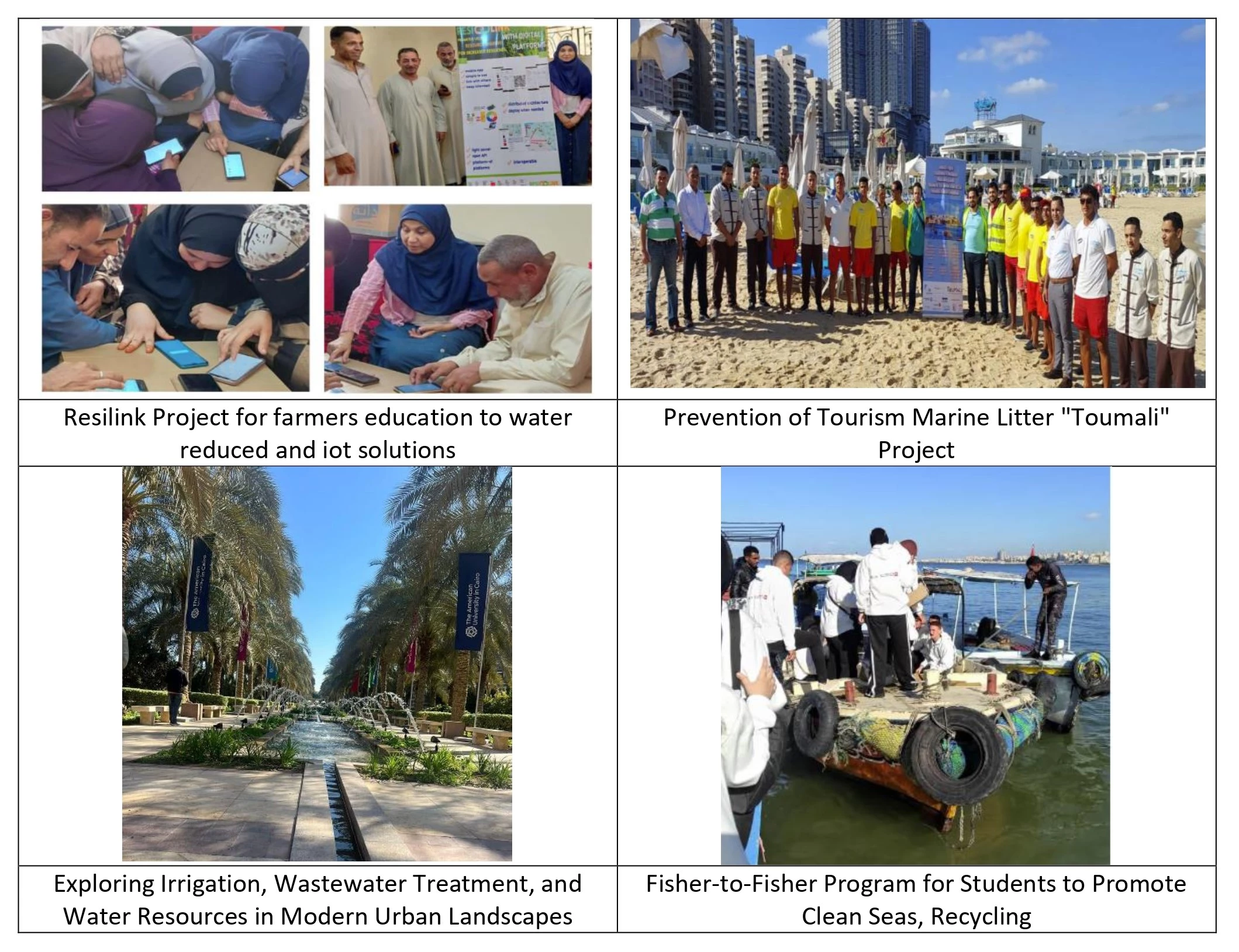
Automated drip-irrigation systems with solenoid valves, bubblers, and IoT controllers ensure precise water distribution and minimize waste. Landscaping with native, drought-tolerant plants conserves water, enhances green cover, and supports biodiversity (SDG 15). Integration of smart sensors, renewable-energy pumps, and data-driven irrigation positions AASTMT as a model for smart-city infrastructure (SDG 9 & 11) and climate-adaptive design (SDG 13).
- Research, Awareness, and Partnerships (SDG 4, SDG 7, SDG 8, SDG 9, SDG 13, SDG 14, SDG 17)
AASTMT conducts applied research in biofilm water treatment, solar desalination, marine pollution control, and aquaculture sustainability. Campaigns such as “Every Drop Counts” and training through the Productivity and Quality Institute (PQI) — including ISO 14001, ISO 50001, NEBOSH Process Safety, and Sustainable Development and Circular Economy diplomas — provide both free and paid educational opportunities that expand national capacity in sustainability fields. Partnerships with the Ministry of Environment, Maritime Authorities, and local communities strengthen environmental governance and marine ecosystem protection (SDG 14), while promoting education (SDG 4), green innovation (SDG 9), and collaborative progress (SDG 17).
https://aast.edu/en/news/news-details.php?language=1&unit_id=1206&news_id=120610241&event_type_id=1
https://aast.edu/en/news/news-details.php?language=1&unit_id=34&news_id=486102003&event_type_id=2