



 UI-Green Metric
[4.6] Water pollution control in campus area (WR.6)
Description:
The AASTMT applies a comprehensive approach to prevent water contamination and ensure safe wastewater management across all campuses in alignment with Egyptian environmental regulations. Through integrated engineering design, routine monitoring, and strict waste-disposal standards, AASTMT safeguards groundwater, enhances sanitation, and reduces pollution risks. This takes place through:
- Pollution Prevention by Design and Water Conservation Policy
- Integration with Wastewater Treatment
- Groundwater and Ecosystem Protection
- Laboratory and Medical Waste Disposal
- Safe Potable Water Systems
- Campus-Wide Waste Management
- Monitoring and Maintenance
- Policy
AASTMT adopts several water conservation policies in its faculties and buildings which is published online aimed to cutting back on car washing, installing hand sanitizers, and promoting consious water usage around all campuses. Besides, AASTMT adopts a consumption and recycling policy to anticipate, reuse, re-purpose, and reduce the amount of trash that results from our activities to mitigate the adverse natural effects that are arising because of our era's increased waste production. The Policy also intends to ensure that AASTMT manages waste concerns through the prevention of contamination and by natural legislation. In addition, AASTMT adopts Policy waste disposal for waste management services to reduce, reuse, recycle and recover waste products in preference to the disposal of waste to landfill.
https://aast.edu/en/sdg/goals.php?unit_item=1206&page_id=120600056
https://aast.edu/en/sdg/goals.php?unit_item=1212&page_id=121200027
Consumption and Recycling Policy
- Incorporating a Drainage Framework for Preventing Water System Pollution
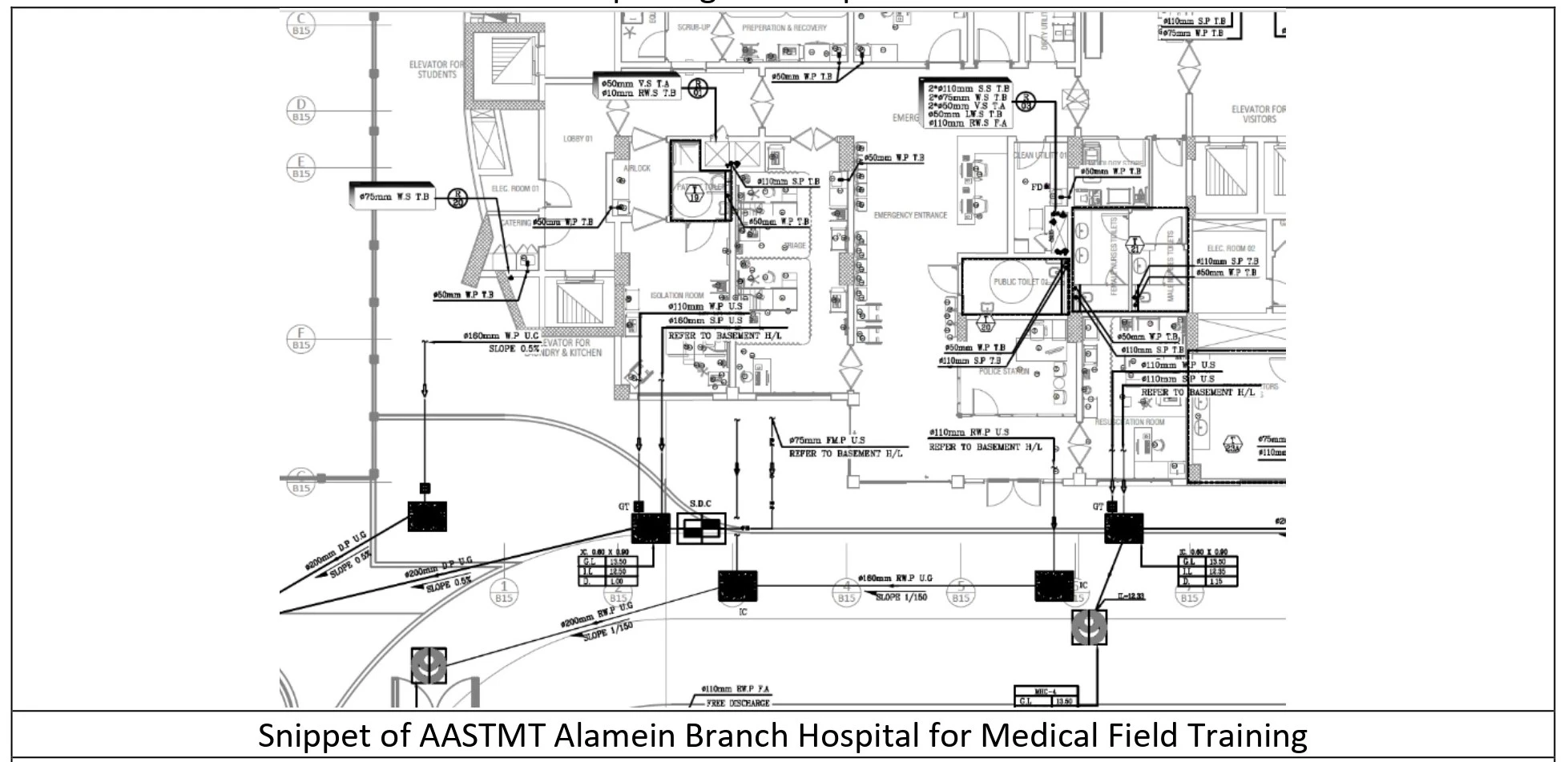
AASTMT’s drainage infrastructure demonstrates the institution’s commitment in preventing contamination, protecting groundwater, and ensuring safe wastewater management across campus facilities. The drainage system design for campus provides a clear model of how engineering systems can actively prevent pollution of water systems and ensure safe effluent conveyance and disposal through the following design strategies:
- Pollution Control by Design:
- Separate drainage networks for sewage, stormwater, and greywater prevent cross-contamination between polluted water and clean rainwater or harvesting systems.
- Slope gradients of 0.5%–1% ensure continuous water flow, preventing stagnation, bacterial buildup, and sludge formation, which are common causes of water pollution.
- Inspection chambers (IC) and manholes (MHC) allow for periodic maintenance, early detection of blockages, and prevention of overflow or surface contamination, ensuring continuous and sanitary operation.
- Integration with Wastewater Treatment and Reuse:
- The network layout is compatible with future wastewater treatment plants (WWTPs) or constructed wetlands for effluent polishing and reuse in irrigation systems, promoting sustainable water recycling.
- It supports sequencing batch or activated sludge processes for treating sanitary sewage
- Free discharge outlets are positioned for controlled release into potential treatment basins or filtration systems, reducing risks of untreated wastewater discharge into the environment.
- Protecting Groundwater and Ecosystems:
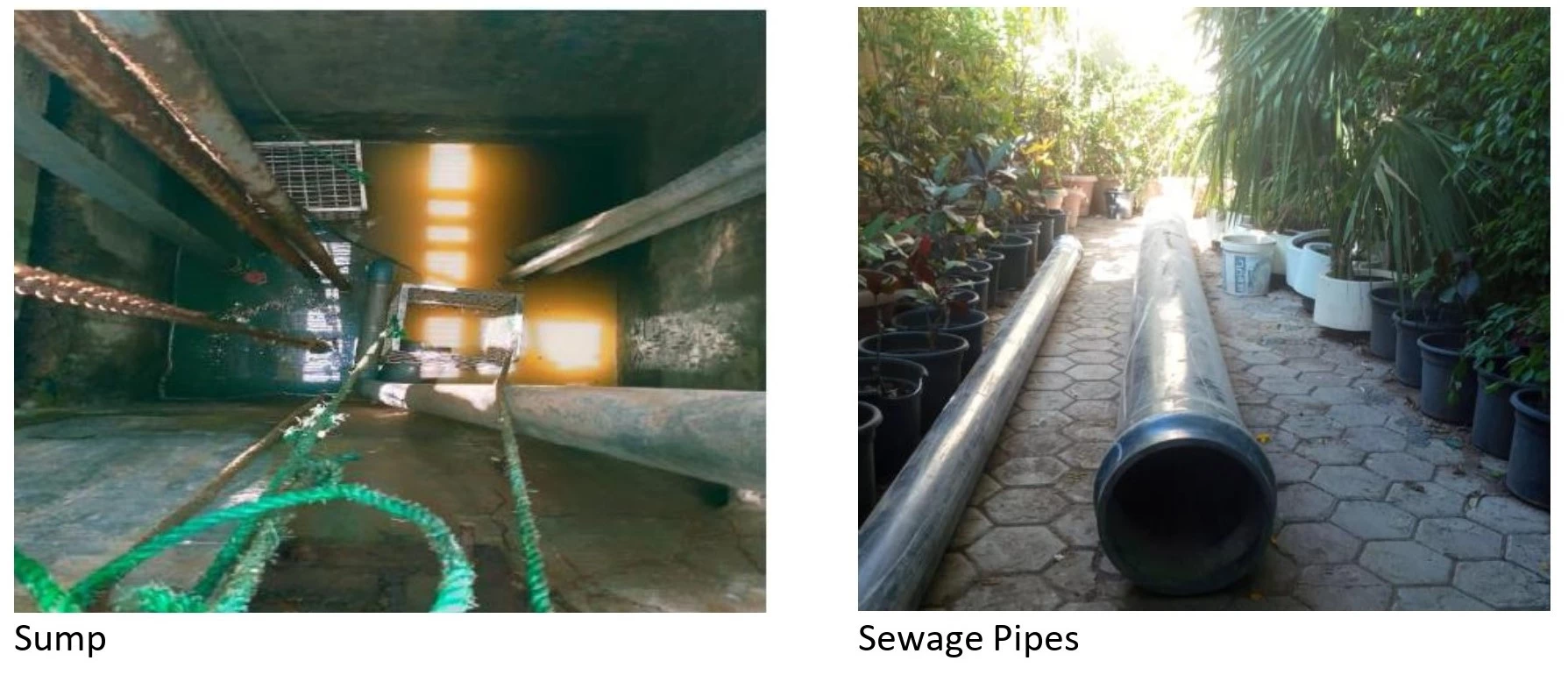
- Use of underground UPVC pipes and sealed joints prevents leakage, seepage, and groundwater contamination, maintaining the integrity of subsurface water systems.
- Sand bedding and proper trenching absorb vibrations and prevent pipe cracking, avoiding the infiltration of polluted water into soil and groundwater.
- Supporting Sanitation and Hygiene Goals:
- The drainage network ensures clean collection and conveyance of wastewater from toilets, kitchens, and medical facilities, thereby improving sanitation and public health protection.
- Rainwater runoff control measures prevent flood-related contamination and protect hospital and campus infrastructure from waterborne pathogens and polluted surface water.
- Incorporating a Framework for Safe Disposal of General Wastes through Shoots
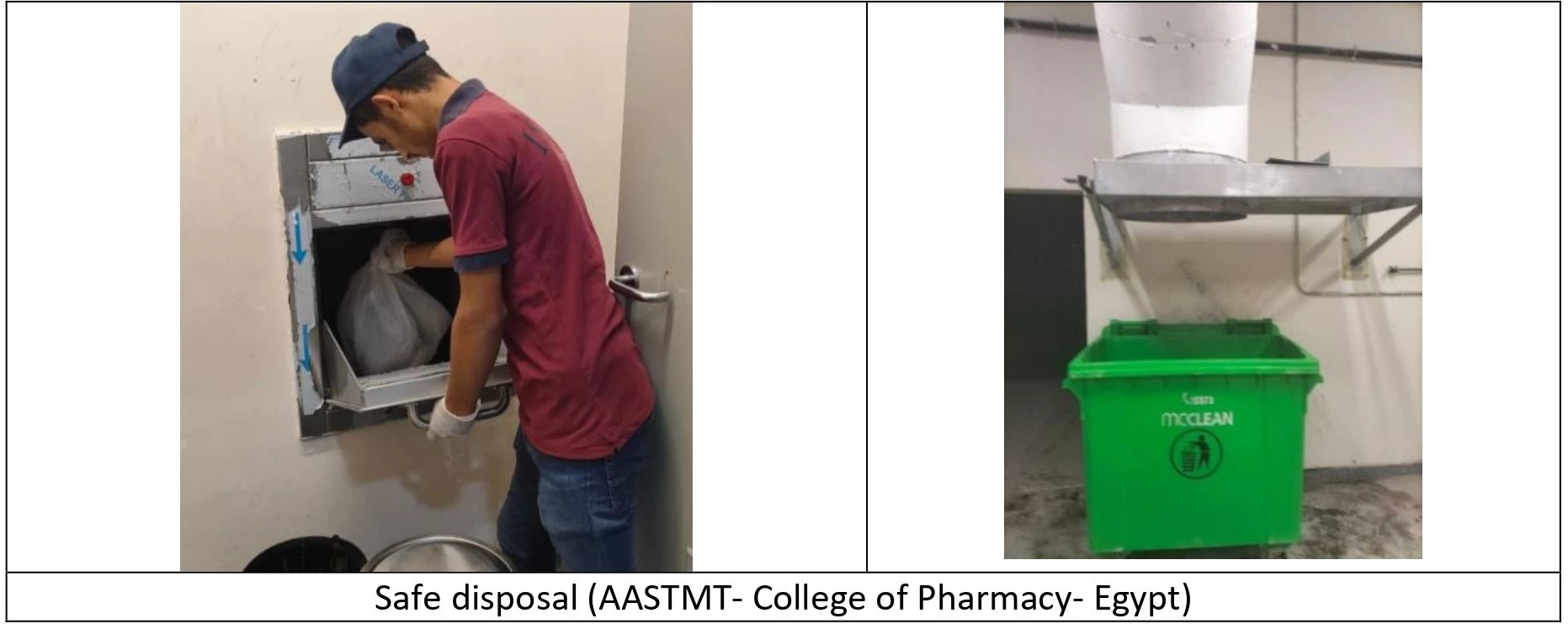
In alignment with the United Nations Sustainable Development Goals, AASTMT – Alamein Branch has launched a comprehensive sustainable waste and water management system aimed at reducing pollution and protecting vital natural resources. This initiative introduces an efficient segregation and recycling system using stainless steel and color-coded bins to ensure proper collection, disposal, and resource recovery, minimizing landfill waste and promoting circular economy practices. By preventing leachate and hazardous runoff, the system actively protects water quality, prevents contamination, and supports sustainable sanitation management, ensuring a cleaner and safer environment for the campus and surrounding communities. Through these integrated sustainability measures, AASTMT Alamein demonstrates leadership in environmental stewardship, contributing to Egypt’s Vision 2030 and serving as a model for green campus operations, where clean water, sustainable consumption, and environmental resilience are at the heart of institutional practice.
- Incorporating a Framework to Ensure the Separation of Potable Water from Wastewater
The AAST follows all guidance measures as per the Code 102 Egyptian Code for the Design and Implementation of Drinking Water and Wastewater Networks (2010) to ensure the strict separation of drinking water and wastewater such as:
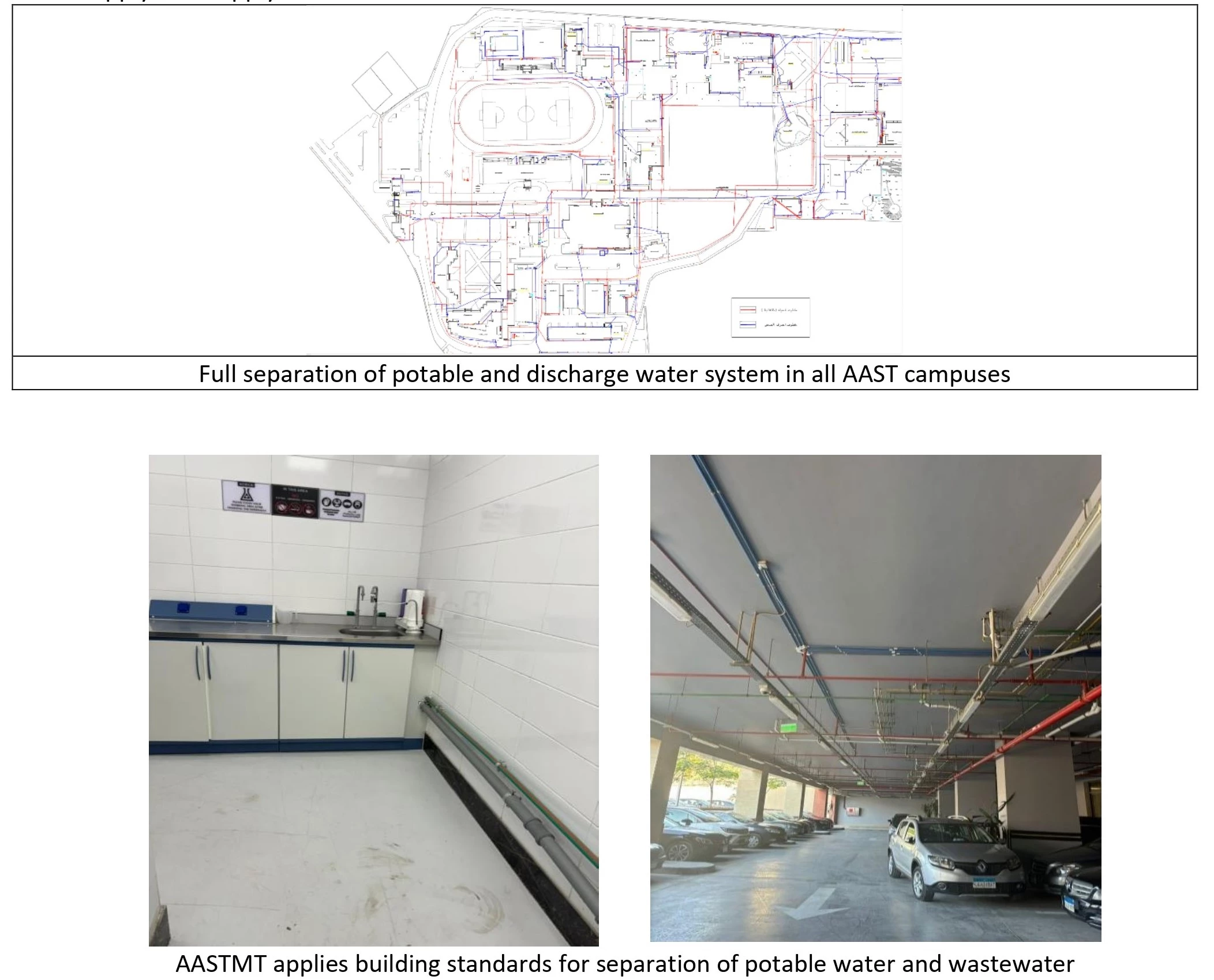
- Dual Pipeline Systems: Install separate, pipelines for drinking water and wastewater in all its facilities. This physical separation is crucial to prevent accidental cross-contamination and ensures compliance with Egyptian regulations.
- Backflow Prevention Devices: water systems are equipped with backflow prevention devices to avoid any possibility of wastewater re-entering the drinking water supply. Regular maintenance and testing of these devices are essential to ensure their reliability and functionality.
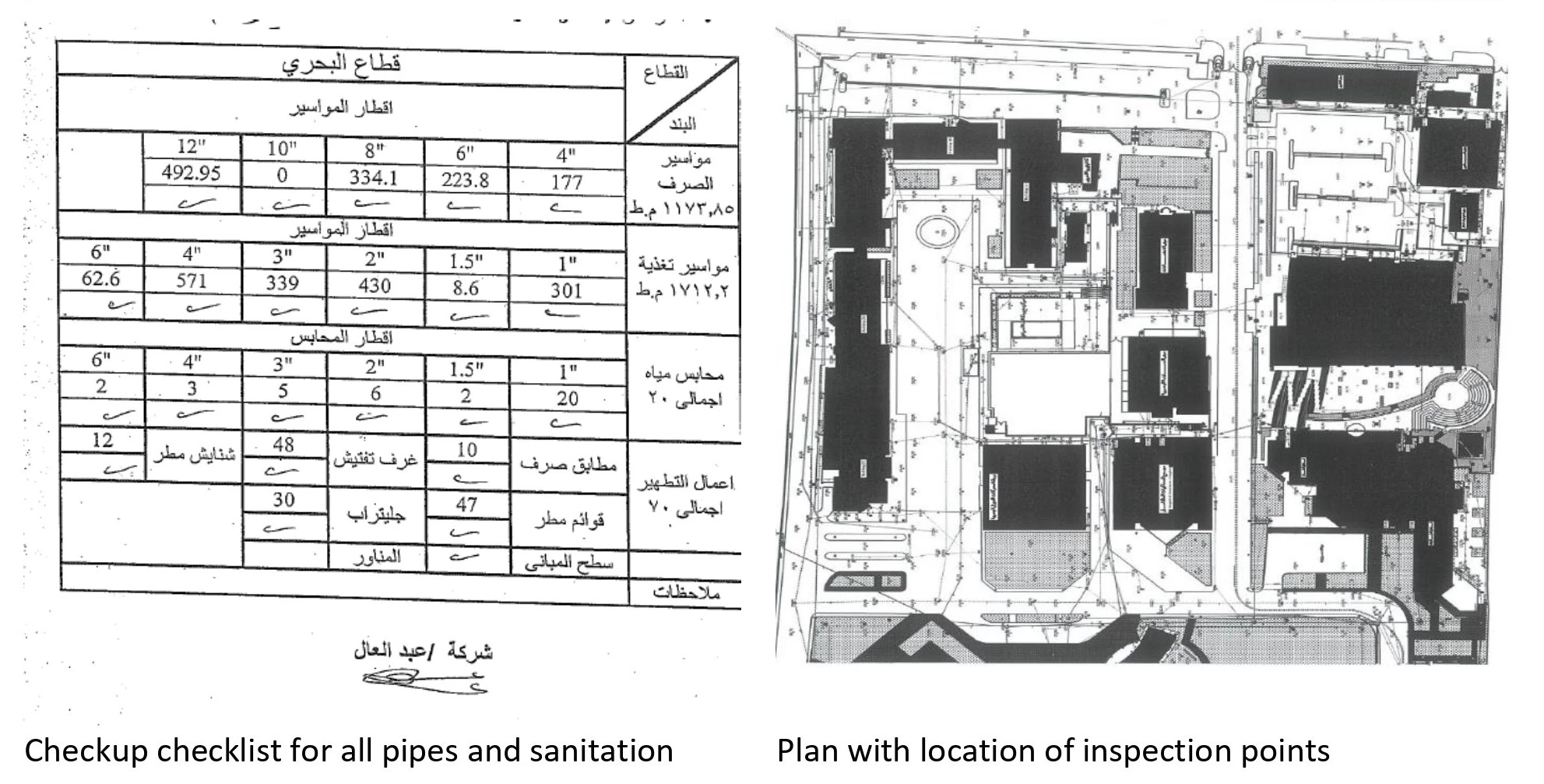
- Routine Inspections and Audits: Conduct routine inspections and audits of water infrastructure to ensure adherence to the standard. Inspections should verify the integrity of water and wastewater lines, identify potential points of contamination, and ensure the continued effectiveness of the separation measures. Regular maintenance and sanitation works is carried out for all campuses, which is carried out periodically as follows:
- Wastewater pipes
- Potable water pipes
- Water valves
- Sanitation )sewage manholes, rain gutters, building roofs, inspection rooms…etc)
Code specifications can be found at:
https://www.prof-eng.net/2019/02/Code-102-2010.html
https://www.hbrc.edu.eg/en/center-activities/codes
The plan below shows a section of one of AASTMT campuses. Red lines represent potable water while blue indicate wastewater. In addition, another picture shows two designated pipes inside AASTMT laboratories, where grey (larger diameter) used for drainage while sewage and green (smaller diameter) is for potable water or clean water supply that supply sinks and other fixtures.
- Incorporating a Framework for Safe Disposal of Wastes from Laboratories
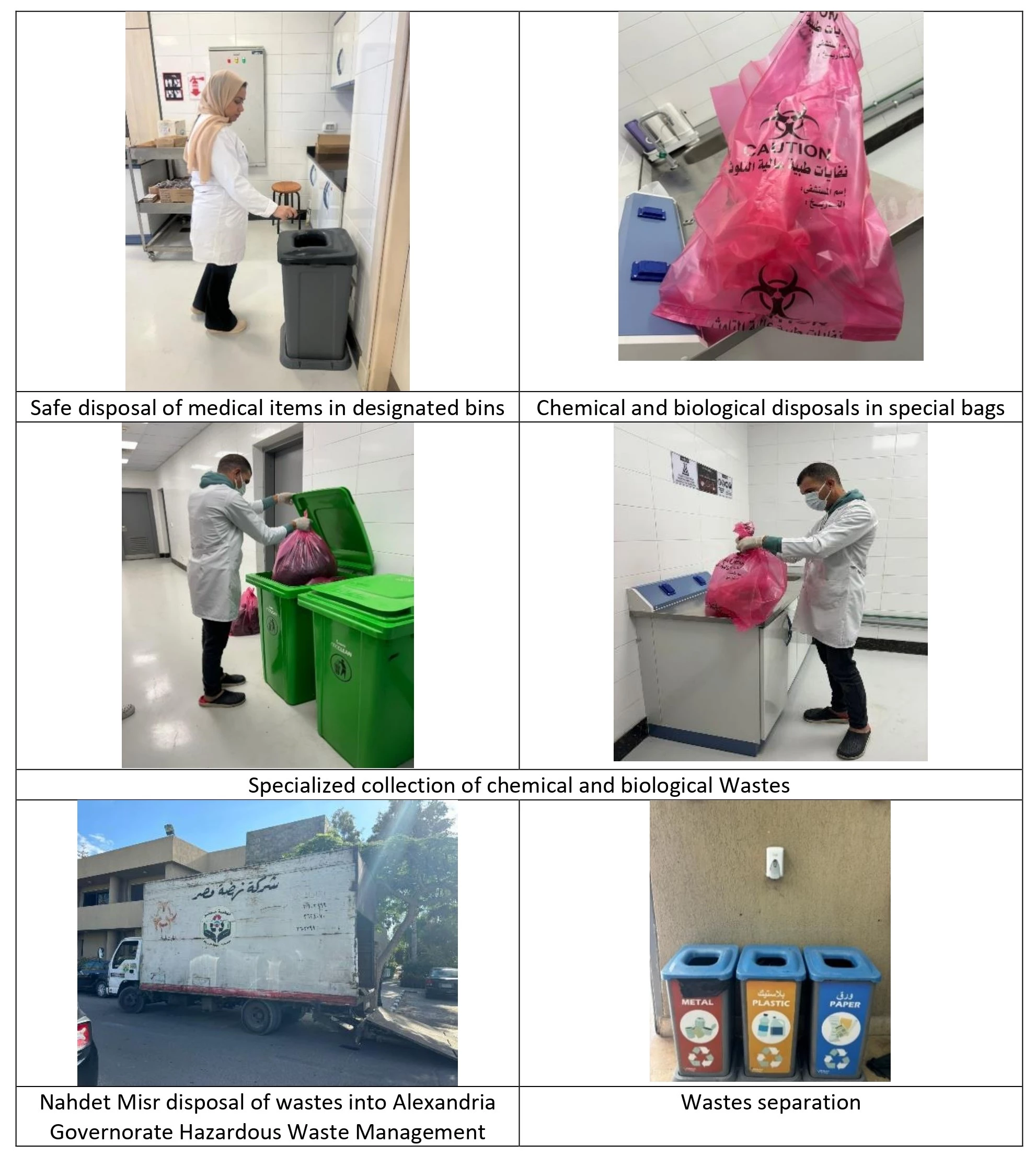
Safe disposal of laboratory waste targets the improvement of water quality by reducing pollution, through adherence to the Egyptian government waste disposal standards. Laboratory waste is collected, temporarily stored on campus, and scheduled for disposal twice a week. Certified disposal companies, adhering the Egyptian Law for disposal of hard materials number (6) for the year 2009 and number (9) for the year 1982 for governmental protection. AAST has a yearly contract with Nahdet Misr which manages the transport and disposal of these wastes into Alexandria Governorate Hazardous Waste Management (Naseria) for inorganic waste disposal. Proper handling and disposal of hazardous laboratory waste prevent harmful chemicals, biological contaminants, and pollutants from entering water sources. This is achieved by enforcing strict standards for containment, storage, transportation, and treatment of lab waste, ensuring it is neutralized or safely disposed of in certified facilities. In AASTMT separation of biological and chemical waste takes place inside AAST labs according to regulations set by Nahdet Misr. The company takes care of disposal of these substances at designated landfills at Naseria.
- Incorporating a Framework for Managing Wastewater Discharge across Campus Facilities
Since the main water coming to all campuses arrives from the district governmental water company, the water gets filtered before entering the campus by district facilities. AASTMT relies on a water storage system in tanks specifically designated for drinking purposes, entirely separate from the sewage system. This strict separation ensures that the water reserved for drinking remains completely isolated from sewage water, upholding a stringent standard to assure the absolute safety and purity of the institution's potable water supply. Moreover, all clean water and wastewater systems in the buildings operate independently from each other. Wastewater systems are controlled and monitored via a designated control and monitoring system with redundant system operation, such that in the event of a failure, one panel will maintain functionality to prevent overflow or other discharge issues. The full function and operation of the wastewater discharge management can be found on:
https://aast.edu/en/sdg/goals.php?unit_item=1215&page_id=121500008
In addition, AAST employs Operational Guidelines and Maintenance Standards as follows:
- Routine Inspections: Conduct bi-annual inspections of sump, pump room, and valve configurations to ensure optimal performance and compliance with safety and environmental standards.
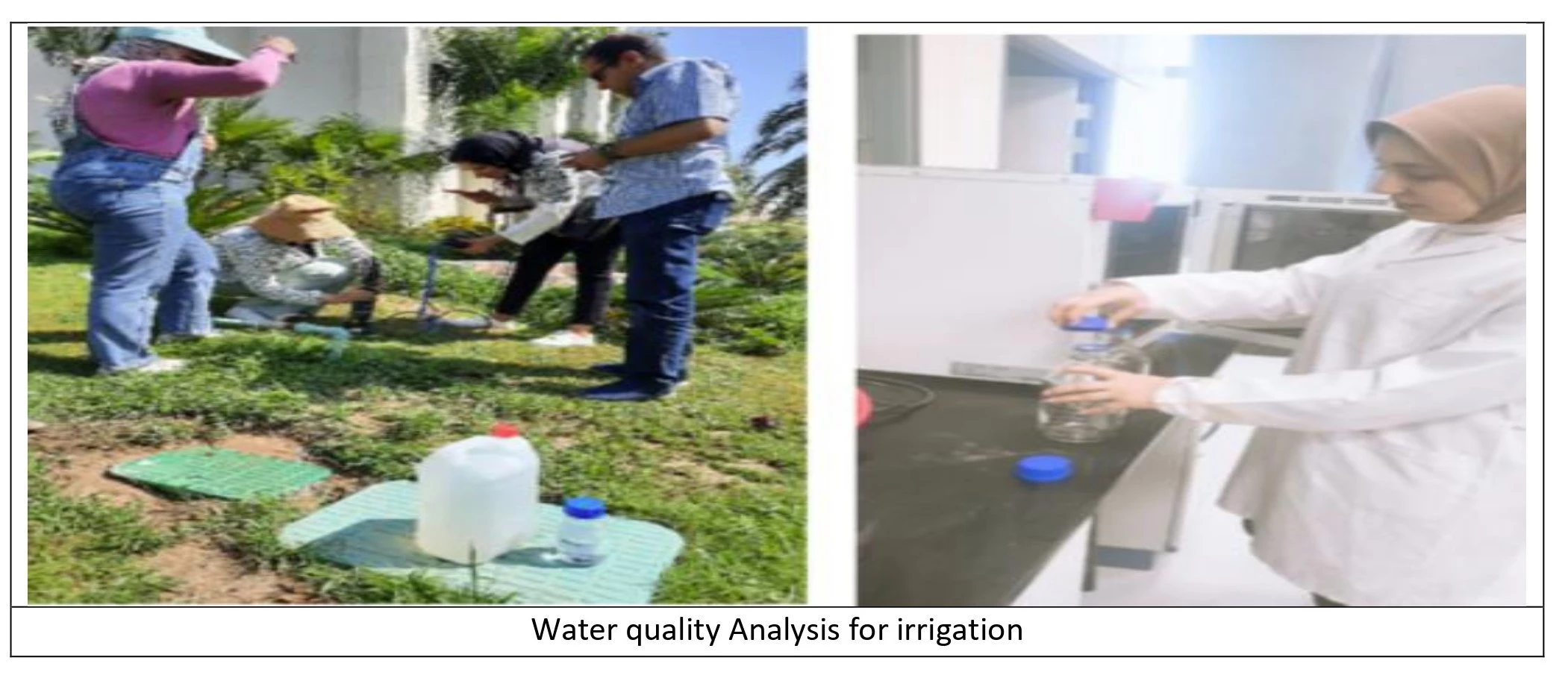
- Discharge Quality Monitoring: Regular testing of discharge water for pH, turbidity, and pollutant levels to ensure alignment with environmental regulations.
- Seasonal Adjustments: Adjust discharge operations based on seasonal rainfall patterns, aiming to prevent overflow and maintain a balanced ecosystem impact.
- Emergency Protocols: the design of two electrical control panels manages pump operations and discharge flow, ensuring optimized, safe operations.
- Incorporating Waste Management System
AASTMT has implemented a comprehensive Recycling Policy to reduce its environmental impact and limit pollutant discharge into water sources.
The AAST addresses issues of potential water pollution by:
- Preventing hazardous/toxic chemical leaks into the water system through stringent waste disposal practices, guided by the Environmental Standard ISO-14001, which provides a structured approach to managing environmental responsibilities.
- Conducting regular preventive maintenance on sewer systems to avoid blockages and leaks into water sources.
- Implementing reliable piping systems across all AAST campuses to prevent any leakage.
In 2022, the AASTMT continued safe disposal practices for toxic waste through Nahdet Misr for Modern Environmental Services, ensuring responsible collection, transportation, and treatment of medical and toxic waste to protect water supplies (Contracts and responsibilities can be found at https://aast.edu/en/sdg/goals.php?unit_item=1203&page_id=120300017 under “Waste Disposal Nahdet Masr Contract”. Laboratory waste is carefully categorized, with licensed contractors managing on-site packaging and handling based on waste type, ensuring compliance with necessary treatment methods.
https://aast.edu/en/sdg/goals.php?unit_item=1212&page_id=121200026