



 UI-Green Metric
[4.5] Consumption of treated water (WR.5)
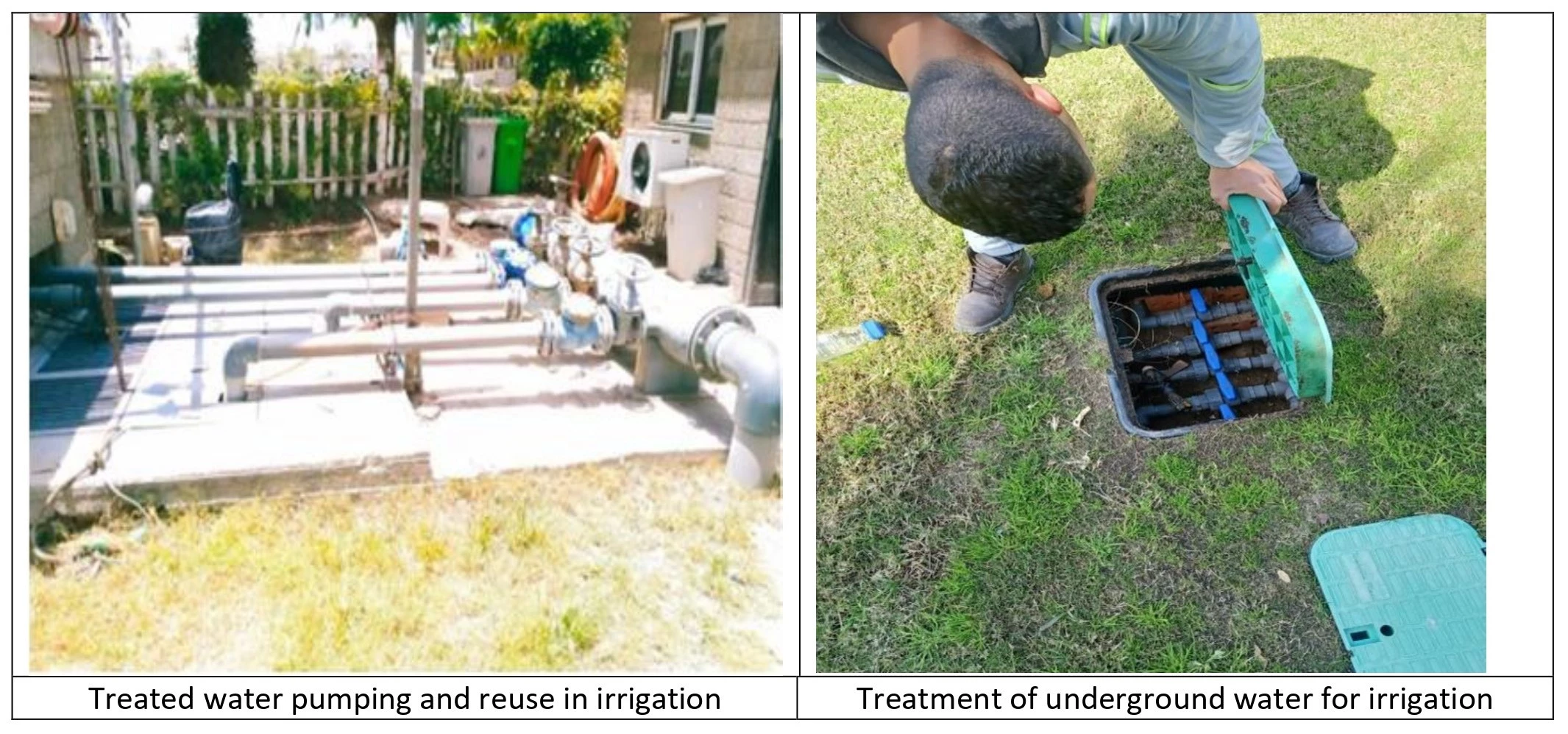
Description:
The AASTMT integrates treated and reclaimed water into its campus operations to promote sustainable water use and support. Through advanced treatment systems, groundwater utilization, and efficient irrigation practices, the Academy ensures responsible resource management, pollution prevention, and long-term water sustainability. This is through:
- Treated Water Utilization
- Wastewater Infrastructure
- Abu Qir Campus Pumping and Control Station
- Water Treatment and Innovation
- Groundwater and Non-Potable Sources
The percentage of treated water (extracted from underground + rain harvested) = 27.8%
- Integration of Campus Infrastructure in Wastewater Treatment
AASTMT reinforces its wastewater management system through a comprehensive network of water supply, drainage, and irrigation infrastructure, all of which contribute to the overall wastewater treatment and reuse cycle in support of SDG 6. The following layouts from the AASTMT demonstrate how the campuses are designed to support safe wastewater handling, pollution prevention, and resource recovery:
- The drainage network serves as the first stage of wastewater management, collecting and conveying effluents safely to public or campus treatment facilities.
- Separate lines for sewage, stormwater, and greywater prevent cross-contamination between clean and polluted water streams.
- Inspection chambers and manholes allow for maintenance and blockage prevention, ensuring uninterrupted and sanitary wastewater flow.
- The design includes controlled slopes (0.5–1%) to prevent stagnation, sludge formation, or overflow, all of which reduce the risk of environmental pollution.
- The network layout is compatible with future constructed wetlands or on-site treatment units, enhancing wastewater treatment capacity and reuse potential.
- The irrigation system reflects AASTMT’s readiness to integrate treated wastewater reuse in landscape irrigation, reducing freshwater demand and promoting resource efficiency.
- The use of drip tubing, pressure-compensating bubblers, and sealed distribution piping ensures that treated effluents can be safely reused for non-potable purposes.
- The network supports deficit irrigation, water-saving practices, and sustainable landscape management.
- Water Supply System– Safe Distribution and Separation
- The water supply layout complements wastewater treatment by maintaining strict separation between potable and wastewater networks.
- Dual pipeline systems prevent backflow or cross-contamination, ensuring drinking water safety and sanitary compliance under Egyptian Code 102 (2010).
- Valves, inspection points, and backflow prevention devices provide control and monitoring across the water distribution system, safeguarding public health and water quality.
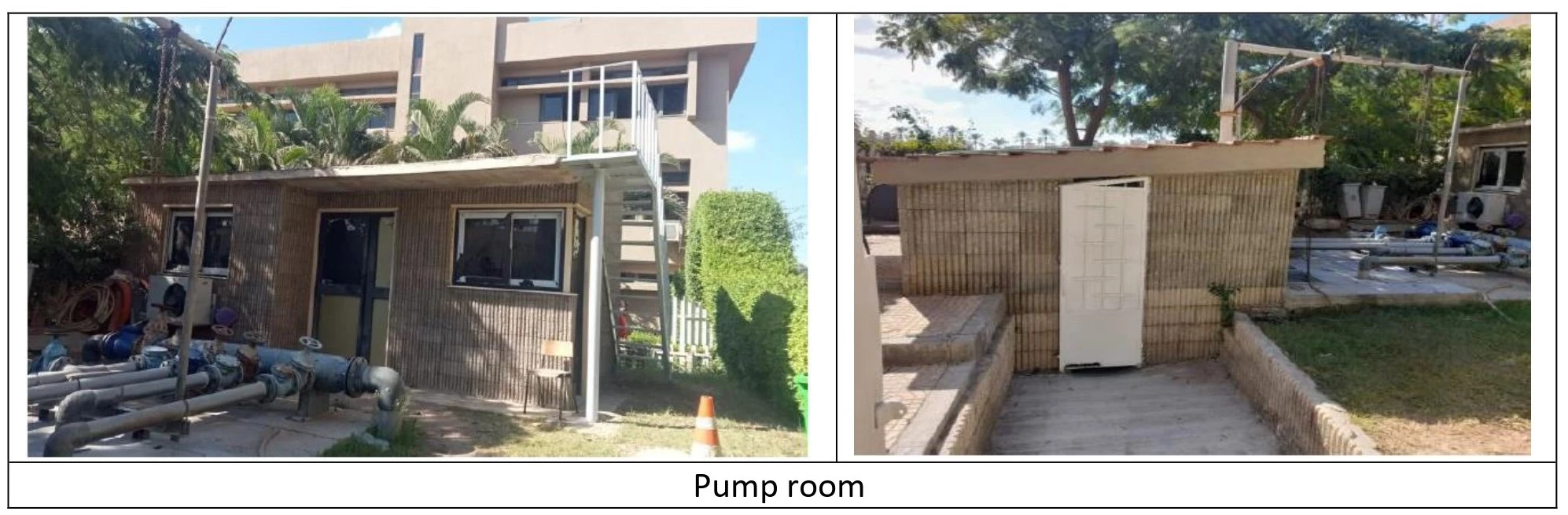
- Comprehensive Wastewater Collection, Treatment, and Reuse Framework
The University's wastewater treatment process involves directing all wastewater into the sewer system, where it undergoes further treatment at government-designed public sewage facilities. This process ensures that the treated water meets all discharge standards for watercourses, specifically in compliance with the Egyptian Standard of Ministry of Housing, Utilities, and Urban Communities, No. 44 of the Year 2000, Amending the Executive Regulations for Law No. 93 of the Year 1962 Concerning the Disposal of Wastewater. Egyptian Standard of Ministry of Housing, Utilities, and Urban Communities Concerning the Disposal of Wastewater. The standard specifies general design data for wastewater treatment plants.
https://leap.unep.org/en/countries/eg/national-legislation/executive-regulation-law-no93-1962-amended-decree-no44-2000
Before discharging onto the public sewage systems, wastewater is collected in a collection station at the main entrance of the AAST Abu Kir campus which is equipped with a sump to collect wastewater from the surrounding area. This area includes buildings for the College of Engineering, College of Computing, student housing, hotels, administration buildings, and the main cafeteria. The wastewater drainage network extends between these buildings and leads to a sump with a storage capacity of approximately 12 cubic meters. The sump dimensions are about 2x2 inches in diameter and can hold around 12 cubic meters. The wastewater discharge system is equipped
with flowmeters for monitoring and recording wastewater discharge monthly. Components of the wastewater station include:
- Pump Room:
- Two submersible pumps, each with a capacity of 10 horsepower, delivering a flow rate of about 60–70 cubic meters per hour.
- Two horizontal dry self-priming pumps with Siemens motors, rated at 15 horsepower, from Turkish manufacturer MAS.
- Battery with Five 12-Inch Outlets:
- Four 4-inch valves.
- Four 4-inch check valves.
- One 6-inch valve.
- One 6-inch check valve.
- Control Room:
- Two electrical control panels.
- The sewage line starts with a gradually tapered discharge pipe with a diameter of 8 inches and connects to a 12-inch main line, which leads outside the campus to the public sewage system.
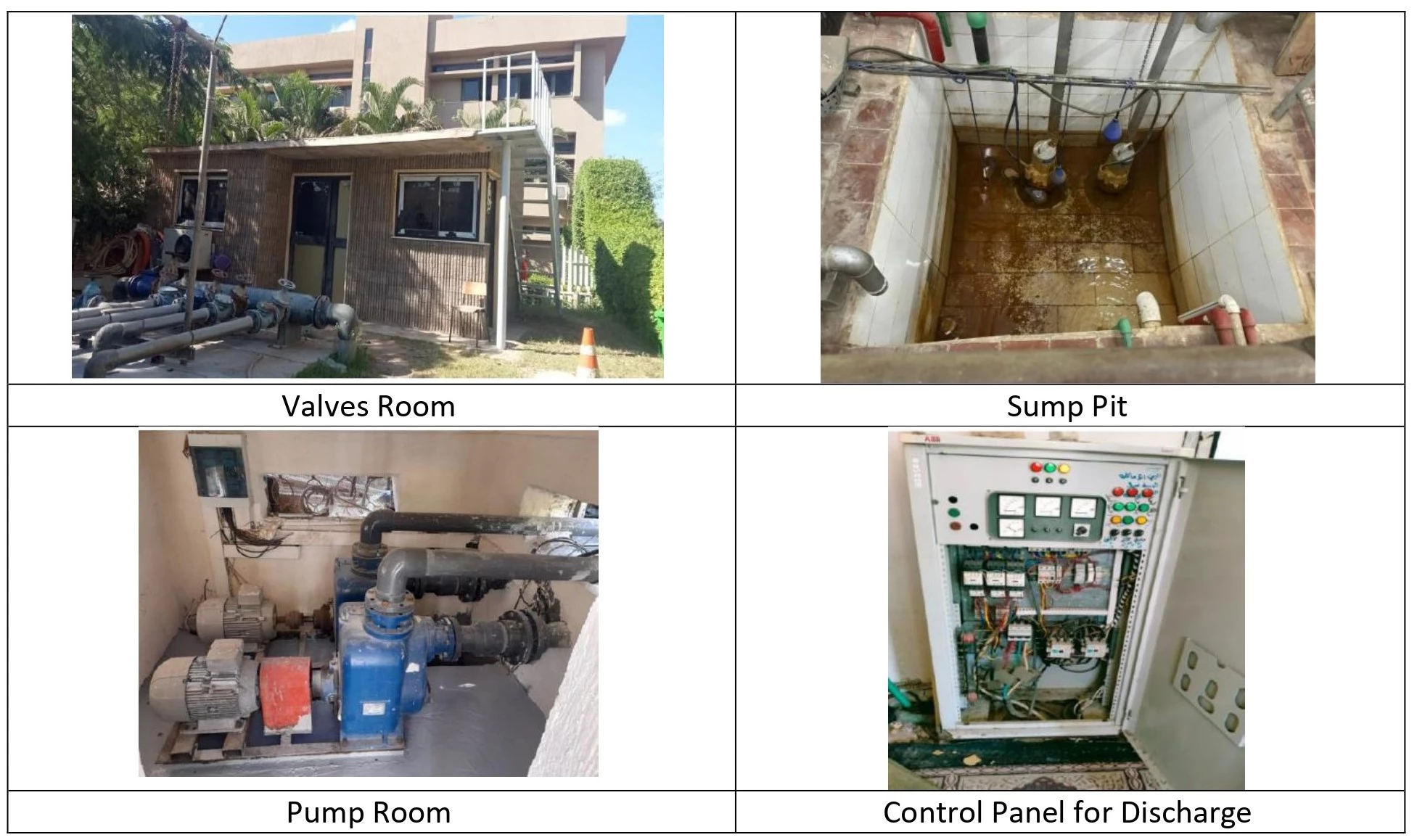
An example, the Western Treatment Plant in the city of Sixth of October is one of the sewage treatment stations serving the campus of Smart Village in Cairo.
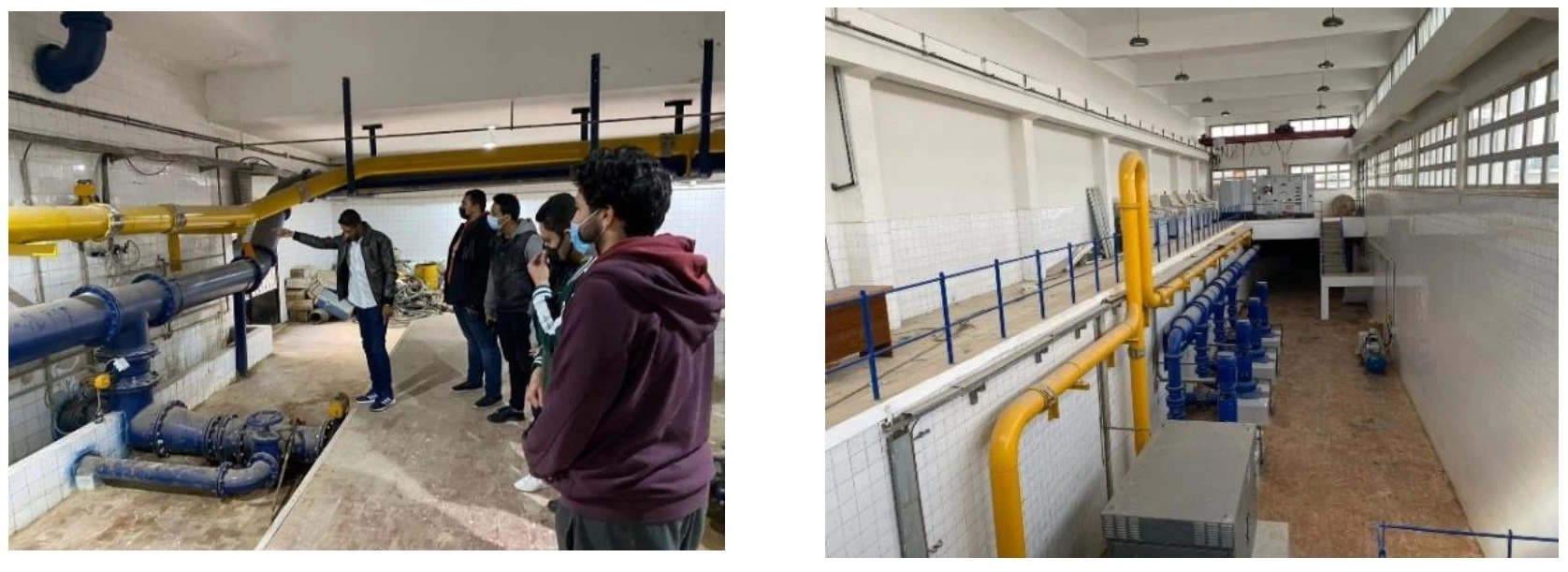
https://aast.edu/en/sdg/goals.php?unit_item=1215&page_id=121500008
- Incorporating Monitoring, Assessment, and Innovative Treatment Technology to Enhance Groundwater Quality for Irrigation
The AASTMT strives for enhancing water quality through seasonal water sampling and subsequent improvements. The main objective of the project is:
- Evaluate the groundwater quality in 13 selected borehole wells at Abu Qir campus, Alexandria, specifically for its suitability for irrigation purposes.
- Investigate the influence of various physical, chemical, and climatic factors on groundwater quality.
- Determine the spatial and temporal variations in the physical, chemical, and microbiological parameters of groundwater in the study area, correlating them with environmental and climatic factors.
- Explore advanced treatment options to improve groundwater quality for irrigation, utilizing new technologies and materials.
- Design an innovative water treatment unit featuring an Activated Carbon (AC) biofilm system supported by silver Nano particles (Ag NPs) as a continuous treatment system. The goal is to ensure and maintain high water quality suitable for irrigation purposes.
The quality of water for irrigation is determined by the concentration and composition of dissolved elements. Assessing salinity or alkali conditions in irrigated regions requires careful evaluation of water quality. Key factors influencing the quality of irrigated water include total soluble salts (TDS), sodium adsorption ratio (SAR), chemical concentrations of potentially toxic elements like Na+ and Cl-, and the presence of residual sodium carbonate or residual alkalinity (RSC or RA). Post-treatment results indicate a significant improvement in water quality, making it suitable for irrigation purposes.