



 UI-Green Metric
[4.4] Water Efficient Appliances Usage (e.g. hand washing taps, toilet flush, etc.)
Description:
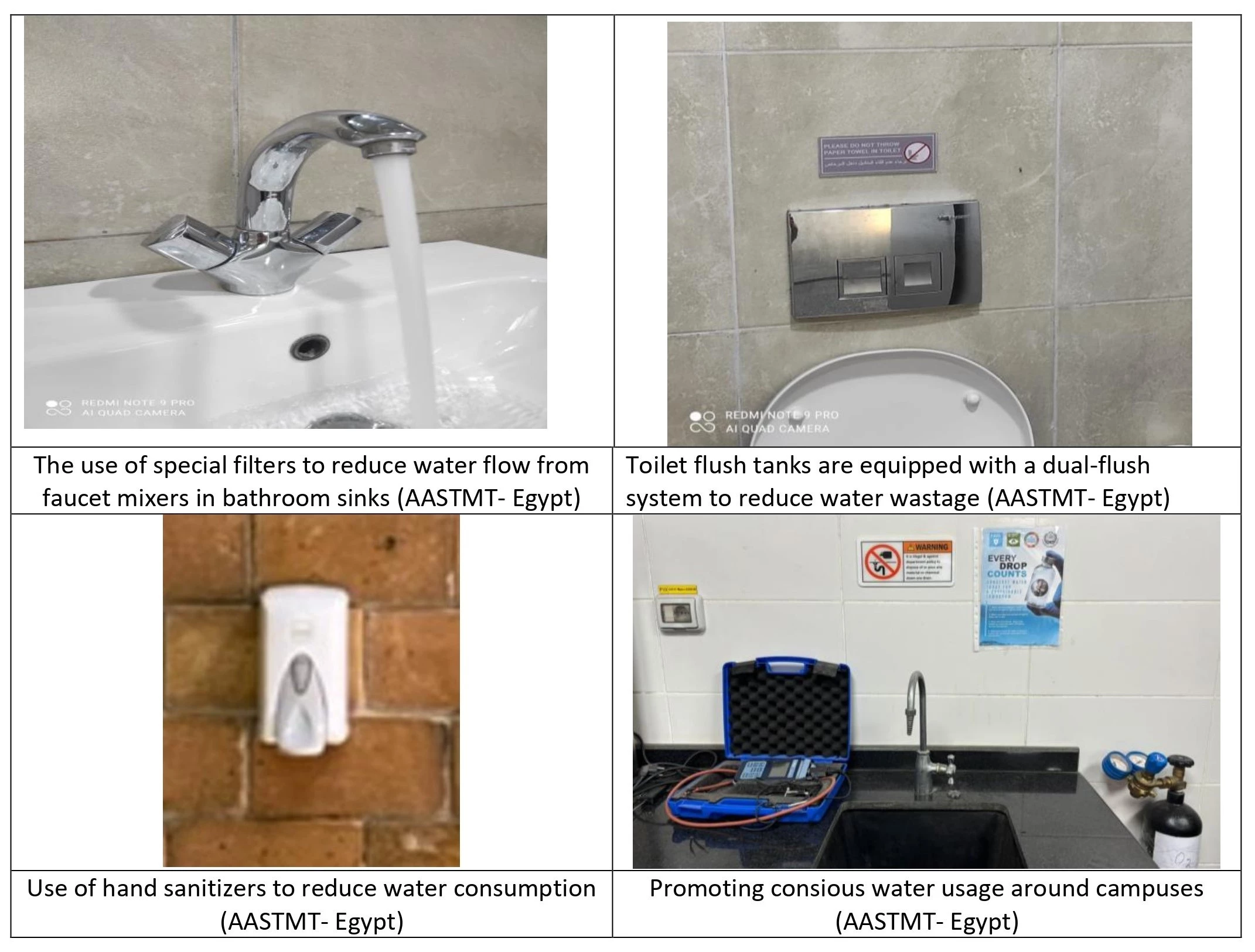
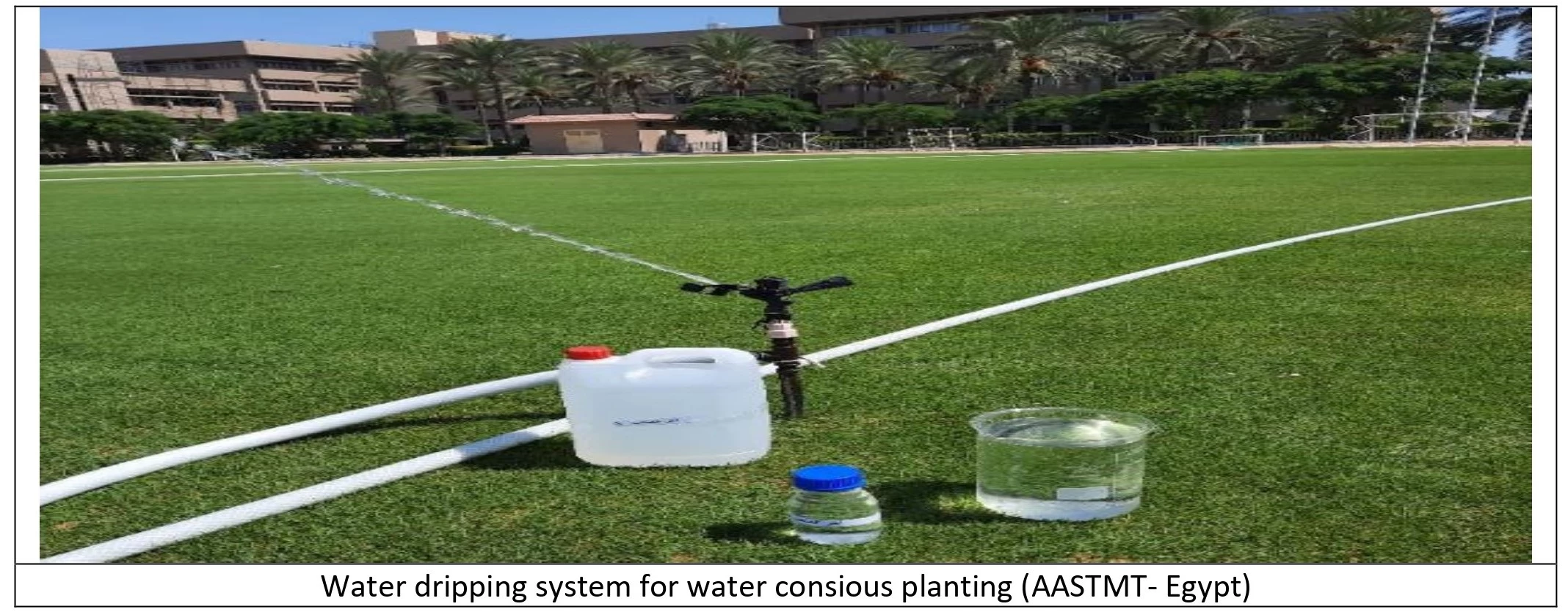
AASTMT has implemented comprehensive water conservation measures across its campuses reducing overall water consumption. Underground water is utilized for irrigation and fire safety, with part of it treated via a solar-powered nanofiltration system for drinking and agricultural use. The institution also adheres to global standards, replacing outdated fixtures with water-saving models, promptly addressing leaks, and using efficient faucets and dual-flush toilets. Additional initiatives include rainwater harvesting, condensate collection for non-potable uses, and hand sanitizer options to further minimize water usage.
- Water Conservation Measures:
Some of the examples of water conservation measures in AASTMT include, low flow of urinal flushing, low flow of toilet flushing, low flow taps and showers.
|
Appliance |
Total Number |
Total number water Efficient appliances |
Percentage |
|
Urinals |
185 |
110 |
59.5% |
|
Showers |
460 |
350 |
76.1% |
|
Toilets |
500 |
430 |
84.3% |
|
Taps |
2050 |
1620 |
79% |
|
|
|
Average Percentage |
74.7% |
- Adopting global building standards:
AASTMT is required to adhere to mandatory building standards established by the Egyptian government as part of the licensing process. Failure to comply with these regulations may lead to penalties, legal action, or the rejection of building permit applications. These standards encompass key measures related to water management, sanitation, and sustainable resources management, ensuring compliance with national guidelines.
- The Egyptian Code of Sanitary Installations in Buildings: This code provides guidelines for the design, installation, and maintenance of plumbing systems within buildings. This code ensures the safe and efficient distribution of potable water and the proper disposal of wastewater, thereby maintaining hygiene standards and protecting public health.
- Egyptian regulations for Waste Management (Law No. 202 of 2020): focuses on improving water quality by reducing pollution, minimizing the release of hazardous chemicals, and ensuring safe waste disposal and management.
- Egyptian Standard of Ministry of Housing, Utilities, and Urban Communities Concerning Liquid Waste Disposal (Resolution No. 44 of 2000): focuses on improving water quality by reducing pollution, eliminating hazardous dumping, and minimizing the release of harmful chemicals.
- GAHAR compliance: The General Authority for Healthcare Accreditation and Regulation (GAHAR) ensures that healthcare facilities in Egypt meet national standards for quality, safety, and patient-centered care. Its role aligns with the mission of AAST Alamein Hospital by guiding the hospital toward excellence in clinical performance, infection control, and service quality to achieve sustainable accreditation and patient trust.
Besides, the plumbing system design at AASTMT follows best practices to guarantee safe distribution of potable water, effective wastewater disposal, and environmental protection against contamination. Applicable Codes:
- International Plumbing Code (IPC): Governs the design and installation of plumbing systems, ensuring safe and sanitary water supply and drainage practices.
- Uniform Plumbing Code (UPC): Provides design standards that safeguard public health through sustainable plumbing design and water conservation.
Besides those standards, AASTMT applies general design standards for its buildings and facilities to minimize water usage such as:
- In 2023-2024, adequate water saving faucets for (lavatories - Kitchens and all other Sinks in the project) have been installed with periodic maintenance to all fixtures, pumps and valves to avoid any leakage from it.
- Wastewater Neutralization Pits: Chemical waste from laboratories is collected and neutralized before discharge, preventing hazardous pollutants from contaminating the municipal network.
- Dual Water Tanks: Double-compartment tanks ensure uninterrupted safe water supply and controlled water storage for both domestic and firefighting use, supporting water resilience.
- Condensate Recovery Systems: Air-conditioning condensate is collected and reused, promoting circular water management practices.
- Hot Water Optimization: Energy-efficient solar and boiler systems provide controlled heating and circulation with balancing valves for minimal waste.
- Sustainable Drainage Design: UPVC and sealed drainage systems prevent leakage and infiltration, protecting the soil and groundwater from contamination.
- Installation of Smart Flush and Flow Control Systems: Integration of modern fittings such as Ideal Standard ProSys dual-flush frames with SmartValve technology ensures controlled refilling and reduces unnecessary water waste.
- In 2022-2023, new meters were added to monitor underground extracted water
- The toilet flush tanks are equipped with a dual-flush system to regulate the amount of water used, reducing excessive water consumption and promoting water saving.
- Conducting regular maintenance and replacing damaged water taps and connections.
- Every campus is furnished with faucets and toilet flushing systems.
- All water closets, drains, and worn-out feeders have been replaced in 2021-2020 with certified, standardized fixtures. Additionally, all faucets have been equipped with water-saving aerators and water-efficient flush tanks.
- Ensuring the availability of spare parts for immediate repairs, contributing to water conservation efforts.
- Consistently monitoring all toilets and water supply points. In the event of repairs or replacements, adherence to water-saving labels is mandatory for the equipment.
- Promptly responding to emergency reports of water leaks and taking necessary measures until repairs are completed.
- Employing efficient lavatory faucets that limit water flow to a maximum of 6 LPM, reducing sink water usage by up to 30% compared to standard faucets without compromising performance.
- Installing effective lavatory faucets that account for 20% of indoor water consumption.
- Measures include installing aerators to conserve water in toilets and placing informative signs across the campus promoting conscious water usage.
- Incorporating efficient water closets, all dual-flush models, using less than 6 LPF, resulting in substantial water savings.
- Recognizing that water closet flush tanks contribute to 25% of indoor water consumption.
- Additionally, the institution opts for hand sanitizers as an alternative to water in certain scenarios, further contributing to their efforts to minimize water usage.
- Implement suitable rainwater harvesting and air conditioning condensate collection systems, aimed at gathering and reusing water for WC flushing instead of relying on drinkable water sources.
- Promoting water-conscious usage on social media and websites with active engagement of students, faculty, and staff.
- Monitoring Consumption: Expanding the installation of meters to measure water and energy consumption allows AASTMT to track building performance.
- Groundwater Utilization: Deep wells are drilled to use groundwater for irrigating large green areas and filling firefighting water reservoirs.
- Water Conservation Technology: New buildings feature leak detection systems, allowing quick identification and repair of leaks to conserve water.
- Reducing Water Usage for Vehicle Washing: AASTMT has reduced the frequency of washing its on- and off-campus vehicles, minimizing water consumption.
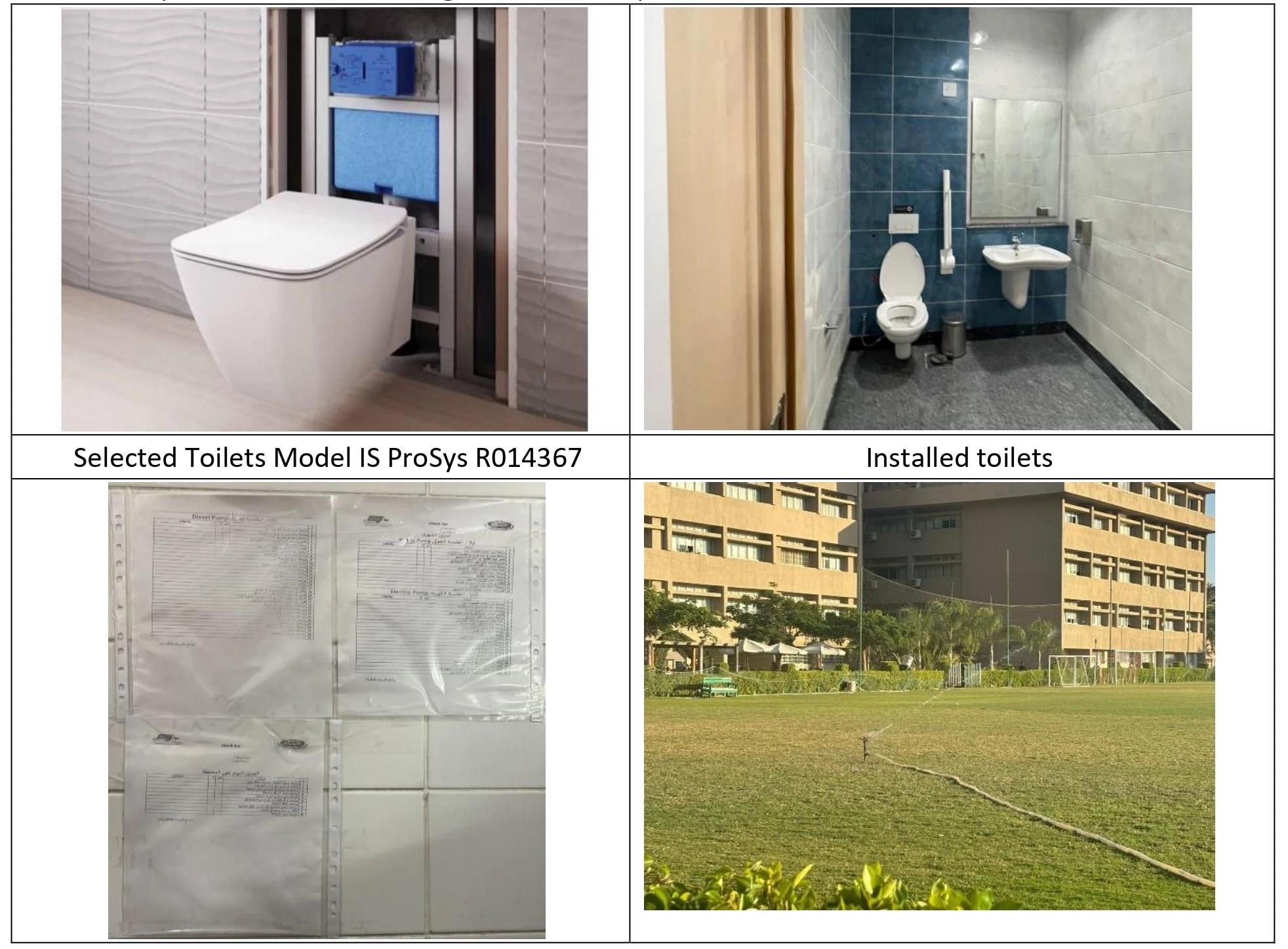
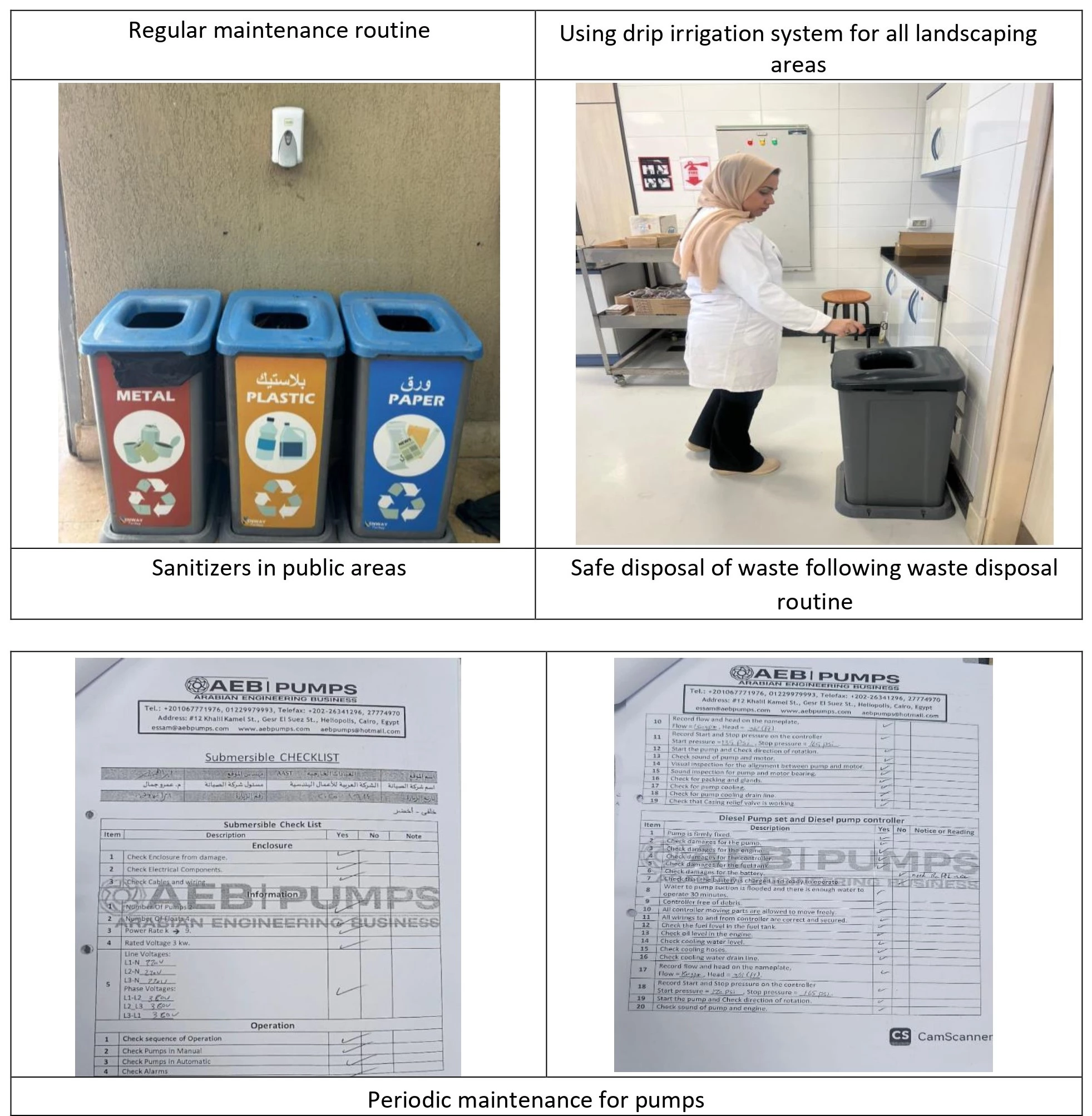
Campus upgrades and following building standards
https://www.aast.edu/en/news/news-details.php?language=1&unit_id=1&news_id=486101517&event_type_id=1
https://aast.edu/en/sdg/goals.php?unit_item=1206&page_id=120600043