1.College of Fisheries and Aquaculture Technology students' participation in the recycling workshop and creating different models from plastic and rubber waste, in line with the college's vision of the importance of environmental preservation through waste recycling.
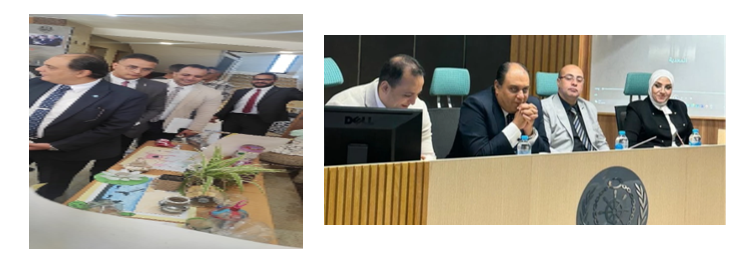
College of Fisheries and Aquaculture Technology organized a workshop titled "Reducing the Harmful Effects of Marine Pollution: Towards Clean Blue Seas." The college was honored to host Dr. Sameh Riyad Abdullah, the Undersecretary of the Ministry of Environment in Alexandria and Head of the Environmental Affairs Agency for the West Delta region, as the keynote speaker at the workshop.
College of Fisheries and Aquaculture Technology-Alexandria | AASTMT
2.The college regularly represents Egypt in working groups on stock assessment (WGSA) for demersal species (WGSAD) and small-pelagic species (WGSASP), organized by the General Fisheries Commission for the Mediterranean (GFCM), Food and Agriculture Organization of the United Nations.
The recommendations from the WGSA are being submitted to the Scientific Advisory Committee on Fisheries (SAC), which gathers and evaluates information on catches, fishing efforts, fleet capacity, and other data relevant to the conservation and management of fisheries. Then, the SAC assesses the status and trends of relevant populations of living marine resources, ecosystems, and fisheries-related human components, using appropriate indicators in relation to agreed-upon biological and/or management reference points. Additionally, an independent advice provision from the SAC aims to facilitate the adoption of recommendations regarding the sustainable management of fisheries and ecosystems at regional and subregional levels, including related biological, environmental, social, and economic aspects, the ecosystem approach to fisheries, the impact of IUU fishing, and the assessment of biological and ecological implications under different management scenarios.
3.Initiative: Outreach workshop with Abu-Qir Bay Fishermen on antifouling paints, environmental risks, and alternative solutions.
Biofouling refers to the buildup of bacteria, algae, and sessile invertebrates on any submerged surface. To fight fouling, ships need regular cleaning and maintenance. Protecting boat hulls from biofouling is vital not only to prevent material corrosion and damage but also to maintain proper maneuverability, which ensures safety at sea. Antifouling paints are typically used to address this problem, often containing toxic substances like copper that can harm marine life. Increasing fishermen's awareness of this issue and promoting the use of eco-friendly antifouling paints is crucial both environmentally and economically. In October 2023, students from the College of Fisheries and Aquaculture Technology launched an innovative initiative to promote environmentally friendly anti-fouling paint as an alternative to traditional paints used by fishermen. This effort supports the college’s goal to improve environmental sustainability and reduce the negative impacts of chemicals on marine ecosystems. Through this project, students seek to educate fishermen about the advantages of eco-friendly paint in protecting their boats and boosting operational efficiency, helping strike a balance between traditional fishing practices and marine resource conservation.
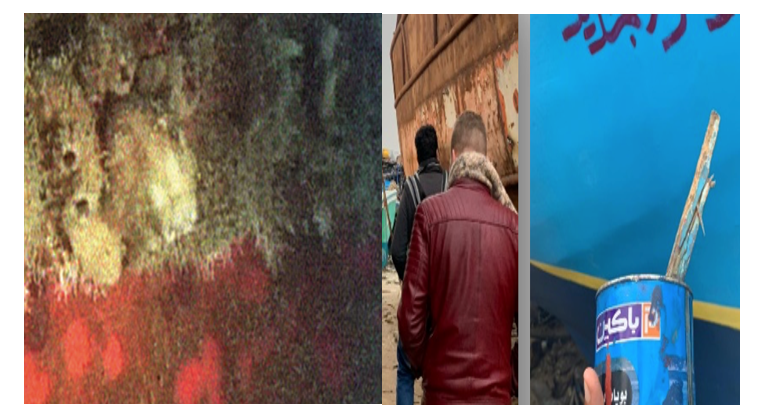
Initiative: Antifouling paints: Environmental hazards and alternatives
4.Scientific Initiative Output (the First International Conference of the Institute of Genetic Engineering Research "Challenges and New Prospects in Biotechnology Sciences" at the City of Scientific Research and Technological Applications)
Students at the College of Fisheries and Aquaculture Technology participated in 2023 in the First International Conference of the Institute of Genetic Engineering Research "Challenges and New Prospects in Biotechnology Sciences" at the City of Scientific Research and Technological Applications. It was recognized as the best poster presented at the conference.
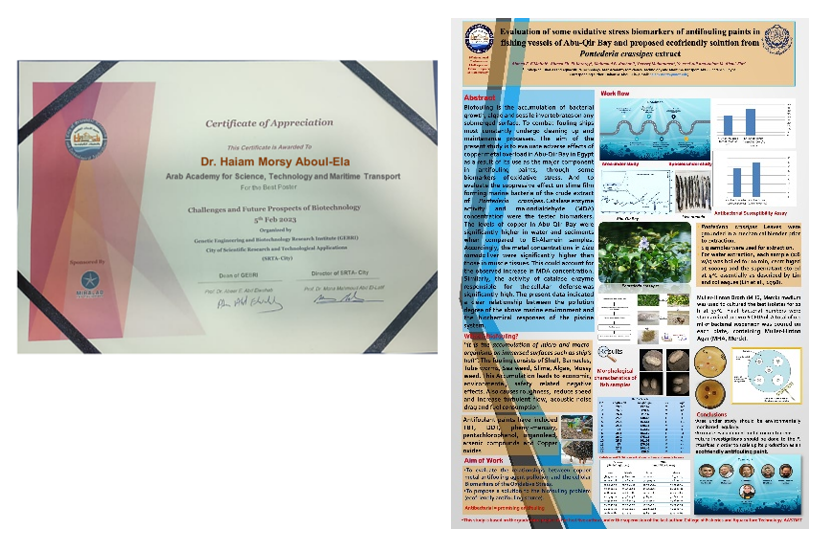
College of Fisheries Technology & Aquaculture Technology-Alexandria | AASTMT
5. AASTMT attended the 82nd MEPC meeting on behalf of IAMU.
The Arab Academy for Science, Technology, and Maritime Transport (AASTMT) actively participates in the International Association of Maritime Universities (IAMU). It represented the IAMU at the Marine Environmental Protection Committee (MEPC) during its 82nd session, held from September 30 to October 4, 2024, in London, UK. Senior Lecturer Mohamed Elbawab, a member of AASTMT’s SDGs team for SDG14, was the IAMU’s representative. Several key environmental issues were discussed, including harmful aquatic organisms in ballast water, air pollution prevention, ship energy efficiency, reduction of GHG emissions from ships, follow-up on the Action Plan to address marine plastic litter from ships, reduction of underwater radiated noise from commercial shipping, pollution prevention and response, and the identification and protection of Special Areas, ECAs, and PSSAs. The committee’s final report is available via the following link for those with an active IMODOCS account.

If access is granted to IMO Docs MEPC82/J/1, a list of participants is available at this link
MEPC 82/WP.1/Rev.1 (15 October 2014)
6. Integrating Sustainable Development Goals in universities to enhance climate change management “INVOLVE.”
The mentioned research project aims to:
- Embody the principles of the environmental SDGs through organizational governance and strategic management of Egyptian universities to ensure their strategies align with the SDGs.
- Establish the Sustainable Development Center (SDC) in Egyptian universities to enhance organizational and internal capacity and ownership of the environmental SDGs, providing the necessary knowledge, skills, and motivation to understand and address them.
- Foster the achievement of environmental SDGs in Egyptian universities by increasing their operational capacities to develop environmentally sustainable campuses.
Since 2019, The recommendations of the WGSAs are being submitted to the Scientific Advisory Committee on Fisheries (SAC), which collects and assesses information on catches, fishing efforts, fleet capacity, and other data relevant to the conservation and management of fisheries.
Then, the SAC adopts the assessment of the status and trends of relevant populations of living marine resources, ecosystems, and fisheries-related human components, using the appropriate indicators and in relation to agreed biological and/or management reference points. In addition, A provision of independent advice made by the SAC to facilitate the adoption of recommendations concerning the sustainable management of fisheries and ecosystems at the regional and subregional levels, including relevant biological, environmental, social, and economic aspects, the ecosystem approach to fisheries, the impact of IUU fishing and the assessment of biological and ecological implications under different management scenarios.
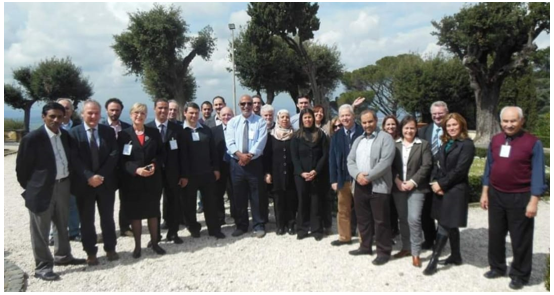
Links to the last three meetings:
Report of the Working Group on Stock Assessment of Demersal Species (WGSAD) session on the assessment of deep-water red shrimp on FAO webpage
Report of the Working Group on Stock Assessment of Demersal species (WGSAD) on FAO webpage
Report of the Working Group on Stock Assessment of Small Pelagic species (WGSASP) on FAO webpage
Biofouling is the accumulation of bacterial growth, algae, and sessile invertebrates on any submerged surface. To combat fouling ships must constantly undergo cleaning up and maintenance processes. Protecting boat hulls against biofoulings is a compelling necessity, not only to prevent material corrosion and degradation but also to maintain the proper maneuverability of the boats, thereby ensuring safety at sea. Antifouling paints are widely used to counteract this problem, using toxic substances such as copper-containing paints, which negatively impact marine organisms. Raising the awareness of fishermen about this problem and encouraging them to use eco-friendly antifouling paints is of great importance; environmental and economic wise.

Initiative: Antifouling Paints: Environmental Hazards and Alternatives (Abu-Qir Bay Fishermen Community Outreach Workshop) on AASTMT webpage
Students at the College of Fisheries and Aquaculture Technology have participated in the First International Conference of the Institute of Genetic Engineering Research "Challenges and New Prospects in Biotechnology Sciences" at the City of Scientific Research and Technological Applications. That was evaluated as the best poster presented at the conference.
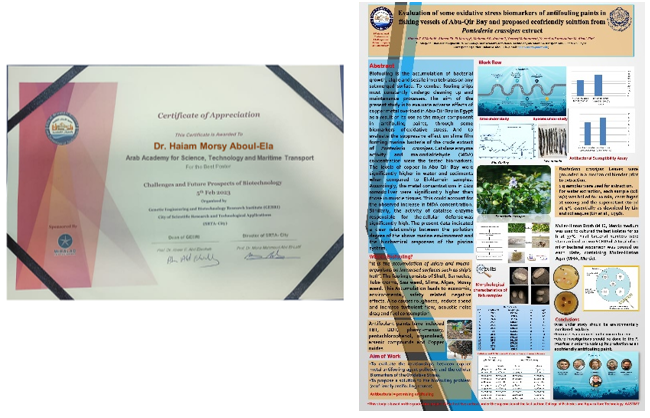
College of Fisheries Technology & Aquaculture Technology-Alexandria | AASTMT on AASTMT webpage
AASTMT represents the IAMU at the 82nd of the MEPC in London
The Arab Academy for Science, Technology and Maritime Transport (AASTMT) is an effective participant in the International Association of Maritime Universities (IAMU), so the AASTMT has represented the IAMU in the Marine Environmental Protection Committee (MEPC) in its 82nd round, held between 30 September and 4 October 2024 in London, UK.
The IAMU’s representative from the AASTMT was Senior lecturer Mohamed Elbawab, one of AASTMT’s SDG workforce for the SDG14 team.
Several crucial environmental issues have been addressed, like
The committee’s final report can be found in the following link for whom has an active IMODOCS account:
If access is granted to IMO Docs MEPC82/J/1, a list of participants is available at this link
MEPC 82/WP.1/Rev.1 (15 October 2014
Integration of Sustainable Development Goals in Universities for Better Climate Change Management “INVOLVE (Erasmus+) Project
The mentioned research project is aiming to:
INVOLVE_AASTMT_ERASMUS Day.pdf on AASTMT webpage