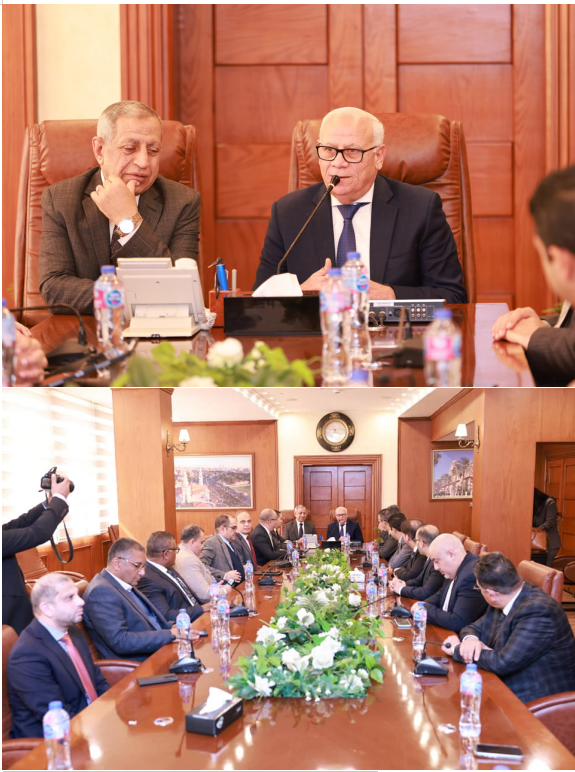
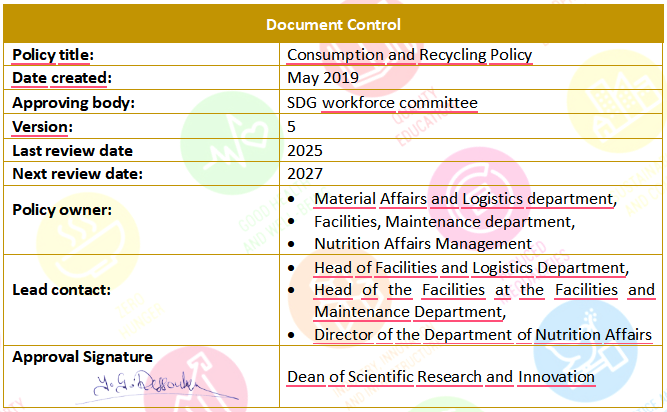
AASTMT’s ethical sourcing commitments are set out in its Sustainable Procurement Policy (Version 3, approved by the SDG Workforce Committee, last reviewed 2025, next review 2027, signed by Prof. Yasser Gaber Dessouky, Dean of Scientific Research and Innovation). Under this policy AASTMT includes sustainability specifications in all relevant procurement contracts and tenders, assesses the environmental and social performance of its suppliers and contractors, and buys products that are ethically and fairly traded, without exploitation of labour, while favouring goods and services that promote equality and diversity. Its supplier-evaluation section commits AASTMT to Fair Trade purchasing principles wherever suitable and feasible and to working with key suppliers to spread sustainability improvements across the supply chain. Supplier transparency, traceability and evaluation, including the ethical sourcing of food and supplies, are further set out in Section 5 of the Consumption and Recycling Policy, reproduced below as a supporting extract.
CONSUMPTION AND RECYCLING POLICY (SUPPORTING EXTRACT)
AASTMT recognizes the growing global challenges arising from the excessive pressure on natural resources, escalating greenhouse gas emissions, rising sea levels, pollution, and inefficient waste management. These environmental issues threaten both present and future generations, underscoring the urgent need for responsible consumption and effective recycling practices. In alignment with its Environmental Change and Social Responsibility Policy, AASTMT is committed to advancing the Sustainable Development Goals by promoting a culture of sustainability across all its campuses and operations. The Consumption and Recycling Policy reflects this commitment by emphasizing waste reduction, resource efficiency, and responsible material use.
Through this policy, AASTMT aims to minimize environmental impact by prioritizing waste prevention, reusing materials whenever possible, and ensuring proper recycling and disposal in compliance with environmental regulations. By fostering awareness and sustainable habits within its community, the University seeks to create a cleaner, safer, and more resilient environment for future generations.
This policy applies to all AASTMT employees, students, and contractors who are involved in handling, managing, or storing any form of waste, including hazardous and non-hazardous materials. It establishes the framework for ensuring that all waste management activities prioritize recycling, reuse, and responsible disposal in line with the university’s sustainability objectives.
Recycling must be integrated at every stage of the waste management process—beginning with proper segregation and collection, followed by safe processing and reuse wherever feasible. A designated responsible person or unit shall oversee the recycling and disposal of materials to ensure compliance with environmental standards and the adoption of the most sustainable methods available.
By embedding recycling practices into daily operations, this policy aims to minimize environmental impact, promote resource efficiency, and support AASTMT’s broader commitment to sustainable development and environmental stewardship.
The AASTMT policy considers end-of-life disposal costs and environmental impacts when making acquisition decisions involving the construction of new or renovated facilities.
AASTMT adopts the waste hierarchy: prevention, preparation for re-use, recycling, other recovery and, as a last resort, disposal. AASTMT applies processes, methods and activities that comply with environmental legislation and best practice, in order to reduce the overall waste produced and to prevent waste wherever possible. AASTMT also measures and weighs the waste it generates, to track it and to identify the best ways to reduce or recycle it.
The Waste Treatment Progressive System and Stages Incorporates:
Prevention
RE-USE
Recycle
Disposal
Ethical Sourcing of Food and Supplies
AASTMT provides healthy food, including vegetarian options, to students, staff and residents across its campuses and student housing. Food and catering services are sourced against the following criteria:
The AASTMT seeks to implement ethical and sustainable practices on all of its campuses. Therefore, the AASTMT has taken crucial measures to implement these practices, such as ecological practices and corporate social responsibility. Through the exchange of information within the Academy's supply chain, these food ethics and practices enable AASTMT to ensure the transparency of information about all suppliers.
To accomplish supply chain transparency, one of the primary goals of AASTMT is to identify the most reliable and reputable partners who share the same ethical practices, objectives, and data. To accomplish ethical and sustainable practices, the first step is to identify the most suitable suppliers.
The interaction with suppliers is the second step to keep secure relationships between partners and to reduce the risk. AASTMT is seeking to build a platform and application to increase communication and share important information. That would give the suppliers and partners access to the internal systems they need based on their roles within the ecosystem, sustainability practices, and the food ethics of AASTMT.
AASTMT traces the origin of its food supplies through supplier certificates (certificates of origin and food-safety certificates), which are checked at delivery and kept with the delivery inspection records before food is accepted on campus.
AASTMT is monitoring the overall processes between its partners to guarantee healthy and sustainable food for students, staff, and Residents. Based on this monitoring, errors must be fixed, and corrective action must be taken.
AASTMT complies with guidelines, legislation and best practice to limit the risk of immediate and future pollution or harm to health when carrying out its operations.
Waste should be prevented or minimised wherever possible. AASTMT encourages staff, students and employers to limit plastic and carton waste, and raises awareness of ways to reduce disposable items.
You can read our Consumption and Recycling Policy on AASTMT website.
You can read our Sustainable Procurement Policy on AASTMT webpage
More activities are applied and practiced in the AASTMT.
Catering Sourcing in Practice, 2024/2025
AASTMT’s Nutrition Affairs Department runs the main restaurants, cafeterias and coffee shops at the Abu Kir campus, serving students in the dormitories, staff and visitors. Food for the restaurants is bought from local suppliers through competitive tenders held twice a year, which give priority to local suppliers offering the best quality and value, and fresh fruit and vegetables come from local Egyptian farmers. The published student menu for the first semester of 2024/2025 shows plant-based options at every meal, a daily three-salad buffet and fresh fruit, reflecting local and seasonal sourcing.
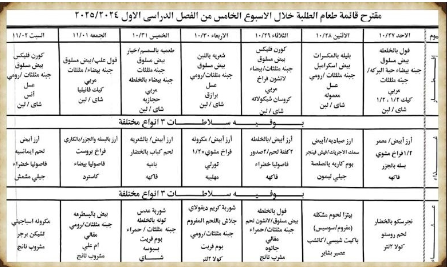
Catering Services and 2024/2025 Student Menu, Nutrition Affairs Department, on AASTMT webpage
Local Food Purchasing in Practice (Sustainable Food Purchases) on AASTMT webpage
“High-Risk Food Safety” Specialised Training Delivered to Silo Foods
From 20 to 22 July 2025, the Productivity and Quality Institute at AASTMT delivered a three-day specialised course on high-risk food safety for the staff of Silo Foods, presented by Dr. Moustafa Elsayed, an expert in food quality and safety systems. The programme was designed for employees working in high-risk food environments and covered hazard analysis, critical control points, contamination prevention and international best practice. Through such programmes, AASTMT’s Productivity and Quality Institute supports food-safety standards across the Egyptian food supply chain.
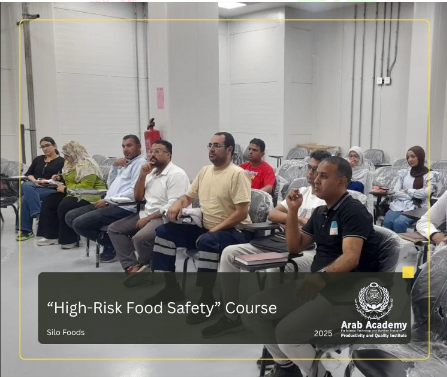
Silo Foods Empowers Staff through Specialized Training on High-Risk Food Safety on AASTMT webpage
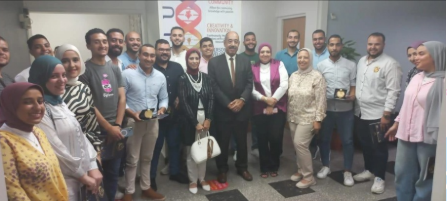
Certificate Ceremony for the 4th Cohort of the Professional Diploma in Food Industries Quality and Safety
On 10 August 2025, the Productivity and Quality Institute at AASTMT held the graduation ceremony for the fourth cohort of its Professional Diploma in Food Industries Quality and Safety, attended by the Secretary General of the Agricultural Professions Syndicate and the Syndicate’s programme coordinator. The guests commended the graduates’ performance and the academic and applied components of the programme, which prepares professionals for the food quality and safety sector. The diploma qualifies specialists who audit and uphold safety standards across the food supply chain.
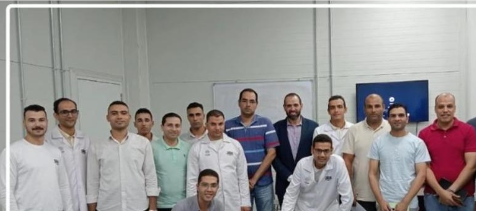
BRCGS Food Safety Global Standard Training for Silo Foods
On 11 November 2024, the Productivity and Quality Institute at AASTMT delivered a training course on the BRCGS Food Safety Global Standard — developed by the British Retail Consortium — for Silo Foods Company, led by Dr. Moustafa Elsayed. The course covered food safety, quality and operational requirements for food manufacturers and foodservice organisations, with a focus on hygiene and safety practices along the production chain. The BRCGS certification is recognised worldwide as a benchmark for food safety and quality management.

AASTMT emphasizes its commitment to incorporating social and environmental responsibility into every facet of its business. The institution exemplifies robust environmental stewardship and acts as a model of responsible organizational conduct through the adoption of sustainable procurement procedures. This comprehensive strategy guarantees that sustainability is fundamentally embedded in AASTMT’s culture, fostering enduring advantages for the environment, society, and economy. The policy, entitled “Ethical Sourcing of Food and Supplies,” delineates the institution’s commitments and principles in accordance with the objectives specified in Policy Statement Point 5.
Consumption and Recycling Policy
1.Introduction
AASTMT recognizes the growing global challenges arising from the excessive pressure on natural resources, escalating greenhouse gas emissions, rising sea levels, pollution, and inefficient waste management. These environmental issues threaten both present and future generations, underscoring the urgent need for responsible consumption and effective recycling practices. In alignment with its Environmental Change and Social Responsibility Policy, AASTMT is committed to advancing the Sustainable Development Goals by promoting a culture of sustainability across all its campuses and operations. The Consumption and Recycling Policy reflects this commitment by emphasizing waste reduction, resource efficiency, and responsible material use.
Through this policy, AASTMT aims to minimize environmental impact by prioritizing waste prevention, reusing materials whenever possible, and ensuring proper recycling and disposal in compliance with environmental regulations. By fostering awareness and sustainable habits within its community, the University seeks to create a cleaner, safer, and more resilient environment for future generations.
2.Scope
This policy applies to all AASTMT employees, students, and contractors who are involved in handling, managing, or storing any form of waste, including hazardous and non-hazardous materials. It establishes the framework for ensuring that all waste management activities prioritize recycling, reuse, and responsible disposal in line with the university’s sustainability objectives.
Recycling must be integrated at every stage of the waste management process—beginning with proper segregation and collection, followed by safe processing and reuse wherever feasible. A designated responsible person or unit shall oversee the recycling and disposal of materials to ensure compliance with environmental standards and the adoption of the most sustainable methods available.
By embedding recycling practices into daily operations, this policy aims to minimize environmental impact, promote resource efficiency, and support AASTMT’s broader commitment to sustainable development and environmental stewardship.
3.Aims of the Policy
The AASTMT policy considers end-of-life disposal costs and environmental impacts when making acquisition decisions involving the construction of new or renovated facilities.
AASTMT receives the 'waste order' of Prevention, reuse, reusing, and other recuperation and removal. AASTMT executes cycles, methods, and activities that guarantee consistency with ecological enactment and best practice, to lessen the general waste produced and forestall waste creation at every possible opportunity. Moreover, AASTMT is committed to measuring and weighing the amount of waste generated to track the waste and to find the best methods to reduce or recycle it.
4.Procedures
The Waste Treatment Progressive System and Stages Incorporates:
Prevention
RE-USE
Recycle
Disposal
Ethical Sourcing of Food and Supplies
AASTMT is seeking to reduce food waste as much as we can through using food preservation methods and vermicomposting practices. The university is committed to delivering healthy food for all parties in the university including food on Campus, Residences, and employees whether vegetarian or others. AASTMT makes sure that the food is available at each level to guarantee healthy food for ASTMT’s stakeholders. However, food waste is still a problem for AASTMT. Therefore, AASTMT is applying the following procedures to use the waste of food in an appropriate way:
5.Policy Statement
The AASTMT seeks to implement ethical and sustainable practices on all of its campuses. Therefore, the AASTMT has taken crucial measures to implement these practices, such as ecological practices and corporate social responsibility. Through the exchange of information within the Academy's supply chain, these food ethics and practices enable AASTMT to ensure the transparency of information about all suppliers.
To accomplish supply chain transparency, one of the primary goals of AASTMT is to identify the most reliable and reputable partners who share the same ethical practices, objectives, and data. To accomplish ethical and sustainable practices, the first step is to identify the most suitable suppliers.
The interaction with suppliers is the second step to keep secure relationships between partners and to reduce the risk. AASTMT is seeking to build a platform and application to increase communication and share important information. That would give the suppliers and partners access to the internal systems they need based on their roles within the ecosystem, sustainability practices, and the food ethics of AASTMT.
Through utilizing new technologies such as block chain technology, AASTMT plays a crucial role in facilitating the monitoring and tracing of the origin of food. It allows the AASTMT to trace the origin of food and ensure its safe delivery to campuses.
AASTMT is monitoring the overall processes between its partners to guarantee healthy and sustainable food for students, staff, and Residents. Based on this monitoring, errors must be fixed, and corrective action must be taken.
AASTMT guarantees that we are conforming to guidelines, enactment, and best practices to limit the danger of prompt and future contamination or mischief to wellbeing when completing operational exercises.
6.Actions
7.Objectives:
Waste ought to be forestalled or limited at every possible opportunity. AASTMT empowers staff, Students, and employers to limit plastic and cartoon waste, in addition to increasing the awareness about the method to minimize disposable items.
8.Review Program
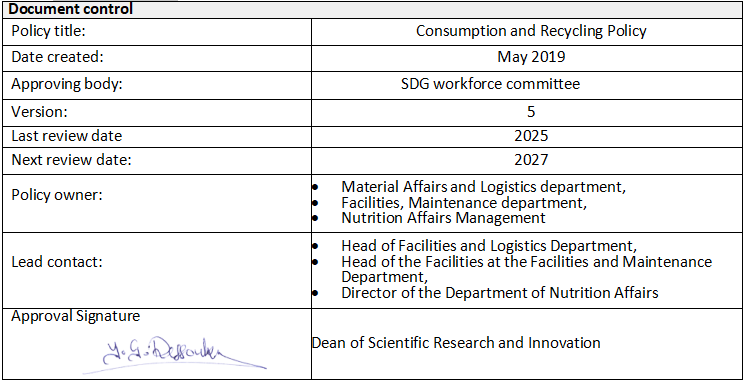
You can read our Consumption and Recycling Policy on AASTMT website.
More activities are applied and practiced in the AASTMT.
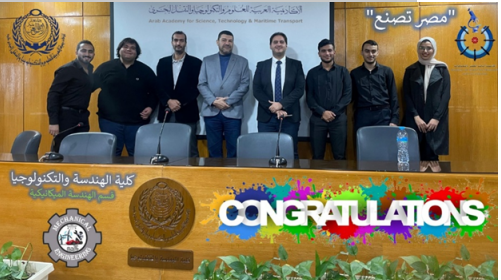
AASTMT Students Win National Recognition for Sustainable Project Turning Plastic Waste into 3D Printing Filaments
The AASTMT proudly announced the selection of a Mechanical Engineering graduation project from the College of Engineering and Technology – Alexandria Campus among 28 winning projects nationwide in the “Egypt Makes – Local Component Deepening Alliance” initiative, funded by the Academy of Scientific Research and Technology (ASRT) for the academic year 2023–2024.
The innovative project, titled “Recycling Plastic Waste into 3D Printing Filaments,” reflects AASTMT’s commitment to sustainability, circular economy practices, and achieving SDG 12 (Responsible Consumption and Production). The student team — Yousry Atef, Hassan Raafat, Omnia Yasser, Kerolos Raymond, and Karim Tarek — designed a system that transforms discarded plastic into reusable 3D printing materials, reducing waste and promoting environmentally conscious production.
Official Announcement of Egypt MAkes page
AASTMT Partners in the Third Edition of the Egypt Industry Challenge 2023 to Foster Technological Innovation
The Arab Academy for Science, Technology and Maritime Transport (AASTMT) played a key role as a strategic and technical partner in the Third Edition of the Egypt Industry Challenge 2023, held under the sponsorship of the Academy of Scientific Research and Technology (ASRT). The challenge aimed to support university graduation projects and promote the application of Fourth Industrial Revolution technologies in Egypt’s industrial sector. In his remarks, Dr. Ismail Abdel Ghaffar, President of AASTMT, emphasized the Academy’s commitment to empowering young innovators and fostering collaboration between academia and industry to drive sustainable industrial development in line with Egypt’s Vision 2030. Through its partnership, AASTMT continues to promote innovation, applied research, and technology-based solutions that strengthen Egypt’s position in the global industrial landscape.
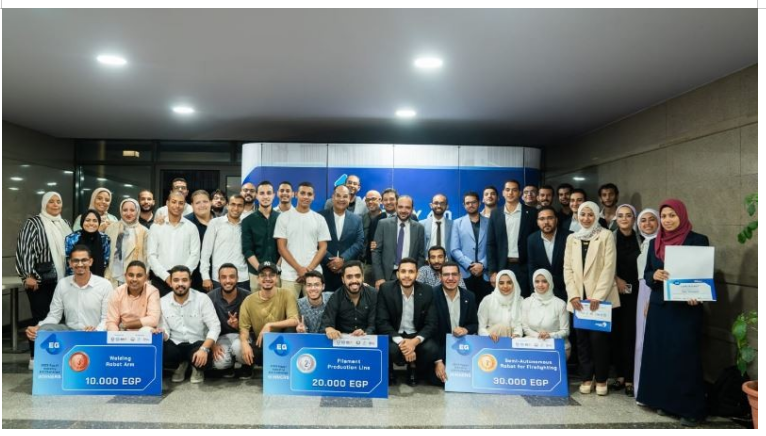
AASTMT Supports Egypt Industry Challenge 2023
AASTMT President Meets Port Said Governor to Expand Cooperation Opportunities
The Arab Academy for Science, Technology and Maritime Transport (AASTMT) President, Dr. Ismail Abdel Ghaffar, met with Major General Adel Al-Ghadban, Governor of Port Said, to discuss new avenues of collaboration in education, research, and development. During the meeting, both sides reviewed the progress of sustainable development projects across the governorate and explored joint initiatives between AASTMT’s Port Said Campus and local authorities to support industrial growth, innovation, and youth training. Dr. Abdel Ghaffar praised the governor’s efforts in implementing Egypt’s national development vision and reaffirmed AASTMT’s commitment to contributing to the advancement of Port Said through education, technology, and strategic partnerships.